

The best quotes about taking care of the environment are short, sourced and easy to act on. Below you will find lines from Rachel Carson, Aldo Leopold, Jane Goodall, Wangari Maathai and the United Nations, each with its source. You will also find short lines for children and a few ways to turn a quote into a family habit.
TL;DR
- Rachel Carson, Aldo Leopold and Jane Goodall give the strongest, best-documented lines on conservation.
- The most useful quotes name a small action: save energy, plant a tree, choose how you travel.
- For children, pick lines of ten words or fewer and pair each one with something to do outside.
- Check the speaker before you share. Many environmental quotes are misattributed.
- A quote works best when it leads to a habit, such as a walk, a planting day or a photo of local wildlife.
Table of Contents
- Quotes from the people who shaped conservation
- Jane Goodall on the choices we make every day
- Quotes about small actions
- Short quotes for children
- Turning a quote into a habit
- How to check a quote before you share it
- Why strong wording works
- Our perspective
- Explore nature with The Zoofamily
- FAQ
- Sources
Quotes from the people who shaped conservation
These quotes come from writers and leaders who made care for nature part of public life. Each one has a traceable source.
Rachel Carson. The US Fish and Wildlife Service lists her words from the 1964 Audubon Medal acceptance: “Conservation is a cause that has no end.” She went on to say there is no point at which the work is finished. It is a good line for children too. It tells them that looking after nature is a habit, not a one-off task.
Aldo Leopold. The ecologist described conservation in plain terms: “Conservation is a state of harmony between men and land.” The same collection records Sir David Attenborough’s point that people will not protect what they do not care about. It also records Wangari Maathai’s view that small things citizens do make a difference, and that planting trees plants seeds of peace and hope.
Theodore Roosevelt. At the 1908 Conference on Conservation of Natural Resources, he argued that a nation should manage its resources with foresight, as a prudent person conserves property for their children. The wording is on the US EPA page of environmental quotations. The same page records a 2001 statement by President George W. Bush. He called good stewardship of the environment a public value and a duty of citizens.
The 14th Dalai Lama. In his writing on thinking globally, he asks readers to respect and care for the Earth, which he calls our mother. He also argues that environmental education helps children and adults know their surroundings, so they are less likely to act out of ignorance. You can read the full message on his official website.
HRH The Prince of Wales. In a 2017 speech at Kew, he noted that media attention can raise an issue, but most people still feel powerless to influence events. He asked listeners to think about the effect of their actions on future generations. The text is on the royal.uk speech page.

A line that is often repeated
You will see “We do not inherit the Earth from our ancestors; we borrow it from our children” everywhere. Its origin is unclear. Quote Investigator suggests it is likely an evolution of a sentiment from Wendell Berry’s 1971 book The Unforeseen Wilderness. If you print it on a card or a school poster, say it is often attributed rather than naming one author as certain.
Jane Goodall on the choices we make every day
Jane Goodall is the name most readers look for, and her message is consistent. Your daily choices matter, and you can decide what kind of impact you make.
In her 2025 Earth Day message, the Jane Goodall Institute records her saying that “Every day you live you make some impact on the world” and that you can choose what kind. The same message gives simple examples: turn off lights, walk or cycle, and take a train or bus instead of a car. These are actions a child can understand and help with.
The University of Cambridge quoted her in a similar way: “We have a choice as to what kind of impact that is.” The article is built around her hope in young people. That makes it a good fit for a family.
She also spoke bluntly about the state of the planet. In an interview with The Guardian, she asked how the most intellectual creature to walk the Earth could be destroying “its only home”. The Jane Goodall Institute carries a longer version of the same idea in its advocacy guidance on protecting endangered species. Both pair the concern with a call to act.
If you want one Goodall line to put on a fridge, use the 2025 one. It is short, it is sourced to her own institute, and it moves straight from worry to choice.
Quotes about small actions
Big problems feel too large for a family. The quotes that help most are the ones that shrink the task.
Ban Ki-moon, then Secretary-General of the United Nations, spoke to children in 2016. He asked them to conserve energy, use water sparingly, plant their trees and work for their children’s better future. The list is concrete. A child can do every item on it this week.
Wangari Maathai makes the same point from the ground. Her view, recorded by the Conservation Foundation, is that ordinary citizens can make a difference through small acts, and that planting a tree is an act of hope.
Here is how these quotes translate into actions for a family:
| Quote theme | Source | A family action |
|---|---|---|
| Conservation never ends | Rachel Carson | Pick one weekly habit, such as a litter walk |
| Small acts count | Wangari Maathai | Plant a tree or a window box |
| Care for what you know | David Attenborough | Spend time watching local wildlife |
| Choose your impact | Jane Goodall | Walk, cycle or take the bus for one regular trip |
| Save energy and water | Ban Ki-moon | Turn off lights and time the shower together |
Short quotes for children
Children remember short lines. Keep them positive and give each one a job.
A 2026 United Nations children’s story for South Africa uses the line “Nature takes care of us… if we take care of it too.” The same story tells children that trees help clean the air. These two sentences are enough for a three-year-old.
Collections of Earth Day lines for children also include lines such as “Tiny hands can make a big difference.” Treat such lines as slogans, not as quotes from a named person. They work well on a drawing, a lunchbox note or a school project.
Try this simple routine:
- Choose one short line for the week.
- Write it on paper and put it where your child will see it.
- Agree on one action that matches the line.
- At the end of the week, ask what your child noticed outside.
Turning a quote into a habit
A quote does not change much on its own. The research on children and nature points the same way: learning sticks when children do something in a real place. Singapore’s Ministry of Education describes schools that use visits to nature reserves and biodiversity surveys to help students understand conservation. You do not need a school programme. A park, a garden or a woodland path is enough.
Here are four ways to start.
Watch wildlife near home. Pick a spot and visit it each week. Count birds, insects or squirrels. Our guide to wildlife-friendly gardens for children shows how to set up a small area that animals will visit.

Learn the local animals. Children care more about animals they can name. See our overview of animals in European forests to prepare for a walk.
Try outdoor experiments. Simple science turns a quote into a question. Our list of outdoor science activities for kids gives seven starting points.
Look further afield. Some families build trips around nature. This guide to educational safari activities for families shows how outdoor experiences help children learn to care for wildlife.
For a yearly occasion, our Earth Day ideas for kids gives seven activities. For a broader view of the subject, read our guide to caring for our planet and our article on playful eco education.
How to check a quote before you share it
Environmental quotes travel fast, and many change on the way. Use this short check.
- Find the original page. Look for the speaker’s own site, an institution or a recorded speech. Carson, Roosevelt and Bush lines above come from official United States pages. Goodall lines come from her institute and Cambridge.
- Compare wording. If two sites give different words, the quote has probably been reworded.
- Be wary of quote collections. They are fine for ideas, but they rarely show where a line came from.
- Search for a fact check. A 2021 USA Today fact check found a quote falsely credited to Thomas Homer-Dixon. It was a partial quote from a book by David Hughes, co-edited by Homer-Dixon.
- Use cautious wording. If the origin is uncertain, write “often attributed to”.
This matters most when a child will copy the quote into a school project. A correct name is a small lesson in itself.
Why strong wording works
The Alliance of Religions and Conservation notes that groups often use powerful, emotive language to convey the urgency of the environmental crisis in ways statistics cannot. That is why quotes stay in memory. For children, the same rule applies in a gentler form. Use warm, concrete words and avoid frightening ones.
Our perspective
We make cameras, walkie-talkies and binoculars for children aged 3 and up. We give them animal designs on purpose. A child who has a toy fox or owl in hand tends to ask what a real one eats and where it lives. That question is where care for nature starts.
The quotes above agree on one point: people protect what they know. We designed our products to help children look closely. A camera lets a child choose a subject, wait and take a picture. Binoculars bring a bird closer. A walkie-talkie gets two children working together on a nature walk.
We also plant one tree for each camera sold. This is our own commitment, and we think it shows children a simple link between a purchase and the planet.
We do not think a quote on a wall is enough. We think a child outside with something to look through is better. That is what we aim to support.
ALAIN
Explore nature with The Zoofamily
If you want your child to turn these quotes into outdoor time, our kids’ cameras are a good place to start. Our current range, with published prices, includes:
- Zoo Friends: €69.95
- Urban Zoo: €89.95
- Zoo video: €79.95
- Zoo Print: €109.95
- Zoo Walkie-Talkie: €54.95
- Zoo eyes: €39.95
- Zoo light: €39.95
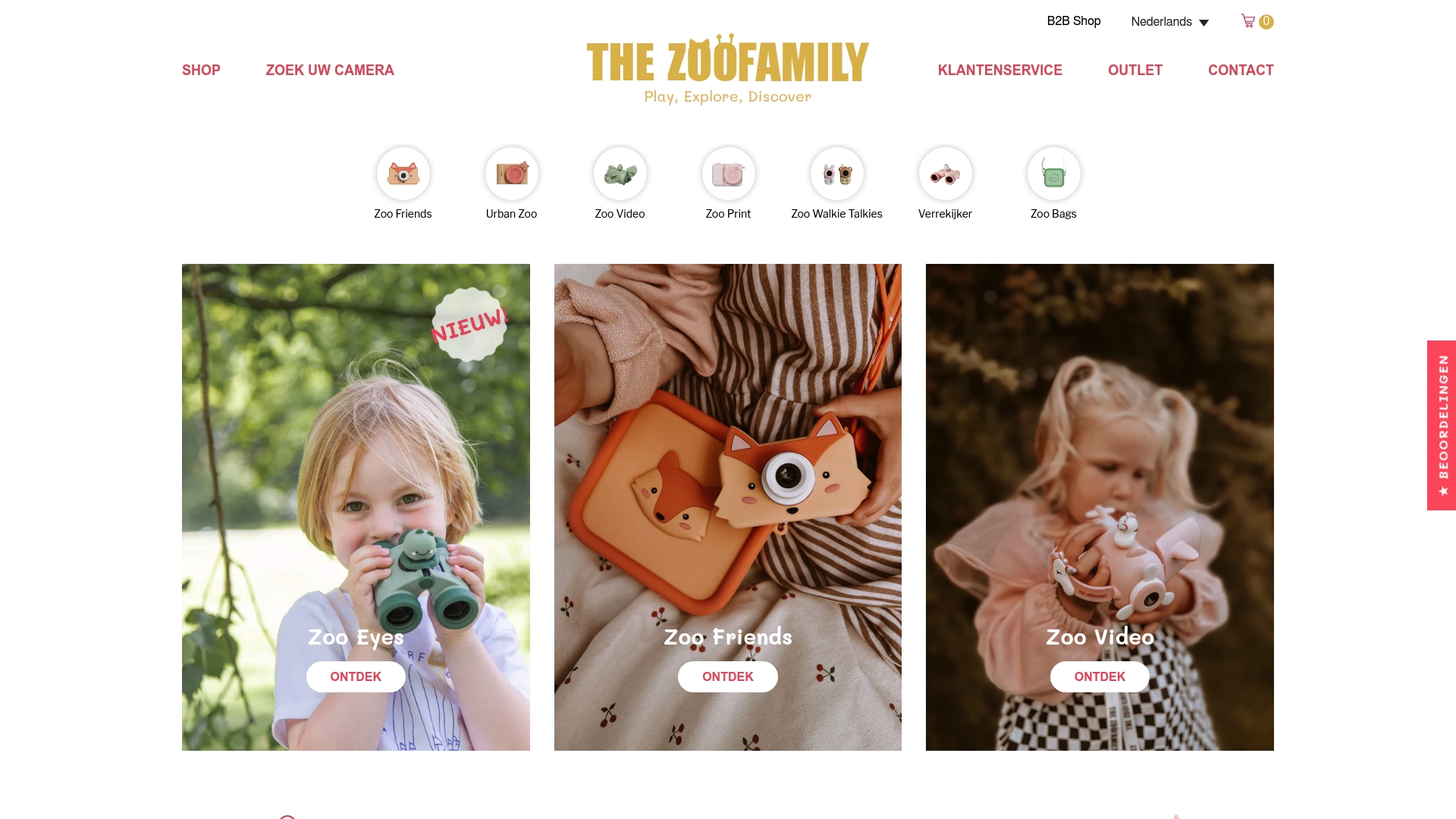
For each camera sold, we plant one tree. Our accessories include zoo bags at €19.95 and zoo sleeves at €9.95. You can see the whole range on The Zoofamily home page. Our guide to eco photography for children explains how a camera can start a conversation about nature.
FAQ
Why is it important to take care of the environment?
People rely on nature for air, water and food, and the choices made today shape what later generations inherit. Theodore Roosevelt described resource management as foresight for children’s well-being, and George W. Bush called stewardship a public value and a duty of citizens. Both statements are on the US EPA quotations page.
What is Jane Goodall’s most famous quote about the environment?
There is no single official answer. One of her most shared lines is that every individual matters, has a role to play and makes a difference. A line from the 2025 Earth Day message, about making some impact every day and choosing what sort, is the best sourced. Both express the same idea: your choices count.
What short, positive quotes can I share with children?
Try “Tiny hands can make a big difference” or the UN story line “Nature takes care of us… if we take care of it too.” Both are easy to read aloud. Pair each with a small action such as planting a seed or picking up litter.
How do I know a quote is correctly attributed?
Find the original speech, book or institutional page, and compare the exact words. If you cannot find it, write “often attributed to” instead of naming the person as certain. A fact check can also help when a quote looks edited or too neat.
Sources
- Environmental Quotations, US Fish and Wildlife Service
- Quotations about the Environment, US EPA
- Voices Across Time, The Conservation Foundation
- The 14th Dalai Lama on thinking globally
- Speech by HRH The Prince of Wales, 2017
- Quote Investigator: We do not inherit the Earth
- Dr Jane Goodall’s 2025 Earth Day message
- University of Cambridge: Dr Jane Goodall on the environment
- The Guardian: The most intellectual creature to ever walk Earth
- Jane Goodall Institute: protecting endangered species
- UN Audiovisual Library, 2016
- United Nations children’s story, 2026
- Best Earth Day quotes for kids, Android Nature
- Singapore MOE: Nature a prominent part of student learning
- USA Today fact check, 2021
- Alliance of Religions and Conservation, Faith in Conservation
- Educational safari activities for families