

Children often surprise us with what they can learn when we stop teaching the way we were taught and start teaching the way they actually learn. Many parents and educators assume that sitting still, memorising facts, and following rigid lesson plans are the gold standard for learning. Yet research shows that children aged 4 to 12 thrive when learning combines developmental readiness, creative exploration, and meaningful connection with nature. This article unpacks evidence-backed strategies to help you support your child’s learning journey, from understanding cognitive progressions to harnessing the power of outdoor education and structured creativity interventions.
Table of Contents
- Key takeaways
- Understanding how children learn: developmental progressions and cognitive skills
- Boosting literacy and creativity: explicit instruction and structured interventions
- Connecting learning with nature: forest schools and outdoor education benefits
- Applying effective learning strategies: practical tips for parents and educators
- Discover more ways to foster creativity and nature connection
- Common questions about how kids learn best
Key Takeaways
| Point | Details |
|---|---|
| Developmental progressions matter | Learning is guided by developmental readiness and cognitive skills such as executive function and language underpinning new concepts. |
| Creativity interventions boost originality | Creativity interventions, when structured, strengthen originality and fluency in learners. |
| Outdoor learning enhances engagement | Outdoor learning boosts engagement, wellbeing and academic outcomes. |
| Group support helps disadvantaged pupils | Group support helps disadvantaged pupils. |
Understanding how children learn: developmental progressions and cognitive skills
Children aged 4 to 12 learn best through developmental progressions that account for cognitive prerequisites like executive functions, language, and motor skills, particularly in maths. Executive functions such as working memory, inhibitory control, and cognitive flexibility form the scaffolding for all higher-order learning. When a child struggles with maths, the issue often lies not in the numbers themselves but in underdeveloped cognitive skills that support mathematical thinking. Language skills enable children to grasp abstract concepts, whilst motor skills help them manipulate objects and internalise spatial relationships.
Teaching that respects these developmental trajectories builds skills in sequence, ensuring each new concept rests on a solid foundation. A child who has mastered counting forwards and backwards is ready to tackle addition, whilst a child still learning one-to-one correspondence needs more time with concrete objects before moving to abstract symbols. Parents and educators can support learning by observing readiness signs such as sustained attention, curiosity about patterns, and the ability to follow multi-step instructions.
Integrating playful activities helps connect cognitive skills with practical tasks. Sorting toys by colour or size strengthens categorisation and executive function. Singing counting songs builds number sense and language simultaneously. Building blocks develop spatial reasoning and fine motor control.
Pro tip: Watch for moments when your child shows genuine curiosity about how things work or why patterns repeat. These are prime opportunities to introduce new concepts that align with their developmental readiness, making learning feel natural rather than forced.
By recognising that learning is not a race but a journey shaped by individual developmental timelines, you can tailor activities to meet your child where they are. This approach reduces frustration, builds confidence, and lays the groundwork for lifelong learning. Explore engaging learning activities that support cognitive development through play.
Boosting literacy and creativity: explicit instruction and structured interventions
Reading comprehension improves most with explicit, multicomponent instruction including strategy teaching, scaffolding, and visual aids, with Tier 3 interventions showing the highest effects. Explicit instruction means directly teaching children how to decode words, understand sentence structure, and extract meaning from text, rather than expecting them to figure it out independently. Scaffolding provides temporary support that gradually fades as the child gains competence, whilst visual aids like graphic organisers help children see relationships between ideas.
Strategy teaching goes beyond reading mechanics to include metacognitive skills such as predicting, questioning, summarising, and clarifying. These strategies empower children to monitor their own understanding and adjust their approach when comprehension breaks down. Research shows that teaching these strategies explicitly, rather than hoping children pick them up incidentally, leads to significant gains in reading proficiency.
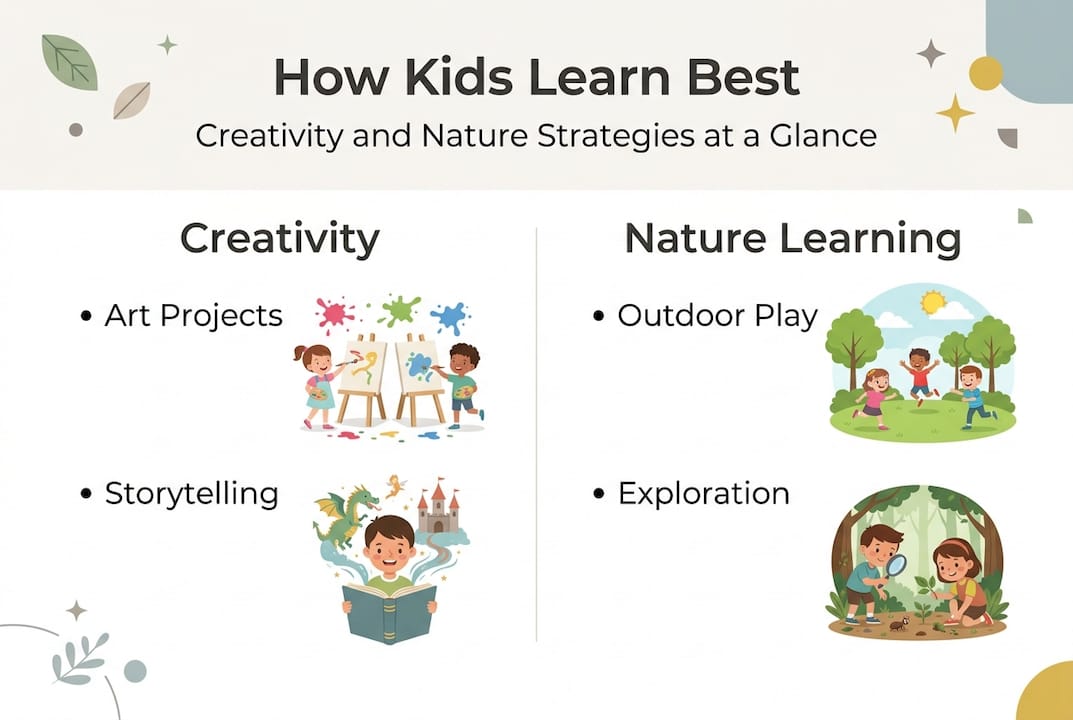
Creativity interventions in early childhood education yield moderate to large effects on originality, fluency, elaboration, and imagination via small-group, arts-based, hands-on activities. Structured creativity interventions outperform unstructured approaches because they provide a framework within which children can explore freely. A child given paints and paper with no guidance may create something lovely, but a child taught specific techniques and then encouraged to experiment will develop a broader creative repertoire.
Small-group settings allow for individualised attention and peer collaboration, both of which enhance creative thinking. Arts-based activities such as storytelling, drama, music, and visual arts engage multiple senses and cognitive pathways, making learning more memorable and enjoyable. Hands-on tasks like building, sculpting, or constructing give children tangible feedback on their ideas, helping them refine and iterate.
“Creativity is not just about artistic talent. It is about thinking flexibly, generating novel solutions, and approaching problems from multiple angles. These skills transfer across all areas of learning and life.”
Integrating literacy with creative arts enriches engagement and retention. A child who writes and illustrates their own story practises writing mechanics whilst exercising imagination. A child who acts out a scene from a book deepens comprehension through embodied learning. Discover more creative learning activities and ways of nurturing eco-awareness through creative exploration.
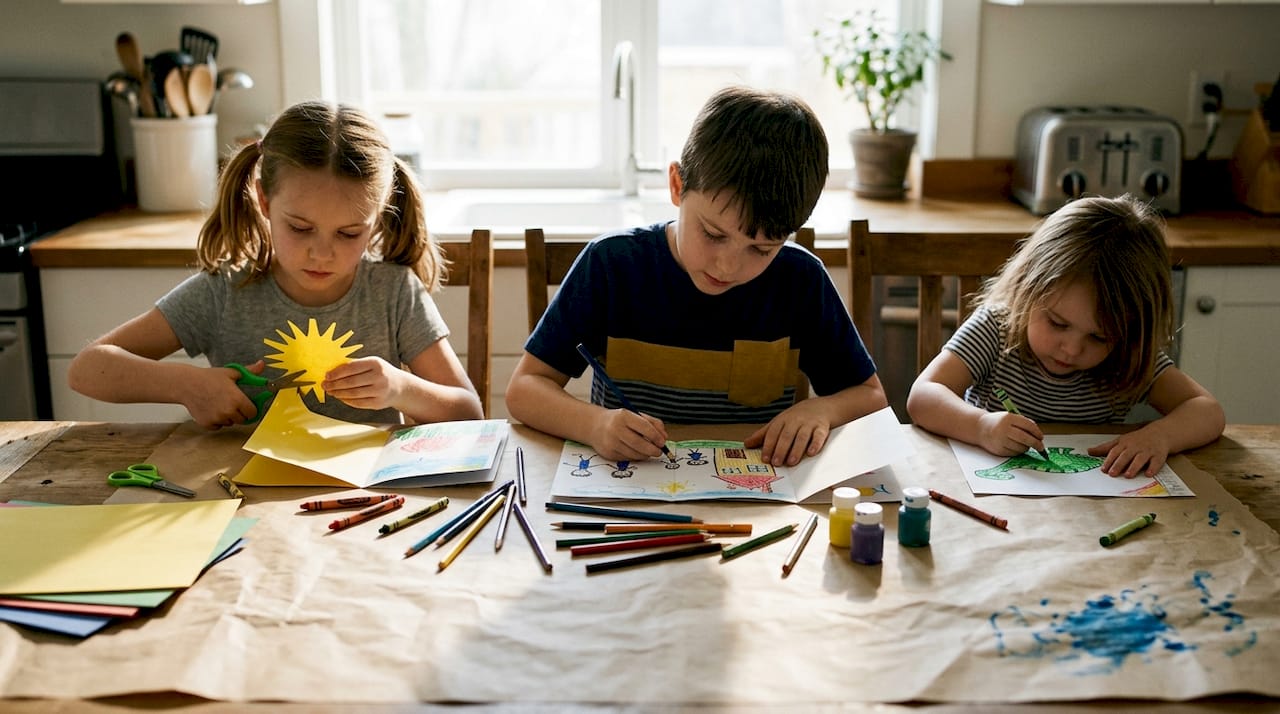
Pro tip: Set up a weekly “creativity hour” where your child chooses an arts-based project with minimal rules. Provide materials and a loose theme, then step back and observe. You will be amazed at what they create when given structure and freedom in equal measure.
Connecting learning with nature: forest schools and outdoor education benefits
Forest schools and outdoor learning in Europe enhance engagement, well-being, academic outcomes, social and emotional skills, ecological awareness, and physical fitness. Outdoor learning environments increase engagement because they stimulate all the senses and offer endless opportunities for discovery. A child learning about plant life cycles in a textbook gains knowledge, but a child planting seeds, watering them, and watching them grow gains knowledge plus a visceral understanding of growth and change.
Forest schools improve academic outcomes alongside social and emotional skills by embedding learning in real-world contexts. Maths becomes relevant when measuring tree circumferences or estimating distances. Literacy comes alive when children create field journals documenting their observations. Science is no longer abstract when children witness decomposition, observe animal behaviour, or track weather patterns.
Child-led exploration in nature promotes creativity and ecological awareness. When children choose where to explore and what to investigate, they develop agency and intrinsic motivation. They learn to ask questions, test hypotheses, and draw conclusions based on evidence. This inquiry-based approach mirrors the scientific method and fosters critical thinking.
Teacher guidance is essential to balance freedom and structure outdoors. A skilled educator knows when to step in with a question that deepens thinking and when to step back and let discovery unfold. Physical fitness benefits are notable in outdoor learning settings, as children naturally engage in climbing, running, balancing, and lifting, building strength and coordination without formal exercise.
| Outdoor learning benefit | Impact on children aged 4 to 12 |
|---|---|
| Engagement and motivation | Higher participation and sustained attention in natural settings |
| Academic outcomes | Improved science, maths, and literacy skills through contextual learning |
| Social and emotional skills | Enhanced cooperation, empathy, and resilience |
| Ecological awareness | Deeper understanding of environmental stewardship and biodiversity |
| Physical fitness | Increased activity levels, motor skills, and overall health |
Pro tip: Start small if your child is new to outdoor learning. A weekly nature walk where they collect interesting items and share observations builds comfort and curiosity. Gradually introduce structured activities like building shelters, identifying plants, or creating nature art.
Explore outdoor science activities, learn more about child development outdoors, and discover nature play ideas to spark curiosity. For a deeper dive into research, review this nature-based learning study.
Applying effective learning strategies: practical tips for parents and educators
Translating research into practice requires intentional planning and flexibility. Here are actionable steps to apply developmental, literacy, creative, and nature-based learning approaches effectively at home or school.
-
Plan learning in stages aligned with your child’s cognitive development. Observe what they can do independently, what they can do with support, and what remains out of reach. Focus on the middle zone, where learning happens.
-
Use targeted small-group literacy and maths interventions for efficiency. Early literacy approaches yield four months’ progress, transferring to maths, with targeted small-group interventions especially effective for disadvantaged pupils. Group children by skill level, not age, and provide intensive, focused instruction on specific skills.
-
Incorporate small-group arts and nature activities to boost creativity. Schedule regular sessions where children work together on creative projects or outdoor explorations. Collaboration enhances learning and builds social skills.
-
Encourage child-led outdoor exploration with balanced teacher guidance. Let children choose their focus, but be ready with questions that extend thinking. “What do you notice about this leaf?” “Why do you think the bird built its nest here?”
-
Foster ecological awareness through interactions with animals and nature. Teach children to observe without disturbing, to appreciate biodiversity, and to understand their role in protecting the environment.
Pro tip: Create a learning journal where your child records observations, questions, and discoveries. This simple practice reinforces literacy, encourages reflection, and builds a record of growth over time.
Consistency matters more than intensity. A daily 15-minute nature walk or creative activity will yield better results than an occasional marathon session. Make learning a habit, not an event.
- Rotate activities to keep engagement high. Alternate between indoor and outdoor, structured and open-ended, individual and group.
- Celebrate effort and progress, not just outcomes. A child who tries a new strategy or persists through a challenge is learning, even if the result is imperfect.
- Connect learning to your child’s interests. A child fascinated by insects will engage deeply in a project about life cycles or habitats.
- Model curiosity and lifelong learning. Let your child see you reading, exploring, and asking questions.
Find more fun learning activities and explore how animal behaviour fosters eco-awareness to enrich your child’s learning journey.
Discover more ways to foster creativity and nature connection
Supporting your child’s learning does not require expensive programmes or complicated plans. It requires understanding how children learn, respecting their developmental readiness, and providing rich opportunities for creativity and connection with nature. The Zoofamily offers a hub of resources designed to help parents and educators create these opportunities.
Our blog features practical ideas for engaging activities for kids that blend learning with play, as well as outdoor science activities that bring concepts to life. Whether you are looking for inspiration, guidance, or tools to support your child’s curiosity, you will find everything you need to make learning an adventure. Explore our collection and discover how simple changes can make a profound difference in how your child learns and grows.
Common questions about how kids learn best
How can I tell if my child is ready for certain learning activities?
Look for signs of cognitive readiness such as sustained attention, curiosity about the topic, and the ability to follow multi-step instructions. If your child can demonstrate prerequisite skills independently or with minimal support, they are likely ready for the next level. Pushing too soon leads to frustration, whilst waiting too long can stifle motivation.
What are simple ways to foster creativity at home?
Provide open-ended materials like paper, paints, building blocks, and natural objects, then give your child time and space to explore without strict instructions. Structured creativity activities such as storytelling prompts, drama games, or collaborative art projects also boost originality and fluency. Balance freedom with gentle guidance to help your child develop a broad creative repertoire.
How does outdoor play benefit my child’s learning and development?
Outdoor play enhances engagement, well-being, and academic outcomes by providing sensory-rich, real-world contexts for learning. Children develop physical fitness, social and emotional skills, and ecological awareness through nature-based activities. Child-led exploration fosters creativity and critical thinking, whilst teacher-guided activities deepen understanding and connect outdoor experiences to curriculum goals.
Why is small-group instruction more effective than whole-class teaching for some children?
Small-group instruction allows for individualised attention, targeted skill development, and immediate feedback. Children who struggle in whole-class settings often need more intensive support and practice on specific skills. Small groups also reduce distractions and create a safe space for children to take risks and ask questions without fear of judgement.
Can creativity interventions really improve academic outcomes?
Yes. Structured creativity interventions improve originality, fluency, elaboration, and imagination, which transfer to problem-solving, critical thinking, and academic tasks. Children who learn to think flexibly and generate novel solutions perform better across all subjects. Creativity is not separate from academics; it is a foundational skill that supports all learning.
Recommended
- Inspirer l’imagination enfant avec cadeaux nature créatifs – The Zoofamily
- Comment éveiller créativité enfant : guide nature ludique – The Zoofamily
- Creative connection for children: nature-based play guide – The Zoofamily
- The Power of Neuroplasticity: How Your Brain Adapts and Evolves
- Learning styles - EBC TEFL courses