

Choosing the right DIY backyard play ideas for your family means balancing creativity, safety, budget, and nature connection. With so many options available in 2026, European moms need clear criteria to match projects with their children’s ages, available space, and environmental values. This guide walks you through essential selection factors and showcases creative, affordable projects that transform your backyard into a space where children explore, learn, and connect with nature.
Table of Contents
- How to Choose the Best DIY Backyard Play Idea for Your Family
- Natural Material Play Structures: Willow Playhouses and Wood Designs
- Creative DIY Projects to Boost Sensory and Motor Skills
- Age-Appropriate and Space-Smart Play Ideas
- Safety and Maintenance: Ensuring Durability and Child Safety
- Budget, Accessibility, and Environmental Impact
- Seasonal Adaptability of Outdoor Play Spaces
- Summary Comparison and Situational Recommendations
- Discover Tools to Enhance Outdoor Creativity and Nature Connection
Key Takeaways
| Point | Details |
|---|---|
| Selection criteria | Space, age, budget, safety, and nature integration guide your project choice. |
| Willow playhouses | Living structures mature in two growing seasons, creating sensory-rich environments. |
| Mud kitchens | Quick weekend builds using recycled materials boost creativity and motor skills. |
| Safety surfacing | Rubber materials reduce injuries by up to 30% compared to traditional options. |
| Seasonal flexibility | Portable elements extend outdoor play by up to six months throughout the year. |
How to Choose the Best DIY Backyard Play Idea for Your Family
Matching project size to backyard space is essential for success and safety. Start by measuring your available area and noting any slopes, shade patterns, or existing features. Small urban gardens benefit from vertical solutions, while larger plots accommodate sprawling structures.
Age appropriateness determines both safety and engagement levels. Toddlers need low platforms and soft surfaces, while older children crave climbing challenges and zip lines. Consider your children’s current abilities and plan for growth over the next few years.
Budget and DIY skill level shape your realistic options. Some projects require only recycled pallets and basic tools, while others demand woodworking experience and specialty materials. Be honest about your time availability and technical comfort before committing to complex builds.
Natural materials create meaningful connections between children and their environment. Wood, willow, stone, and plants introduce textures, scents, and seasonal changes that plastic alternatives cannot match. These elements teach environmental respect while providing richer sensory experiences.
Maintenance requirements vary dramatically between projects. Living willow structures need seasonal pruning, wooden platforms require annual sealing, and rubber surfacing demands regular cleaning. Plan for upkeep from the start to ensure lasting safety and appeal. Explore more DIY playground creativity tips to refine your approach.
Pro Tip: Sketch your backyard to scale on graph paper before selecting projects. This simple step prevents costly mistakes and helps visualize how multiple elements fit together.
- Measure twice, build once to avoid wasted materials
- Choose projects that grow with your children’s abilities
- Prioritize safety features like proper surfacing and secure anchoring
- Select weather-resistant materials suited to your local climate
- Plan maintenance schedules before installation
Natural Material Play Structures: Willow Playhouses and Wood Designs
Living willow playhouses mature with leaf coverage in approximately two growing seasons, creating magical spaces that change throughout the year. Plant dormant willow whips in late winter, weaving them into domed or tunnel shapes. Water regularly during the first summer, and by the second year, dense foliage forms natural walls and roofs.
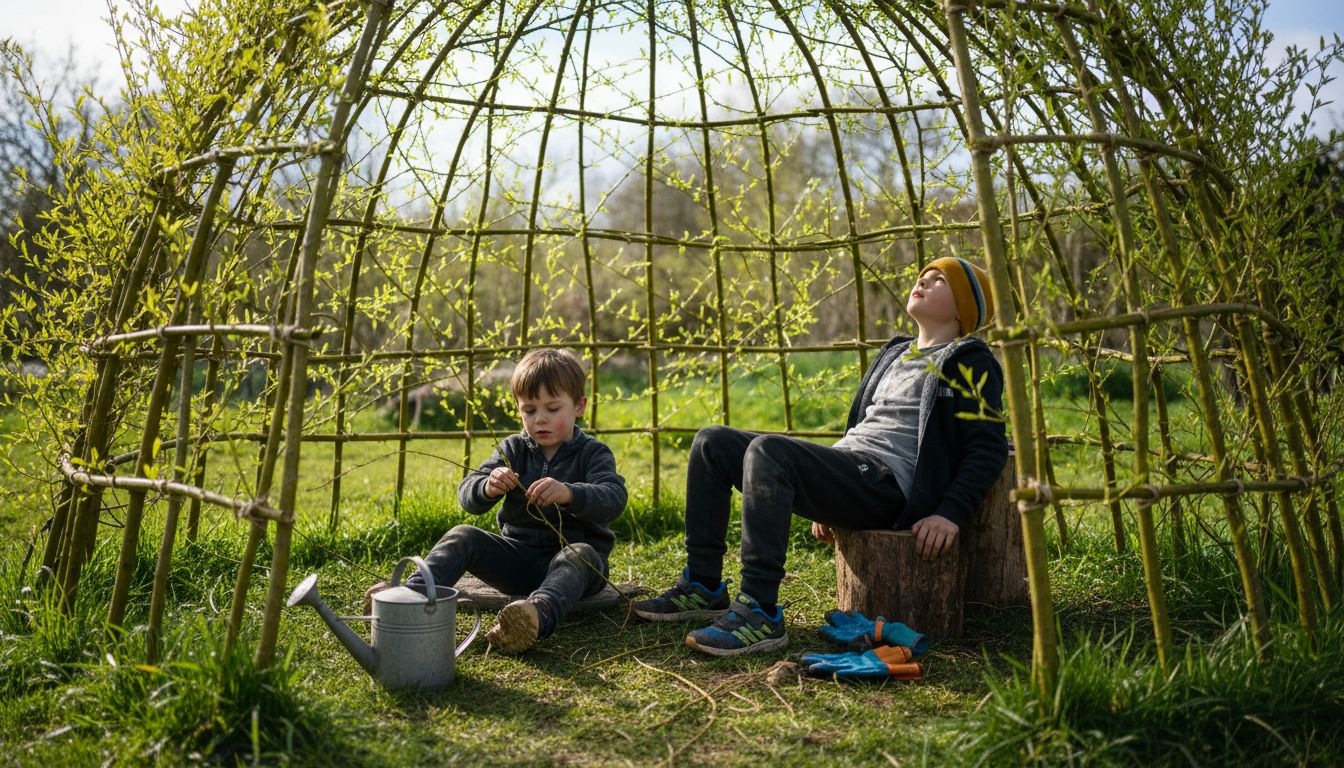
These structures offer unmatched sensory richness. Children experience budding leaves in spring, cooling shade in summer, golden colours in autumn, and stark architectural beauty in winter. The living walls attract birds, insects, and small wildlife, turning play into ongoing nature observation.
Natural wood designs using untreated timber blend seamlessly with garden landscapes. Horizontal log balance beams, vertical climbing poles, and simple A-frame structures require minimal cutting and assembly. Sand smooth any rough edges, but preserve the organic shapes and bark textures that make these pieces distinctive.
Both options support environmental learning naturally. Children witness growth cycles, seasonal adaptations, and ecological relationships firsthand. This direct engagement fosters lasting respect for nature that abstract lessons cannot achieve. Discover additional natural playground ideas for inspiration.
Maintenance stays minimal with proper initial setup. Willow requires occasional weaving of new growth and pruning of dead branches. Wood structures need annual checks for splinters, rot, or loose connections, plus sealing every two years to prevent weathering.
Pro Tip: Source willow cuttings from neighbours or local conservation groups in late winter. Many species root easily, and sharing cuttings builds community connections while saving money.
- Plant willow in moist, well-drained soil for best results
- Combine multiple species for varied leaf textures and colours
- Use locally sourced wood to reduce environmental impact
- Apply natural, child-safe oils instead of chemical sealants
- Involve children in planting and maintenance for deeper engagement
Creative DIY Projects to Boost Sensory and Motor Skills
DIY mud kitchens enhance sensory play and creativity, built from recycled materials within a weekend. Construct counters from old pallets, add salvaged sinks or bowls, and install hooks for utensils. Children mix mud pies, create nature soups, and experiment with textures using water, soil, sand, leaves, and pebbles.
These simple setups develop fine motor control through scooping, pouring, stirring, and moulding. Imaginative play flourishes as children recreate cooking scenarios, invent recipes, and serve pretend meals. The open-ended nature means engagement lasts for years as play evolves with developing abilities.
DIY water walls using recycled bottles provide interactive exploration of flow, gravity, and cause-and-effect. Mount bottles, funnels, tubing, and containers on a fence or freestanding frame. Children pour water at the top and observe how different configurations change speed, direction, and splash patterns.
Safety remains straightforward with water play. Use shallow containers to prevent drowning risks, ensure stable mounting of all components, and supervise young children constantly. Drain and dry elements after use to prevent mosquito breeding.
Canvas teepees or simple shade structures enhance comfort during summer play. These portable additions protect from sun exposure without requiring permanent installation. Look for more creative playground ideas to expand your options.
- Gather recycled pallets, wooden crates, old sinks, and kitchen utensils
- Sand all wood smooth and check for protruding nails or splinters
- Assemble counter height appropriate for your children’s reach
- Install shelving, hooks, and storage for play materials
- Add natural elements like stones, shells, and pinecones for varied textures
- Create designated water source and drainage area nearby
- Rotate materials seasonally to maintain fresh interest
- Use non-toxic wood stains if painting structures
- Position mud kitchens on level ground with good drainage
- Store fabric or cardboard elements indoors during wet weather
- Replace worn utensils and containers as needed
- Encourage cleanup routines to teach responsibility
Age-Appropriate and Space-Smart Play Ideas
Multi-level play decks with climbing nets promote physical development and suit sloped or large yards. Older children aged seven and up tackle vertical challenges, developing strength, coordination, and confidence. Design platforms at varied heights connected by nets, ladders, or rope bridges for diverse movement patterns.
Compact climbing walls and balance beams fit small urban yards while supporting toddlers and young children. Wall-mounted panels occupy minimal ground space, and low beams placed over soft surfacing provide safe skill-building. These scaled-down options deliver physical challenge without requiring large footprints.
Backyard zip lines offer thrilling experiences for children aged eight and older when properly installed with adult supervision. Ensure adequate run length, proper tensioning, secure anchoring to structural posts or mature trees, and safe landing zones with impact-absorbing surfacing. Always check weight limits and inspect hardware before each use.
Safety requirements differ significantly by age group. Toddlers need enclosed spaces, soft landings, and constant supervision. School-age children handle moderate heights and more complex apparatus. Teenagers seek genuine physical challenges that respect their capabilities while maintaining appropriate risk management. Browse space-smart backyard ideas for compact solutions.
Pro Tip: Install adjustable features like movable climbing holds or repositionable balance beams. These adaptations keep play engaging as skills develop without requiring entirely new structures.
| Play Idea | Best Age | Space Needed | Key Features | Safety Notes |
|---|---|---|---|---|
| Mud kitchen | 2-8 years | 2x2 metres | Sensory exploration, imaginative play | Non-toxic materials, supervision for toddlers |
| Willow playhouse | 3-10 years | 3x3 metres | Nature connection, year-round interest | Prune regularly, check for sharp branches |
| Compact climbing wall | 3-8 years | 1x2 metres | Vertical space use, motor skills | Soft surfacing, secure mounting |
| Multi-level deck | 7+ years | 4x4 metres minimum | Physical challenge, varied activities | Proper railings, stable construction |
| Zip line | 8+ years | 15 metres run | Thrilling experience, confidence building | Adult supervision, regular inspections |
- Match equipment height to developmental readiness
- Provide age-appropriate challenges without excessive risk
- Create separate zones for different age groups in shared spaces
- Update safety features as children grow and abilities change
- Supervise mixed-age play to prevent younger children attempting advanced features
Safety and Maintenance: Ensuring Durability and Child Safety
Rubber mulch and tiles reduce playground injuries by up to 30% compared to wood chips or gravel. Install adequate depth under climbing structures, swings, and slides according to fall height specifications. This impact-absorbing layer cushions tumbles and prevents serious head injuries.
Natural wood structures require annual sealing or staining to prevent rot, splinters, and weather damage. Choose non-toxic, water-based products safe for children who will inevitably touch and mouth surfaces. Inspect connections, fasteners, and support posts every spring before heavy use begins.
Routine cleanups and seasonal checks prolong structure life while maintaining safety standards. Look for loose bolts, cracked wood, frayed ropes, rust, or sharp edges. Address minor issues immediately before they become hazardous. Remove debris, trim overhanging branches, and refresh surfacing materials as needed.
Eco-friendly maintenance practices align with sustainability values many European families prioritize. Use natural oils like linseed or tung oil instead of chemical sealants. Choose recycled rubber surfacing over virgin materials. Compost plant trimmings and wood chips from willow maintenance. Find more safe outdoor play tips for comprehensive guidance.
Inspect play areas at minimum twice yearly, ideally in early spring and late autumn. Document findings with photos and maintain repair records. This systematic approach catches deterioration early and demonstrates responsible supervision should accidents occur.
Pro Tip: Create a simple inspection checklist laminated for outdoor use. Assign specific family members to complete checks monthly during peak play season, making safety a shared responsibility.
- Tighten all bolts and fasteners quarterly
- Sand smooth any new splinters immediately
- Replace worn rope or netting before failure occurs
- Keep surfacing materials at proper depth
- Remove hazards like broken glass, sharp stones, or toxic plants
- Store portable elements indoors during extreme weather
- Document all maintenance and repairs with dated records
Budget, Accessibility, and Environmental Impact
Over 20 DIY backyard play projects use inexpensive recycled materials, achievable within a weekend. Pallets, reclaimed timber, old tyres, and repurposed household items create engaging play spaces for minimal cost. Community salvage yards, online marketplaces, and neighbourhood sharing networks provide free or cheap materials.
Recycled materials minimize environmental impact while remaining widely accessible across Europe. Reusing existing resources diverts waste from landfills, reduces manufacturing demand, and teaches children about sustainability through direct example. These projects demonstrate that creativity matters more than spending.
Budget constraints guide realistic prioritization between project complexity and available resources. A simple mud kitchen costs under €50 using scavenged materials, while an elaborate multi-level deck might require €500-€1000 in lumber and hardware. Assess your financial comfort zone honestly before committing.
Localizing material sourcing reduces transportation emissions and supports regional economies. Many councils offer free wood chips from tree maintenance, farmers provide straw bales for obstacles courses, and garden centres discount damaged plants perfect for living structures. Explore eco-friendly playhouse ideas for sustainable options.
Pro Tip: Join local parenting groups or online community forums where families share leftover materials from completed projects. This circular economy approach saves money while building helpful neighbourhood connections.
| Project | Estimated Cost | Primary Materials | DIY Ease | Environmental Impact |
|---|---|---|---|---|
| Mud kitchen | €30-€80 | Recycled pallets, salvaged sinks | Easy | Very low, reuses waste |
| Willow playhouse | €20-€50 | Living willow cuttings, twine | Moderate | Carbon positive, living structure |
| Water wall | €15-€40 | Recycled bottles, tubing | Easy | Minimal, repurposes plastics |
| Balance beams | €40-€100 | Reclaimed timber logs | Moderate | Low, uses existing wood |
| Climbing wall | €100-€200 | Plywood, climbing holds | Moderate | Medium, new materials needed |
| Zip line | €150-€400 | Cable, trolley, hardware | Difficult | Medium, specialized equipment |
- Check construction sites for usable offcuts and discards
- Ask furniture shops for packaging crates and pallets
- Collect fallen branches after storms for natural elements
- Trade skills with neighbours for materials or labour
- Start small and expand projects over multiple seasons
Seasonal Adaptability of Outdoor Play Spaces
Incorporate removable tents and portable water play elements to adapt backyard spaces as weather changes throughout the year. Canvas teepees provide shade during summer heat, then store compactly indoors during winter. Water tables and splash features move easily, preventing ice damage and allowing flexible seasonal use.
Weather-resistant materials and protective covers extend structure durability across European climates. Treat wood with natural oils before autumn rains, cover sandboxes to prevent waterlogging, and secure loose elements before winter storms. These simple preparations maintain safety and reduce repair costs.
Portable water walls and removable shade tents extend outdoor play by up to 6 months annually. Spring and autumn become viable play seasons when weather protection and quick setup allow spontaneous outdoor time. This flexibility maximizes your investment and encourages year-round nature connection.
Plan for quick assembly and disassembly from the design phase. Choose lightweight materials, use hook-and-eye fasteners instead of permanent screws, and design modular components that stack efficiently for storage. This approach maintains backyard aesthetics during off-seasons while preserving play elements.
Seasonal care routines boost safety and engagement during colder or rainy months. Refresh surfacing materials compacted by autumn rains, check that drainage channels clear properly, and ensure structures remain stable after ground freeze-thaw cycles. Consider seasonal play adaptations for year-round ideas.
Pro Tip: Rotate play elements every three months to maintain novelty and interest. Store some features while introducing others, creating fresh excitement without additional expense.
- Use rust-proof hardware for permanent fixtures
- Apply fresh weatherproofing each autumn
- Store fabric elements indoors during prolonged wet periods
- Anchor lightweight structures against wind damage
- Create covered areas for rainy day play
- Plan indoor-outdoor transition spaces
- Schedule seasonal deep cleans and inspections
Summary Comparison and Situational Recommendations
User ratings show mud kitchens top creativity and motor skill development, willow playhouses excel in nature education, and zip lines offer peak thrill challenge with over 30% rating differences between categories. These distinct strengths help families match projects to their specific priorities and circumstances.
Small yards with toddlers benefit most from mud kitchens and compact climbing walls. Both options deliver rich developmental benefits within minimal footprints while remaining affordable and achievable for DIY novices. Safety requirements stay manageable, and engagement lasts through multiple developmental stages.
Large yards accommodating older children shine with multi-level decks and zip lines. These ambitious projects justify their higher costs and complexity through years of intensive use and genuine physical challenge. Proper installation creates neighbourhood gathering spots and memorable childhood experiences.
Nature-minded families prioritizing environmental connection should consider willow playhouses despite longer maturation timelines. The living structures provide unmatched sensory richness and ecological learning opportunities. Initial patience yields years of evolving, maintenance-light play spaces that deepen children’s relationship with the natural world.
Trade-offs exist between immediate gratification and long-term value. Quick-build projects like mud kitchens deliver instant results but may need refreshing after several years. Living structures require patience but mature into increasingly valuable assets. Balance your family’s temperament, timeline, and priorities when choosing. Review this comparison of DIY backyard ideas for detailed analysis.
| Criteria | Mud Kitchen | Willow Playhouse | Compact Climbing | Multi-Level Deck | Zip Line |
|---|---|---|---|---|---|
| Creativity (1-5) | 5 | 4 | 3 | 4 | 3 |
| Budget Friendly (1-5) | 5 | 4 | 3 | 2 | 1 |
| Space Efficiency (1-5) | 5 | 3 | 5 | 2 | 1 |
| Safety (1-5) | 5 | 4 | 4 | 3 | 2 |
| Nature Connection (1-5) | 4 | 5 | 2 | 3 | 2 |
| Best For | Toddlers, small yards | Nature-focused families | Urban gardens | Large yards, older kids | Adventurous children 8+ |
Discover Tools to Enhance Outdoor Creativity and Nature Connection
Your beautifully crafted backyard play space creates the perfect setting for deeper nature exploration. Kids’ cameras extend this learning by encouraging children to observe details, document discoveries, and share their outdoor adventures. Pairing physical play structures with observation tools creates comprehensive learning environments.
The Zoofamily designs products that bridge active play with environmental awareness. Our animal-themed cameras, walkie-talkies, and binoculars spark curiosity about wildlife while supporting the hands-on exploration your DIY projects encourage. Every purchase plants one tree, teaching children that their choices create positive environmental impact.
Discover how kids cameras benefits complement outdoor play by developing observation skills, patience, and artistic expression. Explore our creative outdoor play ideas for preschoolers to maximize your backyard’s learning potential. Together, physical play spaces and nature observation tools nurture well-rounded development and lasting environmental stewardship.
Frequently Asked Questions
Which DIY play projects are best for toddlers with limited backyard space?
Mud kitchens and compact climbing walls suit toddlers in small yards perfectly. Both stimulate sensory development and motor skills within minimal footprints, typically requiring just 2x2 metres. Ensure proper soft surfacing underneath climbing features and maintain constant supervision during water or mud play. These projects grow with developing abilities, remaining engaging for years as imaginative play evolves and physical skills advance.
How can I make my DIY backyard play areas safer on a tight budget?
Rubber mulch or tiles provide affordable impact protection that significantly reduces injury risk. Conduct weekly visual inspections for loose connections, splinters, or sharp edges, addressing issues immediately with basic tools. Choose non-toxic, eco-friendly materials like natural wood oils instead of chemical sealants. Simple vigilance and prompt repairs prevent most accidents without expensive professional services.
What are the best ways to adapt backyard play for different seasons?
Incorporate removable canvas tents for flexible sun and rain protection throughout the year. Select weather-resistant materials like treated wood and rust-proof hardware for permanent structures. Use protective covers over sandboxes and climbing features during prolonged wet periods. Rotate portable elements seasonally, storing some indoors while introducing others, to maintain fresh engagement and extend equipment lifespan across European climate variations.
Are natural materials like willow safe and durable for children’s playhouses?
Willow playhouses remain safe with proper construction and minimal seasonal maintenance. Living willow flexes rather than breaks, reducing injury risk compared to rigid materials. Structures mature fully within two growing seasons, requiring only occasional pruning of dead branches and weaving of new growth. The natural flexibility and ongoing development create uniquely engaging, sensory-rich environments that teach children about living systems and seasonal cycles.
How do I balance creativity with safety in backyard play design?
Start by establishing non-negotiable safety minimums like proper surfacing depth, secure anchoring, and age-appropriate heights. Within these parameters, encourage creative material choices, unconventional layouts, and child input on features. Natural elements like logs, stones, and plants add interest while meeting safety standards. Regular inspections ensure creative designs remain hazard-free, and involving children in safety checks teaches responsible risk assessment alongside imaginative play.