

Over 60 percent of parents say they want to make eco-friendly choices but feel unsure where to start. Choosing sustainable options matters because our daily habits shape the world our children will inherit. By understanding what truly makes a product or habit eco-friendly, families can make small but lasting changes that help the planet and set a powerful example for the next generation.
Table of Contents
- Defining Eco-Friendly Choices For Families
- Types Of Eco-Friendly Products And Actions
- Principles Of Sustainable Consumption At Home
- Common Pitfalls And Greenwashing Risks
- Practical Tips For Eco-Friendly Families
Key Takeaways
| Point | Details |
|---|---|
| Commitment to Eco-Friendly Living | Making intentional choices that reduce environmental harm can create a sustainable future for families. |
| Principles of Sustainable Consumption | Focus on reducing, reusing, repairing, and recycling to minimize waste and resource consumption. |
| Awareness of Greenwashing | Consumers should critically assess product claims to avoid being misled by companies that exploit environmental standards. |
| Engagement and Education | Involve children in eco-friendly practices to foster environmental responsibility and awareness from a young age. |
Defining Eco-Friendly Choices for Families
Making eco-friendly choices isn’t just a trend—it’s a commitment to protecting our planet and creating a sustainable future for our children. Ethical consumerism involves intentional purchasing decisions that support environmentally responsible products and practices, reducing negative impacts on our global ecosystem.
At its core, eco-friendly living means consciously selecting products, services, and lifestyle habits that minimise environmental harm. According to Library of Congress guides, green consumers prioritise sustainable options that demonstrate a meaningful commitment to environmental preservation. These choices can range from simple daily actions like reducing plastic use to more significant decisions about transportation, energy consumption, and household products.

For families wanting to embrace eco-friendly living, consider these foundational strategies:
-
Choose products with minimal packaging
-
Support local and sustainable businesses
-
Reduce single-use plastic consumption
-
Teach children about environmental responsibility
Even small changes can create substantial positive impact. Understanding eco-friendly routines can help families transition smoothly towards more sustainable practices, transforming individual actions into collective environmental progress.
Remember that eco-friendly choices are about progress, not perfection. Every mindful decision contributes to a healthier planet for future generations.
Types of Eco-Friendly Products and Actions
Eco-friendly products represent a powerful way for families to reduce their environmental footprint and make sustainable lifestyle choices. Global Green Building Council highlights several innovative products designed to minimise environmental impact, including reusable grocery bags, biodegradable trash bags, compostable cutlery, and stainless steel straws.
When considering eco-friendly actions, families can explore multiple categories of sustainable alternatives:
Kitchen and Dining
- Bamboo or metal reusable straws
- Glass food storage containers
- Cloth napkins instead of paper
- Compostable or biodegradable cutlery
Personal Care
- Bamboo toothbrushes
- Refillable soap dispensers
- Biodegradable cotton swabs
- Organic, plastic-free personal care products
Household Cleaning
- Concentrated cleaning solutions
- Microfibre cloths instead of disposable wipes
- Natural, non-toxic cleaning products
- Reusable cleaning tools
Parents can also make significant impacts by protecting the planet daily with their children, transforming eco-friendly choices into educational opportunities that teach environmental responsibility.
Remember that sustainable living isn’t about perfection—it’s about making consistent, mindful choices that collectively create meaningful environmental change.
Principles of Sustainable Consumption at Home
Sustainable consumption is more than a buzzword—it’s a fundamental approach to living that transforms how families interact with resources and the environment. Sustainable design focuses on creating living environments that dramatically reduce non-renewable resource consumption, minimize waste, and promote healthier living spaces.
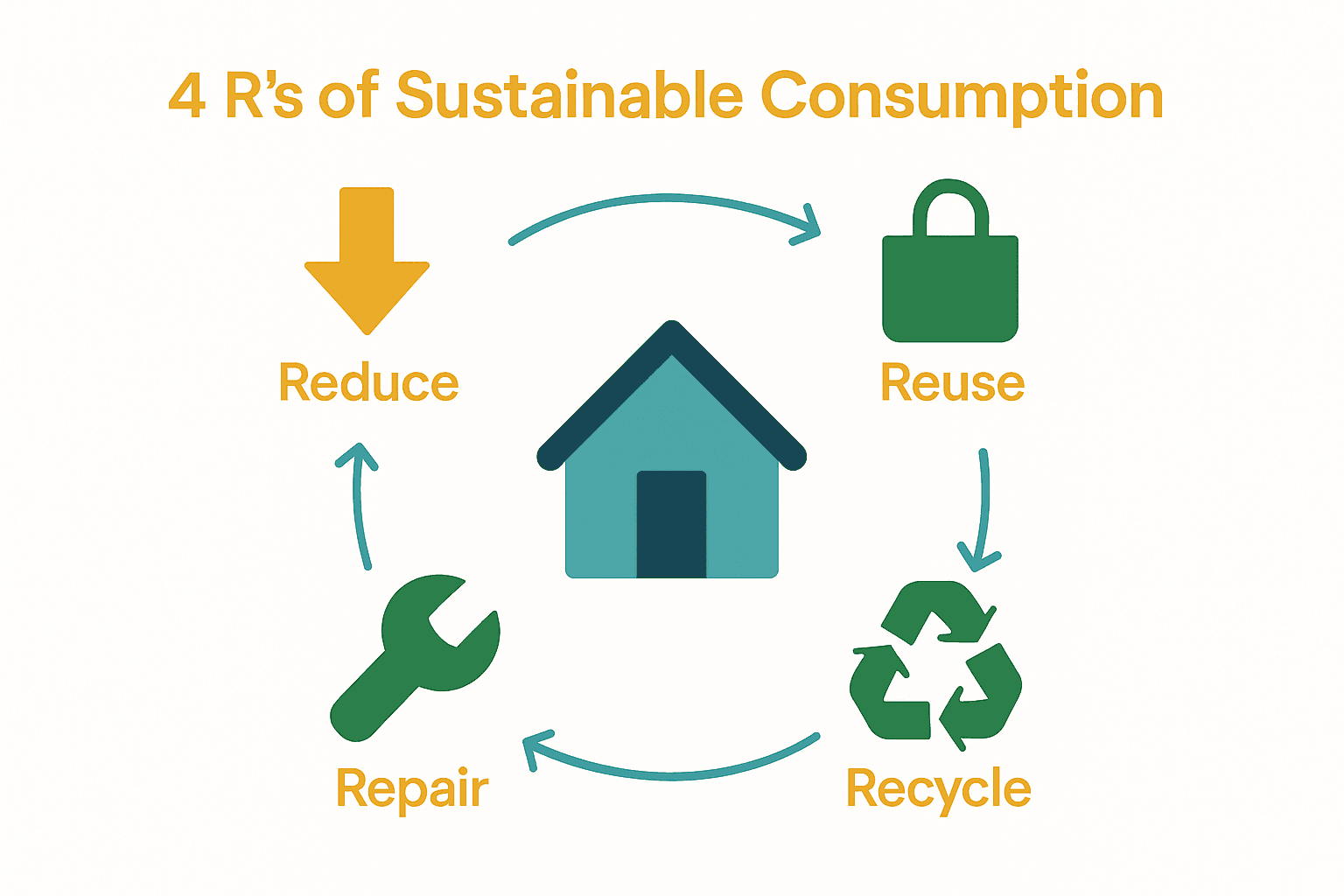
At the heart of sustainable consumption lies the circular economy principle. Circular economy philosophy emphasizes a revolutionary approach to resource management: sharing, reusing, repairing, and recycling materials to extend product lifecycles and significantly reduce waste. This approach challenges traditional linear consumption models and encourages families to think critically about their environmental impact.
Key principles of sustainable consumption include:
- Reduce: Minimize unnecessary purchases
- Reuse: Find multiple purposes for existing items
- Repair: Fix items instead of replacing them
- Recycle: Properly dispose of materials that can be transformed
- Rethink: Challenge existing consumption habits
Families looking to implement these principles can start with simple strategies like exploring eco-friendly cleaning tips that reduce chemical waste and promote more sustainable household practices.
Remember, sustainable consumption isn’t about perfection—it’s about making intentional choices that collectively create meaningful environmental change. Every small decision counts in building a more responsible and environmentally conscious household.
Common Pitfalls and Greenwashing Risks
Ethical consumerism challenges families to make responsible purchasing decisions, but navigating the world of eco-friendly products isn’t always straightforward. Greenwashing has become a significant obstacle for conscientious consumers, with companies often using misleading marketing tactics to appear more environmentally friendly than they truly are.
According to Library of Congress guides, green consumers must develop critical skills to identify genuine sustainable practices. The most common greenwashing tactics include:
- Vague Language: Using terms like “natural” or “eco-friendly” without substantive proof
- Misleading Imagery: Green packaging or nature-inspired designs that don’t reflect actual environmental practices
- Partial Truths: Highlighting one environmentally friendly aspect while ignoring broader environmental impacts
- False Certifications: Creating fake or meaningless environmental badges
- Hidden Trade-offs: Promoting one green feature while overlooking significant environmental damages
To protect themselves, consumers should:
- Research brand sustainability reports
- Look for transparent, specific environmental claims
- Check for legitimate third-party certifications
- Investigate the entire product lifecycle
Parents can further educate themselves by exploring eco-friendly cleaning tips that provide practical insights into genuine sustainable practices.
Remember, true sustainability requires more than clever marketing—it demands critical thinking, thorough research, and a commitment to understanding the real environmental impact of our choices.
Practical Tips for Eco-Friendly Families
Global Green Building Council emphasizes that eco-friendly living starts with simple, intentional choices. Sustainable family practices aren’t about perfection, but about making consistent, meaningful changes that reduce environmental impact and inspire the next generation.
Kitchen and Shopping Strategies:
- Use reusable grocery bags instead of plastic
- Invest in glass or stainless steel food storage
- Buy in bulk to reduce packaging waste
- Choose local, seasonal produce
- Bring refillable containers for takeaway meals
Home and Lifestyle Modifications:
- Implement a family recycling system
- Use energy-efficient appliances
- Reduce water consumption
- Create a small home garden
- Encourage children to participate in eco-friendly activities
Family Education and Engagement:
- Discuss environmental impact together
- Watch nature documentaries
- Participate in local clean-up events
- Track and celebrate your family’s sustainability achievements
Parents seeking deeper insights can explore sustainable living strategies for families, transforming eco-consciousness into a shared family adventure.
Remember: Small steps create significant change. Every eco-friendly choice is a lesson for your children and a contribution to our planet’s future.
Inspire Your Family’s Eco-Friendly Journey with The Zoofamily
Making eco-friendly choices can feel challenging when trying to balance daily life with meaningful sustainability goals. This article highlights the importance of sustainable consumption and mindful purchasing as essential steps to protect the planet for future generations. With an emphasis on reducing waste, avoiding greenwashing, and educating children, families seek tools that engage young minds while supporting environmental responsibility.
At The Zoofamily, we understand these challenges deeply. That is why we designed our kids’ cameras, walkie-talkies, and binoculars to not only spark curiosity about nature but also to foster lasting connections with the environment. Each purchase plants a tree, making your family’s eco-friendly habits truly come alive. Discover how your family can take small yet powerful steps towards sustainability by exploring our collection and learning how to nurture your children’s love for the planet.
Explore sustainable living strategies for families to see practical ways of turning eco-consciousness into an everyday adventure.
Make a positive impact today. Equip your children with tools that cultivate creativity and respect for nature. Visit The Zoofamily now to join a community committed to restoring natural beauty one tree and one family at a time.
Frequently Asked Questions
What are some simple eco-friendly practices families can adopt?
Families can start by choosing products with minimal packaging, reducing single-use plastics, supporting local and sustainable businesses, and teaching their children about environmental responsibility.
How can families ensure the products they purchase are truly eco-friendly?
To ensure products are genuinely eco-friendly, families should research brands, look for transparent environmental claims, check for legitimate third-party certifications, and be cautious of vague language and misleading imagery in marketing.
What principles guide sustainable consumption at home?
The key principles of sustainable consumption include reducing unnecessary purchases, reusing items, repairing instead of replacing, recycling appropriately, and rethinking consumption habits for a reduced environmental impact.
How can families manage the risk of greenwashing when choosing eco-friendly products?
Families can manage the risk of greenwashing by educating themselves on the environmental impact of products, reading sustainability reports, verifying third-party certifications, and staying informed about the entire product lifecycle.
Recommended
- Understanding Eco Friendly Routines for Modern Families – The Zoofamily
- Eco Friendly Cleaning Tips For Busy European Mums – The Zoofamily
- Comment protéger la planète au quotidien avec ses enfants – The Zoofamily
- Comment faire compost maison : Guide pratique étape par étape – The Zoofamily
- Nachhaltig Mit Batterien Umgehen: Der Komplettguide - accu.blog
- Cozee Bay - 10 Essential Sustainable Living Tips for Every Homeowner