

Many parents hand their smartphones to children for photography, assuming it’s the safest option. However, smartphones lack the durability and child-appropriate features needed for outdoor exploration, where drops, water exposure, and rough handling are inevitable. Specialised kids’ cameras offer robust designs that withstand nature adventures whilst teaching valuable skills like patience, observation, and creativity. This guide covers choosing safe equipment, following physical safety protocols, complying with EU privacy laws, and introducing ethical photography practices that protect both your child and the wildlife they photograph.
Table of Contents
- Key takeaways
- Choosing safe cameras for kids: durability and usability
- Physical safety and responsible camera use outdoors
- Privacy and safeguarding: complying with EU laws for child photography
- Educational activities and ethical photography for kids in nature
- Explore child-friendly cameras and resources at The Zoofamily
- Frequently asked questions
Key Takeaways
| Point | Details |
|---|---|
| Durable kid cameras | Kid friendly cameras provide shockproof casings and waterproof seals that smartphones cannot match for outdoor use. |
| Themed photo activities | Introduce short themed photo tasks to keep children engaged while teaching composition and observation. |
| EU privacy compliance | Obtain parental consent and follow EU data protection rules when capturing images of children. |
| Ethical photography | Respect wildlife and other people by avoiding disturbance and following local guidelines. |
Choosing safe cameras for kids: durability and usability
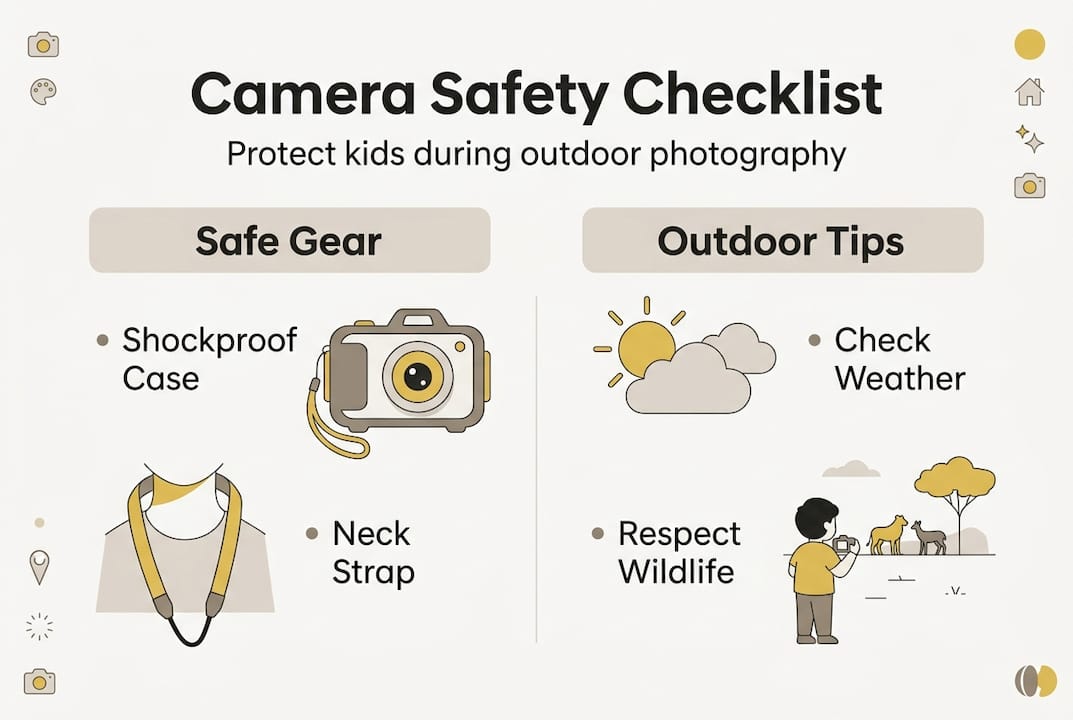
Selecting the right camera transforms photography from a fragile, frustrating experience into an empowering creative activity. Kid-specific cameras prioritise safety features that smartphones simply cannot match. Shockproof casings protect internal components when dropped on rocks or paths. Waterproof seals prevent damage during rainy hikes or accidental puddle encounters. Lightweight designs reduce strain on small hands and necks during extended outdoor sessions.
Technical specifications matter less than durability for young photographers. Most quality kids’ cameras offer 5 to 26 megapixels, which provides sufficient resolution for learning composition and capturing nature details. Simple button layouts with large, clearly labelled controls help children aged 5 to 12 operate cameras independently without constant adult intervention. Battery life around 150 minutes supports typical outdoor exploration sessions without requiring backup power sources.
Pro tip: Test the camera’s grip and button placement with your child before purchasing to ensure they can hold it comfortably and reach all controls without awkward hand positions that lead to drops.
Three standout options demonstrate these safety principles effectively:
- myFirst Camera 10: Combines 26MP resolution with waterproof construction and instant print capability, letting children see results immediately and reinforcing the connection between action and outcome
- Kidywolf Kidycam: Features robust shockproof design with simplified interface perfect for younger children just starting their photography journey
- Explorer Cam: Balances durability with advanced features like burst mode and basic editing functions for older children ready to develop technical skills
Instant print features deserve special mention for their educational value. Children develop stronger understanding of cause and effect when they immediately see physical prints of their compositions. This tangible feedback loop encourages experimentation with angles, lighting, and framing far more effectively than digital screens alone. The novelty of holding a physical photograph also maintains engagement during longer nature walks when attention might otherwise wander.
| Camera Model | Resolution | Key Safety Features | Ideal Age Range | Battery Life |
|---|---|---|---|---|
| myFirst Camera 10 | 26MP | Waterproof, instant print | 6-12 years | 150 minutes |
| Kidywolf Kidycam | 8MP | Shockproof, simplified controls | 5-8 years | 120 minutes |
| Explorer Cam | 12MP | Durable casing, burst mode | 8-12 years | 180 minutes |
Durability extends beyond physical construction to include intuitive operation that prevents user error. Cameras with automatic settings reduce the chance children will accidentally delete photos or change critical configurations. Wrist straps and neck lanyards with breakaway clasps provide security without creating strangulation hazards if caught on branches during woodland exploration.
Physical safety and responsible camera use outdoors
Technical camera settings directly impact both image quality and child safety during outdoor photography sessions. Fast shutter speeds above 1/250 second freeze movement from running, jumping, or wildlife action without motion blur. This setting proves essential when children photograph insects, birds, or even their siblings during active play. Slower shutter speeds force children to hold cameras steadier for longer periods, increasing fatigue and the likelihood of trips or collisions with obstacles.
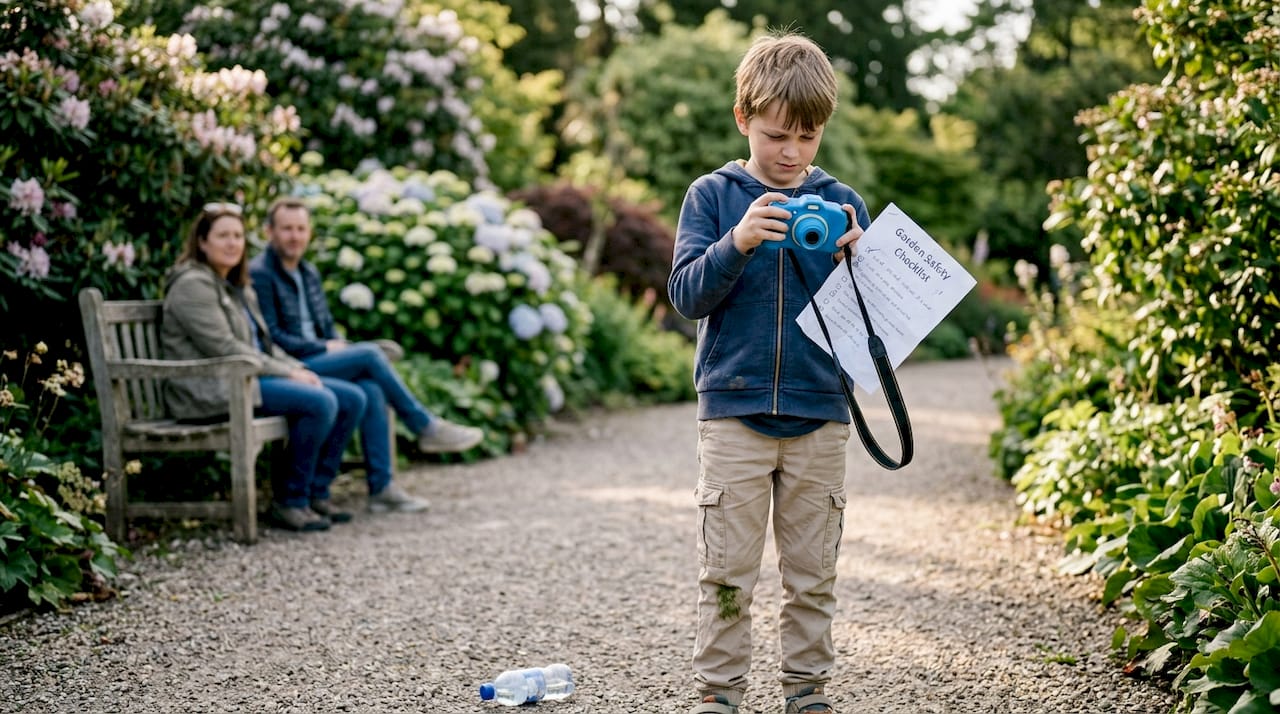
Shooting at eye level prevents the neck strain and balance issues that occur when children crane cameras upward or bend awkwardly downward. Encourage your child to crouch or sit when photographing ground-level subjects like flowers or insects rather than tilting the camera sharply. This practice also improves composition by creating more engaging perspectives that place viewers directly into the scene rather than looking down from an adult’s height.
Flash photography poses genuine risks that many parents overlook. Direct flash can temporarily impair children’s developing vision, particularly in dim woodland settings where pupils dilate widely. Wildlife photography ethics also prohibit flash use, as sudden bright light disorients animals and may trigger defensive behaviours or cause them to abandon nests. Teach children to rely on natural light by scheduling photography during golden hours or using reflectors to bounce existing light onto subjects.
Pro tip: Create a simple safety checklist your child reviews before each photography session covering equipment check, weather-appropriate clothing, established boundaries, and the buddy system for staying within sight.
Supervision requirements vary by age and environment. Children under 8 need constant visual contact, particularly near water, steep terrain, or areas with vehicle traffic. A dedicated spotter allows the photographing child to focus on composition whilst an adult monitors surroundings for hazards. Older children aged 9 to 12 can work more independently in familiar, enclosed spaces like gardens or parks, but should still check in at predetermined intervals.
Equipment handling education prevents both accidents and damaged gear:
- Always use wrist straps or neck lanyards with proper weight distribution
- Place cameras in padded cases immediately after shooting rather than setting them on rocks or ground
- Keep lenses pointed away from direct sunlight when not actively photographing to prevent sensor damage
- Establish designated camera-free zones near water edges, climbing areas, or anywhere requiring both hands for safety
Respecting wildlife distances protects both children and animals. Zoom lenses allow close-up shots without physical approach that might provoke defensive reactions from parent birds protecting nests or mammals feeling cornered. Teach children to observe animal behaviour for signs of stress like vocalisation changes, aggressive postures, or retreat attempts. If an animal alters its behaviour due to human presence, you’re too close. For more guidance on teaching these principles, explore photography ethics for kids and this comprehensive kids photography guide.
Privacy and safeguarding: complying with EU laws for child photography
European data protection regulations establish clear requirements for photographing and sharing images of children. Parental consent is mandatory before photographing children under 16 according to EU GDPR and German DSGVO frameworks. This applies not only to your own children but to any minors who might appear in background shots during group activities, school events, or public spaces. Verbal permission suffices for private family use, but written consent becomes necessary when sharing images through any digital platform or with third parties.
Personal devices create vulnerability because they typically sync photos automatically to cloud services with varying privacy protections. Dedicated kids’ cameras without internet connectivity eliminate this data leakage risk entirely. If you must transfer images from a connected device, disable automatic uploads and use direct cable transfers to computers with robust security measures rather than wireless methods that broadcast data.
Metadata embedded in digital photographs reveals far more than most parents realise:
- GPS coordinates pinpointing exact locations where photos were taken
- Timestamps establishing patterns of when children visit specific places
- Camera model and settings that can fingerprint specific devices
- Sometimes even photographer names if cameras are registered to accounts
Removing this metadata before sharing images online protects children from location tracking and pattern analysis. Free tools like ExifTool or built-in options in photo editing software strip this information whilst preserving image quality. Many parents overlook this step when posting to social media, inadvertently broadcasting their children’s routines and frequented locations.
Low-resolution images provide additional protection by making faces less suitable for facial recognition systems whilst still allowing friends and family to enjoy shared moments. Resize images to 800 pixels on the longest edge before posting, which maintains visual appeal on screens whilst degrading the biometric data AI systems require for reliable identification. Never include children’s full names in captions, filenames, or image descriptions, using only first names or nicknames that don’t connect to other identifying information.
Artificial intelligence misuse presents emerging risks that demand vigilance. Sophisticated algorithms can now generate convincing fake images by combining features from multiple photographs. Grooming attempts increasingly involve manipulated images that appear to show children in compromising situations they never experienced. Limiting the volume and detail of publicly shared photographs reduces the source material available for such manipulation.
School and organisational photography requires explicit parent approvals before any image capture or distribution. Many institutions now use opt-in consent forms that specify exactly how images will be used, stored, and eventually deleted. Review these agreements carefully, questioning any clauses that grant indefinite usage rights or allow third-party access. You maintain the right to withdraw consent at any time, requiring removal of your child’s images from all platforms and materials. For comprehensive guidance on these ethical considerations, visit our photography ethics and privacy resource.
Educational activities and ethical photography for kids in nature
Structured photography activities transform random picture-taking into purposeful learning experiences that develop observation skills and creative thinking. Photo hunts with specific targets focus children’s attention whilst teaching them to notice details they might otherwise overlook. Challenge your child to photograph five different leaf shapes, three examples of symmetry in nature, or four distinct shades of green within a single garden. These constraints encourage problem-solving as children figure out how to frame subjects effectively and distinguish subtle variations.
Composition fundamentals become accessible when introduced through simple, memorable rules. The rule of thirds divides the frame into a 3x3 grid, placing subjects at intersection points rather than dead centre. This technique creates more dynamic, professional-looking images that draw viewers’ eyes through the photograph. Demonstrate by showing comparison shots of the same subject centred versus positioned according to the rule, letting your child identify which feels more engaging.
Pro tip: Use tape or a dry-erase marker to draw a rule of thirds grid directly on your child’s camera screen protector, providing a constant visual reference until the principle becomes intuitive.
Technical settings unlock different creative possibilities:
- Burst mode captures multiple frames per second, essential for photographing insects in flight, birds taking off, or siblings mid-jump, ensuring at least one frame catches the peak action
- Golden hour lighting during the first hour after sunrise and last hour before sunset provides warm, soft illumination that flatters subjects and creates dramatic shadows without harsh contrast
- Macro photography reveals intricate details invisible to casual observation, transforming ordinary beetles, flower stamens, or bark textures into abstract art that sparks curiosity about biological structures
Session duration significantly impacts learning outcomes and enjoyment. Children under 7 maintain focus for approximately 30 to 45 minutes before fatigue degrades both attention and behaviour. Ages 8 to 12 can extend to 60 minutes with appropriate breaks. Watch for signs of declining engagement like repetitive shots without thought, complaints about being tired, or reduced care in handling equipment. Ending sessions whilst children still feel enthusiastic ensures they associate photography with positive experiences rather than exhausting obligations.
Patience and observation represent photography’s most valuable transferable skills. Waiting for a butterfly to land or a bird to emerge from foliage teaches children that worthwhile results often require stillness and attention. This contrasts sharply with the instant gratification dominating much of modern childhood, building capacity for delayed rewards and sustained focus. Discuss what your child notices whilst waiting, encouraging verbal articulation of sensory details that deepen their connection to natural environments.
| Activity Type | Duration | Skills Developed | Ideal Age |
|---|---|---|---|
| Colour photo hunt | 20-30 min | Observation, colour recognition | 5-7 years |
| Rule of thirds practice | 30-45 min | Composition, spatial awareness | 7-10 years |
| Macro exploration | 45-60 min | Patience, detail focus, biology interest | 8-12 years |
| Golden hour landscapes | 45-60 min | Lighting awareness, timing, planning | 9-12 years |
Ethical imperatives must accompany every photography lesson to ensure children respect the subjects they document. Never touch or feed wildlife, as human contact transmits diseases, alters natural behaviours, and habituates animals to people in ways that endanger both species. Maintain distances that allow animals to continue normal activities without awareness of observers. If photographing nests or dens, take only one or two quick shots from existing paths rather than approaching closely or visiting repeatedly, which may cause parents to abandon vulnerable young.
Habitat protection extends beyond avoiding obvious damage like picking flowers or disturbing nests. Teach children to stay on established trails, as repeated foot traffic compacts soil and damages root systems even when no visible harm appears immediately. Explain that every organism plays a role in ecosystem health, so even photographing “boring” subjects like fungi, dead wood, or insects contributes to understanding nature’s complexity. For more educational photo tips for kids and inspiration from professionals, explore these wildlife photography tips.
Explore child-friendly cameras and resources at The Zoofamily
Transitioning from photography education to the right equipment and ongoing support helps your family maintain momentum in developing these valuable skills. The Zoofamily specialises in kid-safe cameras engineered specifically for nature exploration, combining the durability and simplicity discussed throughout this guide with designs that spark children’s curiosity about wildlife. Every camera sold plants one tree, connecting your child’s creative development directly to habitat restoration efforts that protect the subjects they photograph.

Beyond equipment, The Zoofamily website provides expert guides covering everything from photography ethics to age-appropriate teaching methods that make learning feel like play. Whether you’re selecting your child’s first camera or looking for fresh activity ideas to maintain engagement, you’ll find practical resources tailored to parents navigating the intersection of technology, creativity, and outdoor education. Browse kid-friendly camera options designed with input from parents and educators who understand what actually works during real-world nature adventures.
Frequently asked questions
What is the safest type of camera for young children to use?
Durable, waterproof, lightweight cameras with simplified controls designed specifically for children aged 5 to 12 provide the safest option for outdoor photography. These devices withstand drops, water exposure, and rough handling that would destroy smartphones or adult cameras. Look for shockproof construction, wrist straps with breakaway clasps, and intuitive button layouts that children can operate without frustration.
How can parents protect their children’s privacy when sharing photos?
Always obtain parental consent before sharing any images containing children under 16, as required by EU GDPR regulations. Remove metadata including GPS coordinates and timestamps using free tools like ExifTool before posting online. Use low-resolution versions around 800 pixels wide and avoid including children’s full names in captions or filenames to prevent identification by facial recognition systems.
What are some fun and educational photography activities for kids?
Organise photo hunts focusing on specific targets like different leaf shapes, colour variations, or examples of symmetry in nature to develop observation skills. Teach the rule of thirds composition by having children place subjects at grid intersection points rather than centre frame. Introduce macro photography to explore tiny details like insect anatomy or flower structures that spark curiosity about biology and natural design.
How long should photography sessions last for young children?
Children under 7 typically maintain focus and enthusiasm for 30 to 45 minutes before fatigue affects both attention and behaviour. Ages 8 to 12 can extend sessions to 60 minutes with appropriate breaks for water and rest. End sessions whilst children still feel engaged rather than pushing until exhaustion, which creates negative associations with photography and outdoor exploration.
What ethical guidelines should children follow when photographing wildlife?
Teach children to never touch or feed animals, as human contact transmits diseases and alters natural behaviours that endanger both species. Maintain distances that allow wildlife to continue normal activities without awareness of observers, using zoom lenses for close-up shots. Stay on established trails to avoid habitat damage from repeated foot traffic, and limit visits to sensitive areas like nests to prevent parents from abandoning vulnerable young.