

Teaching children to work as a team sounds simple but it is one of the hardest skills to nurture at home. Most people focus on chores, but the real secret is how you observe their interactions. Active listening and open communication are the hidden strengths that mark genuine teamwork. Spotting these quiet moments can completely change the way your children develop social confidence.
Table of Contents
- Step 1: Assess Your Children’s Current Teamwork Skills
- Step 2: Create Opportunities for Group Activities
- Step 3: Establish Clear Roles and Responsibilities
- Step 4: Encourage Open Communication Among Kids
- Step 5: Celebrate Team Achievements Together
Quick Summary
| Key Point | Explanation |
|---|---|
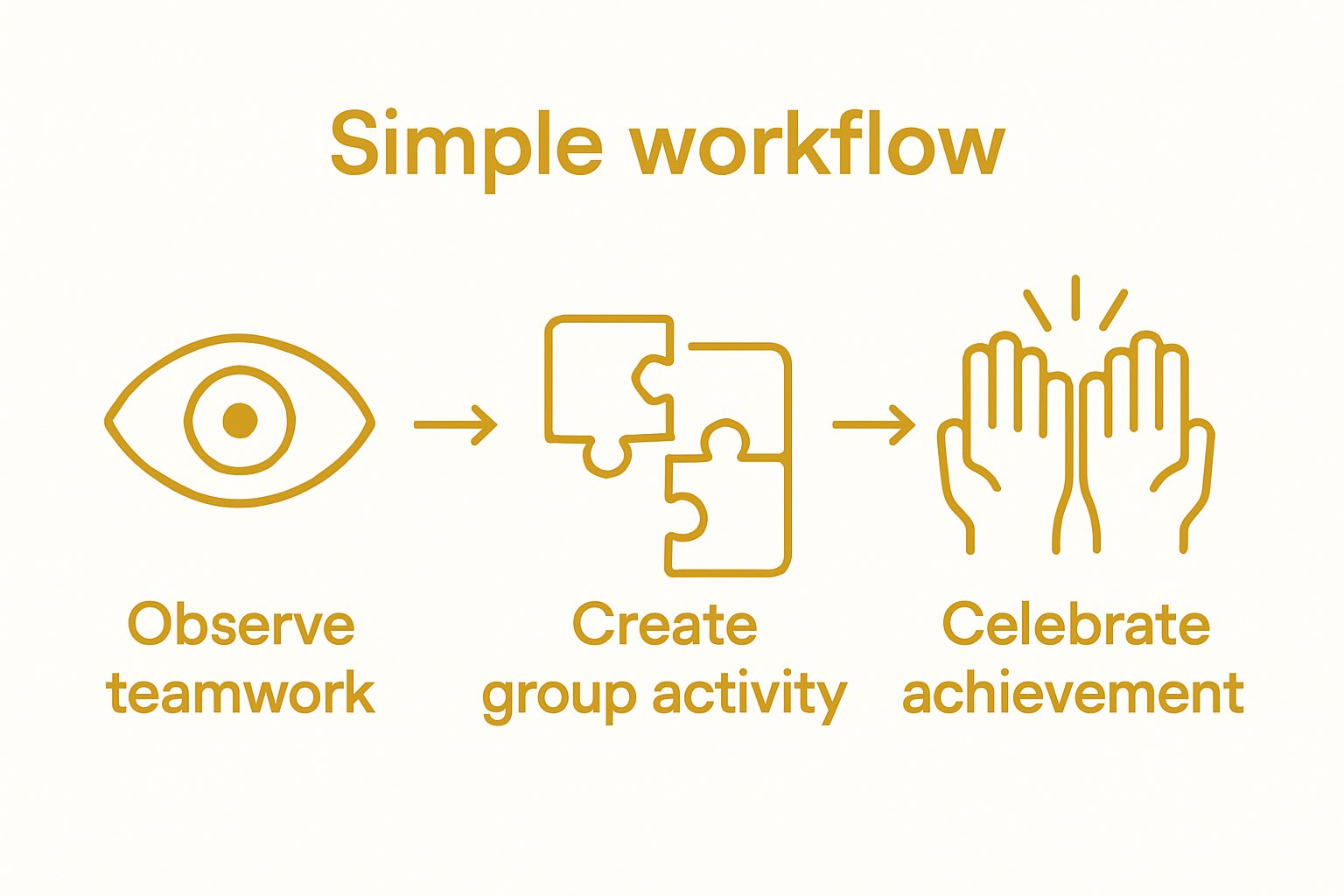
| 1. Observe children’s teamwork behaviours | Assess their negotiation, communication, and problem-solving skills through structured activities and observation. |
| 2. Create engaging group activities | Choose activities that encourage cooperation, such as board games or outdoor challenges, to develop teamwork in a fun way. |
| 3. Define clear roles and responsibilities | Assign roles based on each child’s strengths and interests, allowing them to feel valued and integral to the group’s success. |
| 4. Foster open communication | Model respectful dialogue and create a safe environment for children to express feelings, enhancing their collaborative efforts. |
| 5. Celebrate teamwork achievements | Recognise both individual and collective contributions with meaningful celebrations to boost motivation and reinforce positive behaviour. |
Step 1: Assess Your Children’s Current Teamwork Skills
Understanding your children’s existing teamwork skills forms the critical foundation for nurturing their collaborative abilities. Think of this assessment as creating a personalised roadmap for their social development. Observation is your primary tool when evaluating how children interact, communicate, and solve problems together.
Start by creating deliberate situations that reveal their natural teamwork tendencies. This might involve setting up group activities where they must collaborate to achieve a shared goal. Watch carefully how they negotiate, share resources, listen to each other, and distribute tasks. Some children naturally gravitate towards leadership roles, while others prefer supporting positions. Neither approach is inherently better - understanding their unique interaction styles is key.
Children typically demonstrate teamwork skills through specific behavioural indicators. Look for signs like active listening, where they genuinely hear and acknowledge their peers’ ideas. Notice whether they can compromise, share credit for achievements, and handle minor conflicts constructively. Pay attention to verbal and non-verbal communication signals: Do they make eye contact? Do they use encouraging language? Can they accept feedback without becoming defensive?
Making Learning Fun: Engaging Activities for Your Kids can provide additional insights into creating assessment scenarios. Consider structured observation moments like:
- Board game sessions requiring cooperative strategy
- Group art or building projects
- Team problem-solving challenges
- Collaborative household chores
Remember that assessment isn’t about judging your children but understanding their current capabilities. Each child develops social skills at their own pace. Your role is to create supportive environments that gently expand their teamwork capabilities, celebrating small improvements and maintaining a positive, encouraging atmosphere.
Step 2: Create Opportunities for Group Activities
Creating strategic group activities transforms theoretical teamwork understanding into practical skill development. Group activities are the training ground where children learn collaboration’s nuanced art, moving beyond individual capabilities towards collective achievement.
Designing effective group experiences requires thoughtful planning and intentional structure. Consider activities that naturally encourage interaction without feeling forced or artificial. Board games represent an excellent starting point, as they inherently require communication, strategy sharing, and mutual decision making. Choose games with cooperative mechanics where players win or lose together, reinforcing the concept that collective success matters more than individual performance.
Outdoor and physical activities provide another robust platform for teamwork skill development. According to The Food Project, collaborative challenges like relay races, group obstacle courses, or treasure hunt scenarios compel children to communicate, coordinate, and support one another. These activities tap into children’s natural energy while teaching them critical interpersonal skills.
Key group activity characteristics include:
- Clear shared objectives
- Balanced participation opportunities
- Minimal adult intervention
- Enjoyable and age-appropriate challenges
- Built-in problem-solving requirements
Home environments offer numerous organic teamwork opportunities. Family cooking projects, gardening tasks, or collaborative home improvement activities can transform mundane chores into powerful learning experiences.
The following table summarises effective group activities for encouraging teamwork in children, along with their main skills focus and suggested variations for different age groups.
| Activity | Key Skills Developed | Age-Appropriate Variations |
|---|---|---|
| Cooperative board games | Communication, shared strategy | Simple co-op games for younger children; complex strategy games for older children |
| Outdoor challenges | Coordination, support, energy management | Relay races for younger children; obstacle courses or treasure hunts for older children |
| Group art/building projects | Creative collaboration, negotiation | Collaborative murals for younger children; team model-building for older children |
| Family cooking projects | Task sharing, following instructions | Simple recipes for younger children; meal planning and execution for older children |
| Home improvement tasks | Problem-solving, practical teamwork | Tidying or basic gardening for younger children; DIY projects for older children |
Remember that not all group activities will succeed immediately. Some attempts might feel awkward or challenging, and that’s perfectly normal. Patience and consistent exposure are fundamental. Celebrate small collaborative victories, provide gentle guidance when conflicts arise, and maintain a positive, supportive atmosphere that makes teamwork feel rewarding and fun.
Step 3: Establish Clear Roles and Responsibilities
Effective teamwork hinges on understanding individual contributions within a collective framework. Defining roles transforms group activities from chaotic interactions into purposeful collaborations, giving each child a sense of ownership and importance in the team’s success.
Role assignment should be a dynamic, inclusive process that considers each child’s strengths, interests, and developmental stage. Instead of imposing rigid structures, invite children to participate in role selection. This approach empowers them and increases their commitment to the team’s objectives. For instance, during a family project, allow children to volunteer for tasks that genuinely interest them, whether it’s planning, collecting materials, or leading the execution.
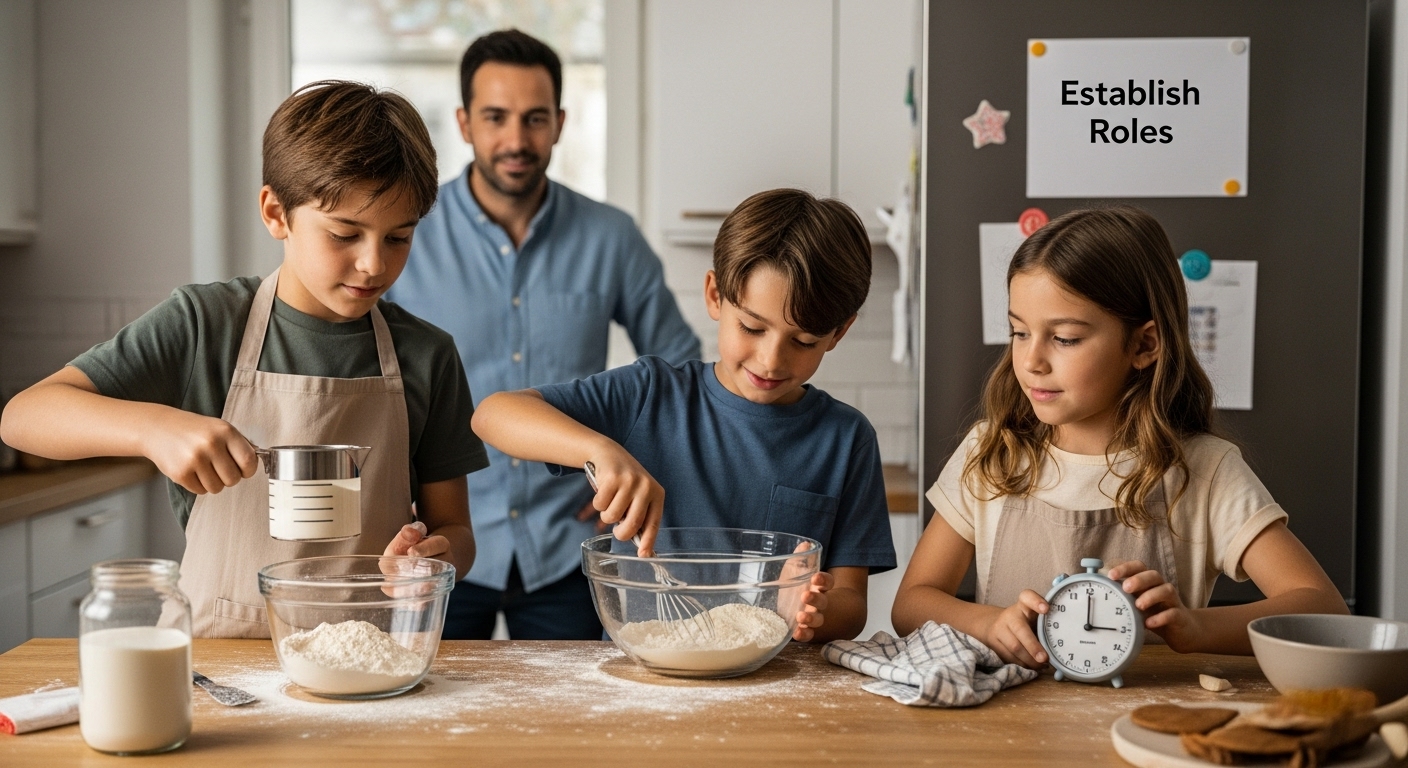
According to University of Minnesota’s Human Resources guidance, clear communication of roles is fundamental to successful teamwork. When assigning responsibilities, ensure that expectations are transparent and age-appropriate. Young children might handle simpler tasks like gathering supplies or keeping track of time, while older children could manage more complex coordination and planning elements.
Important role-assignment principles include:
- Match tasks to individual strengths
- Rotate roles to prevent monotony
- Ensure fair distribution of responsibilities
- Create opportunities for skill development
- Encourage mutual support
Teamwork roles extend beyond task completion. Emotional roles are equally crucial. Some children naturally excel at motivating teammates, others at mediating conflicts, and some at maintaining group morale. Recognise and celebrate these less tangible but equally important contributions.
Remember that role establishment is an ongoing process. What works today might need adjustment tomorrow as children grow and develop new skills. Maintain flexibility, offer constructive feedback, and create an environment where children feel comfortable discussing their experiences and challenges within their team roles.
 The goal is not perfection, but continuous learning and improvement in collaborative skills.
Step 4: Encourage Open Communication Among Kids
Open communication serves as the critical foundation for genuine teamwork, transforming group interactions from mechanical tasks to meaningful collaborations. Effective communication goes beyond simply talking - it’s about creating an environment where children feel safe, heard, and valued.
Begin by modelling respectful communication yourself. Children learn communication skills through observation and practice. When discussing team activities, demonstrate active listening techniques: maintain eye contact, ask clarifying questions, and show genuine interest in what they’re sharing. Create regular family or group discussion moments where everyone gets an opportunity to speak without interruption.
According to American Psychological Association research, teaching children to express their thoughts and feelings constructively is crucial. Introduce communication frameworks that help children articulate their perspectives. For younger children, this might involve using emotion cards or simple sentence starters like “I feel… when…” For older children, encourage more nuanced discussions about team dynamics, challenges, and potential improvements.
Communication skill development strategies include:
This table outlines common communication skill-building strategies for children, the objective of each approach, and practical ways to implement them at home.
| Strategy | Objective | Practical Home Examples |
|---|---|---|
| Reflective listening | Ensure children feel heard and understood | Repeat back what children say in discussions |
| Expressing feelings | Help children articulate emotions | Use emotion cards or “I feel… when…” starters |
| Respectful disagreement | Teach constructive conflict resolution | Model respectful turn-taking in debates |
| Creating safe spaces | Encourage honest, uninhibited dialogue | Regular family meetings without interruption |
| Validation of perspectives | Reinforce value of different viewpoints | Praise thoughtful suggestions or compromise |
- Practice reflective listening
- Encourage expressing feelings without judgment
- Teach respectful disagreement techniques
- Create safe spaces for honest dialogue
- Validate different perspectives
Making Learning Fun: Engaging Activities for Your Kids can provide additional insights into creating engaging communication environments. Introduce communication games that make learning these skills enjoyable. Role-playing scenarios, group storytelling, or team problem-solving challenges can help children practice expressing themselves clearly and listening actively.
Patience is key in communication skill development. Not every conversation will go smoothly, and children will make mistakes. Treat these moments as learning opportunities, offering gentle guidance and constructive feedback. The goal is to create an atmosphere where children feel confident sharing their thoughts, understanding that their opinions are respected and valued.
Step 5: Celebrate Team Achievements Together
Celebrating team achievements transforms collaborative experiences from mere tasks into memorable, motivational moments. Recognition is the powerful fuel that transforms good teamwork into extraordinary team spirit, reinforcing positive behaviours and encouraging future cooperative efforts.
Celebration doesn’t always require grand gestures. Small, meaningful acknowledgments can be incredibly impactful. Consider creating a family or group ritual that highlights collective accomplishments. This might involve a special dinner where everyone shares their contribution to a recent project, a unique team handshake, or a collaborative art piece that symbolizes their shared achievement. The key is making every team member feel valued and integral to the success.
According to Educational Psychology research, recognizing team performance significantly boosts motivation and engagement. Design celebrations that focus not just on the end result, but on the collaborative process. Discuss the specific ways team members supported each other, overcame challenges, and demonstrated remarkable teamwork.
Effective celebration strategies include:
- Personalized recognition for individual contributions
- Visual documentation of team achievements
- Shared reflection on collaborative learning
- Creating memorable team experiences
- Developing unique team traditions
Making Learning Fun: Engaging Activities for Your Kids can provide additional inspiration for creating enjoyable celebration moments. Photographs, team journals, or digital memory boards can help children revisit and appreciate their collective achievements. These tangible reminders serve as powerful motivational tools, reinforcing the joy of working together.
Authenticity is crucial in team celebrations. Avoid generic praise and instead highlight specific examples of teamwork, empathy, and problem-solving. Encourage children to articulate what they learned, how they supported each other, and what they might do differently next time. This reflective approach transforms celebrations from simple acknowledgments into meaningful learning experiences that build stronger, more resilient teams.
Turn Learning Teamwork into Real-Life Adventures
Are you looking for fun and meaningful ways to help your children develop teamwork beyond board games and family projects? If your goal is to nurture group communication, active listening, and shared achievement, the right tools can turn these crucial skills into lifelong habits. Many parents notice their children need more engaging ways to collaborate and discover nature together, not just indoors but outside as well.
Transform every group activity and family outing into an opportunity for genuine connection and skill-building. With The Zoofamily, explore our specially designed kids’ cameras, binoculars, and walkie-talkies. These aren’t just toys—they encourage communication, teamwork, and a love for nature. Every purchase also helps the planet, with one tree planted for each camera sold. Visit our main site today and find interactive essentials that inspire your children to work together and make memories. Let your next group adventure spark a lifelong love of teamwork—start now and see the difference first-hand.
Frequently Asked Questions
How can I assess my child’s current teamwork skills?
You can assess your child’s teamwork skills by observing their interactions in group activities, such as board games or collaborative projects. Look for behaviours like active listening, sharing ideas, and resolving conflicts respectfully.
What types of group activities can promote teamwork among children?
Group activities that encourage teamwork include cooperative board games, outdoor challenges, collaborative art projects, and family cooking tasks. These activities facilitate communication and problem-solving skills in a fun, engaging way.
How should I assign roles and responsibilities in team activities?
Assign roles based on each child’s strengths and interests, allowing them to choose tasks that excite them. Clear communication of each role’s expectations is vital for effective teamwork and ensuring each child feels valued.
Why is open communication important in teamwork for kids?
Open communication fosters a safe environment where children feel heard and valued. Teaching them to express their thoughts constructively enhances collaboration and helps resolve conflicts effectively.