

Connecting siblings outdoors is defined as engaging children in collaborative, nature-based activities that build teamwork, communication, and shared memories in a screen-free environment. The American Academy of Pediatrics confirms that children who spend more time outside show improved impulse control, reduced aggression, and better emotional regulation. These are not small gains. They are the precise conditions under which siblings stop competing and start cooperating. Whether you have a five-year-old and a ten-year-old or twins with wildly different interests, the outdoor world offers a shared stage that screens simply cannot replicate.
What outdoor activities best connect siblings in nature?
The most effective outdoor sibling activities are those that embed communication and coordination roles naturally, rather than forcing children to interact. Research from The Modern Parent Zone confirms that activities with built-in talking roles yield stronger bonding than any amount of prompted conversation. The activity does the work. Your job is to choose the right one.
Nature scavenger hunts
A nature scavenger hunt is the single most adaptable outdoor sibling activity available. Each child receives their own list, calibrated to their age: picture lists for toddlers, written clues for older children, and sketching challenges for teenagers. The Modern Parent Zone recommends age-adapted scavenger lists that allow siblings to contribute at their own level while working towards a shared goal. Thezoofamily’s nature scavenger hunt ideas offer seven ready-to-use formats that work across age gaps. The key is giving each child ownership of their role, so neither sibling feels overshadowed.
Backyard camping and cooperative games
Backyard camping transforms a familiar space into an adventure that siblings plan and execute together. Pitching a tent, gathering supplies, and deciding on a campfire story all require negotiation and shared decision-making. Alongside camping, cooperative outdoor games such as water balloon toss, obstacle courses, and chalk mural projects give siblings a shared creative goal rather than a competitive one. The distinction matters. Competitive games can sharpen sibling rivalry; cooperative ones redirect that energy into something productive.
- Nature scavenger hunts with individual lists and shared observation pauses
- Backyard camping with joint planning and storytelling
- Water balloon toss and obstacle courses requiring turn-taking
- Chalk murals or natural material collages as creative joint projects
- Wildlife spotting walks using binoculars and simple field guides
Pro Tip: When setting up a cooperative game, assign each sibling a specific role rather than letting the activity be free-for-all. One child navigates, one records findings, one photographs. Defined roles prevent the older child from dominating and give the younger one genuine responsibility.
How to prepare the right environment for sibling bonding outside
The right environment does more work than any single activity. A well-prepared outdoor space removes friction before it starts and gives siblings the physical room to spread out, which unstructured outdoor play research shows is critical for emotional regulation and cooperative storytelling. Indoors, siblings compete for the same sofa cushion. Outdoors, there is simply more space to breathe.
Equipment that sparks curiosity
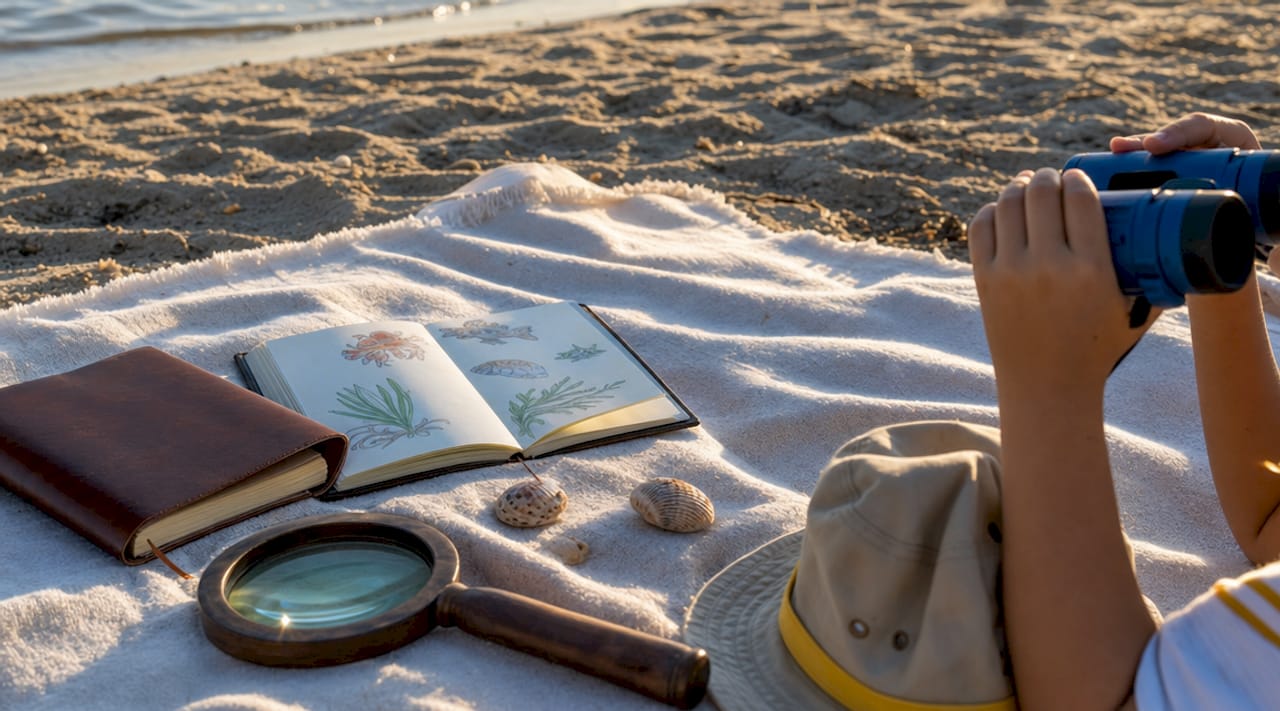
Simple tools transform a garden or local park into an explorer’s territory. Binoculars, magnifying glasses, basic field maps, and kids’ cameras give each child a specific instrument and therefore a specific purpose. Thezoofamily designs its binoculars and cameras with animal references precisely to trigger children’s curiosity about the natural world. A child who is genuinely curious about what lives under a log is not thinking about their sibling’s irritating habits. Shared curiosity is the fastest route to shared experience.
| Tool | Best use | Age range |
|---|---|---|
| Kids’ binoculars | Bird and wildlife spotting on walks | 4 and above |
| Kids’ camera | Photography scavenger hunts and nature journals | 5 and above |
| Field map or trail guide | Navigation and route planning as a team | 7 and above |
| Magnifying glass | Close-up insect and plant observation | 3 and above |
| Walkie-talkies | Communication games across larger outdoor spaces | 5 and above |
Creating screen-free outdoor time
The AAP recommends device-free meals, bedrooms, and the hour before bed to protect time for exercise, play, and family interaction. Applying the same logic to outdoor time means designating the garden, local park, or trail as a phone-free zone for the whole family. This is not about punishment. It is about removing the competition. When a screen is available, it wins. When it is not, siblings turn to each other.
Pro Tip: Tell children in advance that the outdoor session is screen-free and explain why. Children who understand the reason behind a rule comply far more willingly than those who simply have a device confiscated.
Parents who model device-free behaviour outdoors set the most powerful example available. If you are checking your phone on the trail, your children notice. Put it away, pick up a stick, and start looking for something interesting. Your involvement signals that this time matters.
Step-by-step: how to run outdoor sibling bonding activities
Structure is the difference between an outdoor session that builds connection and one that ends in an argument. Sibling outdoor activities fail when games are either too rigid or too open. The sweet spot is a flexible shared goal with clear roles and a natural endpoint.
Here is a repeatable framework for a family nature scavenger hunt:
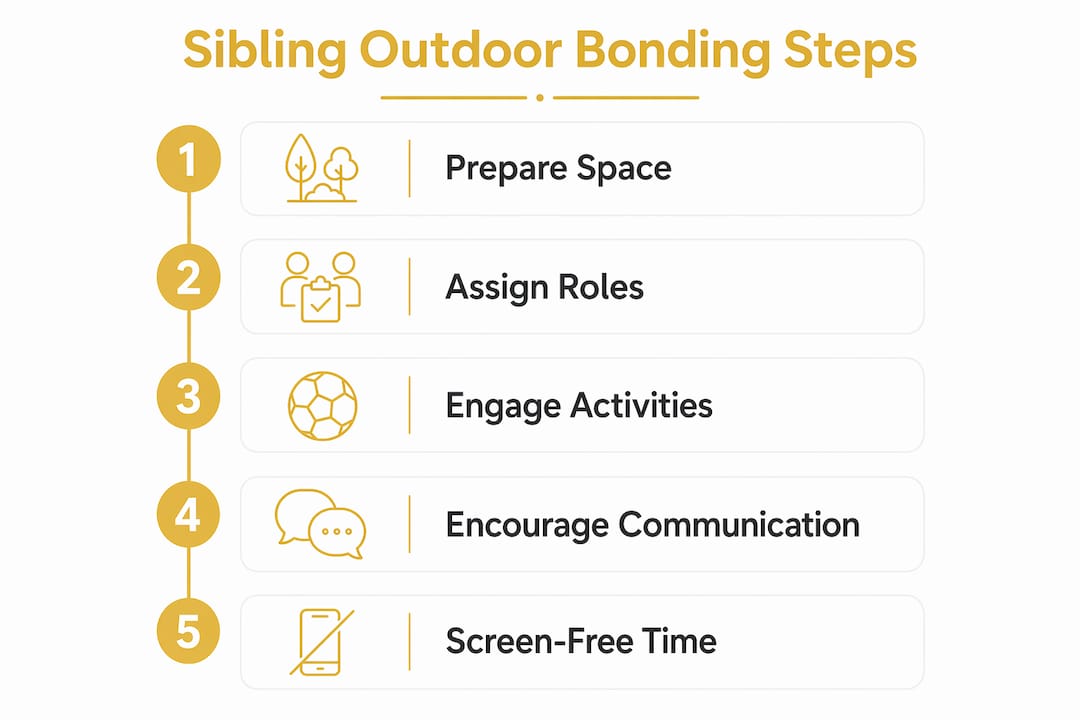
- Prepare individual lists. Give each child a list matched to their ability. Younger children get pictures; older ones get written clues or a sketching challenge. This prevents the eldest from completing everything first.
- Set a quiet observation rule. Before the hunt begins, spend two minutes standing still and listening. Ask each child what they can hear, smell, or see. This slows everyone down and shifts attention to the environment.
- Assign roles. One child is the navigator (holds the map), one is the recorder (writes or draws findings), and one is the spotter (uses binoculars). Rotate roles halfway through.
- Build in pause moments. Every ten minutes, gather the group and share one discovery each. This keeps siblings communicating throughout rather than racing ahead independently.
- Debrief at home. Sit together and discuss the best find of the session. Ask each child what surprised them. This converts momentary discovery into a shared narrative that siblings will reference for weeks.
“Ownership, shared observation pauses, and debriefing are the three elements that turn a nature walk into a genuine sibling bonding experience.” — The Modern Parent Zone, 2026
For backyard camping, the same principle applies. Assign one sibling to plan the menu, another to set up the tent, and a third to choose the bedtime story. The shared project creates the bond. The camping itself is almost secondary.
When conflict arises mid-activity, resist the urge to adjudicate immediately. Give siblings thirty seconds to resolve it themselves. Balancing rules and freedom in outdoor games means allowing some friction to resolve naturally, which builds the very communication skills you are trying to develop.
What does research say about the benefits of outdoor sibling play?
The evidence base for nature-based sibling play is substantial and growing. Children play harder outdoors, show improved motor development, and demonstrate less anger and better emotional regulation than children who spend equivalent time indoors. For siblings specifically, this matters because emotional regulation is the foundation of conflict resolution.
A 2026 study published in Springer Nature found that community schoolyard improvements correlate with reduced behavioural problems and increased free play that builds social skills. The implication is clear: access to quality outdoor space changes how children relate to each other. Research from Frontiers confirms that nature-based activity programmes produce significant gains in children’s self-expression and communication, both of which are prerequisites for healthy sibling relationships.
| Outcome | Indoors | Outdoors |
|---|---|---|
| Emotional regulation | Limited by confined space and sensory competition | Improved through physical activity and open space |
| Sibling conflict frequency | Higher due to competition for shared resources | Lower due to space, roles, and shared goals |
| Communication quality | Often reactive and competitive | Structured by activity roles and shared observation |
| Physical development | Restricted movement and motor challenge | Enhanced motor skills and physical confidence |
The digital media challenge is real. Screens compete directly with outdoor play for children’s attention, and they are designed to win. The AAP’s family media plan framework recommends treating outdoor time as a non-negotiable daily commitment rather than a reward. When outdoor play is the default rather than the exception, siblings build the habit of turning to each other rather than to a device.
Key takeaways
Connecting siblings outdoors works best when activities embed communication roles, assign individual ownership, and include a structured debrief that converts shared discovery into lasting memory.
| Point | Details |
|---|---|
| Embed communication roles | Assign navigator, recorder, and spotter roles so siblings interact naturally throughout the activity. |
| Use age-adapted challenges | Give each child a list or task matched to their ability to prevent older siblings from dominating. |
| Protect screen-free time | Designate outdoor sessions as device-free for the whole family, including parents. |
| Debrief after every session | A short at-home conversation about discoveries turns a single outing into a shared sibling narrative. |
| Choose cooperative over competitive | Water balloon toss, camping, and scavenger hunts build shared goals; competitive games can sharpen rivalry instead. |
Why the small moments matter more than the grand adventures
I have watched a lot of families head outdoors with enormous ambitions and return home frustrated because the children argued for forty minutes about who found the biggest stick. And I have watched siblings who spent an unremarkable Tuesday afternoon lying on their backs identifying cloud shapes come home closer than they had been in months. The grand adventure is not the point. The repeated, low-stakes shared experience is.
What strikes me most, having spent years thinking about how children connect with nature and with each other, is that parents consistently underestimate the power of giving children a specific tool and stepping back. Hand a child a pair of binoculars and a genuine question (“I wonder if there are any warblers in that hedge”) and you have done most of the work. The curiosity does the rest. Thezoofamily’s approach of building animal references into their equipment design is not incidental. It is a deliberate trigger for exactly this kind of spontaneous engagement.
The digital distraction problem is real, but I think parents sometimes frame it as a battle they are losing. The more useful frame is replacement. You are not taking screens away. You are offering something that screens genuinely cannot replicate: the texture of bark, the smell of rain on soil, the specific satisfaction of finding something you were actually looking for. Siblings who share those sensory experiences build a private vocabulary of reference points that lasts into adulthood.
My honest advice: start smaller than you think you need to. A fifteen-minute garden observation session with a magnifying glass and a shared notebook is more connective than a three-hour hike where everyone is tired and cold. Build the habit first. The adventures follow naturally.
— ALAIN
Explore outdoor tools and ideas for sibling adventures
Thezoofamily has put together a growing collection of resources to help parents plan outdoor sibling activities that actually work. From backyard play setups to wildlife-friendly garden ideas, the blog covers practical setups for every outdoor space and season.
Thezoofamily’s kids’ cameras, binoculars, and walkie-talkies are designed specifically to give siblings individual roles in shared outdoor exploration. Every camera sold plants one tree, so your family’s outdoor adventures contribute directly to restoring the natural world your children are learning to love. Visit Thezoofamily to discover the full range of outdoor explorer kits and find your next sibling adventure.
FAQ
What is the best outdoor activity for connecting siblings?
Nature scavenger hunts are the most effective outdoor sibling activity because they embed communication roles naturally and can be adapted to different ages. Research from The Modern Parent Zone confirms that activities with built-in talking roles produce stronger bonding than unstructured free play.
How does outdoor play reduce sibling conflict?
Outdoor space gives siblings room to spread out and regulate their emotions, which reduces the competition for shared resources that drives most indoor conflict. Studies show children demonstrate less anger and better impulse control when spending regular time in nature.
How much screen-free outdoor time do children need?
The American Academy of Pediatrics recommends treating outdoor play as a daily non-negotiable rather than a reward, with device-free zones established for meals, bedrooms, and designated outdoor sessions. The specific duration matters less than the consistency of the habit.
Can outdoor activities work for siblings with a large age gap?
Age-adapted scavenger hunts, where younger children use picture lists and older children use written clues or sketching challenges, work effectively across significant age gaps. Assigning different roles rather than identical tasks prevents older siblings from dominating and gives younger ones genuine responsibility.
Do parents need to participate in outdoor sibling activities?
Parent involvement and modelling of device-free behaviour significantly increases the quality of outdoor sibling play. You do not need to direct every moment, but your presence and genuine curiosity signal that the time is worth taking seriously.