

Forest bathing for families is the practice of immersing yourselves in a natural environment through mindful sensory engagement to strengthen health, reduce stress, and deepen family connection. Known formally as shinrin yoku, a term coined in Japan in the 1980s, it is not a hike with a destination. It is a slow, deliberate experience of the forest through sight, sound, smell, and touch. Structured sessions typically last around two hours and cover less than one mile, making them genuinely accessible for families with young children. Many guided sessions admit children under 12 free of charge, lowering the barrier to entry further still.
What do families need to prepare for forest bathing?
Preparation for a family forest bathing session is straightforward. The goal is comfort and openness, not specialist kit or perfect conditions.
Clothing and footwear
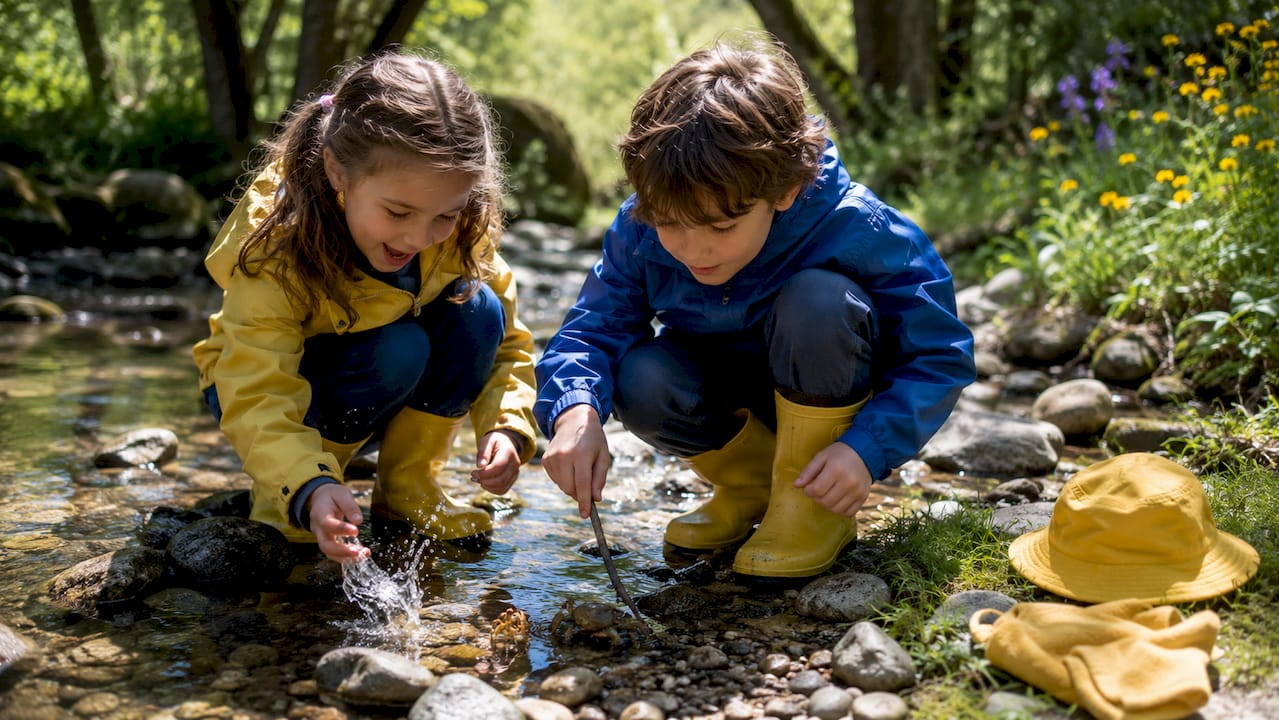
Wear layers suited to the weather and sturdy, comfortable footwear. Children should be dressed for mud and movement. Waterproof trousers and boots make wet woodland far more enjoyable than a miserable trudge back to the car.
Choosing your location
You do not need a vast ancient forest. Soft fascination — the effortless attention nature triggers in the brain — works in a local park, a small woodland, or even a tree-lined street. The internal mindset of sensory awareness matters far more than the grandeur of the setting. Urban families can start with their nearest green space and build from there.
What to bring
| Item | Must-have or optional |
|---|---|
| Comfortable, weatherproof clothing | Must-have |
| Sturdy footwear | Must-have |
| Water and snacks | Must-have |
| Nature journal or sketchbook | Optional |
| Scavenger hunt list | Optional |
| Magnifying glass or binoculars | Optional |
| Guided meditation audio | Optional |
A nature journal gives older children a focus without turning the session into schoolwork. A simple scavenger hunt list works brilliantly for younger ones who need a concrete task to anchor their attention.
Pro Tip: Leave phones in your bag or car. Children mirror parental behaviour directly, and a distracted adult undermines the entire session before it begins.
Mindset matters most
Arrive with the intention to slow down, not to achieve. Forest bathing is not a fitness activity and not a lesson. Frame it to your children as an adventure in noticing things, rather than a walk with rules. That single shift in framing removes most of the resistance you will encounter from reluctant participants.
How can families practise forest bathing together?
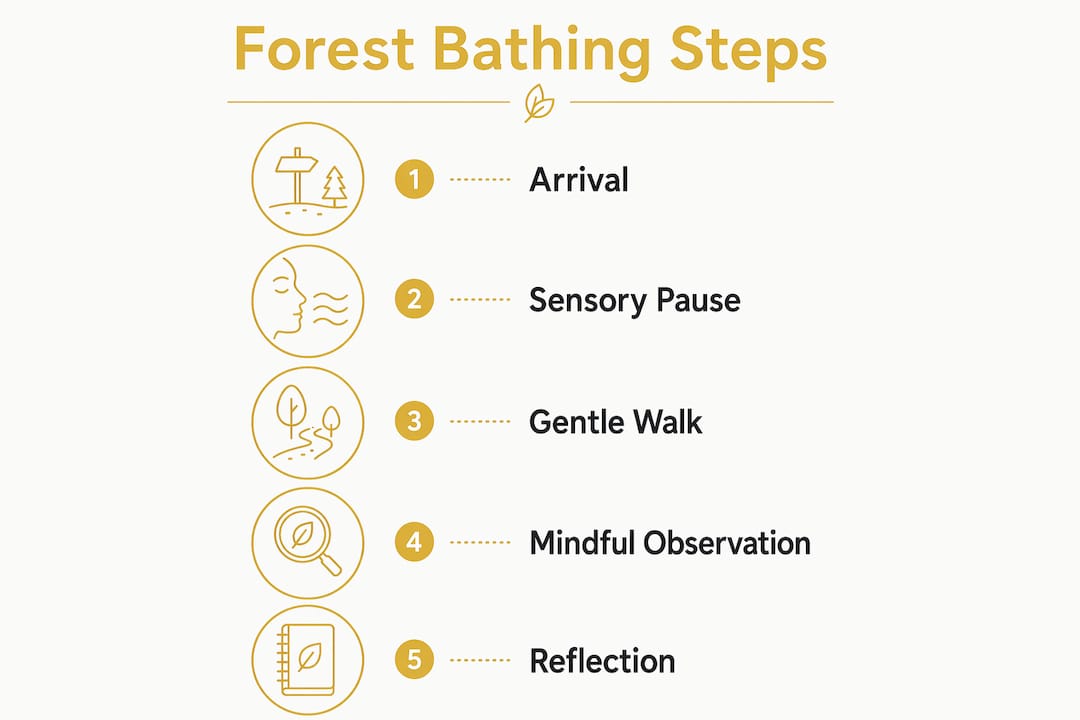
A structured approach helps, particularly on your first few sessions. The following steps work for mixed-age groups and can be adapted as your family grows more comfortable with the practice.
-
Begin with a sensory pause. Stop at the entrance to your chosen green space. Ask everyone to close their eyes for thirty seconds and name one sound they can hear. This simple act signals to the brain that the session has begun and shifts attention away from the journey to get there.
-
Walk slowly and without agenda. Cover ground at roughly half your normal walking pace. There is no destination. If a child stops to examine a beetle or a patch of moss, that is the practice working exactly as intended.
-
Introduce a sensory invitation. Ask the group to find something rough, something smooth, something that smells interesting, and something that moves in the wind. These sensory games keep younger children engaged without forcing silence or stillness.
-
Alternate movement with stillness. Alternating walking and stillness avoids the disengagement that comes from either constant movement or enforced quiet. Sit together for two or three minutes and simply observe. Then move again.
-
Share observations aloud. Ask each family member to share one thing they noticed during a stillness pause. This builds shared vocabulary around nature and opens conversations that rarely happen at home.
-
Close with a brief reflection. Before leaving, ask everyone to name one thing they are grateful for from the session. The Morton Arboretum’s family mindful movement programme uses exactly this kind of closing ritual to consolidate the experience.
| Session phase | Duration | Purpose |
|---|---|---|
| Sensory opening pause | 2–3 minutes | Shift attention to the present |
| Slow walk with sensory invitations | 20–30 minutes | Engage curiosity and observation |
| Stillness and shared reflection | 5–10 minutes | Deepen awareness and connection |
| Playful activity (scavenger hunt etc.) | 15–20 minutes | Maintain children’s engagement |
| Closing gratitude round | 5 minutes | Consolidate the experience |
Pro Tip: For children under six, keep the total session to forty-five minutes. Extend gradually as their stamina and interest grow. Ending on a high note matters more than hitting two hours.
Experts recommend at least one session every few weeks to maintain the psychological and physiological benefits. Monthly sessions are a realistic starting point for most families.
What are the key benefits of forest bathing for families and children?
The benefits of nature therapy for kids and adults are well documented and span physical, psychological, and social dimensions.
“Nature-based mindfulness reduces anxiety and depression, lowers blood pressure, and boosts immune function. These are not marginal effects. They are consistent findings across multiple studies.”
Here is what the evidence shows:
- Reduced stress hormones. Time in nature lowers cortisol levels in both adults and children. Lower cortisol means calmer behaviour, better sleep, and reduced anxiety.
- Lower blood pressure. Monthly forest bathing produces measurable reductions in blood pressure. This benefit extends to children, not just adults.
- Improved immune function. Regular exposure to forest environments increases natural killer cell activity, part of the body’s defence against illness.
- Enhanced mood and creativity. Children who spend time in green spaces show improved concentration and creative thinking. These gains carry over into school performance.
- Stronger family bonds. Shared sensory experiences create a different quality of conversation than screen time or structured activities. Families report improved communication after regular outdoor sessions.
- Children’s inner calm and curiosity. Viewing trees and wildlife as partners in well-being deepens children’s environmental respect and builds a lasting sense of calm that carries into daily life.
- Brain restoration. Nature triggers soft fascination, an effortless attention that allows the brain to recover from cognitive fatigue. This works even with a single tree or a small patch of grass. The effectiveness depends on sensory awareness, not the scale of the location.
The social benefit is often the one families notice first. When you remove devices, destinations, and schedules, you create space for the kind of unhurried conversation that builds genuine connection between parents and children.
How to keep children engaged during forest bathing
The most common mistake families make is treating forest bathing as a silent, adult-led meditation. Children disengage quickly from that model. The solution is to shift from performance to participation, turning the session into a shared exploration rather than a guided exercise.
Practical techniques that work across age groups:
- Nature scavenger hunts. Give each child a list of things to find using their senses: something that smells earthy, something that makes a sound, something smaller than their thumbnail. This keeps attention active without breaking the meditative quality of the session.
- The “three good things” practice. At the end of each session, ask every family member to name three things they noticed or enjoyed. Daily 15-minute sensory practices like this sustain mood improvements and nature connectedness for up to a month after the session.
- Nature journaling. Older children respond well to sketching or writing brief observations. A small notebook and a pencil are enough. The act of recording sharpens attention and gives children ownership of their experience.
- Tactile exploration. Encourage children to touch bark, leaves, soil, and water. Tactile engagement activates the senses most directly and holds attention far longer than visual observation alone.
- Role modelling by adults. Children mirror parental engagement directly. When parents crouch down to examine a fungus or sit quietly listening to birdsong, children follow. Passive adult observation produces passive children.
For collaborative nature games that work well alongside forest bathing sessions, Thezoofamily has a dedicated collection of ideas designed to build connection and curiosity in children of all ages.
Pro Tip: Never force silence. Quiet moments arise naturally when children feel safe and engaged. Demanding silence creates resistance and associates the practice with restriction rather than freedom.
Key takeaways
Forest bathing for families works best when adults shift from leading to co-exploring, combining sensory invitations with playful activities to sustain children’s engagement and deepen shared connection.
| Point | Details |
|---|---|
| Shinrin yoku is the formal term | Forest bathing is the informal name for this Japanese mindfulness practice; both terms refer to the same sensory immersion in nature. |
| Location flexibility | Soft fascination works in local parks and small green spaces, not only in remote forests. |
| Session structure matters | Alternating movement with stillness and sensory invitations keeps children engaged and prevents disengagement. |
| Frequency for lasting benefits | Practise at least once every few weeks to maintain measurable psychological and physiological gains. |
| Adults must participate actively | Children mirror parental engagement; passive adults reduce the effectiveness of the session for the whole family. |
Why forest bathing changed how I think about family time outdoors
I spent years treating outdoor time with my family as exercise with scenery. We walked fast, covered distance, and came home tired. Forest bathing forced me to unlearn that entirely.
The first time I tried a proper shinrin yoku session with my children, I was struck by how much they noticed when I stopped leading and started exploring alongside them. My youngest found a spider’s web catching the light between two branches. We stood there for nearly five minutes. That would never have happened on a purposeful walk.
What I have found over time is that the benefits are cumulative and quiet. You do not come home from a forest bathing session feeling dramatically different. You notice, weeks later, that your children are calmer at bedtime, that conversations at the dinner table have more texture, that your own anxiety sits lower. Regular practice builds something that a single session cannot.
My honest observation is this: you do not need to travel anywhere special. The small park at the end of your road is enough. The practice is internal. A mindset of sensory openness in a patch of urban greenery delivers more than a distracted walk through an ancient forest. Start small, start local, and start soon.
— ALAIN
Explore more family nature activities with Thezoofamily
Thezoofamily was built around one idea: that children who connect with nature grow into people who protect it. Every camera sold plants a tree, and every product is designed to make the natural world feel like an adventure worth exploring. If this guide has inspired you to take your family outdoors more regularly, Thezoofamily has a full collection of outdoor creative activities and family outdoor rituals to keep the momentum going between forest bathing sessions. From nature journals to binoculars designed for small hands, everything at Thezoofamily is made to deepen the connection between your children and the living world around them.
FAQ
What is forest bathing and is it suitable for young children?
Forest bathing, or shinrin yoku, is the practice of mindful sensory immersion in a natural environment. It is suitable for children of all ages, with sessions adaptable to shorter durations and playful activities for younger participants.
How long should a family forest bathing session last?
Structured sessions typically last around two hours and cover less than one mile. For families with young children, starting at forty-five minutes and extending gradually is a more practical approach.
Do you need a guide for forest bathing with children?
A guide is helpful for your first session but not required. The core practice involves slow walking, sensory observation, and shared reflection, all of which families can lead themselves with basic preparation.
How often should families practise forest bathing to see benefits?
Experts recommend at least one session every few weeks to maintain measurable reductions in stress, blood pressure, and anxiety. Monthly sessions are a realistic and effective starting point for most families.
Can forest bathing work in a city park rather than a forest?
Nature’s soft fascination works through sensory awareness, not the scale of the location. A local park, a tree-lined path, or any small green space delivers genuine benefits when approached with mindful attention.