

Most british families across Germany and France are discovering that less than half of toys in the average home are used weekly, sparking a shift toward more meaningful, eco-friendly choices. For eco-conscious parents, hands-on play is about more than just keeping kids busy. It opens pathways for curiosity, creativity, and a genuine connection with nature. This guide reveals how sustainable play supports your child’s growth and offers fresh ideas for gifting with purpose.
Table of Contents
- Defining Hands-on Play and Common Myths
- Types of Hands-on Play Activities for Children
- Cognitive, Social, and Emotional Benefits Explained
- How Hands-on Play Connects Kids to Nature
- Choosing Sustainable and Impactful Play Options
Key Takeaways
| Point | Details |
|---|---|
| Hands-on Play’s Impact | Hands-on play fosters cognitive, emotional, and social development in children through active engagement and exploration. |
| Common Misconceptions | Many parents underestimate the educational value of hands-on play, which is crucial for developing problem-solving and interpersonal skills. |
| Types of Activities | Activities like physical, construction, sensory, and imaginative play provide diverse learning opportunities that stimulate creativity and critical thinking. |
| Sustainable Options | Choosing sustainable play materials supports both child development and environmental responsibility, promoting resourcefulness and creativity in children. |
Defining Hands-on Play and Common Myths
Hands-on play represents a dynamic, interactive learning approach where children engage directly with materials, objects, and environments to explore, discover, and understand the world around them. Unlike passive entertainment, this form of play involves active manipulation, experimentation, and sensory engagement that stimulates cognitive development and creativity. Understanding the benefits of imaginative play reveals how crucial physical interaction is for children’s learning processes.
Many parents harbour misconceptions about hands-on play, often believing it to be unstructured or lacking educational value. However, research from the California Department of Education demonstrates that play is fundamental to children’s cognitive, emotional, and social growth. Play is not merely recreational but a critical mechanism through which children develop problem-solving skills, spatial awareness, and emotional intelligence. The misconception that play is trivial undermines its profound developmental significance.
Key characteristics of effective hands-on play include voluntary engagement, intrinsic motivation, and child-directed exploration. Children naturally gravitate towards activities that allow them to experiment, make discoveries, and learn through direct experience. This approach transcends cultural boundaries, demonstrating universal learning principles that support holistic child development. Hands-on play encourages children to ask questions, test hypotheses, and develop critical thinking skills in a supportive, low-pressure environment.
Pro tip: Create a dedicated play space at home with open-ended materials like building blocks, natural objects, and art supplies to encourage exploratory, hands-on learning experiences.
Types of Hands-on Play Activities for Children
Hands-on play encompasses a diverse range of activities that support children’s holistic development through active engagement and sensory exploration. Learning through play reveals several essential categories that eco-conscious families can integrate into their children’s daily experiences. These activities go beyond simple entertainment, providing rich opportunities for cognitive, social, and emotional growth while nurturing a child’s natural curiosity and learning potential.
The primary types of hands-on play activities include physical play, which involves gross and fine motor skill development through movement and active exploration. Construction play emerges as another critical category, where children manipulate materials like building blocks, natural objects, and recycled items to create structures, encouraging spatial reasoning and problem-solving skills. Making learning fun through engaging activities can transform ordinary moments into extraordinary learning opportunities for children.
Sensory and exploratory play represent powerful learning modalities that allow children to interact directly with their environment. These activities might involve water play, sand exploration, nature investigations, or tactile experiences with different textures and materials. By providing open-ended resources that invite manipulation and discovery, parents can create rich learning landscapes that stimulate creativity, critical thinking, and scientific inquiry. Make-believe and imaginative play further complement these approaches, enabling children to process social experiences, develop emotional intelligence, and understand complex social dynamics through interactive storytelling and role-playing.
Pro tip: Create a dedicated exploration zone at home with various natural and recycled materials that encourage children to investigate, construct, and imagine without predetermined outcomes.
Here is a summary of the main types of hands-on play activities and their unique contributions to children’s growth:
| Type of Play | Key Developmental Focus | Example Activities |
|---|---|---|
| Physical Play | Motor skills, coordination | Climbing, running, ball games |
| Construction Play | Spatial reasoning, problem-solving | Building with blocks, assembling recycled items |
| Sensory & Exploratory | Sensory integration, inquiry | Water play, sand exploration |
| Imaginative/Make-believe | Social skills, empathy | Role play, storytelling |
Cognitive, Social, and Emotional Benefits Explained
Hands-on play represents a powerful developmental mechanism that extends far beyond simple entertainment, offering profound cognitive, social, and emotional benefits for children. Research from the California Department of Education demonstrates how interactive play experiences fundamentally shape children’s neurological and psychological development. These experiences trigger complex neural pathways, supporting critical thinking, emotional intelligence, and adaptive learning strategies that prepare children for future challenges.
Cognitively, hands-on play stimulates executive function skills such as problem-solving, spatial reasoning, and creative thinking. Children engaged in constructive play develop enhanced mental flexibility, learning to approach challenges from multiple perspectives. Childhood brain development insights reveal that these play experiences create essential neural connections, supporting advanced cognitive capabilities that extend well beyond childhood.
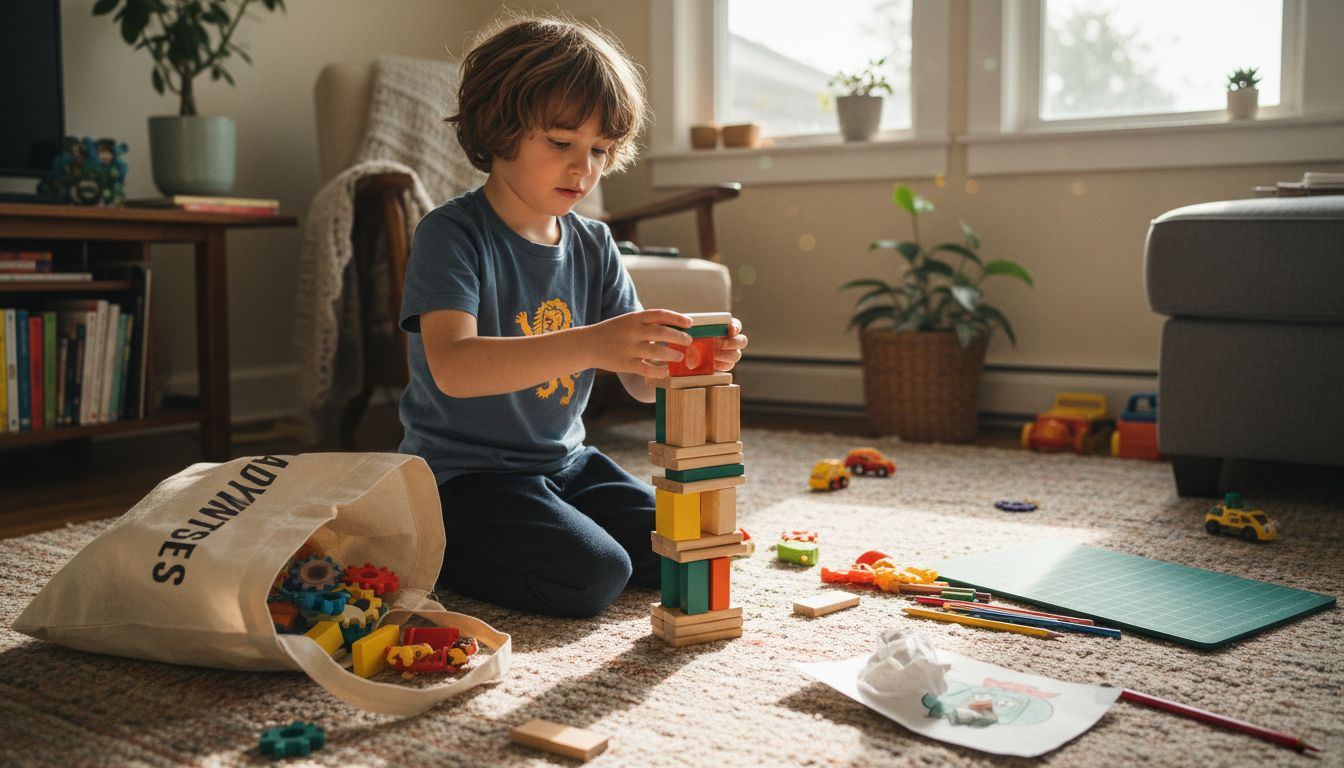
Social and emotional development emerges as another crucial dimension of hands-on play. The American Academy of Pediatrics highlights that interactive play experiences enable children to develop critical social competencies, including emotional regulation, communication skills, and empathy. Through collaborative play scenarios, children learn negotiation, sharing, and understanding complex social dynamics. These experiences provide safe environments for emotional exploration, helping children process feelings, build resilience, and develop healthy interpersonal relationships.
Pro tip: Create intentional play scenarios that encourage cooperation, problem-solving, and emotional expression, rotating materials and challenges to maintain children’s engagement and learning.
How Hands-on Play Connects Kids to Nature
Nature connection represents a transformative experience for children, with hands-on play serving as a critical bridge between young learners and the natural world. Research highlighting the benefits of nature-based interactions demonstrates that direct engagement with natural environments supports holistic child development, fostering environmental awareness and personal growth simultaneously.
Hands-on play in natural settings enables children to develop profound sensory connections with their environment. Through tactile experiences like collecting leaves, observing insects, touching tree bark, and exploring outdoor landscapes, children cultivate a deep, intuitive understanding of ecological systems. Making learning fun through outdoor activities encourages children to become active participants in understanding and appreciating the natural world, transforming passive observation into immersive learning experiences.
By integrating hands-on play with nature exploration, parents can nurture environmental stewardship from an early age. Children learn complex ecological concepts through direct experience, developing empathy for living systems and understanding their interconnectedness. Designing naturalized play environments that invite curiosity, exploration, and respectful interaction helps children build lasting emotional connections with the natural world, supporting their cognitive, physical, and emotional development while simultaneously cultivating a generation of environmentally conscious individuals.
Pro tip: Create weekly nature exploration routines that allow children to observe, interact, and document seasonal changes in a specific outdoor location, developing their scientific observation skills and environmental connection.
Choosing Sustainable and Impactful Play Options
Sustainable play options represent a critical intersection between child development and environmental consciousness, offering eco-conscious families meaningful strategies for nurturing their children’s growth. Comprehensive research on play-based learning interventions emphasises the importance of selecting play materials and experiences that support both child development and ecological responsibility.
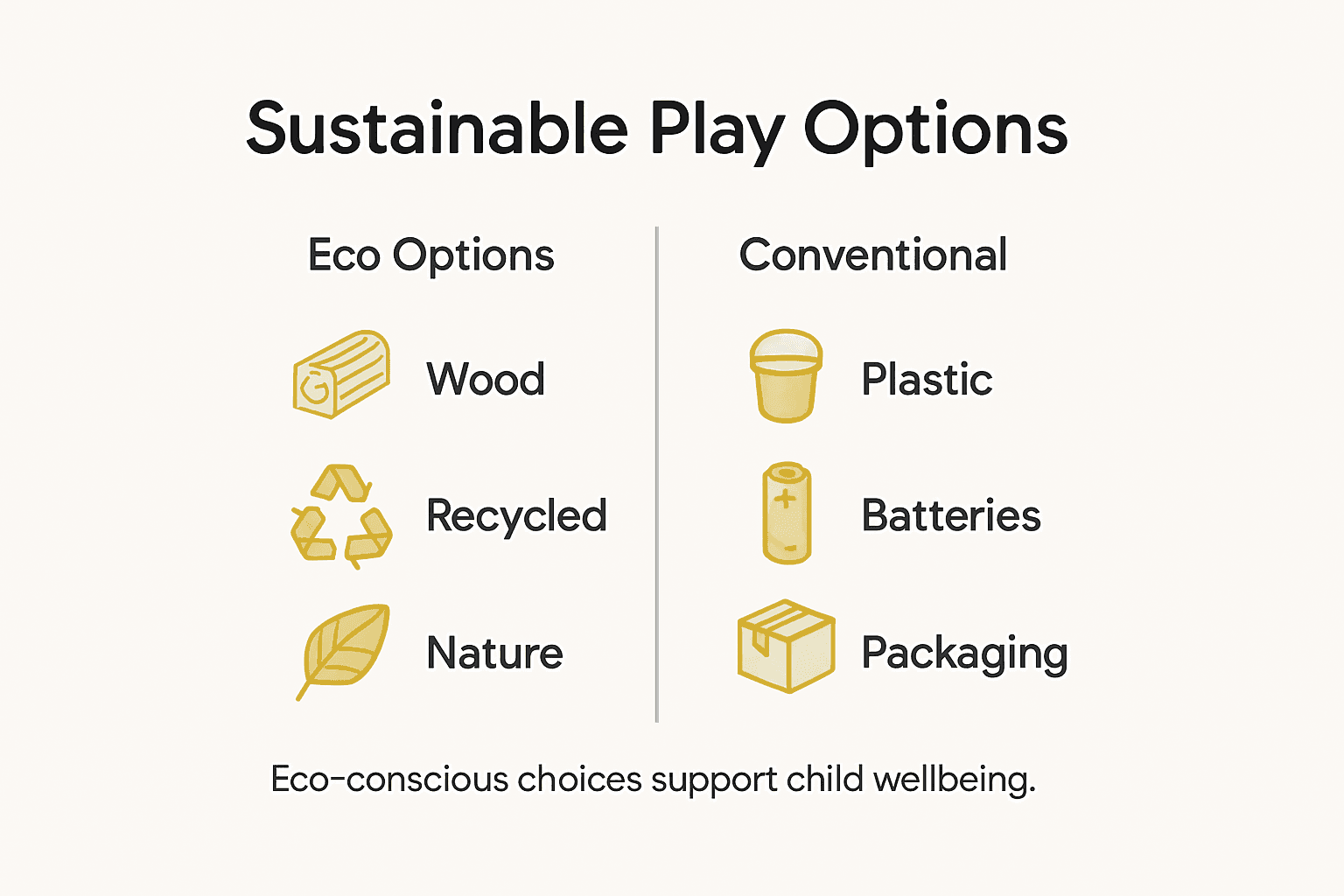
When selecting sustainable play options, families should prioritise natural, low-cost materials that encourage creativity and minimise environmental impact. Wooden blocks, recycled craft supplies, and items sourced from natural environments provide rich sensory experiences while teaching children about resource conservation. Understanding eco-friendly routines can help parents make informed choices that align with both developmental needs and environmental stewardship.
The CDC guidance highlights the critical balance between safety and exploratory learning in play environments. Sustainable play options should create opportunities for children to engage with their environment meaningfully, encouraging risk-appropriate exploration that develops physical skills, problem-solving abilities, and environmental awareness. This approach involves selecting play materials that are durable, multipurpose, and capable of supporting long-term learning experiences while minimising waste and environmental burden.
Pro tip: Curate a ‘discovery box’ with natural and recycled materials that can be rotated and repurposed, encouraging creative play while teaching children about resource efficiency and environmental responsibility.
The following table compares sustainable and conventional play options, highlighting their impact on development and the environment:
| Aspect | Sustainable Play Options | Conventional Play Options |
|---|---|---|
| Material Sources | Natural, recycled items | Plastics, single-use components |
| Environmental Impact | Minimised waste, eco-friendly | Greater waste, higher resource use |
| Learning Emphasis | Creativity, resourcefulness | Pre-determined outcomes |
| Durability | Long-lasting, reusable | Often disposable or short-lived |
Inspire Eco-conscious Hands-on Play with The Zoofamily
The article highlights the vital challenge many eco-conscious families face: finding play experiences that nurture children’s cognitive and emotional growth while fostering a strong connection to nature. The key pain points include the need for materials that encourage creativity, environmental awareness, and active exploration — all essential elements of hands-on play that support holistic child development. By emphasising sensory engagement, imaginative play, and sustainable choices, families can empower children to become stewards of the planet from an early age.
With The Zoofamily, you can transform everyday play into meaningful, nature-inspired learning adventures. Our specially designed kids’ cameras, walkie-talkies, and binoculars ignite curiosity with animal references that spark a love for the natural world. Every product promotes discovery and creativity in a sustainable way, as for every camera sold we plant a tree. Give your children the tools to explore hands-on play thoughtfully and responsibly.
Encourage your children to dive deeper into creative connections with nature today. Discover how our eco-friendly play solutions align perfectly with the developmental benefits outlined in the article. Start fostering curiosity, empathy, and environmental stewardship with play experiences that truly matter—visit The Zoofamily now and make every moment count.
Frequently Asked Questions
What are the cognitive benefits of hands-on play?
Hands-on play stimulates cognitive development by enhancing executive function skills such as problem-solving, spatial reasoning, and creative thinking. Engaging in constructive play helps children develop mental flexibility and approach challenges from multiple perspectives.
How can hands-on play promote environmental awareness in children?
Hands-on play in natural settings allows children to observe and interact with their environment, fostering a deep understanding of ecological systems. Through tactile experiences, children develop empathy for living systems and learn about their interconnectedness, promoting environmental stewardship from an early age.
What materials are best for facilitating hands-on play at home?
Natural and recycled materials are ideal for hands-on play, as they promote creativity and minimise environmental impact. Examples include wooden blocks, recycled craft supplies, and items sourced from nature, all of which provide sensory-rich experiences for children.
How can parents create a safe environment for hands-on play?
To create a safe environment for hands-on play, parents should focus on risk-appropriate exploration by providing durable, multipurpose materials that encourage meaningful engagement. Additionally, parents can set clear guidelines and monitor play to ensure that children can explore safely while developing important physical and problem-solving skills.