

TL;DR:
- Genuine sustainability depends on full product lifecycle, not just eco labels or packaging.
- Look for trusted certifications like FSC, GOTS, and EU marks to verify eco claims.
- Experience-based gifts and educational conversations have lasting environmental benefits for children.
Finding a gift that genuinely excites your child and sits lightly on the planet is harder than it sounds. European parents are navigating a market flooded with products labelled ‘eco’, ‘natural’, or ‘green’, yet many of these claims are hollow. With toy sustainability statistics showing rapid growth in the green toy sector, the marketing noise has grown just as fast. This guide cuts through that noise. You will learn which certifications to trust, how to shortlist the right gift types, and how to spot misleading claims before they reach your child’s hands.
Table of Contents
- Understanding sustainability in gifts for children
- Preparation: Deciding what you need for a sustainable gift
- Step-by-step: How to select and verify a sustainable gift
- Troubleshooting and avoiding greenwashing pitfalls
- Why most ‘eco’ gifts miss the mark: A parent’s perspective
- Discover more sustainable gift ideas with The Zoofamily
- Frequently asked questions
Key Takeaways
| Point | Details |
|---|---|
| Verify certification | Always check for reputable sustainability labels like FSC, GOTS, and CE before purchasing gifts. |
| Prioritise nature experiences | Gifts that actively engage children with nature—like kits or outings—build deeper environmental awareness. |
| Avoid greenwashing | Ignore vague ‘eco’ claims and select products with evidence-backed sustainability credentials. |
| Quality beats quantity | One durable, certified gift delivers more impact than multiple disposable or uncertified options. |
Understanding sustainability in gifts for children
Sustainability in gifting is not just about swapping plastic for wood. It is about the full journey a product takes, from the forest or field where raw materials are sourced, through manufacturing, all the way to what happens when your child outgrows it. This lifecycle thinking is what separates a genuinely sustainable gift from one that simply looks the part.
Certifications are your most reliable shortcut. Key certifications to verify include FSC for wood products, GOTS for textiles, the mandatory EU CE mark, Nordic Swan, Oeko-Tex, and Blue Angel. Each label signals that an independent body has audited the product against strict environmental and safety standards. Without one of these marks, any green claim is just marketing language.
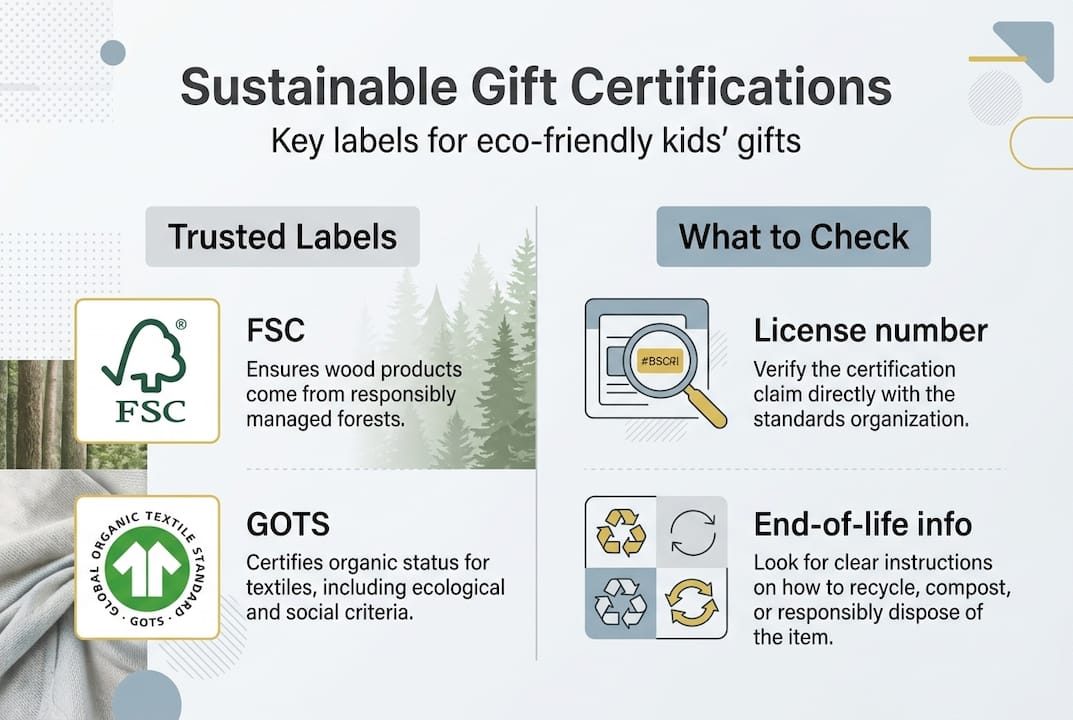
Material choices matter enormously. Wood, organic cotton, and responsibly sourced recycled plastic are the most credible options. The numbers back this up: FSC wood toys produce 70% lower greenhouse gas emissions compared to conventional plastic alternatives. That is not a marginal difference. It is a compelling reason to prioritise certified wood over cheaper plastic options, even when the upfront price stings a little.
Quality over quantity is the guiding principle here. A single well-made wooden toy that lasts five years is far more sustainable than three cheap novelty gifts that break within weeks. When browsing the eco-friendly toys guide, you will notice that the most recommended products share one trait: they are built to be passed down, not thrown away.
Pro Tip: Never trust green packaging alone. Flip the box over and look for a printed certification logo with a licence number. If it is not there, the claim is unverified.
Here is a quick comparison of common sustainable materials:
| Material | Key certification | Typical lifespan | End of life |
|---|---|---|---|
| FSC-certified wood | FSC | 5 to 10 years | Biodegradable |
| Organic cotton | GOTS | 3 to 6 years | Compostable |
| Recycled plastic | Oeko-Tex / Blue Angel | 3 to 5 years | Recyclable |
| Biobased plastic | Varies (check carefully) | 2 to 4 years | Often landfill |
The key takeaway: certifications are non-negotiable, materials matter, and longevity is part of the environmental equation.
Preparation: Deciding what you need for a sustainable gift
Before you open a single browser tab, it helps to get clear on what you actually want the gift to achieve. Are you hoping to spark your child’s curiosity about the natural world? Do you want to teach a sense of responsibility for living things? Your environmental goal shapes every choice that follows.

Over 60% of British parents now prioritise sustainability when choosing gifts, which tells us that this is no longer a niche concern. It is a mainstream expectation. But prioritising sustainability without a clear plan often leads to impulse purchases that look good on paper and disappoint in practice.
Shortlist your gift categories first. Recommended gifts that foster nature interest include nature exploration kits, grow-your-own gardens, tree planting certificates, wooden nature-themed toys, FSC wood vehicles and blocks, and experiences like park or wildlife adventures. These are not random suggestions. They are categories with proven track records for engaging children with the environment.
“Nature-themed experiences nurture children’s environmental awareness and cognitive development.”
Choosing EU-certified brands simplifies verification considerably. When a brand operates within European regulatory frameworks, their certifications are easier to check and their supply chains are more transparent. For hands-on inspiration, DIY nature ornaments offer a creative, low-cost option that involves children directly in the gifting process. Pairing a handmade element with a certified product is a powerful combination.
Use this simple checklist when shortlisting any gift:
- Materials: Is it wood, organic cotton, or verified recycled content?
- Certification: Does it carry FSC, GOTS, CE, Nordic Swan, Oeko-Tex, or Blue Angel?
- Nature engagement: Does it connect your child to the natural world in a meaningful way?
- Durability: Is it built to last beyond one season?
- Age suitability: Check age-appropriate sustainable toys to match developmental stage.
The Woodland Trust’s nature gifts for children list is also worth bookmarking for experience-based ideas that leave no physical waste at all.
Step-by-step: How to select and verify a sustainable gift
With your requirements clear, here is a proven process for evaluating any gift before you commit to buying it.
- Check the packaging for certification marks. Look for FSC, GOTS, Nordic Swan, or the EU CE mark printed directly on the box. A logo without a licence number is a red flag.
- Search the brand’s website for sustainability claims. Credible brands publish their certification details, supplier information, and environmental policies. Vague language without evidence is a warning sign.
- Favour modular and open-ended designs. Toys that grow with a child, can be repaired, or serve multiple play purposes last significantly longer. Toy lifespan extends to 2.3 years on average with modular design, compared to single-use alternatives.
- Prioritise EU or locally made products. The European market favours local production for measurably lower transport emissions. A toy made in Portugal or Denmark has a smaller carbon footprint than one shipped from outside the EU.
- Cross-reference with trusted guides. Resources like wooden toys sustainability and ethical children’s toys provide independent assessments that cut through brand marketing.
- Use the definitive eco-toys guide as a final check before purchasing.
Pro Tip: A higher upfront cost is often a signal of better materials and construction. Think of it as an investment in fewer replacements, less waste, and greater play value over time.
| Checklist item | What to look for |
|---|---|
| Certification | FSC, GOTS, CE, Nordic Swan, Oeko-Tex |
| Material | Wood, organic cotton, recycled content |
| Nature engagement | Animal themes, outdoor use, exploration focus |
| Longevity | Modular, repairable, multi-age design |
Troubleshooting and avoiding greenwashing pitfalls
Even with a solid process, the market will try to catch you out. Greenwashing, the practice of making misleading environmental claims, is widespread in the toy industry. Understanding how it works is your best defence.
The most common tactic is vague language. Words like ‘natural’, ‘eco-friendly’, or ‘planet-conscious’ without any certification to back them up are meaningless. Around 40% of uncertified toys carry some form of green claim that cannot be independently verified. The EU is responding with the Green Claims Directive and updated Toy Safety Regulations, but enforcement takes time. Your awareness is the fastest protection.
Bioplastics deserve special caution. They sound sustainable, but biobased plastics are not always lower impact than conventional plastic. Many still end up in landfill because they require industrial composting facilities that most European households cannot access. Unless a bioplastic product carries verified certification, treat it with the same scepticism as standard plastic.
“EU law protects consumers from misleading green claims. Knowledgeable parents make the best choices.”
Imported toys from outside the EU often bypass the standards that European manufacturers must meet. Lower production costs frequently reflect lower environmental and safety standards. When in doubt, choose local.
Here is what to watch for:
- Vague terms (‘eco’, ‘natural’, ‘green’) with no certification logo
- Certification logos without a verifiable licence number
- Bioplastic claims without composting or recycling guidance
- No information about country of manufacture
- Packaging that looks sustainable but contains non-recyclable mixed materials
On a more encouraging note, 91% of leading toy companies have phased out PVC since 2020, and the idea that sustainable toys are dull has been firmly disproved. Vibrant natural colours, animal-themed designs, and tactile wooden textures are genuinely exciting for children. You can find further inspiration in eco-friendly nature connection gifts and the carbon footprint guide for deeper reading. Also worth checking is how to make toys more sustainable for a broader industry view.
Why most ‘eco’ gifts miss the mark: A parent’s perspective
Here is an uncomfortable truth: most gifts labelled ‘eco’ are chosen by parents who want to do the right thing, and sold by brands that know exactly how to exploit that impulse. The green packaging, the earthy colour palette, the warm font. It is a formula. And it works, even when the product inside is no better than its conventional equivalent.
What actually makes a difference is not the label. It is the story behind the product, and whether that story holds up to scrutiny. Sustainable gifts that teach responsibility through hands-on nature interaction have measurable benefits for cognitive and sensory development. That is the real value proposition, not the recycled cardboard box it arrives in.
Nature-based experiences consistently outlast physical toys in terms of lasting impact. A morning spent birdwatching or planting seeds does more for a child’s environmental awareness than most products ever will. When you do buy a physical gift, choose one that extends that sense of wonder, something that encourages your child to look more closely at the world around them.
Involve your child in the process. Explain why you chose a certified wooden toy over a cheaper plastic one. Talk about the tree that was planted, or the farmer who grew the organic cotton. These conversations are where creative sustainable play becomes genuinely educational. The gift is just the starting point.
Pro Tip: Let your child hold the certification logo and ask what it means. That single moment of curiosity is worth more than any eco claim on the packaging.
Discover more sustainable gift ideas with The Zoofamily
At The Zoofamily, we design kids’ cameras, binoculars, and walkie-talkies with animal-inspired details that are built to turn children’s attention towards the natural world. Every product we sell plants one tree, because we believe the best gift you can give a child is a planet worth exploring.
If you are looking for curated guides, evidence-backed recommendations, and practical inspiration for eco-conscious gifting, our blog is a resource built specifically for parents like you. From nature exploration ideas to detailed sustainability breakdowns, everything we publish is designed to help you make choices you can feel confident about. Start exploring and find the gift that sparks genuine curiosity.
Frequently asked questions
What are the most trusted certifications for sustainable gifts in Europe?
FSC (for wood), GOTS (for textiles), and the mandatory EU CE mark are the most reliable; also look for Nordic Swan, Oeko-Tex, or Blue Angel labels on packaging.
Are wooden toys always more sustainable than plastic alternatives?
FSC-certified wood toys typically produce 70% lower emissions than plastic, but the true impact depends on certification and how long the toy is actually used.
How can I avoid gifts with misleading eco claims?
Check for EU or global certifications, avoid vague terms like ‘natural’ or ‘eco’ without proof, and 40% of uncertified toys carry unverified green claims, so local EU-made brands offer better transparency.
What types of gifts best encourage children’s interest in nature?
Nature kits, grow-your-own sets, tree planting certificates, wooden nature-themed toys, and outdoor experiences like park or wildlife outings all foster genuine environmental curiosity.
Is it worth paying more for sustainable gifts?
Most parents (73%) are willing to pay a premium, and modular sustainable toys last up to 2.3 years longer on average, making them better value and better for the planet over time.