

Eco cleaning means using cleaning products and methods that are better for your health, your home and the environment. In practice, that is four things. Choose products with credible third-party labels. Use simple ingredients for simple jobs. Reduce packaging. Store everything safely away from children and pets. This guide covers each step in plain terms.
TL;DR
- Eco cleaning uses natural or certified products and methods that cut harm to people and the environment, and reduce waste.
- Vague words such as ‘green’, ‘natural’ or ‘eco-friendly’ on a bottle are not proof. Look for credible third-party ecolabels.
- Baking soda, vinegar, lemon juice and liquid soap handle many everyday jobs.
- Never mix bleach and ammonia. Keep all cleaners in original containers, out of reach of children and pets.
- Concentrates and refillable bottles reduce packaging waste.
Table of Contents
- What eco cleaning means
- How to read eco claims on a label
- Ingredients and methods for common jobs
- When you need to disinfect
- What you should never mix
- Safe around children and pets
- Cut packaging and waste
- Does eco cleaning work?
- A simple weekly routine
- Our view on teaching kids to care
- Take the habit outdoors
- FAQ
- Sources
What eco cleaning means
Eco cleaning is also called green cleaning. It covers two options: natural cleaners you make or buy, and commercial products certified as better for the environment. According to The Spruce, these products typically avoid phosphates, chlorine, artificial fragrances and artificial colours.
The aim is wider than the bottle. Green cleaning uses products and methods that keep people and the home environment healthy. It also reduces landfill waste and the human carbon footprint, as The Spruce explains.
Two expert views help here:
- The New Jersey Green Building Manual describes green cleaning as a discipline that joins policy, product choice and education of the people in the building. The goal is to reduce risks to health and the environment.
- The IEEE Technology Navigator says green cleaning is a full lifecycle matter. It covers formulation, packaging, use and disposal, not only what happens when you spray a surface.
For a family home, this means you look at what is in the product, how you use it, what it comes in and where it ends up.
How it differs from conventional cleaning
The differences are practical. Here is a short comparison.
| Area | Conventional approach | Eco cleaning approach |
|---|---|---|
| Ingredients | Often includes artificial fragrance and colour | Typically avoids phosphates, chlorine, artificial fragrance and colour |
| Product choice | Brand or price | Third-party ecolabel, or simple home ingredients |
| Disinfecting | Used everywhere | Limited to places where germs are a real risk |
| Packaging | Single-use bottles | Concentrates, refills, recycled or recyclable packaging |
| Waste | Often more bottles | Fewer bottles, less transport weight |
Eco cleaning does not mean cleaning less. It means choosing the right tool for each job.
How to read eco claims on a label
Many bottles use words that sound good. The US Environmental Protection Agency (EPA) advises care with vague claims such as ‘environmentally friendly’, ‘eco safe’ or ‘green’. It points shoppers to its Safer Choice and DfE labels instead.
The David Suzuki Foundation gives the same advice. Terms like ‘natural’ and ‘eco-friendly’ are largely unregulated, so they can mislead. It recommends credible third-party ecolabels such as Safer Choice, Green Seal, ECOLOGO or EWG Verified. See its guide to shopping for green cleaners.

These schemes are North American. Their logic still applies in the UK: a label from an independent body means more than a word chosen by the brand. When you shop in Britain, look for an independent scheme named on the pack and check what it covers.
A quick label checklist
- Find a named third-party label, not only a green leaf drawing.
- Ignore single words such as ‘green’ or ‘natural’ with no detail behind them.
- Read the ingredient list for the items you want to avoid, such as artificial fragrance.
- Check the packaging: is it recyclable, made with recycled content or refillable?
- Check the dosage. A concentrate that you dilute gives more cleans per bottle.
Ingredients and methods for common jobs
You do not need a different product for every surface. The EPA publishes a green cleaning brochure with non-toxic recipes. It includes a baking soda soft scrubber, a floor cleaner made with vinegar or lemon juice, and cleaners based on liquid soap.
Here is how those ingredients map to jobs around the house.
- Sinks, tubs and hobs: a baking soda paste works as a soft scrubber. Apply, rub gently, rinse.
- Floors: a diluted vinegar or lemon juice solution. Test a small hidden patch first, especially on natural stone or waxed wood.
- General surfaces: warm water with a little liquid soap and a cloth.
- Windows and mirrors: a diluted vinegar solution and a dry, clean cloth.
The brochure gives exact proportions. Follow its recipes rather than guessing the mix.
Pet areas and soft furnishings
Pets spend time on beds, blankets and floors, so these need regular care. A guide on how to clean a dog bed covers covers, cushions and foam. It helps you plan a routine that does not rely on strong chemicals.

Tools matter too
Methods count as much as products. Use washable cloths instead of single-use wipes. Rinse surfaces well so no residue stays where children play. Clean from the least dirty area to the most dirty. These habits reduce the amount of product you need.
When you need to disinfect
Cleaning and disinfecting are different jobs. Cleaning removes dirt. Disinfecting kills germs. The EPA notes that many general cleaning tasks do not need disinfectants. It says to limit them to high-touch surfaces where contamination risk is high, such as bathroom fixtures and doorknobs.
When you do disinfect, order matters. The World Health Organization (WHO) says to clean the surface first with soap, water or detergent. Organic matter left behind can inactivate the disinfectant. Only then should you apply a 0.1% sodium hypochlorite (bleach) solution, as set out in its guidance on cleaning and disinfecting surfaces.
A simple rule for families:
- Clean everyday surfaces with soap and water.
- Keep disinfectant for bathroom fixtures, doorknobs and similar high-touch spots.
- Always clean first, then disinfect.
What you should never mix
This is the most important safety point in the guide. Do not combine disinfectants such as bleach and ammonia. The WHO warns that mixtures can cause respiratory irritation and release potentially fatal gases. See its safety advice.
The same page gives these precautions when you use disinfectants:
- Ventilate the room.
- Keep children and pets away until the surface is dry and there is no odour.
- Wear at least rubber gloves, a waterproof apron and closed shoes.
If someone breathes in fumes and feels unwell, move them into fresh air and call NHS 111 or, in an emergency, 999. A natural recipe is not a licence to mix products. Use one product at a time, and rinse between them.
Safe around children and pets
Eco products are not automatically safe to swallow. Treat every cleaner, bought or homemade, with the same storage rules. The East Bay Municipal Utility District guide Clean It! says to keep all cleaning products in their original containers, out of the reach of children and pets. It also says never to store them where food is kept.
Practical steps:
- Keep the original label on every bottle. Do not pour cleaners into drink bottles.
- If you make a homemade mix, label the bottle clearly with what it holds and the date.
- Store cleaners high up or in a locked cupboard, away from the kitchen food shelves.
- Put products away straight after use, not at the end of the day.
Storage ideas from other parts of home life apply here too. A guide to safe decor storage shows how closed, labelled containers keep items out of pets’ reach. The same thinking works in a utility cupboard.
Cut packaging and waste
Packaging is a large part of the footprint of a cleaning product. The EPA says to choose concentrated formulas, lightweight packaging, recyclable or recycled-content packaging, and refillable bottles. Its guidance on greener products also says good packaging should be free from heavy metals, BPA and phthalates.
Ways to apply this at home:
- Buy concentrates. You dilute them yourself, so you carry less water and use fewer bottles.
- Refill. Keep one good spray bottle and refill it.
- Use fewer products. A kit of three or four basics replaces a shelf of specialist sprays.
- Choose recycled or recyclable packs. Rinse and recycle them according to your local council rules.
Does eco cleaning work?
Yes, when you choose and use it well. The IEEE Technology Navigator states that green cleaning can achieve equivalent or better soil removal. It also notes that concentrated products, formulas that work in cold water and refillable packaging reduce raw material use and transport emissions.
Where the impact comes from depends on the product. A life cycle study of six household products, published in 2015 with European data, found a split. For several sprays, packaging and transport drive the impact. For dishwashing and laundry detergents, water temperature, water use or dosage matter most.
This gives you a simple action list:
- For sprays: choose refills and concentrates.
- For dishwashing and laundry: measure the dose and use cooler water where the product allows.
A simple weekly routine
A routine keeps the work small and reduces the need for strong products.
| Task | How often | Method |
|---|---|---|
| Wipe kitchen surfaces | Daily | Soapy water and a cloth |
| Floors | Weekly | Diluted vinegar or lemon juice solution, or soap and water |
| Bathroom sink and tub | Weekly | Baking soda paste, then rinse |
| Bathroom fixtures and doorknobs | As needed | Clean, then disinfect |
| Pet bedding | Regularly | Wash covers and follow the care label |
| Cupboard check | Monthly | Labels intact, lids tight, items out of reach |
Our view on teaching kids to care
We make cameras, walkie-talkies and binoculars for children aged 3 and up. Our animal designs are made to spark interest in nature. That interest often starts at home, with small daily habits.
We think cleaning is one of those habits. Children notice what adults choose. A refilled bottle, a labelled cupboard and a short talk about why we pick certain products show that care for the home and care for nature are linked.
Our aim is a world where natural beauty is restored for generations to come. This is why we plant one tree for every camera sold. Small steps at home and bigger steps outside belong together.
ALAIN
Take the habit outdoors
Once the house is clean, the next step is nature outside. Our animal-themed gear is designed to help children aged 3 and up look closely at what they find. Zoo eyes binoculars cost €39.95. Zoo Friends cameras cost €69.95. For every camera sold, we plant one tree.
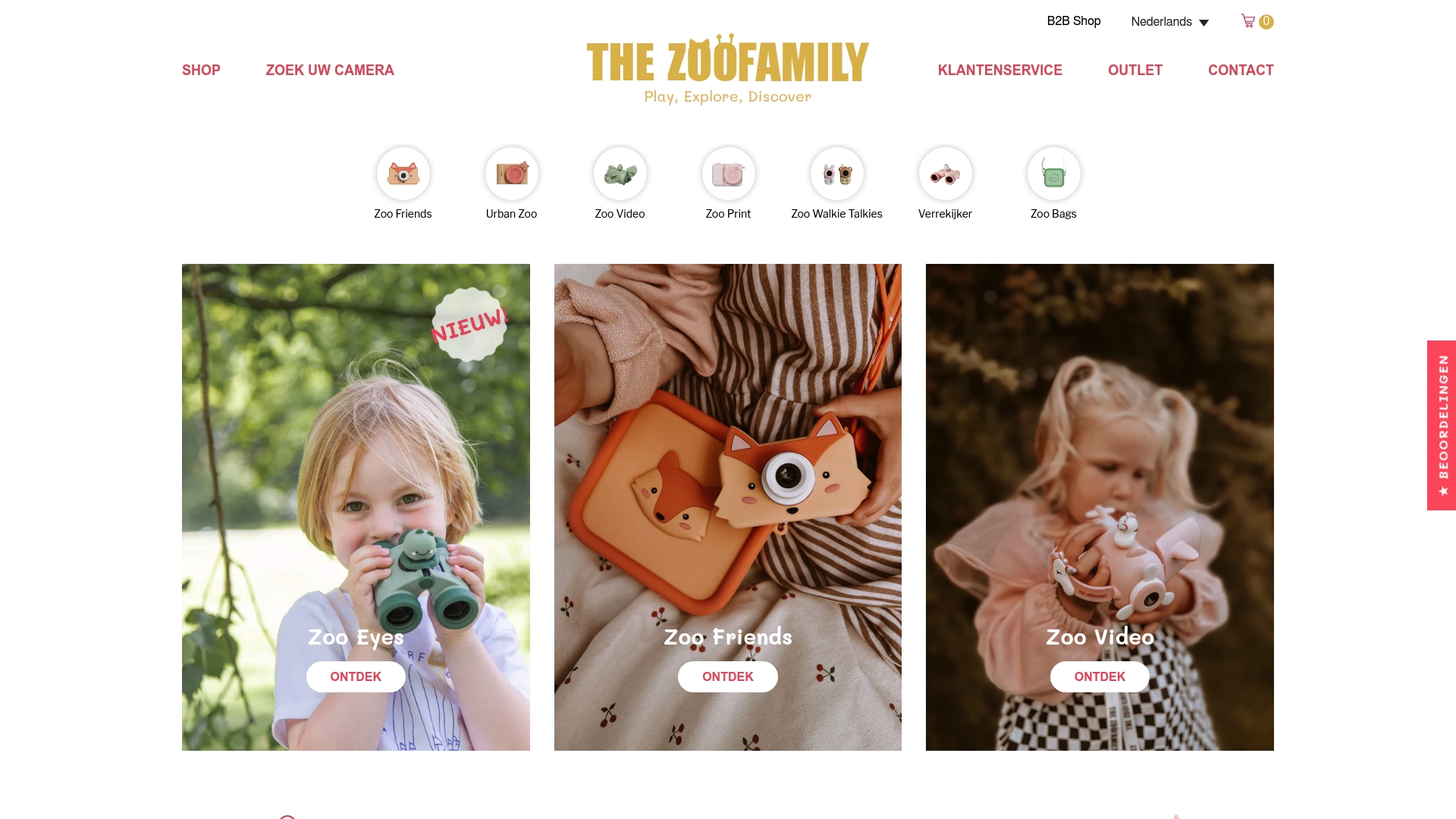
See the full range, including cameras, walkie-talkies and night lights, at The Zoofamily, or go straight to the Zoo Friends collection.
FAQ
What is the difference between eco cleaning and green cleaning?
They mean the same thing in everyday use. Both describe cleaning with natural or certified products and methods that reduce harm to people and the environment. The aim also includes less waste and a smaller carbon footprint.
How can I tell if a cleaning product is really eco-friendly?
Look for a credible third-party ecolabel and read the ingredient list. Words such as ‘green’, ‘natural’ and ‘eco-friendly’ are largely unregulated, so they are not enough alone. Also check whether the packaging is recyclable, recycled or refillable.
Are homemade cleaners safe around children and pets?
Store them like any other cleaner. Keep them in labelled containers, out of reach of children and pets, and never near food. Do not mix products, and keep children and pets away from a surface until it is dry and has no odour.
Can I replace bleach with vinegar or baking soda?
For everyday dirt, soap, baking soda and vinegar-based recipes handle many jobs. Disinfectants are only needed on high-touch surfaces such as bathroom fixtures and doorknobs. Never mix bleach with ammonia, and clean a surface before you disinfect it.
Sources
- What Is Green Cleaning? (The Spruce)
- EC Green Cleaning (NJ Green Building Manual)
- Green cleaning (IEEE Technology Navigator)
- Identifying Greener Cleaning Products (US EPA)
- How to shop for green cleaners (David Suzuki Foundation)
- Green Cleaning: Non-toxic cleaning recipes for your home (US EPA)
- Cleaning and disinfecting surfaces in non-health care settings (WHO)
- Clean It! Safer House-Cleaning Methods (EBMUD)
- A compilation of life cycle studies for six household detergent product categories