

Over 60 percent of british and European families now prioritize eco-friendly outdoor play for their children. For many parents in France and Germany, turning your own garden into a creative haven brings both peace of mind and a chance to connect with nature. Discover how simple steps and sustainable materials can spark your child’s imagination and transform everyday outdoor time into meaningful family adventures.
Table of Contents
- Step 1: Assess Outdoor Space And Gather Eco-Friendly Materials
- Step 2: Design Nature Inspired Play Structures For Kids
- Step 3: Build And Assemble Safe Play Elements Together
- Step 4: Add Creative Activities To Encourage Nature Engagement
- Step 5: Test And Verify Playground Safety Before Use
Quick Summary
| Main Insight | Explanation |
|---|---|
| 1. Assess Outdoor Space Thoroughly | Measure dimensions and identify natural features to inform playground design and promote engaging play opportunities for children. |
| 2. Use Eco-Friendly Materials | Opt for locally sourced, sustainable materials like recycled timber and native plants to create a safe and stimulating playground environment. |
| 3. Prioritise Safety in Design and Build | Ensure all playground elements are stable, secure, and free from hazards while caring for children’s safety during play activities. |
| 4. Engage Children in Nature Activities | Introduce sensory activities to encourage interaction with the environment, enhancing their learning and appreciation of nature. |
| 5. Conduct Regular Safety Inspections | Implement a quarterly checklist to assess playground safety standards and maintain a secure play area for children. |
Step 1: Assess Outdoor Space and Gather Eco-Friendly Materials
Transforming your garden into a magical playground begins with a thoughtful assessment of your available outdoor space and selecting sustainable materials that connect children with nature. Playground design research highlights the importance of creating environments that offer challenges and opportunities for personalised play.
Start by walking through your garden or outdoor area, measuring the dimensions and noting key features like existing vegetation, terrain variations, and potential obstacles. Look for natural elements such as trees, slopes, or rocky areas that can be incorporated into your playground design. Consider sunlight exposure, shade availability, and ground surface quality. Ideal spaces will have a mix of soft ground cover like grass or sand and slightly uneven terrain that provides natural play challenges.
Gather eco-friendly materials that are locally sourced and sustainable. Wood offcuts from local carpentry workshops, recycled tyres, natural stones, fallen branches, and untreated timber can become fantastic playground components. Utilising local sustainable materials like soil, wood, and natural vegetation creates a stimulating outdoor play environment that supports learning and engagement.
Professional Recommendation: Select materials that are robust, splinter-free, and can withstand outdoor conditions while providing safe play opportunities for children.
Here is a comparison of common eco-friendly playground materials and their benefits:
| Material Type | Main Benefit | Example Use |
|---|---|---|
| Recycled timber | Low environmental impact | Balance beams, platforms |
| Natural stone | Highly durable, varied form | Climbing steps, borders |
| Fallen branches | Promotes creative shapes | Tunnels, fort frames |
| Recycled tyres | Provides cushioning effect | Stepping zones, swings |
| Native plants | Supports local wildlife | Shaded areas, soft zones |
Step 2: Design Nature Inspired Play Structures for Kids
Creating engaging play structures that connect children with nature requires thoughtful design that transforms ordinary garden spaces into extraordinary childhood adventure zones. The key is to use natural materials and imaginative layouts that encourage exploration and creativity.
Start by sketching a preliminary design that incorporates existing landscape features. Wooden logs can become balance beams, large stones can serve as climbing elements, and fallen branches might transform into natural tunnels or fort foundations. Consider creating multiple play zones that offer different sensory experiences wind a winding path through various textures and heights. Nature play spaces integrate surrounding landscapes with materials like boulders logs and plants to promote active and imaginative outdoor experiences.

Prioritise safety while maintaining a sense of adventure by ensuring all natural materials are securely positioned and free from sharp edges or potential hazards. Smooth wooden surfaces sand down rough timber elements and check that climbing structures have adequate support. Use native plants and local materials to create a playground that feels like a natural extension of your garden environment.
Professional Recommendation: Always test playground structures yourself and supervise children during play to ensure both excitement and safety.
Step 3: Build and Assemble Safe Play Elements Together
Building safe playground elements requires careful planning and attention to detail. Community involvement and technical safety standards are crucial when developing playground structures that provide stimulating and durable play opportunities.
Start by gathering all necessary materials and tools before beginning assembly. Ensure you have protective equipment like work gloves and safety glasses. Wooden elements should be carefully sanded to remove potential splinters and checked for structural integrity. Use child-safe wood treatments and ensure all connections are secure and robust. Following comprehensive safety guidelines helps minimise injury risks during playground equipment installation.
Pay special attention to anchoring play structures securely into the ground. Create stable foundations for climbing frames logs and balance beams. Check that all elements can support a child’s weight without wobbling or shifting. Maintain appropriate spacing between structures to allow safe movement and prevent potential collisions. Test each assembled element thoroughly before allowing children to use the playground.
Professional Recommendation: Always perform a comprehensive safety inspection of playground elements before permitting children to play and conduct regular maintenance checks to ensure ongoing safety.
Step 4: Add Creative Activities to Encourage Nature Engagement
The Green Hour initiative offers innovative strategies for inspiring children to connect deeply with the natural world. Transforming your outdoor playground into an immersive learning environment requires imagination creative activities and a sense of playful exploration.
Begin by introducing sensory discovery activities that encourage children to observe and interact with their surroundings. Create a nature detective kit with magnifying glasses notebooks and small collection bags. Invite children to explore different textures collect interesting leaves examine insects and document their discoveries. Audubon nature programs provide excellent inspiration for wildlife observation and environmental exploration projects that can spark curiosity and develop a genuine connection with the natural world.
Develop engaging challenges that motivate children to interact with their environment. Suggest activities like wildlife tracking bird watching plant identification or creating nature art using found materials. Encourage children to sketch plants take photographs of interesting natural features or create landscape maps of their playground. These activities transform outdoor play into an educational adventure that stimulates creativity and environmental awareness.
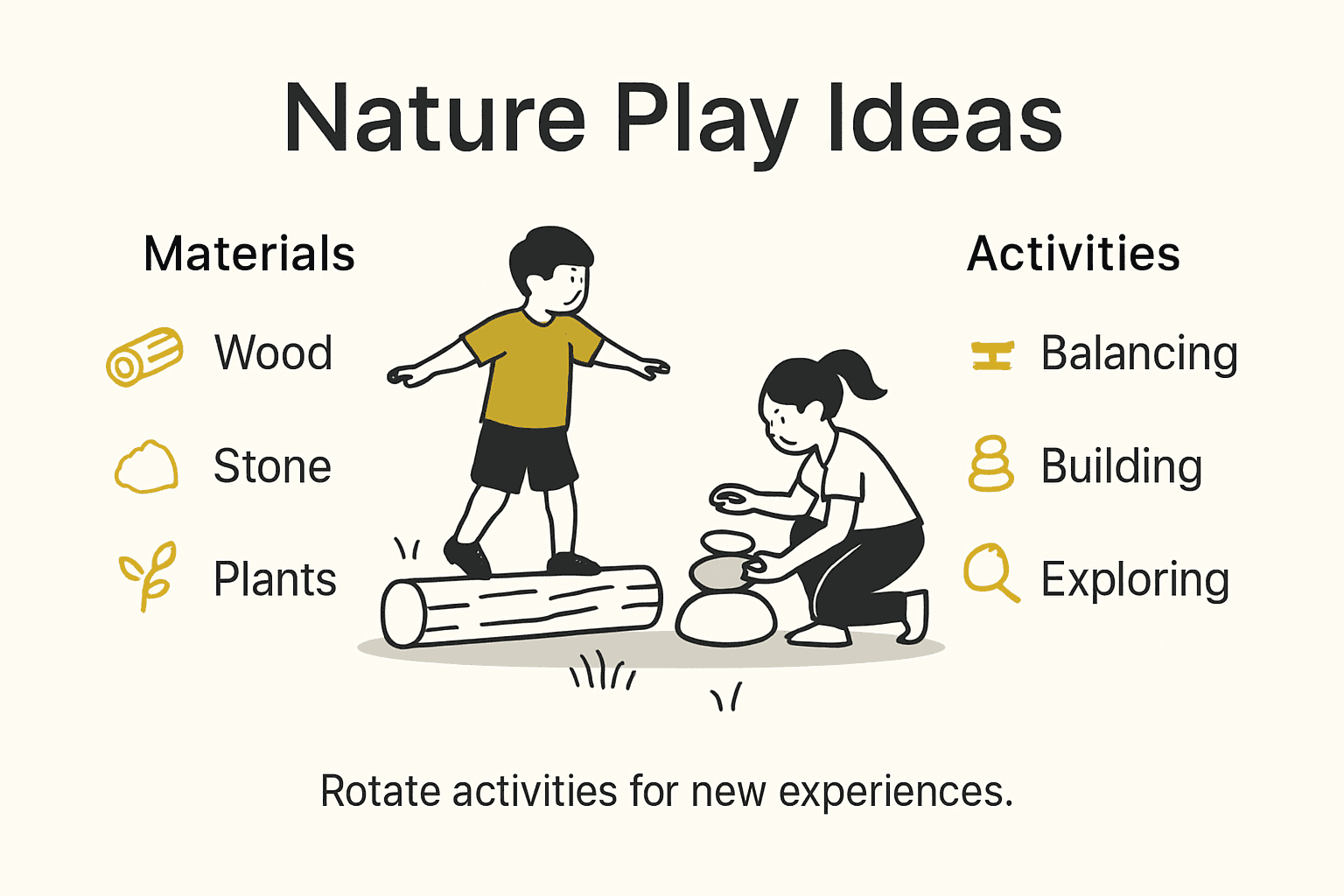
Professional Recommendation: Rotate activities regularly to maintain children’s interest and ensure each nature exploration feels like an exciting new discovery.
Below is a summary of creative nature engagement activities and their educational focus:
| Activity | Main Skill Developed | Engagement Example |
|---|---|---|
| Sensory discovery trail | Observation | Explore textures and sounds |
| Wildlife tracking | Critical thinking | Identify animal footprints |
| Plant identification | Scientific knowledge | Use guidebooks to label species |
| Nature art creation | Artistic expression | Build sculptures with leaves |
| Landscape mapping | Spatial awareness | Sketch playground layout |
Step 5: Test and Verify Playground Safety before Use
The National Recreation and Park Association provides comprehensive training for systematic playground safety inspections, ensuring every play structure meets critical safety standards before children use them. Understanding how to thoroughly evaluate playground elements is crucial for preventing potential injuries and creating a secure play environment.
Begin with a meticulous visual inspection of all playground components. Check wooden structures for splinters loose screws or rotting sections. Test the stability of climbing frames swings and balance beams by applying gentle pressure and ensuring they can support a child’s weight without significant movement. Examine ground surfaces for uneven areas sharp objects or potential tripping hazards. Playground safety assessment tools offer detailed report cards and inspection guidelines to systematically verify equipment integrity.
Perform hands-on testing of each play element. Simulate a child’s movement by applying weight to structures and checking connection points. Measure gaps between components to ensure they cannot trap small limbs. Verify that fall zones around elevated structures have adequate soft surfacing like wood chips or rubber matting. Consider conducting your safety check during different times of day to assess how weather and temperature might impact equipment stability.
Professional Recommendation: Create a quarterly safety checklist and document your inspections to maintain a consistent and comprehensive approach to playground maintenance.
Spark Outdoor Creativity and Nature Connection at Home
Creating a safe and imaginative DIY playground can be challenging when you want to inspire children to explore and connect with nature. The article highlights key goals such as using eco-friendly materials, designing playful yet secure structures, and encouraging nature engagement. These ideas align perfectly with the values behind The Zoofamily, where every product is designed to deepen kids’ curiosity about wildlife and the environment while nurturing creativity.
Discover how The Zoofamily helps bring your nature-inspired playground to life:
- Equip kids with engaging tools like cameras and binoculars that complement your outdoor setup
- Foster meaningful connections to wildlife through beautifully crafted animal references
- Support a greener future as every purchase contributes to tree planting
Ready to transform your garden into a magical sanctuary of play and learning? Explore our carefully designed children’s cameras, walkie-talkies, and binoculars at The Zoofamily. Experience how thoughtful tools spark imagination and encourage discovery while supporting environmental restoration. Visit our website now to give your children a playground adventure that lasts a lifetime.
Frequently Asked Questions
What are some eco-friendly materials I can use for a DIY playground at home?
Using eco-friendly materials is crucial for creating a sustainable playground. Consider gathering recycled timber, natural stones, fallen branches, and native plants from your surroundings. Start by sourcing materials locally to ensure they are sustainable and suitable for outdoor use.
How can I design engaging play structures for kids using natural elements?
To design engaging play structures, incorporate existing landscape features like trees and rocks into your layout. Sketch ideas that utilise logs for balance beams and stones for climbing. Aim to create multiple play zones with varied sensory experiences to enhance children’s creativity and exploration.
What safety measures should I take when building a DIY playground?
Prioritising safety involves inspecting all materials and securely anchoring structures. Sand down rough edges on wood and check that climbing elements are stable. Conduct a thorough safety inspection to ensure every element is safe for children to use before allowing them to play.
How can I encourage children to engage with nature during play?
You can encourage engagement with nature by introducing sensory discovery activities that allow children to explore their environment. Create nature detective kits with tools for observing and documenting their findings. Rotate these activities regularly to keep their interest alive and encourage ongoing exploration.
How do I test playground safety before my children use it?
Testing playground safety involves a detailed visual and hands-on inspection of all structures. Look for any loose components, sharp edges, or tripping hazards to ensure children’s safety. Aim to complete a safety checklist for regular maintenance checks at least once every three months.
Recommended
- Making Learning Fun: Engaging Activities for Your Kids – The Zoofamily
- Understanding the Benefits of Imaginative Play – The Zoofamily
- 7 Astuces pour explorer la nature et decouvertes montessori – The Zoofamily
- Bricolages avec coquillages : Créez des cadeaux uniques pour enfants – The Zoofamily
- 7 aizraujošas idejas ko darīt Rīgā brīvdienās piedzīvojumu meklētājiem – Skydive Latvia