

Over 60 percent of northern European parents report concerns about excessive screen time, driving the search for engaging play alternatives. For eco-conscious mothers who value creative British outdoor traditions and want their children connected to nature, walkie talkies offer an inventive approach that inspires curiosity and confidence. Discover how these simple devices transform communication into adventure, supporting social growth and imaginative outdoor play for every season.
Table of Contents
- What Are Walkie Talkies For Children?
- Types Of Kids’ Walkie Talkies Compared
- How Walkie Talkies Support Outdoors & Creativity
- Safety, Independence And Supervision Outdoors
- Vital Alternatives To Screens And Phones
- Common Mistakes And Safe Usage Tips
Key Takeaways
| Point | Details |
|---|---|
| Enhanced Communication | Walkie talkies encourage children to engage in direct communication, fostering social skills and turn-taking in a fun environment. |
| Developmental Benefits | These devices promote confidence, cooperation, and imaginative play, enhancing overall child development. |
| Safety Features | Modern walkie talkies offer safety features like volume limiting and emergency channels, ensuring secure use outdoors. |
| Screen Time Alternative | Walkie talkies provide an engaging, physical alternative to screens, encouraging active, meaningful interactions. |
What Are Walkie Talkies For Children?
Walkie talkies are portable two-way communication devices specifically designed for children to enhance play, learning, and social interaction. These compact electronic devices allow youngsters to communicate wirelessly across short distances, transforming ordinary play experiences into exciting adventures of connection and imagination.
Children’s walkie talkies typically feature simplified controls and robust designs that make them easy to operate for younger users. Special communication adaptations enable these devices to serve diverse needs, including models designed for children with different communication abilities. Some models incorporate engaging animal themes or bright colours to make them more appealing to children, encouraging exploration and interactive play.
The primary functions of children’s walkie talkies extend beyond simple communication. They serve multiple developmental purposes: promoting social skills, encouraging cooperative play, building confidence in communication, and providing a sense of independence. Whether used during outdoor activities, family camping trips, or backyard games, these devices help children learn turn-taking, develop listening skills, and practice clear verbal expression.
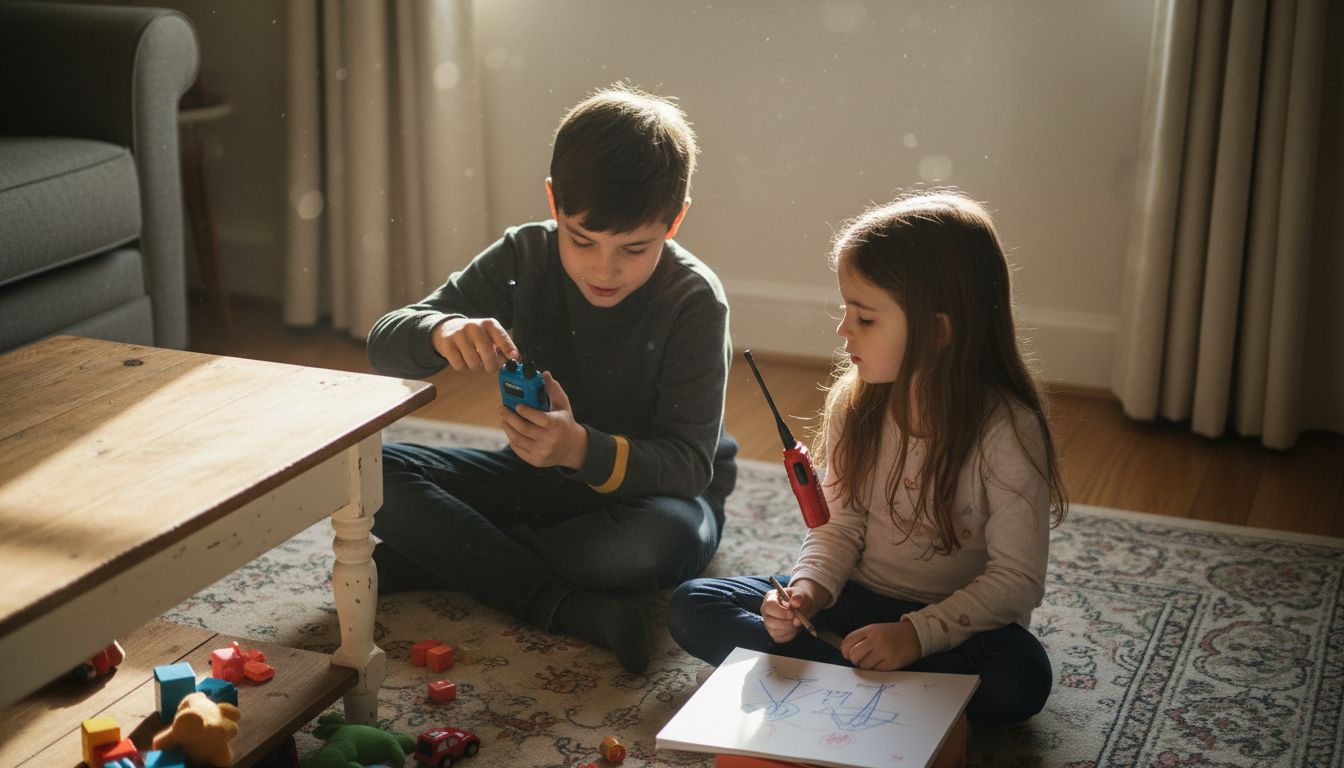
Beyond recreational use, walkie talkies can also introduce children to basic technology concepts, teaching them about radio communication, signal transmission, and interactive communication protocols. By making communication feel like a fun game, these devices transform learning into an engaging experience that feels more like play than education.
Pro tip: Select walkie talkies with child-friendly features like volume limits, durable construction, and simple push-to-talk buttons to ensure safe and enjoyable communication experiences.
Types Of Kids’ Walkie Talkies Compared
Walkie talkies for children come in diverse configurations, each designed to meet specific developmental and recreational needs. Different models offer unique features tailored to various age groups and usage scenarios, making selection an important consideration for parents seeking the right communication device for their child.
The primary categories of children’s walkie talkies can be broadly classified into several key types:
- Basic Models: Simple devices with limited range, ideal for younger children learning communication basics
- Outdoor Adventure Walkie Talkies: Robust designs with increased range, weather resistance, and durability for active play
- Educational Walkie Talkies: Advanced models featuring additional learning components like built-in educational games or language development features
- Themed Walkie Talkies: Devices decorated with popular cartoon characters or animal designs to enhance engagement
When comparing different types, parents should evaluate critical factors such as communication range, battery life, sound quality, and additional safety features. Some sophisticated models include built-in flashlights, emergency channels, and volume control mechanisms to ensure child-friendly operation. The ergonomic design is particularly crucial, with manufacturers creating devices specifically sized for smaller hands and featuring simplified button configurations that make communication intuitive for children.
Technology advancements have transformed walkie talkies from simple communication tools into interactive learning devices. Modern children’s walkie talkies often incorporate digital technologies, offering clearer sound transmission, extended battery life, and more engaging user interfaces that appeal to tech-savvy younger generations.
Here’s a quick overview of how different types of children’s walkie talkies compare in terms of their ideal usage and key strengths:
| Type of Walkie Talkie | Ideal For | Key Strengths |
|---|---|---|
| Basic Models | Indoor play, younger children | Easy controls, safe range |
| Adventure Designs | Camping, outdoor games | Weatherproof, long battery life |
| Educational Versions | Learning activities, group projects | Built-in games, enhances skills |
| Themed Devices | Imaginative scenarios, themed play | Visual appeal, encourages creativity |
Pro tip: Always test walkie talkie range and durability in your specific environment before purchasing, as performance can vary significantly between indoor and outdoor settings.
How Walkie Talkies Support Outdoors & Creativity
Walkie talkies represent far more than simple communication devices for children; they are powerful tools that transform outdoor play experiences and stimulate creative engagement with the environment. Outdoor play dynamics are significantly enhanced by these interactive devices, providing children with unique opportunities for imaginative exploration and social interaction.
These communication tools encourage children to venture beyond traditional play boundaries, creating elaborate storytelling scenarios and collaborative adventures. Whether pretending to be explorers, secret agents, or wilderness researchers, children use walkie talkies to construct complex narrative worlds that extend their imaginative capabilities. The devices become conduits for creativity, enabling youngsters to design intricate play scenarios that blend physical activity with narrative development.
Digital interaction through walkie talkies introduces children to structured yet flexible communication methods. Interactive play experiences demonstrate how these devices motivate children to engage more deeply with their surroundings. By providing a technological bridge between individual play and group interaction, walkie talkies help children develop critical social skills while maintaining the spontaneity of outdoor exploration.
The physical design of modern walkie talkies further supports creative play. Robust, child-friendly models with animal-themed designs, simple controls, and engaging audio features transform these devices into companions for outdoor adventures. They encourage children to communicate, problem-solve, and collaborate in ways that traditional toys cannot, bridging technological interaction with natural play environments.
Pro tip: Encourage children to create storytelling games using walkie talkies, setting imaginative scenarios that promote communication and collaborative play.
Safety, Independence And Supervision Outdoors
Child safety during outdoor activities represents a critical concern for parents seeking to balance protective oversight with children’s need for exploration and independence. Walkie talkies emerge as an ingenious solution, providing a technological bridge that enables parents to maintain communication without hovering or restricting a child’s natural curiosity.
These communication devices create a sophisticated supervision framework that respects children’s autonomy while ensuring their security. Parents can establish predefined boundaries and communication protocols, allowing children to explore outdoor environments with increased confidence. The ability to instantly connect enables quick check-ins, emergency communications, and real-time location confirmation without physically constraining a child’s movements.
Communication reliability in remote areas makes walkie talkies particularly valuable for outdoor adventures. Unlike mobile phones that may struggle with signal strength in wilderness or rural settings, these devices provide consistent communication channels. This reliability becomes crucial during family camping trips, hiking excursions, or neighbourhood play scenarios where traditional mobile networks might fail.
Modern walkie talkies incorporate advanced safety features like emergency channels, location tracking, and volume-limited audio to enhance child protection. These technological innovations transform the devices from simple communication tools into comprehensive safety systems that provide parents peace of mind while allowing children to develop independence and spatial awareness.
Below is a summary of essential safety and reliability features to consider when selecting walkie talkies for children:
| Feature | Why It Matters | Added Benefit |
|---|---|---|
| Emergency Channels | Enables instant contact during issues | Greater peace of mind |
| Location Tracking | Supports monitoring outdoors | Increased supervision capacity |
| Volume Limiting | Protects children’s hearing | Promotes safe usage |
| Durable Build | Withstands drops and weather | Longer lasting communication device |
Pro tip: Establish clear communication rules and practice emergency protocols with children before allowing independent walkie talkie usage to maximise safety and understanding.
Vital Alternatives To Screens And Phones
Screen time challenges for children have become increasingly prominent in modern parenting conversations, highlighting the critical need for engaging alternatives that promote active, meaningful interaction. Walkie talkies emerge as a compelling solution, offering children a dynamic communication tool that dramatically differs from passive smartphone engagement.
Unlike smartphones that typically encourage solitary, sedentary behaviour, walkie talkies stimulate physical movement, social interaction, and imaginative play. Children using these devices are encouraged to explore outdoor environments, collaborate with peers, and develop communication skills through direct, real-world interactions. The tactile nature of walkie talkies creates a more intentional and interactive communication experience compared to the impersonal digital messaging prevalent on mobile devices.
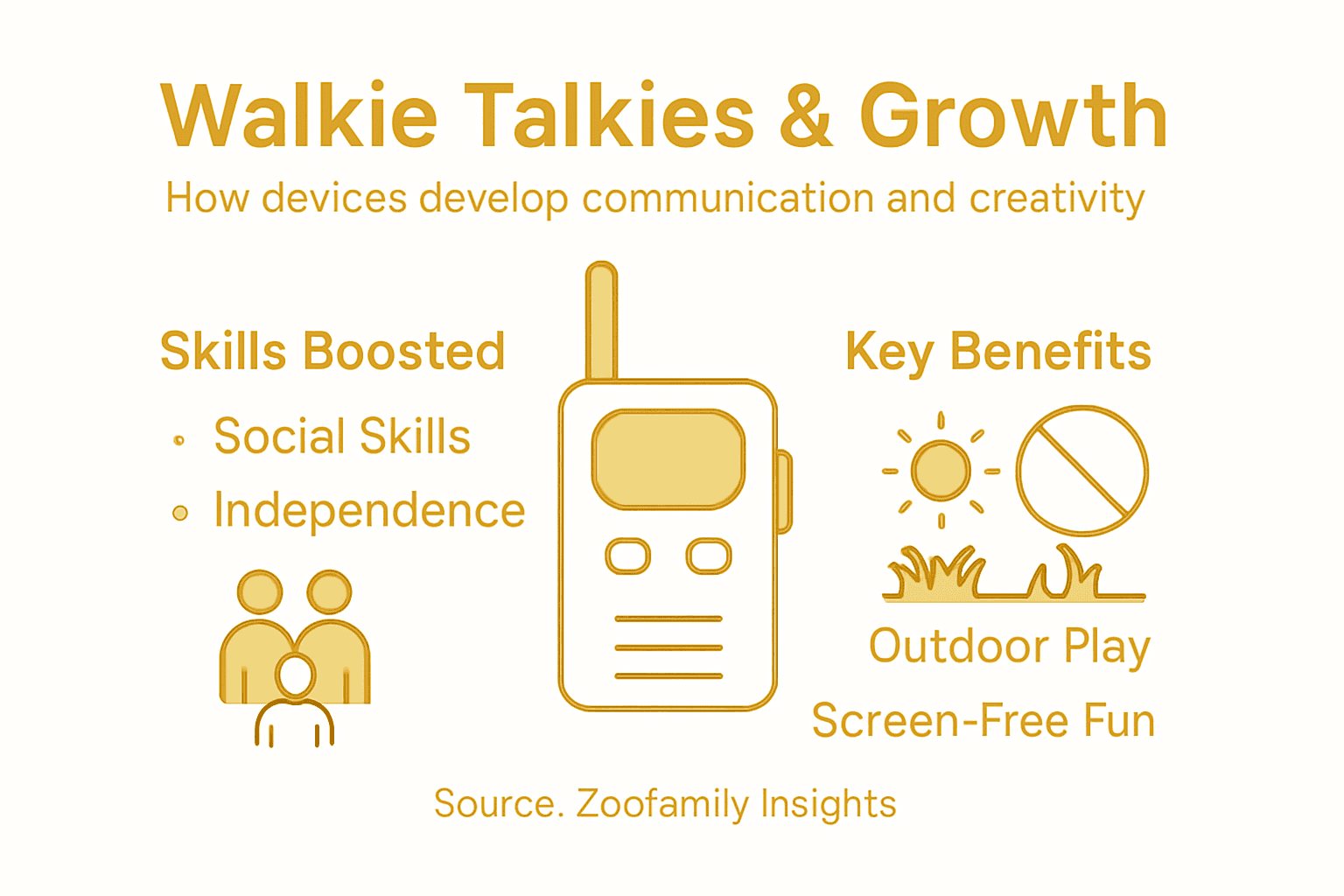
Cognitive development alternatives to screen-based technologies are crucial for healthy childhood growth. Walkie talkies represent more than just a communication device; they are a developmental tool that supports multiple aspects of child development. By requiring verbal communication, turn-taking, and active listening, these devices help children build essential social and emotional skills that smartphone interactions often bypass.
The design of modern walkie talkies deliberately addresses the shortcomings of digital screens. With robust, child-friendly features like simplified controls, engaging audio interfaces, and often animal-themed designs, these devices transform communication into an adventure. They encourage children to look up, engage with their surroundings, and connect with others in meaningful, physical ways that smartphones cannot replicate.
Pro tip: Create a daily screen-free challenge using walkie talkies, encouraging children to communicate and play without relying on digital devices.
Common Mistakes And Safe Usage Tips
Navigating the world of children’s walkie talkies requires understanding effective communication protocols. Parents and children must recognise common pitfalls that can undermine the safety and enjoyment of these devices, transforming potential communication barriers into opportunities for learning and responsible technology use.
Key communication mistakes frequently emerge when children first use walkie talkies. These include talking continuously without pausing, failing to listen, interrupting ongoing conversations, and not waiting for a clear channel before transmitting. Safe usage strategies become critical in teaching children proper radio etiquette. Essential practices involve speaking clearly and concisely, using standardised phrases like ‘over’ to indicate message completion, and understanding basic transmission courtesy.
Technical challenges can also compromise walkie talkie effectiveness. Parents should teach children to regularly check battery levels, understand signal strength limitations, and recognise appropriate environments for device usage. Some walkie talkies feature volume controls and range indicators that can help children become more sophisticated users, transforming these devices from simple communication tools into educational technology experiences.
Establishing family-specific communication protocols can significantly enhance walkie talkie safety. This might include defining specific channels for different family members, creating emergency communication codes, and setting clear boundaries about when and where walkie talkies can be used. Such structured approaches help children develop responsible communication skills while maintaining the playful, interactive nature of these devices.
Pro tip: Create a family walkie talkie ‘training day’ where everyone learns and practices proper communication protocols together.
Foster Growth and Imagination with The Zoofamily Walkie Talkies
Children’s walkie talkies are more than just toys. They are tools that nurture communication skills, independence, and creativity while encouraging outdoor adventures and meaningful social interaction. The article highlights challenges such as safe outdoor supervision, developing communication etiquette, and providing alternatives to screen time. At The Zoofamily, we address these concerns by offering durable, child-friendly walkie talkies designed to inspire natural curiosity and collaborative play.
Explore our unique range where each device connects kids not only with friends but also with nature through engaging animal themes that spark wonder and learning. With every purchase, you support a greener future because for one camera sold we plant one tree. Discover how to transform playtime into growth time by visiting The Zoofamily. Take the first step towards empowering your child’s development and helping the planet today.
Frequently Asked Questions
What are the benefits of walkie talkies for children’s development?
Walkie talkies support children’s development by promoting social skills, encouraging cooperative play, and building confidence in communication. They provide opportunities for imaginative scenarios and help children learn turn-taking and listening skills.
How do walkie talkies enhance outdoor play for children?
Walkie talkies enhance outdoor play by allowing children to communicate while exploring their environment, leading to creative scenarios and collaboration. They encourage active participation and imaginative storytelling, making outdoor adventures more engaging.
What features should parents look for in children’s walkie talkies?
Parents should look for features such as durable construction, volume limits for hearing protection, simplified controls for easy operation, and safety features like emergency channels and location tracking to ensure a safe and enjoyable experience.
How can walkie talkies provide safety and independence for children during outdoor activities?
Walkie talkies allow children to explore outdoors with more independence while enabling parents to maintain communication for safety. They provide a reliable connection for quick check-ins, ensuring a balance between supervision and freedom.
Recommended
- Understanding How Walkie Talkies Work for Kids – The Zoofamily
- Comment fonctionne un talkie walkie : guide simple pour mamans et enfants – The Zoofamily
- Comprendre l’utilité des talkies walkies enfants – The Zoofamily
- Comprendre l’utilité des talkies walkies enfants – The Zoofamily
- Complete Guide to Team Communication Improvement Tips - Blog
- 13 Anger Management Activities for Kids, Children and Teens