

TL;DR:
- Water scarcity challenges exist in Europe despite heavy rainfall due to infrastructure and climate disruptions.
- Teaching methods like practical experiments and gamified activities effectively instill water conservation habits in children.
- Family, school, and community initiatives reinforce water-saving values and create lasting behavioral change.
Europe gets a reputation for grey skies and steady rain, so it can feel strange to worry about water. Yet the UK faces water scarcity despite its famously damp weather, and the same pattern appears across the continent. The truth is, rainfall and accessible, clean water are two very different things. Children who grow up understanding this become the eco-conscious adults our planet needs. This guide gives you practical, evidence-backed, genuinely fun ways to turn water conservation into a family adventure rather than a list of rules to enforce.
Table of Contents
- Why water conservation matters for children in Europe
- Evidence-based strategies: how kids learn best about water
- Fun activities and everyday habits for water-wise children
- School and community: amplifying impact beyond the home
- A parent’s perspective: what works (and what doesn’t) in real life
- Continue your eco journey with The Zoofamily
- Frequently asked questions
Key Takeaways
| Point | Details |
|---|---|
| Rain doesn’t mean surplus | Many European regions experience water scarcity even with frequent rain, so education matters everywhere. |
| Playful learning is best | Kids retain water-saving habits more when activities are fun, gamified, and hands-on. |
| Teamwork amplifies change | Family, school, and community involvement create lasting water-wise behaviours. |
| Everyday tasks matter | Simple routines like timed showers and garden mulching teach practical conservation lessons for life. |
Why water conservation matters for children in Europe
Many families across Europe assume water is simply not something to worry about. The taps work, the rain falls, and life carries on. But this assumption quietly misleads an entire generation of children.
Rainfall does not automatically translate into water you can drink, cook with, or bathe in. Water must be collected, treated, stored, and distributed through ageing infrastructure. Localised shortages are on the rise even in cities and regions that receive plentiful rainfall. Climate change is disrupting seasonal patterns, meaning the rain that does fall often arrives at the wrong time and in the wrong amounts. Reservoirs run low during dry summers, and treatment systems struggle to keep pace with demand.
Children are particularly important in this conversation for one surprising reason: they change household behaviour more effectively than most adults. Research consistently shows that when children learn about environmental responsibility at school or through structured activities, they bring those habits home. They remind parents to turn off taps. They notice when the hose runs unnecessarily. They become the family’s eco-conscience.
Here are some of the most common misconceptions worth addressing with your children:
- “It rains all the time here, so we have plenty of water.” Rainfall and usable water supply are not the same thing.
- “One person’s habits don’t make a difference.” Household water use adds up significantly across millions of families.
- “Water conservation is for dry countries only.” Scarcity affects temperate climates too, especially during summer months.
- “Saving water is boring and inconvenient.” Gamified approaches prove otherwise, as you’ll discover below.
“Water scarcity is not just a problem for arid regions. It is increasingly a local issue for communities across Northern Europe, where demand outpaces supply during critical periods.”
Exploring eco-responsible water tips together as a family is a wonderful starting point. It reframes conservation not as a sacrifice but as a shared mission, which is exactly the mindset children respond to.
Evidence-based strategies: how kids learn best about water
Not all teaching methods are equal, especially when your audience is between five and twelve years old. Lectures and statistics tend to wash over children without leaving much trace. What actually works is rooted in solid educational research.
Hands-on, gamified, and visual learning dramatically increases how much children retain. When a child physically measures how much water drips from a leaking tap over an hour, the number becomes real in a way no chart ever could. Interactive programmes boost knowledge and change actual water use behaviour in children, as demonstrated by the Droppie Water initiative in the Netherlands, a free educational programme used widely in Dutch primary schools.
Peer teaching is another powerful tool. When children explain what they’ve learnt to a sibling or friend, they consolidate that knowledge far more deeply than if they simply listened to an adult. Family participation matters too. Children whose parents actively join in conservation activities show stronger and longer-lasting behaviour change.
A social learning theory-based programme significantly increased water and energy awareness among primary school children, confirming that learning alongside peers and family members is far more effective than individual instruction.
Here is a simple comparison of teaching approaches:
| Method | Engagement level | Behaviour change | Best age range |
|---|---|---|---|
| Lecture or rules | Low | Minimal | Any |
| Visual storytelling | Medium | Moderate | 5 to 8 |
| Hands-on experiments | High | Strong | 6 to 12 |
| Gamified challenges | Very high | Long-lasting | 5 to 12 |
| Peer and family teaching | Very high | Long-lasting | 7 to 12 |
To get started, try these approaches in order:
- Begin with a simple visual experiment at home, such as measuring water used during a long shower versus a short one.
- Introduce a family challenge with a small reward for hitting a weekly water-saving goal.
- Let your child teach a younger sibling or friend what they’ve learnt.
- Connect the activity to something they already love, like animals or nature photography.
- Celebrate progress visibly, using a chart on the fridge or a nature journal.
Pro Tip: Pair water conservation activities with early years water play for younger children. Sensory play with water naturally sparks curiosity, and you can gently introduce conservation ideas while they explore.
Fun activities and everyday habits for water-wise children
Knowing the theory is one thing. Having a ready list of activities you can actually do this weekend is another. The good news is that water conservation lends itself beautifully to games, challenges, and creative projects.
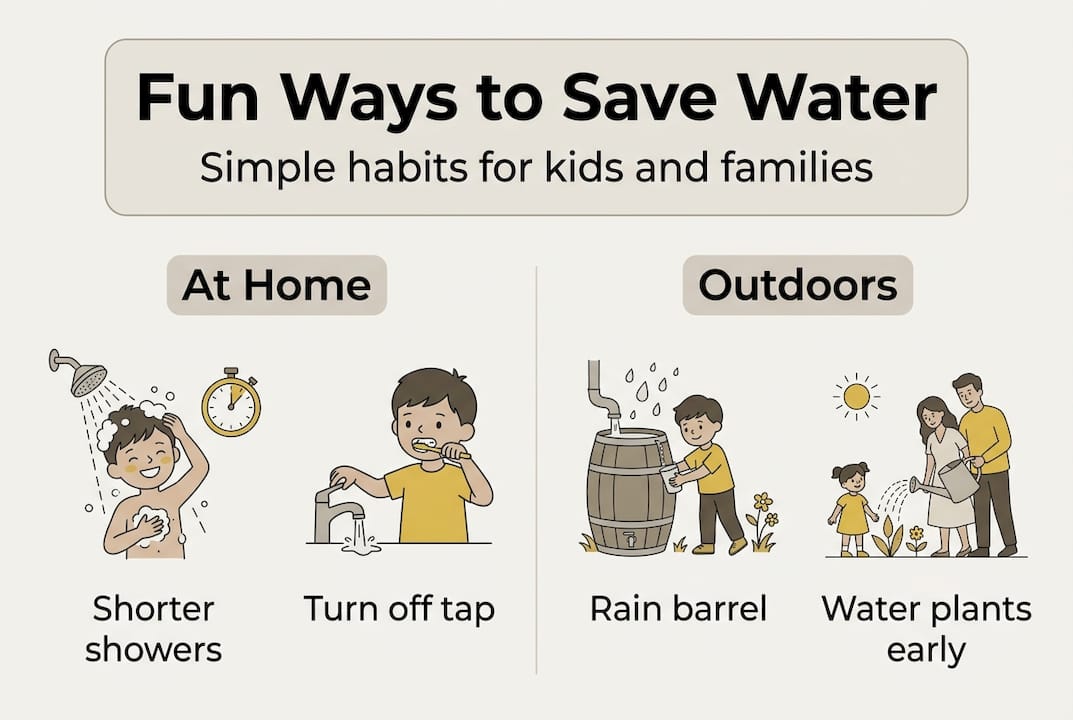
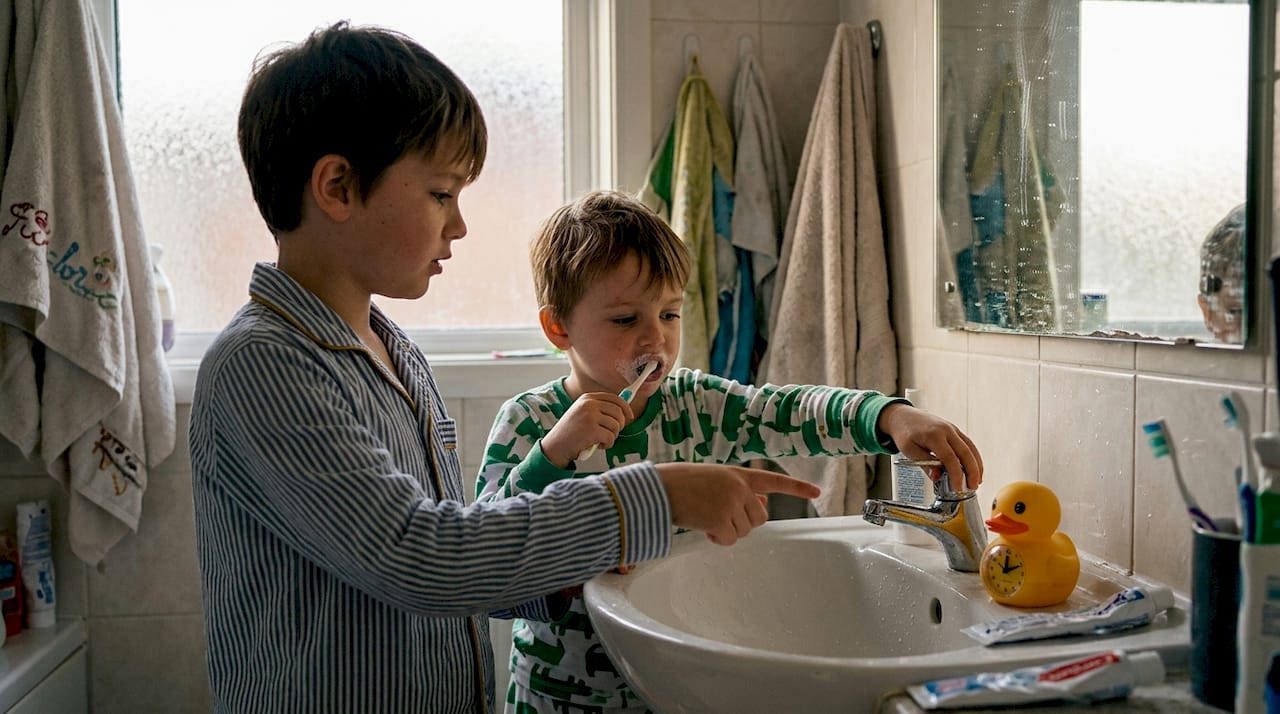
Proven family activities include the Turn-the-Tap-Off Tooth-Brushing Challenge, the Two-Song Shower Race, building a rain barrel together, and learning to water the garden with mulch to reduce evaporation. Each of these turns a daily routine into a mini-mission.
Here is a quick comparison of popular water-saving challenges:
| Activity | Age suitability | Water saved | Fun factor |
|---|---|---|---|
| Tap-off tooth brushing | 5 and up | Up to 6 litres per brush | Medium |
| Two-song shower race | 6 and up | Significant per shower | High |
| Rain barrel build | 8 and up | Hundreds of litres monthly | Very high |
| Mulch garden watering | 7 and up | Up to 70% less evaporation | Medium |
Beyond the challenges, small daily habits make a big difference:
- Place a bucket in the shower to collect warm-up water for plants.
- Use a timer or a favourite playlist to keep showers short and fun.
- Let children help read the water metre monthly to track family progress.
- Create a “water hero” sticker chart for younger children.
- Grow a small vegetable patch and discuss why plants need water wisely.
Pro Tip: Celebrate Earth Day ideas for kids by launching a new water challenge each April. It gives children an annual milestone to look forward to and builds a sense of global community around conservation.
For bath time, choosing eco-friendly bath toys is a simple way to reinforce your family’s values while keeping things playful. Even small choices send a message to children about what matters.
School and community: amplifying impact beyond the home
Home is where habits begin, but school and community are where they solidify. Across Europe, schools are increasingly becoming living laboratories for environmental education, and the results are impressive.
Eco-Schools in Istanbul and Slovak rainwater projects demonstrate how schools can install rainwater retention systems and green roofs that save significant costs while teaching children about water cycles through direct experience. One Slovak secondary school saved hundreds of euros monthly through these measures, turning the project into a hands-on science lesson that no textbook could replicate.
In Spain, the “Water at School” programme in Ibiza integrates in-depth water-saving activities into the curriculum and runs community-wide campaigns that reach families at home. The programme shows how school-based initiatives ripple outward, changing behaviour across entire communities.
Here is how European school models compare:
| Model | Country | Key feature | Community impact |
|---|---|---|---|
| Rainwater retention | Slovakia | Cost saving and living lab | Moderate |
| Eco-Schools | Turkey | Green infrastructure | High |
| Water at School | Spain | Curriculum plus community | Very high |
| Droppie Water | Netherlands | Digital and classroom tools | High |
If your child’s school does not yet have a water conservation programme, here are four steps to help start one:
- Share resources with the head teacher, such as the Droppie Water programme or Eco-Schools framework.
- Suggest a simple rainwater collection project for the school garden.
- Propose a student-led water audit, where children measure and report on school water use.
- Connect the initiative to existing science or geography lessons to ease adoption.
“When children see their school taking water conservation seriously, they internalise it as a community value rather than a personal inconvenience.”
Encouraging children to document these projects through eco photography is a wonderful way to deepen engagement. Photographing a rain barrel, a green roof, or a school garden gives children ownership of the story. Pairing this with eco-friendly routines at home creates a seamless loop between school and family life.
A parent’s perspective: what works (and what doesn’t) in real life
Here is something most water conservation guides won’t tell you: nagging does not work. Telling a seven-year-old that they are wasting a precious resource while they splash in the bath produces eye rolls, not behaviour change. Fear-based messaging, heavy statistics, and guilt rarely motivate children. They often do the opposite, making conservation feel like a punishment.
What genuinely works is giving children agency. When a child feels they are the hero of a challenge rather than the subject of a lecture, everything shifts. Gamification turns conservation into lifelong habits without a single scolding moment. The Two-Song Shower Race is not about restriction. It is about winning.
The most common mistake parents make is leading with importance rather than fun. Start with the game. The meaning follows naturally. Children who feel proud of their water-saving achievements will ask questions, seek more challenges, and eventually understand the bigger picture on their own terms.
Connecting conservation to water play for children in the early years builds an emotional relationship with water that makes later lessons land far more deeply.
Continue your eco journey with The Zoofamily
Teaching children to care for water is just one thread in a much richer tapestry of environmental education. At The Zoofamily, we believe that curious, nature-connected children grow into the planet’s most passionate protectors. From kids’ cameras that inspire eco photography to resources that make green living genuinely enjoyable, we are here to support your family every step of the way.
Explore our collection of water-saving ideas for families and discover how small, playful changes at home can add up to something truly meaningful. Join our community of eco-minded families across Europe and let’s raise the next generation of water heroes together.
Frequently asked questions
How can I introduce water conservation to my five-year-old?
Start with playful activities like turning off the tap during tooth brushing or using two favourite songs to time their shower. Gamified challenges like the Two-Song Shower Race are specifically recommended for young children because they feel like a game rather than a rule.
Are school water conservation programmes effective?
Yes, hands-on and curriculum-integrated programmes have been shown to improve knowledge and change behaviour. School-based programmes significantly improve water use awareness, as evidenced by the widely adopted Droppie Water initiative in the Netherlands.
Can rainwater collection really make a difference in water use?
Absolutely. Rainwater harvesting reduces water bills and teaches children about natural water cycles through direct experience. A Slovak school saved €500 per month using rainwater retention measures, turning the project into a live science lesson.
What if my child isn’t interested in water conservation?
Try framing it as a family challenge or competition rather than an environmental lesson. Peer teaching and gamified activities boost involvement by giving children a sense of ownership and pride in their achievements.