

This page gives you twelve ready-to-run recycled craft projects for children, sorted by age and time needed, plus the practical groundwork that makes recycling crafts stick: prepping materials, organising a maker-space, and setting simple learning goals. The ideas draw on tested approaches from resources like PBS Parents and The Zoofamily’s own project blog, so you’re not guessing what actually works with real families.
TL;DR:
- Using household waste like egg cartons and toilet rolls for crafts promotes creativity without extra cost, but requires proper prep and organization.
- Adults need to handle cutting, drilling, or electrical disassembly, especially with tins, glass, or electronic waste to ensure safety and proper recycling.
- Maintaining a designated, labeled “clean craft box” encourages children to develop recycling habits and simplifies project preparation.
- Recycled craft skills, such as sorting, sequencing, and fine motor control, support early learning and environmental awareness.
- When time or materials are limited, outdoor nature activities or eco-themed cameras can substitute for crafting and keep environmental curiosity alive.
Table of Contents
- Twelve art and craft recycling ideas using household waste
- Preparing recyclables safely before craft time
- Building a ‘clean recyclables’ box that actually gets used
- What children actually learn from recycled crafting
- Turning old clothing and textiles into craft projects
- Creative projects using electronic waste and small tech parts
- A small habit that keeps recycled crafting going
- An alternative when you want a ready-made nature prompt
- Sources
Twelve art and craft recycling ideas using household waste
Every project below uses materials most households throw out weekly. Pick based on the age group in front of you and how much time you actually have.
-
Toilet-roll binoculars (ages 3-5, 10 minutes). Tape two toilet rolls together, punch a hole on each side, thread string or wool through for a neck strap. Let children decorate with paint or stickers before assembly. Simplify further by skipping the string for toddlers who might tug at it.
-
Egg-carton flowers (ages 3-5, 15 minutes). Cut individual cups from an egg carton, snip petal shapes around the rim, paint, then push a pipe cleaner or twig through the base for a stem. Group several into a “garden” display.
-
Bottle-cap fish (ages 6-8, 20 minutes). Glue bottle caps onto a painted cardboard fish shape as scales, working from tail to head. Older children can sort caps by colour first to plan a pattern.
-
Water-bottle flowers (ages 6-8, 25 minutes). Cut the base of a plastic bottle into petal shapes, flatten slightly, paint, and mount on a cardboard tube stem. This one appears often in recycled craft roundups because the base naturally holds a flower shape without much cutting.
-
CD spring birds (ages 6-8, 20 minutes). Attach a paper cone beak and paper wings to an old CD, then hang from a spring or elastic thread so it bounces. Adults should pre-cut the cone for children under seven.
-
Tin-can planters (ages 6-8, 30 minutes, adult help required). Wash the can, decorate the outside, and have an adult pierce drainage holes before children add soil and seeds. Good for tying craft directly to growing something real.
-
Cereal-box puppets (ages 3-5, 15 minutes). Flatten a cereal box, draw a simple animal or character front and back, cut around the outline leaving the fold intact, and slide a hand inside like a sock puppet.
-
Milk-carton bus (ages 6-8, 30 minutes). Cut windows into a rinsed carton, paint the body, and glue on bottle-cap wheels. Older children (9+) can add cardboard passengers or a working door flap.
-
Toilet-roll town (ages 6-8, 30-40 minutes, works well as a group project). Each child decorates one or two rolls as a building, then combine them into a shared cardboard-base village. This scales easily into a classroom collaboration.
-
Crayon gems (ages 9+, 40-45 minutes, adult supervision for heat). Melt broken crayon pieces in a silicone mould in a low oven, then pop out as jewel shapes once cool. Skip the oven entirely for younger children by using crayon shavings glued onto paper instead.
-
Cardboard dinosaur cut-outs (ages 9+, 30 minutes). Trace a dinosaur template onto flattened cardboard, cut out, score fold lines for a free-standing base, and paint. Works as a fast single-session project or a multi-day painted diorama.
-
Bubble-wrap crocodile (ages 3-5, 15 minutes). Paint bubble-wrap green and press it onto paper to print scaly texture, then cut into a crocodile outline once dry.
Pro Tip: Keep one “master template” set of shapes (fish, flower, dinosaur) laminated in a folder. You’ll reuse them across several projects instead of redrawing every session.
Large craft collections document dozens of adaptable variants on these same bases, from CD crabs to tin-can planters, so once a technique clicks with your child, you can swap the animal or object without changing the method.
Preparing recyclables safely before craft time
Rinse milk and juice cartons immediately after emptying, and peel off sticky labels while they’re still slightly damp, since dried glue residue is much harder to remove. Leave items upside down on a tea towel overnight rather than stacking them wet.
Keep a small toolkit on hand: blunt-tip scissors, PVA glue, washi tape, masking tape, and a hole punch cover most projects on this list. Some tasks are adult-only: piercing drainage holes in tin cans, any cutting involving glass, and repurposing electronic waste with exposed wiring or batteries at home.
Check for small parts that pose a choking risk with children under three, and wash containers thoroughly if anyone in the group has food allergies, since trace residue can linger in ridges and seams — important pet-safety considerations when repurposing household recyclables for crafting, as explained in our Ultimate Guide to Upcycled Pet Food Ingredients.
Why this matters: PBS Parents notes that virtually any clean, dry household container or cardboard item can be upcycled into functional art, which is exactly why recycled crafting costs so little to start. You’re not sourcing anything, you’re just cleaning what’s already in the bin.
Building a ‘clean recyclables’ box that actually gets used
A labelled box near the kitchen bin, not buried in a cupboard, is the single change that makes recycled crafting a habit rather than an occasional scramble. PBS Parents recommends exactly this setup to avoid last-minute prep when a child suddenly wants to make something.
- Label one box “clean craft box” and drop in rinsed tubes, caps, lids, and small boxes as they’re used.
- Sort loose bits like caps and buttons into mason jars so children can see options at a glance.
- Use a shallow tray for anything mid-project, so a half-finished model doesn’t get tidied away by mistake.
- Rotate stock monthly, recycling anything unused so the box stays interesting rather than cluttered.
- Teach children to return offcuts to the box themselves as part of clean-up, not just the adult’s job.
Pro Tip: For multi-session builds like the toilet-roll town, keep the tray on a shelf children can reach themselves, so they can pick the project back up without asking permission.
What children actually learn from recycled crafting
Beyond the finished object, each project builds specific skills worth naming out loud. Cutting and threading develop fine motor control; assembling a milk-carton bus in the right order teaches sequencing; sorting bottle caps by colour reinforces pattern recognition; and describing a finished crocodile or dinosaur builds storytelling and environmental vocabulary together.
Set one plain-language goal before starting, such as “today we’re practising cutting along a line,” then check progress with a quick show-and-tell, a photo, or a one-sentence reflection afterwards.
Framing a craft with a short nature-connection prompt, like a walk to collect materials or spotting insects for inspiration, deepens environmental learning in a way that a purely indoor activity rarely matches.
The Zoofamily’s own collection of recycled art projects works as a companion resource for exactly this reason: it pairs craft steps with animal and nature prompts. It’s part of a wider pledge to plant one tree for every camera sold, which gives children a concrete example of a small activity connecting to a much bigger environmental outcome.
Turning old clothing and textiles into craft projects
Worn-out t-shirts, odd socks, and outgrown clothing make excellent craft stock once you stop thinking of them as waste. A stretched t-shirt cut into strips becomes woven wall hangings or braided friendship bracelets for children aged six and up. Single socks missing their pair turn into simple hand puppets in minutes: sew or glue on button eyes, add a felt tongue, and you’ve got a character with no cutting required.
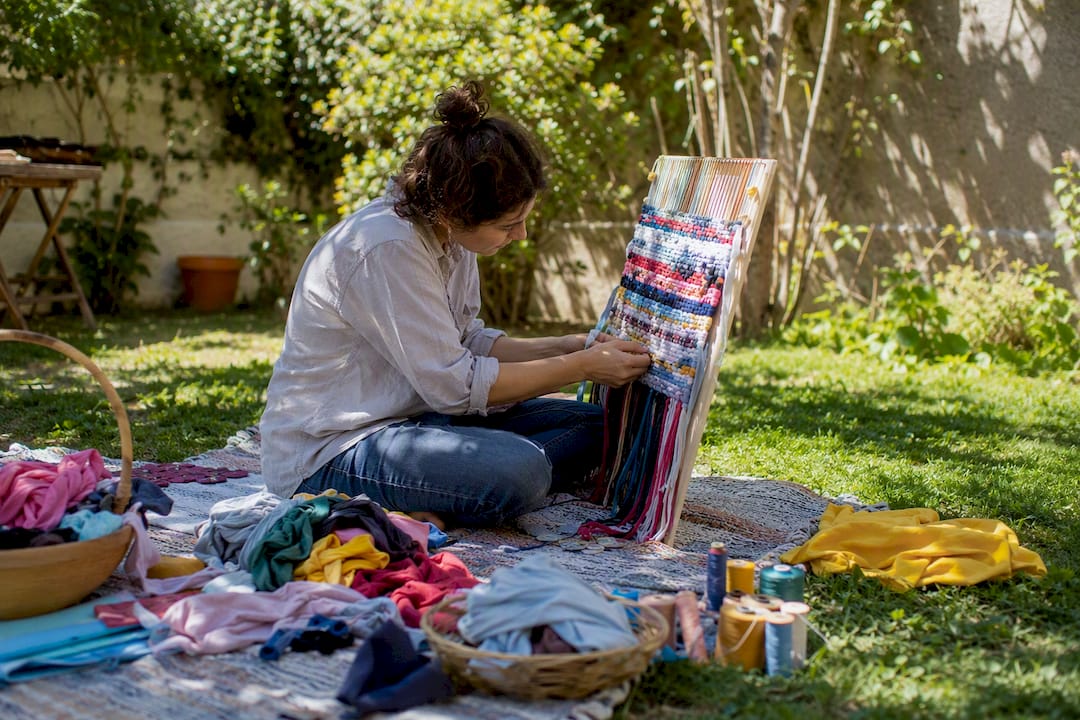
Old denim jeans are sturdier than most craft fabric and hold shapes well, making them useful for fabric-covered notice boards or patchwork coasters. Cut squares from several pairs of jeans and glue or stitch them onto cardboard backing for a simple, durable project suited to older children.
Fabric scraps of any size work as collage material, layered onto cardboard bases alongside paper and paint for texture. Buttons salvaged from clothing beyond repair add detail to almost any project on the main list, from eyes on the bottle-cap fish to decoration on the milk-carton bus.
Keep a small “textile box” separate from your main recyclables box, since fabric behaves differently to cardboard and plastic and tends to need scissors rather than a hole punch. This also teaches children a distinct sorting skill: recognising which category of household waste suits which kind of project.
Creative projects using electronic waste and small tech parts
Old electronics contain genuinely interesting craft material, but this is one area where adult judgement matters more than usual. Small, disconnected components like plastic keyboard keys, empty CD cases, and old computer mice (with batteries and any exposed wiring fully removed by an adult) can become robot-themed collage pieces or sculpture details for children aged nine and up.
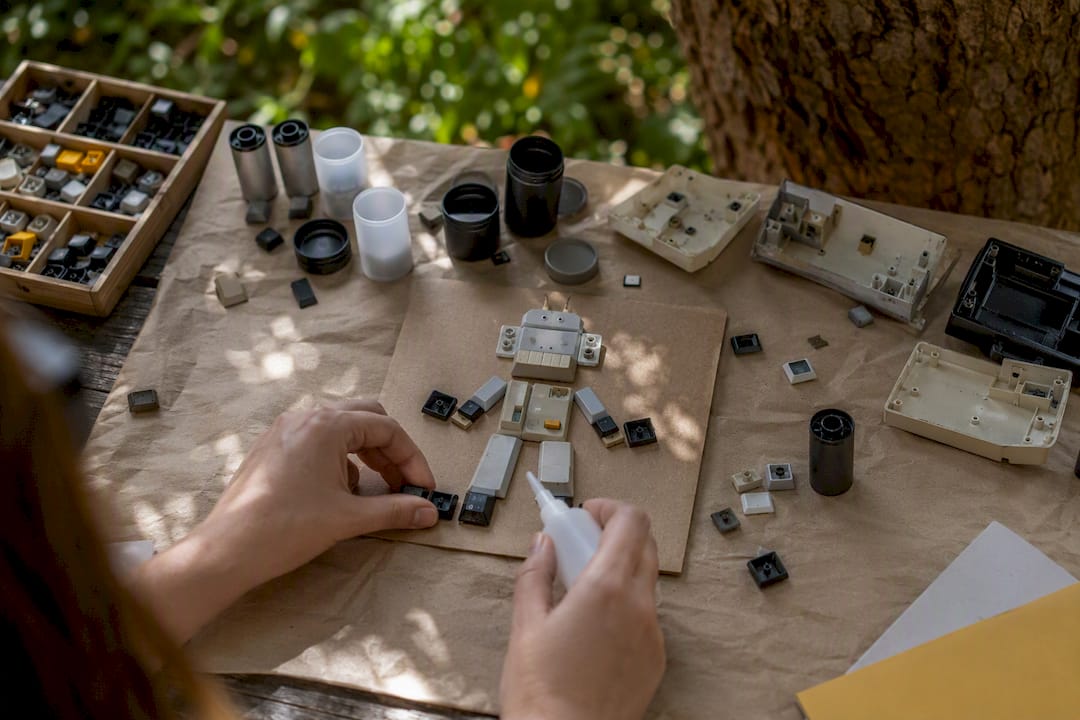
Keyboard keys glued onto cardboard in rows make surprisingly effective mosaic patterns, and their existing letters and symbols give children a built-in starting point for alphabet-themed art. Empty CD and DVD cases, cleaned and dried, work as small display frames for pressed leaves or flat collages.
The rule that matters most here: batteries, circuit boards with exposed components, and anything that was ever plugged into mains power should never be handed to children as craft material. An adult should strip a device down to safe plastic and metal casing first, discarding anything with wiring or a power source through proper e-waste recycling rather than the craft box. Once that sorting is done, what’s left, the plastic shells, buttons, and casings, behaves like any other durable recyclable and slots into the same projects as bottle caps or tin lids.
A small habit that keeps recycled crafting going
A fifteen-minute Friday craft slot works better than waiting for the “right” project, because it removes the pressure to make something impressive and just makes the habit routine. Adapt whatever’s in the clean box to whoever’s in the room that week: the same toilet-roll base that becomes binoculars for a four-year-old turns into a fully painted rocket ship with a nine-year-old, using identical materials and roughly double the time.
Don’t chase the exact project on this list if your recycling bin holds something different. The method matters more than the object.
— ALAIN
An alternative when you want a ready-made nature prompt
Some days there isn’t time to prep a craft box, and that’s exactly when a different kind of nature activity earns its place. Thezoofamily makes animal-themed cameras, instant print cameras, and binoculars designed for children aged three and up, built to spark the same curiosity about the outdoors that a toilet-roll pair of binoculars aims for, minus the cutting and gluing. Every camera sold funds a tree planted, so the environmental link that recycled crafting teaches through materials, Thezoofamily builds directly into the product itself.
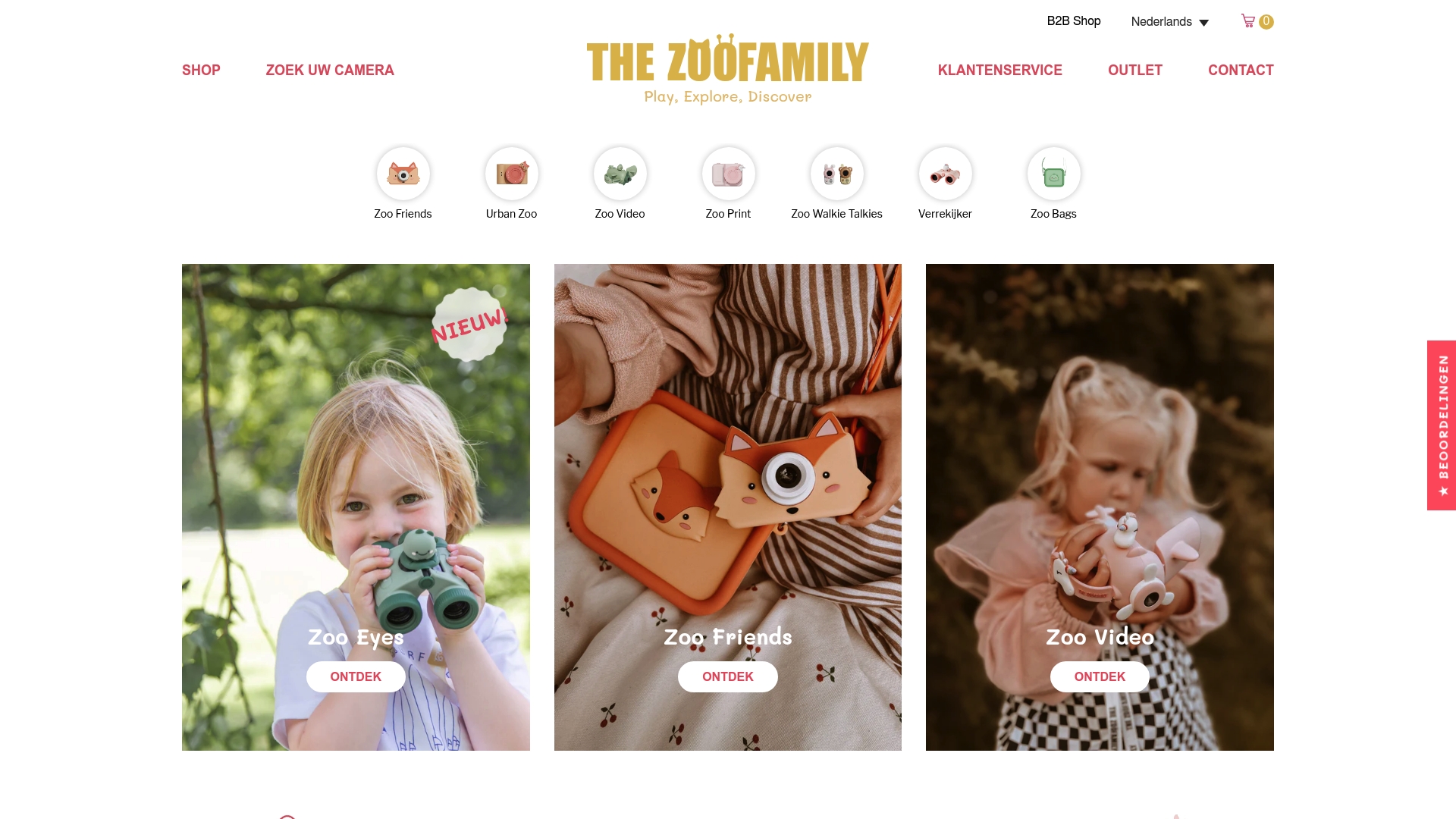
Think of it as a companion to hands-on crafting rather than a replacement: on a day when the clean recyclables box is empty, handing a child a nature camera or a pair of kid-sized binoculars keeps the same outdoor curiosity alive. Explore the current range on the Thezoofamily website to see which product suits your child’s age and interests.