

Every parent notices the spark in their child’s eyes when they spot a ladybird in the garden or ask why the sky is blue. In busy city life, nurturing this innate drive for discovery can feel challenging, yet natural curiosity is a universal characteristic of childhood that helps children learn and grow. This guide shares science-backed insights and practical ideas for encouraging curiosity about nature and wildlife, supporting your child’s joyful exploration in both home and outdoor settings.
Table of Contents
- Defining Natural Curiosity In Childhood
- Types Of Curiosity And Developmental Stages
- How Curiosity Shapes Learning And Creativity
- Nurturing Curiosity At Home And Outdoors
- Barriers To Curiosity And How To Overcome Them
Key Takeaways
| Point | Details |
|---|---|
| Natural Curiosity is Fundamental | Childhood curiosity is a vital developmental mechanism that drives exploration and understanding of the environment. |
| Types and Stages of Curiosity | Curiosity evolves through distinct stages, with perceptual curiosity appearing first, followed by epistemic curiosity as cognitive abilities mature. |
| Curiosity Enhances Learning | Curiosity acts as a catalyst for learning and creativity, transforming passive observation into active engagement with knowledge. |
| Overcoming Barriers | Structuring learning environments to encourage questioning and exploration is essential to maintain children’s innate curiosity. |
Defining Natural Curiosity in Childhood
Natural curiosity represents a fundamental developmental mechanism through which children explore and understand their environment. Systematic research reveals that curiosity emerges as an intrinsic motivational drive enabling young minds to actively seek knowledge and make sense of complex world dynamics.
At its core, curiosity manifests as an internally motivated information-seeking behaviour characterised by spontaneous questioning and exploration. Researchers define this phenomenon as a universal childhood characteristic that directs attention towards understanding knowledge gaps. Children demonstrate this trait through persistent questioning, experimental interactions with objects, and an inherent desire to comprehend how things function.
The mechanisms of childhood curiosity extend beyond mere information gathering. They represent complex cognitive processes wherein children actively construct understanding by engaging with their surroundings. Neurologically, curiosity triggers dopamine release, creating pleasurable sensations that reinforce learning behaviours. This biological reward system encourages continuous exploration and intellectual growth, transforming simple observations into profound developmental experiences.
Pro Tip: Encourage your child’s natural curiosity by asking open-ended questions that prompt deeper thinking and exploration, rather than providing immediate answers.
Types of Curiosity and Developmental Stages
Childhood curiosity manifests through distinct developmental stages, each characterised by unique exploratory patterns and cognitive mechanisms. Neuroscientific research identifies two primary curiosity types: epistemic curiosity, driven by knowledge acquisition, and perceptual curiosity, triggered by novel sensory experiences.
The developmental progression of curiosity mirrors children’s cognitive maturation. Young toddlers initially exhibit perceptual curiosity, characterised by tactile exploration and sensory investigations. Preschool-aged children transition towards more sophisticated epistemic curiosity, demonstrating increased questioning behaviours and systematic information-seeking strategies. Research differentiates between internal curiosity, arising from intrinsic motivation, and external curiosity, stimulated by environmental provocations.
As children advance through developmental stages, their curiosity becomes increasingly complex. Neurological changes enable more nuanced exploration, with brain regions associated with reasoning and abstract thinking becoming more engaged. Adolescents demonstrate the most sophisticated curiosity forms, capable of hypothetical reasoning and meta-cognitive questioning that extend beyond immediate sensory experiences.
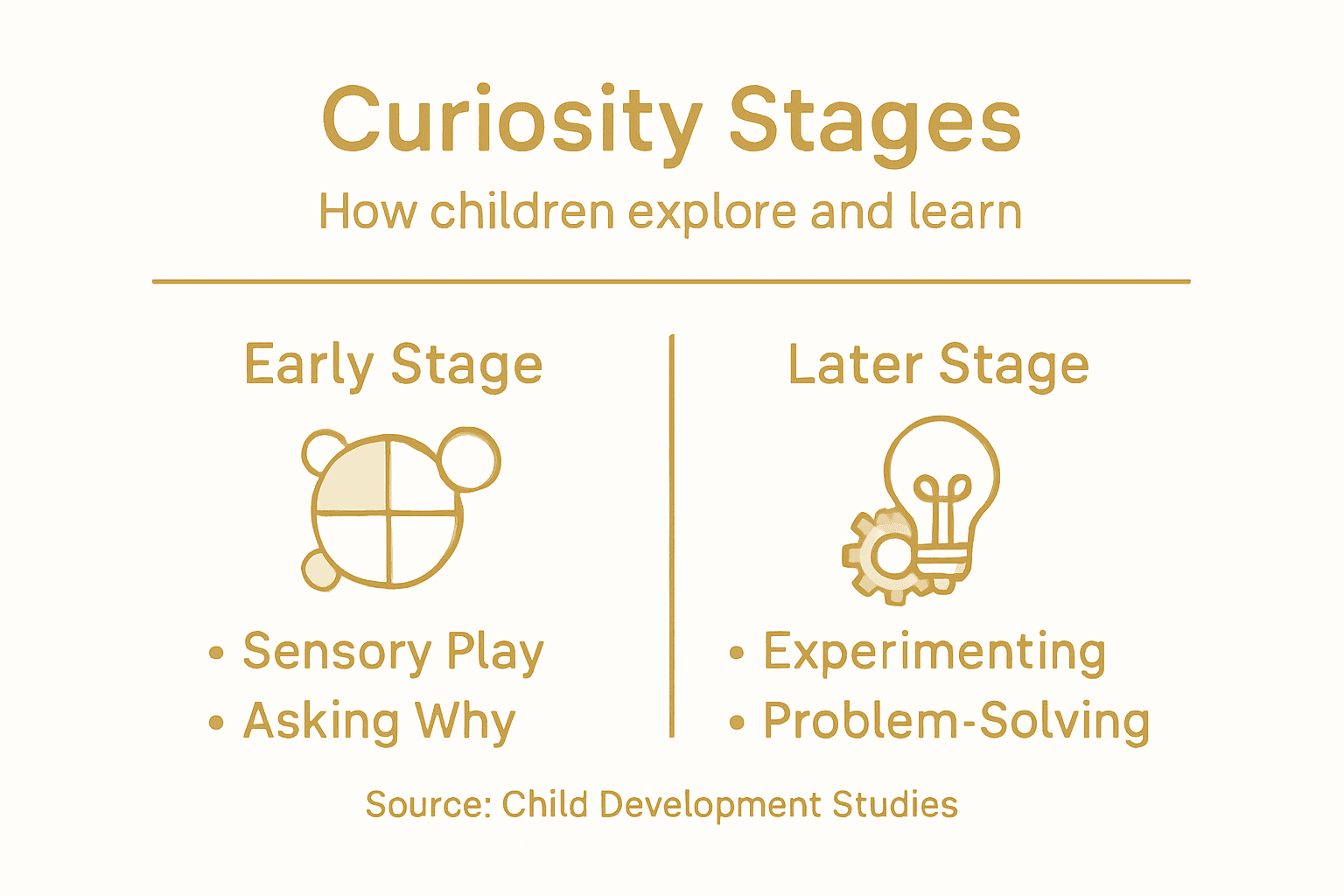
Here is a summary of curiosity types and their primary characteristics:
| Curiosity Type | Trigger | Typical Age Range | Example Behaviour |
|---|---|---|---|
| Perceptual Curiosity | New sensory stimuli | Toddlers and young children | Touching objects to explore texture |
| Epistemic Curiosity | Knowledge gaps | Preschool and older | Asking ‘why’ or ‘how’ questions |
| Internal Curiosity | Personal interest | All ages | Self-driven investigation |
| External Curiosity | Environmental changes | All ages | Exploring newly introduced objects |
Pro Tip: Create curiosity-rich environments by presenting age-appropriate challenges that slightly exceed your child’s current understanding, encouraging them to stretch their cognitive boundaries.
How Curiosity Shapes Learning and Creativity
Scientific investigations reveal that curiosity functions as a fundamental cognitive mechanism driving children’s learning and creative development. By motivating information-seeking and exploratory behaviours, curiosity transforms passive observation into active intellectual engagement, enabling children to construct knowledge through direct experience and questioning.
The intricate relationship between curiosity and creativity emerges through children’s natural tendency to explore beyond established boundaries. Childhood research indicates that curious children demonstrate enhanced capacity for generating novel ideas, approaching problems from unconventional perspectives, and maintaining sustained attention during complex cognitive tasks. This exploratory mindset allows them to transcend traditional thinking patterns, fostering innovative problem-solving skills.
Neurologically, curiosity triggers reward pathways in the brain, creating positive reinforcement for learning and discovery. When children experience the excitement of understanding something new, dopamine release encourages continued exploration. This biochemical mechanism transforms curiosity from a mere cognitive process into a powerful developmental strategy that supports intellectual growth, creative thinking, and lifelong learning potential.
Pro Tip: Nurture your child’s curiosity by responding to their questions with additional thought-provoking queries that encourage deeper investigation, rather than providing immediate, definitive answers.
Nurturing Curiosity at Home and Outdoors
Early childhood research emphasises that curiosity flourishes through intentionally crafted environments which stimulate exploration and sensory engagement. Parents can transform ordinary spaces into curiosity laboratories by introducing diverse materials, creating open-ended play scenarios, and encouraging children to investigate their surroundings with minimal intervention.
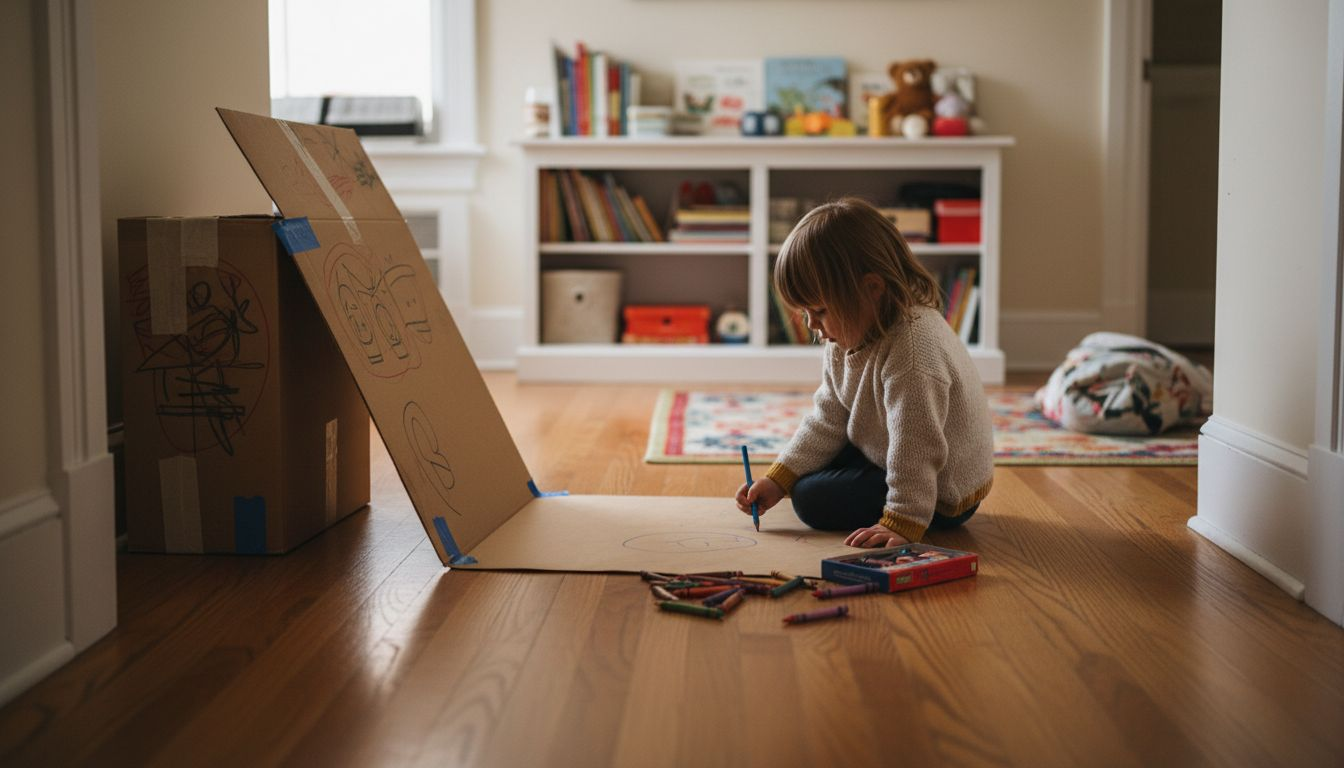
Outdoor environments offer particularly rich opportunities for nurturing natural curiosity. Educational studies highlight the profound importance of nature-based experiences in developing children’s wonder and investigative skills. Gardens, parks, and even small outdoor spaces become dynamic learning landscapes where children can observe insects, examine plant life, collect natural objects, and engage in unstructured exploration that triggers deep cognitive and sensory learning.
Indoors, curiosity can be nurtured through carefully designed interaction zones that invite questioning and discovery. Create dedicated spaces with accessible materials like magnifying glasses, simple science tools, art supplies, and collections of interesting objects that prompt investigation. Rotate these resources regularly to maintain novelty and prevent sensory fatigue, ensuring that children remain motivated to explore and learn through their innate curiosity.
Consider these strategies for nurturing curiosity at home and outdoors:
| Environment | Example Practice | Benefit to Curiosity |
|---|---|---|
| Indoors | Providing open-ended art supplies | Sparks creative questioning |
| Outdoors | Exploring natural spaces | Fosters wonder and discovery |
| Family Culture | Modelling inquisitiveness | Normalises exploration behaviour |
| Rotating Materials | Regularly changing learning tools | Maintains sustained engagement |
Pro Tip: Cultivate a family culture of curiosity by modeling inquisitive behaviour, asking open-ended questions about everyday experiences, and demonstrating genuine excitement when discovering new information together.
Barriers to Curiosity and How to Overcome Them
Educational research identifies multiple systemic barriers that can diminish children’s natural curiosity. Overly structured learning environments, excessive focus on standardised testing, and rigid educational approaches frequently suppress children’s innate desire to explore and question. These constraints create learning spaces that prioritise compliance over genuine intellectual discovery.
Pressures from external expectations significantly impact children’s curiosity development. Academic performance metrics, rigid curriculum frameworks, and limited opportunities for autonomous exploration can systematically erode children’s intrinsic motivation to learn. Psychological studies highlight the importance of creating psychological safety where children feel empowered to ask questions without fear of judgment or failure.
Overcoming these barriers requires intentional, holistic strategies. Parents and educators must actively design learning environments that validate children’s questions, encourage experimental thinking, and demonstrate that uncertainty is a fundamental component of genuine learning. This involves creating spaces where mistakes are viewed as valuable learning opportunities, where exploration is celebrated, and where children’s natural inquisitiveness is consistently nurtured and respected.
Pro Tip: Create a ‘wonder wall’ in your home where children can post questions, drawings, and observations, transforming curiosity into a celebrated and collaborative family experience.
Ignite Your Child’s Natural Curiosity with Tools Designed for Discovery
The article highlights the crucial role of natural curiosity in childhood development and the challenges of providing environments that nurture this innate drive. Children benefit from engaging sensory experiences and opportunities that encourage epistemic and perceptual curiosity. However, many face barriers such as overly rigid learning spaces that suppress their interest in exploration. At The Zoofamily, we understand these needs and are committed to supporting parents and educators by offering innovative products crafted to stimulate creative connections with nature and foster lifelong wonder.
Our kids’ cameras, walkie-talkies, and binoculars are more than just toys. They are active tools that invite children to explore their natural surroundings, ask insightful questions, and develop their internal curiosity in enriching ways. Each product features animal references designed to spark interest in the environment, helping your child transform everyday moments into opportunities for discovery. Plus, for every camera sold, we plant a tree, making your family part of a global effort to restore natural beauty for future generations. Start shaping an inspiring, curiosity-rich childhood today by visiting The Zoofamily. Explore our full range of nature-inspired products and give your child the best chance to thrive intellectually and creatively. Check out our landing page to learn more and take the first step towards a world where curiosity leads the way.
Frequently Asked Questions
What is natural curiosity in children?
Natural curiosity in children is an intrinsic motivational drive that encourages them to explore their environment and seek knowledge through questioning and experimentation.
How does curiosity affect learning and creativity in children?
Curiosity motivates children to engage actively with their surroundings, which enhances their ability to learn and fosters creativity by encouraging them to think outside established boundaries.
What types of curiosity do children exhibit at different developmental stages?
Children exhibit two primary types of curiosity: perceptual curiosity, which is about new sensory experiences, and epistemic curiosity, which is driven by the desire to acquire knowledge. These types evolve as children grow and their cognitive abilities mature.
How can parents nurture their child’s natural curiosity at home?
Parents can foster curiosity by creating a stimulating environment with open-ended play materials, asking open-ended questions, and modelling inquisitiveness to encourage exploration and inquiry.
Recommended
- Making Learning Fun: Engaging Activities for Your Kids – The Zoofamily
- Making Learning Fun: Engaging Activities for Your Kids – The Zoofamily
- Understanding the Benefits of Imaginative Play – The Zoofamily
- Childhood Brain Development: A Guide for Modern European Mums – The Zoofamily
- Hoe magnetisch bouwen de fantasie van je kind tot leven brengt