

Growing herbs successfully comes down to six steps: choose three easy herbs, give them 6–8 hours of sun, use well-drained soil, pick the right pot size, water steadily, and harvest regularly. Follow those steps and you will have fresh herbs in your kitchen within weeks.
Your 6-step quick-start checklist:
- Choose your herbs. Start with chives, mint, and thyme. All three are forgiving, useful in cooking, and suited to UK conditions.
- Pick your site. A south- or west-facing windowsill, patio, or garden bed works well. Most herbs need direct sun for most of the day.
- Sort your pot and soil. Use a pot at least 15 cm wide with drainage holes. Fill it with good-quality potting compost mixed with a little grit.
- Plant correctly. Set nursery plants at the same depth they were in their original pot. Firm the compost gently and water in.
- Care daily. Check the top 2–3 cm of soil. Water when it feels dry. Do not let pots sit in standing water.
- Harvest often. Pinch the growing tips regularly. This keeps plants bushy and productive.
The three most common beginner mistakes are overwatering, placing herbs in poor light, and mixing herbs with very different water needs in the same pot. Avoid those three and you are already ahead of most first-time growers.
Pro Tip: Buy young nursery plants rather than supermarket herb pots for your first season. Supermarket pots are grown for immediate use and their root systems are often too restricted to thrive long-term when moved to a home environment.
Key takeaways
Most herbs need 6–8 hours of sun, well-drained soil, and regular harvesting to stay productive through the season.
| Point | Details |
|---|---|
| Start with three herbs | Choose chives, mint, and thyme for the easiest first season in the UK. |
| Match soil to herb type | Mediterranean herbs need lean, gritty compost; moisture-loving herbs need richer, moister soil. |
| Water by feel, not schedule | Check the top 2–3 cm of soil and water only when it feels dry. |
| Harvest little and often | Never remove more than one-third at a time; regular pinching keeps plants bushy. |
| Protect tender herbs in winter | Move basil and lemon verbena indoors before the first frost; mulch hardy perennials in the ground. |
Table of Contents
- What do herbs need? Core facts at a glance
- Which herbs are best to start with in the UK?
- When and where should you plant herbs in the UK?
- How do you choose pots and soil for different herbs?
- How do you start herbs from seed, cuttings, or nursery plants?
- How do you water, feed, and light herbs properly?
- How and when should you harvest and prune herbs?
- How do you protect herbs through a UK winter?
- What are the most common herb problems and how do you fix them?
- How do you design a small herb bed or windowsill layout?
- Simple ways to grow herbs with children
- Starting small is the right call
- Sources
What do herbs need? Core facts at a glance
Understanding a herb’s life cycle and basic requirements saves a lot of guesswork. Here are the key facts.
Life cycles
Herbs fall into three categories according to the RHS growing guidance:
- Annuals complete their life in one season. Basil and coriander are annuals; sow them fresh each year.
- Biennials grow leaves in year one and flower in year two. Parsley is the most common example.
- Perennials return year after year. Thyme, rosemary, chives, mint, and sage are all perennials. Many become woody at the base after three or four seasons and benefit from cutting back by one-third in early spring.
Sunlight
Most culinary herbs grow best with around 6–8 hours of direct sun each day. Coriander and dill are useful exceptions: both tolerate partial shade and actually prefer it in warmer months, since full sun causes them to bolt quickly. Indoors, a south-facing windowsill is the best position; a north-facing one rarely provides enough light without supplemental grow lighting.
Soil and drainage
| Herb type | Soil preference | Drainage need | Fertility |
|---|---|---|---|
| Mediterranean (thyme, rosemary, oregano) | Light, gritty, lean | High | Low |
| Moisture-loving (mint, chives, parsley) | Rich, loamy | Moderate | Medium–high |
| Annuals (basil, coriander) | Well-drained, fertile | Moderate–high | Medium |
Well-drained soil is the single most important factor for most herbs. Waterlogged roots cause more herb deaths than drought. Add grit or perlite to standard potting compost if drainage feels slow.
Which herbs are best to start with in the UK?
These ten herbs suit beginners well. Each is widely available at UK garden centres and supermarkets, and each has a clear culinary use.
- Chives. Mild onion flavour, very hardy, and happy in a 15 cm pot on a windowsill. Snip leaves as needed. Good for both indoor and outdoor growing.
- Mint. Fast-growing and almost impossible to kill. Grows best in a pot because it spreads aggressively via underground runners and will take over a bed if planted directly in the ground. Keep it in its own container.
- Thyme. A Mediterranean perennial that thrives in poor, dry soil and full sun. Excellent in pots and very drought-tolerant once established.
- Rosemary. Woody, long-lived, and suited to a large pot (at least 30 cm) or a sunny border. Needs good drainage above all else.
- Basil. Loves warmth and sun. Grow it on a south-facing windowsill or outdoors only in summer. Keep it away from cold draughts.
- Parsley. A biennial that is best treated as an annual. Prefers richer, moister soil than Mediterranean herbs. Grows well in a medium pot or a border.
- Oregano. Hardy, low-maintenance, and suited to dry conditions. Works well alongside thyme in a Mediterranean pot grouping.
- Coriander. Sow little and often because it bolts quickly. Tolerates partial shade, which slows bolting. Best grown from seed directly where it will grow.
- Dill. Tall and feathery; grows best in a deep pot or a sheltered border spot. Avoid transplanting as it dislikes root disturbance.
- Sage. A woody perennial with a strong flavour. Needs full sun and very good drainage. Suits a large pot or a raised bed.
Pro Tip: Always plant mint in its own pot, even if you intend to keep it outdoors. Burying a pot in the ground with the rim just above soil level is a reliable way to contain it while still giving it space to grow.
When and where should you plant herbs in the UK?
Timing matters in the UK, where late frosts can arrive well into May in many regions.
Seasonal timing
- March to April: Sow hardy herbs such as chives, parsley, and thyme indoors on a warm windowsill.
- April to May: Sow basil indoors; do not move it outside until after the last frost, typically late May.
- May to June: Plant out nursery plants of most herbs once night temperatures stay above 5°C.
- September to October: Move tender perennials such as basil and lemon verbena indoors before the first frost.
- October to November: Mulch hardy perennials in the ground and reduce watering for potted herbs.
Rough sow-to-harvest timings vary by herb. Chives take around 8–10 weeks from seed to first cut. Basil is ready to pinch in 4–6 weeks from a nursery plant. Rosemary and thyme, bought as young plants, can be harvested lightly within two to three weeks of potting up.
Site selection
Choose a spot that gets direct sun for most of the day. South- or west-facing positions are best. Avoid low-lying areas where cold air pools overnight. A little wind shelter helps tender herbs like basil, but good airflow around the plants reduces the risk of fungal disease.
For indoor growers, a south-facing windowsill is the first choice. East- or west-facing windows work for less demanding herbs like chives and mint. A north-facing window is rarely sufficient without a full-spectrum grow light.
Pro Tip: If you are moving indoor seedlings outside for the first time, harden them off over 7–10 days. Place them outside for a few hours each day, starting in a sheltered spot, and gradually increase their exposure to sun and wind before leaving them out full-time.
How do you choose pots and soil for different herbs?
The right container and compost make a significant difference, especially for herbs with very different water needs.
Pot sizes
- Small pots (10–15 cm): Suitable for chives, basil, and coriander grown individually.
- Medium pots (20–25 cm): Good for parsley, mint (always alone), and oregano.
- Large pots (30 cm and above): Needed for rosemary, sage, and dill, which develop deeper root systems.
Every pot must have drainage holes. Sitting a pot in a saucer is fine, but empty the saucer after watering so roots are never submerged. Terracotta pots are a good choice for Mediterranean herbs because the porous walls allow moisture to evaporate, keeping the compost drier. For moisture-loving herbs like mint and parsley, glazed or plastic containers retain water longer and suit their needs better.
Soil mixes
General-purpose mix (for parsley, chives, basil, mint):
- 3 parts good-quality peat-free potting compost
- 1 part perlite or coarse grit
Lean, gritty mix (for thyme, rosemary, oregano, sage):
- 2 parts peat-free potting compost
- 2 parts horticultural grit or coarse sand
- Optional: a small handful of fine gravel at the base of the pot for extra drainage
| Herb | Pot material | Compost type | Repot when |
|---|---|---|---|
| Thyme | Terracotta | Lean, gritty | Roots appear at drainage holes |
| Rosemary | Terracotta | Lean, gritty | Every 2–3 years |
| Mint | Plastic or glazed | General-purpose | Each spring |
| Basil | Any with drainage | General-purpose | When pot-bound |
| Parsley | Plastic or glazed | General-purpose | Each season |
Repot when roots start pushing through the drainage holes or when the plant looks stressed despite regular watering. Spring is the best time for most herbs.
How do you start herbs from seed, cuttings, or nursery plants?
There are three ways to start herbs. Each suits different situations.
Starting from nursery plants (recommended for beginners)
Starting from young nursery plants speeds up time to harvest and reduces early failures compared with seeds, which is why many beginners find this route more rewarding. Note that supermarket herb pots are grown for immediate culinary use and their root systems are often too restricted to thrive long-term, so a garden centre plant is a better starting point.
- Inspect the plant. Look for firm stems, healthy green leaves, and no signs of pests or yellowing.
- Water the plant thoroughly before potting up.
- Choose a pot one size larger than the nursery pot and fill it with the appropriate compost mix.
- Ease the plant out gently, loosen the roots slightly, and set it at the same depth as before.
- Firm the compost around the roots and water in well.
- If moving outdoors, harden off over 7–10 days before leaving the plant outside permanently.
Starting from cuttings
Mint, basil, oregano, and sage all root readily from cuttings, making this a low-cost way to expand your herb collection. Woody herbs like rosemary take longer and may benefit from rooting hormone powder. Roots typically form within 2–6 weeks.
- Take a cutting 8–10 cm long just below a leaf node. Remove the lower leaves.
- For soft-stemmed herbs (mint, basil): place the cutting in a glass of water on a bright windowsill. Change the water every two days. Pot up once roots are 2–3 cm long.
- For woody herbs (rosemary, sage): dip the cut end in rooting hormone, insert into a small pot of gritty compost, and cover loosely with a clear plastic bag to retain humidity. Keep in a warm, bright spot.
- Once rooted, pot on into the appropriate compost mix.
Starting from seed
Seeds are the most economical option when you need many plants or want to succession-sow. Coriander and dill are best sown directly where they will grow because they dislike root disturbance. Basil, chives, and parsley germinate well on a warm windowsill. Rosemary and thyme are slow from seed and rarely worth the wait when young plants are readily available.
Pro Tip: For your first season, buy two or three nursery plants from a garden centre rather than starting from seed. You will have herbs to harvest within weeks, which builds confidence and keeps you motivated to grow more.
How do you water, feed, and light herbs properly?
Daily care does not need to be complicated. A few clear rules cover most situations.
Watering
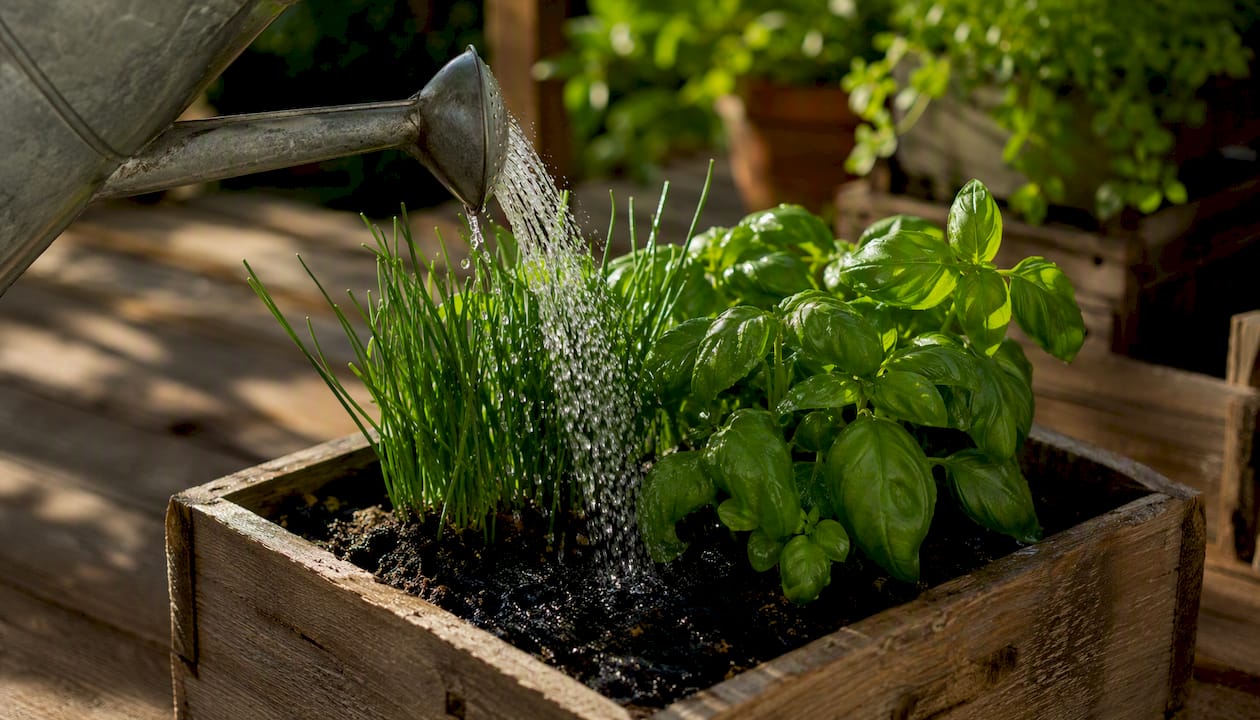
Check the top 2–3 cm of soil before watering. If it feels dry, water thoroughly until it drains from the bottom. If it still feels damp, wait. Potted herbs dry out faster than in-ground plants and may need daily watering in warm summer weather, according to Almanac’s indoor herb guidance. In winter, reduce watering significantly for all herbs, especially those kept indoors.
Overwatering is the most common cause of herb failure. Yellow leaves, soft stems, and a sour smell from the compost are all signs of too much water.
Feeding
Most herbs do not need heavy feeding. A weak liquid feed (half the recommended dose of a general-purpose liquid fertiliser) every two to three weeks during the growing season is enough for pot-grown herbs. Mediterranean herbs in lean, gritty compost need very little feeding at all. Over-feeding produces lush, soft growth that is more vulnerable to pests and has less flavour.
Light indoors
Most herbs need several hours of bright light. In winter or in north-facing rooms, a full-spectrum LED grow light placed 15–20 cm above the plants for 12–14 hours a day compensates for low natural light. Central heating dries the air, which stresses herbs kept on windowsills. A pebble tray filled with water placed under the pot raises local humidity without waterlogging the roots.
Pro Tip: Rotate pots a quarter turn every few days on a windowsill. This stops plants leaning towards the light and keeps growth even on all sides.
How and when should you harvest and prune herbs?
Harvesting correctly is what keeps herbs producing leaves all season. The technique is simple but easy to get wrong.
Harvesting leafy herbs
- Pinch or cut just above a pair of leaves or a leaf node, not at the base of the stem.
- Take from the top of the plant first, working downwards.
- Never remove more than one-third of the plant at a single harvest. Regular harvesting stimulates side-shoots and produces bushier, more productive plants.
- Harvest in the morning after any dew has dried for the best flavour.
- Remove any flower buds as soon as they appear on basil, mint, and coriander. Once a plant flowers, leaf production slows and flavour drops.
Pruning woody herbs
Thyme, rosemary, and sage benefit from a light trim after flowering and a more significant cutback in early spring. Cut back by no more than one-third of the plant’s total growth. Avoid cutting into old, bare wood on rosemary as it rarely regrows from there. Sage and thyme respond well to being cut back to fresh green growth each spring, which keeps them compact and productive for longer.
Preserving excess harvest
- Drying: Tie small bunches loosely and hang them upside down in a warm, dry, airy spot for 1–2 weeks. Store in an airtight jar away from direct light.
- Freezing: Chop herbs finely, pack into ice cube trays, cover with water or olive oil, and freeze. Drop cubes directly into cooking.
- Fresh storage: Stand cut stems in a glass of water in the fridge (like flowers) for up to a week. Cover loosely with a plastic bag.
How do you protect herbs through a UK winter?
UK winters vary considerably by region, but most tender herbs need some protection from November onwards.
Hardy versus tender herbs
- Hardy (can stay outdoors): Thyme, chives, rosemary (in most UK regions), sage, oregano, mint (dies back but regrows from roots).
- Tender (need indoor shelter or protection): Basil, lemon verbena, Vietnamese coriander, French tarragon.
Overwintering options
- Mulching: Apply a 5–8 cm layer of bark chippings or straw around the base of hardy perennials in the ground in late autumn. This insulates roots against hard frosts.
- Moving pots indoors: Bring tender herbs inside before the first frost. A cool, bright room (around 10–15°C) is better than a warm, dark one. Excessive warmth with low light produces weak, leggy growth that is more vulnerable to pests, as noted in Penn State Extension’s indoor herb guidance.
- Unheated greenhouse or cold frame: A good middle option for herbs that are borderline hardy, such as rosemary in northern UK regions. Provides frost protection without the dry air of a heated room.
Herbs kept indoors over winter grow slowly and need much less water. Reduce watering and stop feeding entirely from October until March. Year-round indoor cultivation is possible with supplemental lighting and adjusted watering, but growth will be slower in winter regardless.
Pro Tip: Check overwintered herbs weekly for signs of grey mould (botrytis). Good airflow is the best prevention. Remove any dead or yellowing leaves promptly and avoid misting the foliage in winter.
What are the most common herb problems and how do you fix them?
Most herb problems have a simple cause and a straightforward fix.
Quick troubleshooting checklist
- Yellow leaves: Usually overwatering or waterlogged roots. Check drainage, reduce watering, and remove affected leaves.
- Leggy, pale growth: Not enough light. Move the plant to a brighter spot or add a grow light.
- Wilting despite wet soil: Root rot from overwatering. Remove the plant, trim any black or mushy roots, repot in fresh, dry compost.
- Sticky or curling leaves: Aphids or whitefly. Check the undersides of leaves.
- White powdery coating on leaves: Powdery mildew, usually caused by poor airflow or inconsistent watering. Improve ventilation and remove affected growth.
- Holes in leaves, slime trails: Slugs or snails. More common outdoors, especially in damp conditions.
Simple, safe fixes
- Aphids and whitefly: Blast with a jet of water to dislodge them. For persistent infestations, spray with a diluted washing-up liquid solution (a few drops in a litre of water). Repeat every few days.
- Slugs: Use copper tape around pot rims, crushed eggshells, or wildlife-safe slug pellets. Hand-pick at night when slugs are most active.
- Powdery mildew: Remove affected leaves, improve airflow by spacing pots further apart, and avoid wetting the foliage when watering.
- Root rot: Act quickly. Remove the plant, cut away rotten roots with clean scissors, dust with sulphur powder if available, and repot in fresh compost with improved drainage.
If a plant is heavily infested or diseased and not recovering, dispose of it in the general waste (not the compost bin) to prevent spread to other pots. Clean the pot thoroughly with hot soapy water before reusing it.
How do you design a small herb bed or windowsill layout?
Grouping herbs by their needs is the most practical approach for a small space. Mixing herbs with very different water requirements in one pot is one of the most common causes of poor performance.
Two simple groupings
Mediterranean group (dry, sunny conditions):
- Thyme, rosemary, oregano, and sage
- Use lean, gritty compost in terracotta pots
- Space plants at least 20–25 cm apart to allow airflow
Moisture-loving group (richer, moister conditions):
- Mint (always in its own pot), chives, and parsley
- Use general-purpose compost in plastic or glazed containers
- Space at 15–20 cm apart
Keep these two groups in separate pots or separate areas of a bed. Watering one group correctly will harm the other if they share a container.
Spacing and airflow
Overcrowding is a common beginner error. Crowded plants compete for light and nutrients, and reduced airflow between them encourages fungal disease. Follow the spacing guidance on plant labels and resist the urge to fill gaps too quickly.
Windowsill layout tips
- Use tiered shelving or a small plant stand to give each pot direct access to light rather than stacking pots behind one another.
- Shallow planters (window boxes) work well for chives, thyme, and oregano side by side, provided each has adequate drainage.
- Rotate pots regularly so all sides receive equal light.
Pro Tip: On a small windowsill, three individual pots in a row outperform one large mixed planter. You can water each pot according to its own needs, and if one plant struggles, it does not affect the others.
Simple ways to grow herbs with children
Growing herbs is one of the most accessible outdoor activities for children. The results are quick, the sensory experience is strong, and the connection to food is immediate. For family-focused ideas on creating wildlife-friendly gardens that children can explore safely, Thezoofamily has practical guidance worth reading alongside this section.
Three child-friendly herb activities
- Potting party. Give each child their own small pot, a scoop of compost, and a young chive or mint plant. Let them pot it up themselves, label it with their name, and take responsibility for watering it. Chives and mint are fast-growing and forgiving, so children see results quickly.
- Label-making. Cut lolly sticks or use smooth pebbles as plant markers. Children can draw the herb, write its name, or paint the marker. This builds familiarity with each plant and gives them ownership of the garden.
- Sensory tasting. Once plants are established, let children pinch a leaf and smell or taste it. Mint, lemon thyme, and basil all have strong, distinctive scents. This is a simple way to connect herbs to food and cooking.
Safety notes
Some common herbs are not suitable for households with young children or pets. Avoid planting pennyroyal (a type of mint) where small children or cats have access, as it can be toxic in large quantities. Rue and tansy are also best avoided in family gardens. Stick to culinary herbs: basil, chives, mint, thyme, parsley, and rosemary are all safe for supervised tasting.
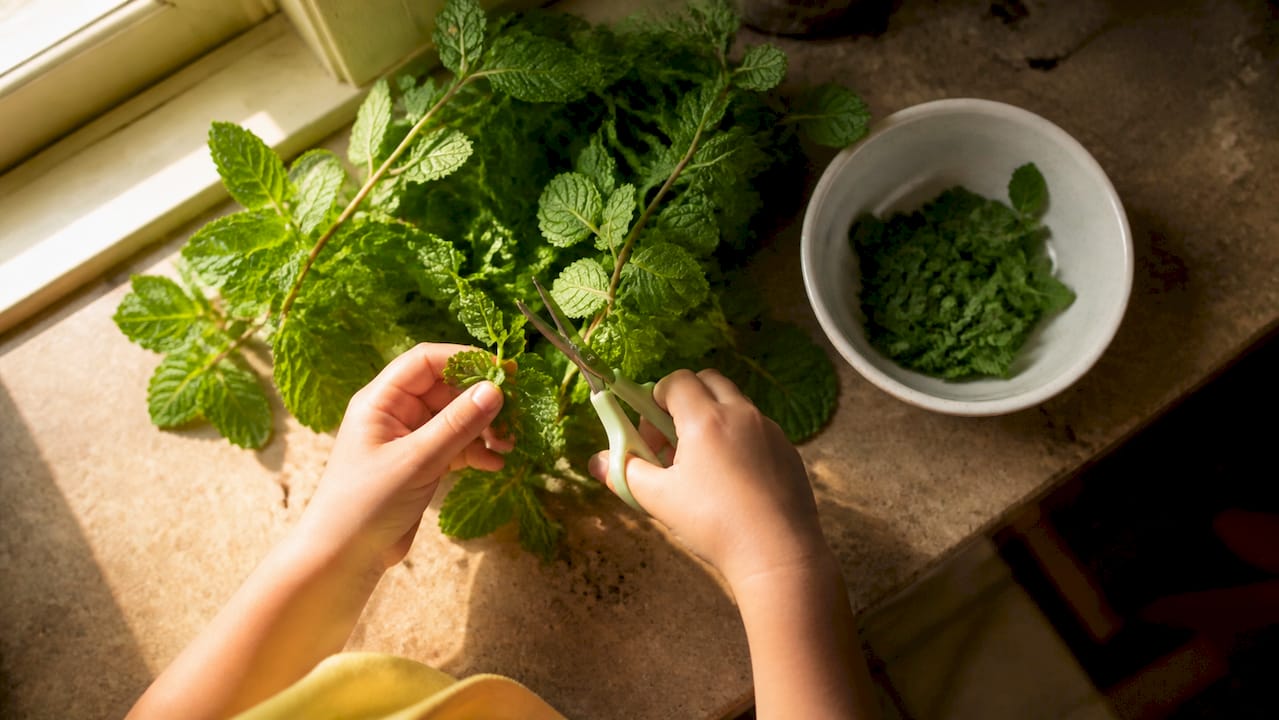
Pro Tip: Keep activities short and end with a clear reward, such as snipping chives onto scrambled eggs or adding mint to a glass of water. Children stay interested when they can see and taste the result of their work within the same session.
Starting small is the right call
Starting with three herbs in pots is not a compromise. It is the most practical approach for anyone new to herb growing, and the reasoning is straightforward. Pots give you control: you can move them to follow the sun, adjust the compost for each herb’s needs, and bring them indoors before the first frost without any digging. Three herbs is enough to make a real difference in your cooking without creating a maintenance burden.
At Thezoofamily, the focus is on connecting families with the natural world in ways that are simple, rewarding, and accessible. Growing herbs fits that approach well. A child who pots up their own mint plant, waters it each morning, and snips it into a drink has made a genuine connection with how food grows. That is worth more than a large, complicated herb garden that nobody has time to tend.
Start with one pot, one child, and one herb. Add more when you are ready.
Sources
These sources are reliable, UK-relevant, and free to access:
- Herbs: Growing and Harvesting | RHS Advice
- How to grow a thriving kitchen herb garden | Epicurious
- Growing herbs indoors | Almanac
- Growing Herbs Indoors | Penn State Extension