

You take care of the planet through a handful of repeated habits: wasting less, using less energy and water, travelling by foot or bike where you can, eating more plants and looking after nature close to home. Children learn these habits best when they are doing them with you and when they feel connected to nature. This guide gives you the actions that matter most and shows how to turn each one into something a child aged 3 and up can do.
TL;DR
- Start with waste, energy and water at home: the UNICEF family guide names turning off lights, closing taps and sorting recycling as jobs children can own.
- Walk, cycle or take public transport for short trips when it is safe and practical.
- Food matters: the United Nations says eating more plants and less meat and dairy lowers an individual’s environmental impact.
- Children who feel connected to nature are more motivated to protect it, so give them time outdoors and a way to look closely.
- Small habits that fit your routine add up more than one big gesture you cannot keep up.
Table of Contents
- Why small family habits are worth the effort
- Waste: the easiest place to start
- Energy and water at home
- Getting around and eating
- Help wildlife close to home
- Ten ways at a glance
- Give children a way to look closely
- Will the Earth be all right in 2050?
- Our view: children protect what they know
- Cameras, walkie-talkies and binoculars for young nature explorers
- FAQ
- Sources
Why small family habits are worth the effort
No single household fixes the climate. Yet the habits of millions of households are what shape demand for energy, food and goods, and the habits of children become the habits of the next generation. WWF’s 60 actions for the planet (2026) makes the same point: small choices that fit into daily routines add up, and collective individual actions help invest in the planet’s future.
There is also a practical reason to involve children. UNICEF’s guidance says children who feel connected to nature are more motivated to protect it. A child who has watched a bird build a nest, or followed a snail across the patio, has a reason to care that no lecture can give.
So the plan below has two parts. First, the actions with the largest effect for a household. Second, ways to make them visible and fun for children.
Waste: the easiest place to start
The familiar “reduce, reuse, recycle” still heads most official lists. NOAA includes it in its ten ways to protect the Earth, alongside conserving water, shopping wisely, planting trees and driving less. UNICEF adds a fourth R, and the idea is simple: the best waste is the waste you never create.
What this looks like in a family home:
- Swap single-use items for reusable ones. UNICEF USA suggests replacing straws, water bottles and take-away containers with reusable versions in stainless steel, bamboo or cotton. A named bottle and a lunch box a child chose themselves get used more.
- Let children sort the recycling. Give each child one bin or one material. It teaches where things go, and the UNICEF guide lists helping with household recycling as a task suited to children.
- Try mini-composting. The New South Wales education department’s family booklet suggests putting vegetable scraps in a small container, watching what changes and later adding the compost to the garden. It works as a science project too.
- Tackle food waste together. According to UNEP, citing the 2021 Food Waste Index Report, people waste about 1 billion tonnes of food a year, and food waste accounts for around 8 to 10 per cent of global greenhouse gas emissions (UNEP). Plan meals, freeze leftovers and let children pick a “use it up” meal each week.
Energy and water at home
Heating, hot water and electricity make up a large share of a household’s footprint, and most of the savings need no investment.
- Make children “energy detectives”. UNICEF suggests they turn off lights when leaving a room and unplug devices not in use. A sticker chart makes it a game.
- Dress for the temperature. Both UNICEF and NAEYC point out that putting on a jumper before turning up the heating lowers energy use and bills.
- Check the water heater. Environment Canada advises setting it between 55 and 60 degrees Celsius and insulating the pipes.
- Save water in small ways. Close the tap while brushing teeth, take shorter showers and report leaks, as the UNICEF guide recommends.
- Switch to efficient bulbs. NOAA lists energy-efficient bulbs among its ten actions.
A good family routine is a five-minute “switch-off round” before bed: lights, chargers, taps. Children enjoy being in charge of it.
Getting around and eating
Travel
UNICEF advises families to walk or cycle for short trips if it is safe and practical where they live, and to use public transport for longer journeys where it is available. The school run is the obvious place to start. Walking also gives you time to point out trees, birds and puddle life, which feeds the nature connection described above.
Food
The UN’s ten actions say eating more vegetables, fruit, whole grains, legumes, nuts and seeds, and less meat and dairy, can significantly lower an individual’s environmental impact. You do not have to change everything. One meat-free dinner a week, cooked with the children, is a realistic first step. The same page notes that plastics generated 1.8 billion tonnes of greenhouse gas emissions in 2019, 3.4 per cent of the global total, which is one more reason to favour reusable packaging and containers.

Help wildlife close to home
Caring for the planet is not only about carbon. Habitats matter too, and you can help them from a garden, a balcony or a school playground.
The Natural History Museum’s illustrated guide suggests:
- planting nectar-rich flowers for pollinators;
- mowing the lawn less often;
- building bird boxes, bee hotels or a small pond;
- choosing reusable items over single-use ones.
Gardens and other private land can matter more for wildlife than many people expect. One example is how private land as a refuge is helping some rare amphibians, and the same idea applies to bees, birds and hedgehogs in an ordinary garden.
On days out, WWF’s guidance is to stay on established paths and trails so plants and animals are left undisturbed. A simple rule for children: look closely, touch gently, leave everything where it is.
If you want ideas to start with, we have written about wildlife-friendly gardens for children, outdoor science activities and eco-friendly family routines.
Ten ways at a glance
| Action | What it looks like for a family | Child’s job |
|---|---|---|
| Reduce, reuse, recycle | Reusable bottles and lunch boxes, sorted bins | Sorts the recycling |
| Save energy | Efficient bulbs, lower heating, unplug devices | Energy detective |
| Save water | Short showers, tap off, fix leaks | Tap monitor |
| Waste less food | Meal plans, leftovers | Chooses a “use it up” meal |
| Compost | Small container for scraps | Observes the changes |
| Walk or cycle | Short trips on foot or by bike | Spots wildlife on the way |
| Eat more plants | One meat-free meal a week | Helps cook |
| Plant for wildlife | Nectar flowers, longer grass | Waters the plants |
| Build habitats | Bird box, bee hotel, pond | Builds and checks it |
| Learn and share | Community clean-ups, talking about it | Tells friends |
NOAA also lists volunteering and educating others among its ten actions, so a community clean-up is a good family outing.
Give children a way to look closely
A child who is asked to “care about nature” may shrug. A child with a camera or a pair of binoculars has a mission: find the bird, photograph the beetle, count the bees. NSW education guidance says time in the natural environment helps children develop curiosity, problem-solving skills and a deeper appreciation for nature.
Some ideas that work for ages 3 and up:
- Nature challenges. UNICEF suggests setting challenges such as finding five different leaves or three kinds of bird.
- A neighbourhood photo diary. Photograph the same tree through the seasons. Our guide to eco-friendly photography for children shows how to start.
- Bird watching. Feeders, a notebook and patience. See our guide to bird watching for the whole family.
- Earth Day projects. Our seven ideas for celebrating Earth Day with kids work at any time of year.
- Playful learning. More on eco education through play.
Will the Earth be all right in 2050?
The honest answer is that it depends on emissions in the coming years. The UN’s climate change page says the Earth is about 1.44°C warmer than in the pre-industrial era (1850 to 1900) and that temperatures are likely to pass the 1.5°C threshold within the next decade unless emissions fall much faster. It also projects that glaciers will vanish from a third of current sites by 2050.

That is a reason to act, not to give up. The choices above, repeated by many households, are part of how that trajectory changes. With children, keep the message hopeful and practical: here is what we can do this week.
Our view: children protect what they know
We started The Zoofamily because we believe children look after what they have learned to notice. That is why our cameras, walkie-talkies and binoculars carry animal designs: they are there to spark a child’s interest in nature.
We also wanted our own business to give something back. For every camera sold, we plant one tree.
Our advice to parents is simple. Pick two or three habits from this guide, make them a family routine, and give your child a tool to explore outdoors. A camera in small hands turns a walk into an expedition, and an expedition is how a child starts to care.
ALAIN
Cameras, walkie-talkies and binoculars for young nature explorers
If you want to give your child something to take outdoors, our range is designed for children aged 3 and up, with animal themes that encourage an interest in nature. For every camera sold, we plant one tree.
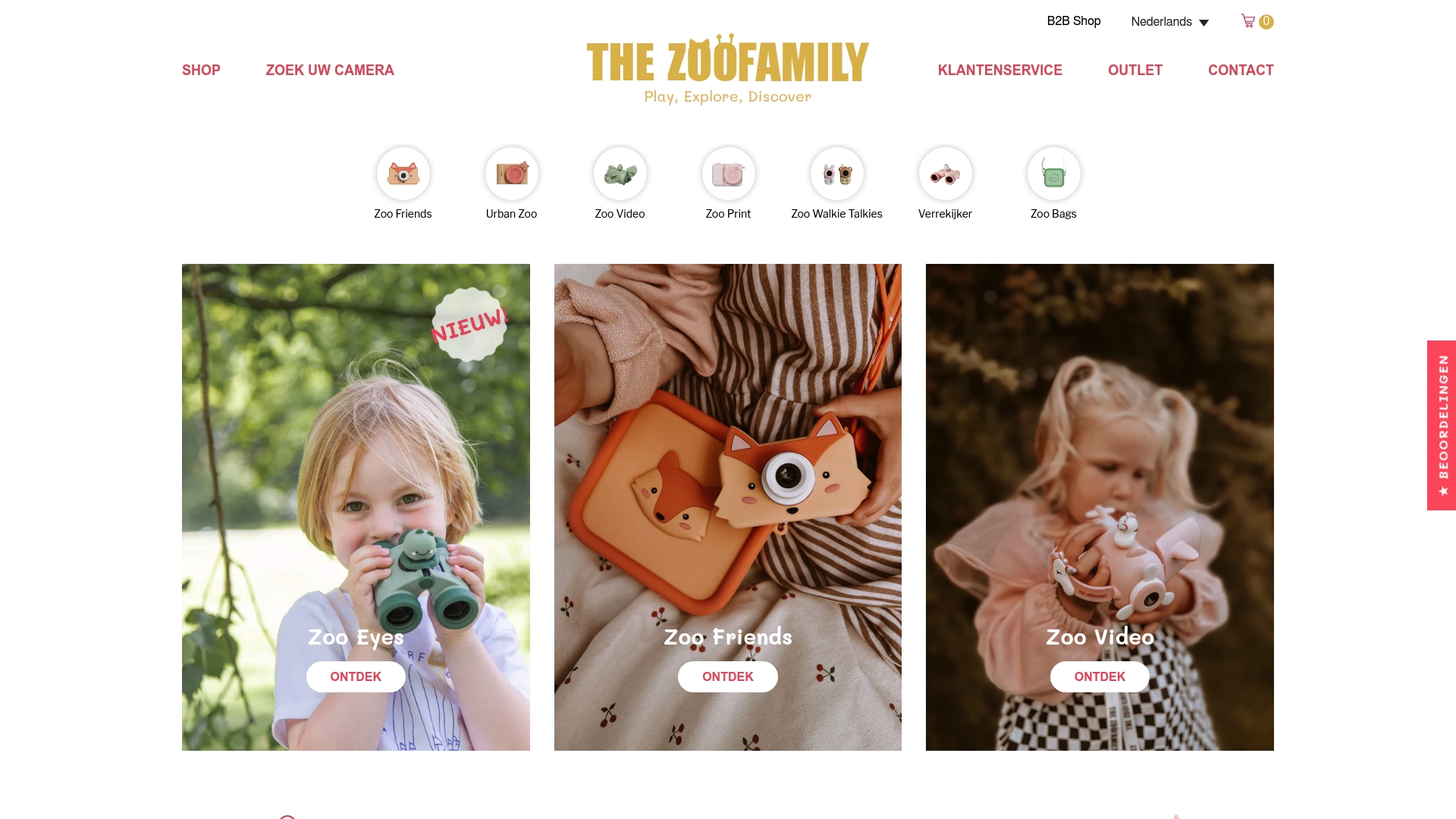
- Kids’ digital cameras: Zoo Friends, €69.95, and Urban Zoo, €89.95.
- Video camera: Zoo Video, €79.95.
- Instant print camera: Zoo Print, €109.95.
- Binoculars: Zoo Eyes, €39.95.
- Walkie-talkies: Zoo Walkie-Talkie, €54.95.
- Night light: Zoo Light, €39.95.
- Extras: Zoo Bags, €19.95, and Zoo Sleeves, €9.95.
Browse the kids’ cameras, the Zoo Walkie Talkies or the full range.
FAQ
How can I take care of our planet with young children?
Choose two or three habits and make them routines: switching off lights, closing taps, sorting recycling and walking short trips. Give each child a small job so they feel responsible. Time outdoors helps, because children who feel connected to nature are more motivated to protect it.
What are the most effective ways to protect the environment?
NOAA’s list includes reducing, reusing and recycling, conserving water, using energy-efficient bulbs, planting trees, driving less and educating others. The UN adds eating more plant-based food. Choose the ones that fit your daily life, since habits you keep matter more than ambitious ones you drop.
How can children help wildlife?
Children can build bird boxes or bee hotels, help plant nectar-rich flowers and observe local animals. The Natural History Museum suggests these for families. On outings, stay on paths and trails so habitats are left undisturbed.
Will the Earth be okay in 2050?
The UN says warming is already about 1.44°C and is likely to pass 1.5°C within the next decade without faster emission cuts. How much further it goes depends on decisions made now, including household ones. That is why acting early and teaching children to do the same is worthwhile.
Sources
- Climate action for families, UNICEF Parenting
- Actions for a healthy planet, United Nations
- Actions for the Planet, WWF (2026)
- Protecting Our Planet Starts with You, NOAA
- A Guide to Sustainable Living, UNICEF USA
- Caring for the environment, NSW Department of Education
- 10 ways you can help fight the climate crisis, UNEP
- Going Green at Home, NAEYC
- Things you can do to help the environment, Canada.ca
- What you can do to help the planet, Natural History Museum
- Climate Change, United Nations
- Private land as a refuge for rare frogs