

An eco friendly oven cleaner is a cleaning agent formulated without caustic chemicals, designed to remove grease and baked-on grime while staying safe for people, pets, and the environment. Unlike conventional oven cleaners, which rely on sodium hydroxide and produce harsh fumes, non-toxic alternatives use plant-based or enzyme-based ingredients that biodegrade without leaving harmful residues. For households with young children, pets, or anyone with respiratory sensitivities, the difference is not trivial. This guide covers the most effective natural and commercial green oven cleaner options, when each works best, and how to use them safely.
How does the baking soda and vinegar method clean ovens naturally?
The baking soda and vinegar method is the most effective DIY natural oven cleaning solution, and it requires at least 12 hours of dwell time to break down baked-on grime properly. That dwell time is not optional. The method works through gentle alkaline chemistry and physical agitation, not instant chemical action.
Here is how to do it correctly:
- Remove the oven racks. Set them aside to clean separately in the sink with warm soapy water.
- Mix the paste. Combine half a cup of bicarbonate of soda with two to three tablespoons of water to form a spreadable paste.
- Apply the paste. Coat the interior walls, base, and door glass. Avoid the heating elements, fan, and rubber door gasket entirely.
- Leave overnight. A minimum of 12 hours gives the bicarbonate time to penetrate and loosen carbon deposits and grease.
- Spray with white vinegar. The vinegar reacts with the bicarbonate paste, fizzing and lifting residue from the surface.
- Wipe clean. Use a damp cloth or non-scratch scouring pad to remove the loosened grime. Repeat in stubborn spots.
The fizzing reaction between bicarbonate and vinegar is satisfying to watch, but the real work happens during the overnight soak. Dwell time and gentle scrubbing do the heavy lifting, not the spray itself.
Pro Tip: Apply the paste the evening before a day off. You will have a clean oven by morning without any scrubbing effort the night before.
One critical safety point: never apply the paste to heating elements or rubber gaskets. Bicarbonate of soda on these components can cause damage and malfunction. Use a small brush to apply the paste precisely and keep a clear margin around all sensitive parts.
What are the benefits and limitations of natural eco-friendly oven cleaning?
Natural cleaning methods offer genuine advantages, but they also have real limits. Understanding both helps you choose the right approach for your oven’s condition.
The benefits are clear:
- No harmful fumes. Natural cleaners produce no toxic vapours, making them safe for households with children and pets and anyone with asthma or chemical sensitivities.
- Biodegradable ingredients. Bicarbonate of soda, white vinegar, and lemon juice break down harmlessly in water systems. Conventional caustic cleaners do not.
- Low cost. A bag of bicarbonate of soda and a bottle of white vinegar cost a fraction of commercial products.
- No residue risk. You will not accidentally contaminate food with chemical traces left on oven surfaces.
- Gentle on most surfaces. These methods are safe for enamel-coated oven interiors, which cover the majority of domestic ovens.
The limitations matter too:
- Ineffective on heavy grime. Natural DIY methods struggle with thick, burnt-on carbon deposits. If your oven has not been cleaned in months, a single overnight soak will not be enough.
- Time-intensive. The 12-hour minimum dwell time rules out quick cleans before a dinner party.
- Not suitable for aluminium interiors. The baking soda and vinegar method can corrode or discolour aluminium surfaces. Always check your oven’s interior material before applying any DIY paste.
- Requires physical effort. Stubborn spots still need scrubbing. The chemistry softens grime; your arm removes it.
Lemon juice and washing-up liquid are useful companions for light spills and oven odours, but they cannot replace bicarbonate of soda for anything beyond routine maintenance. Think of them as a weekly wipe-down tool, not a deep-clean solution.
What features distinguish commercial eco-friendly oven cleaners from conventional ones?
Commercial eco-friendly oven cleaners use enzyme-based or plant-based formulations instead of sodium hydroxide. That single difference changes the entire user experience. There are no caustic fumes, no requirement for heavy rubber gloves, and no need to vacate the kitchen during application.
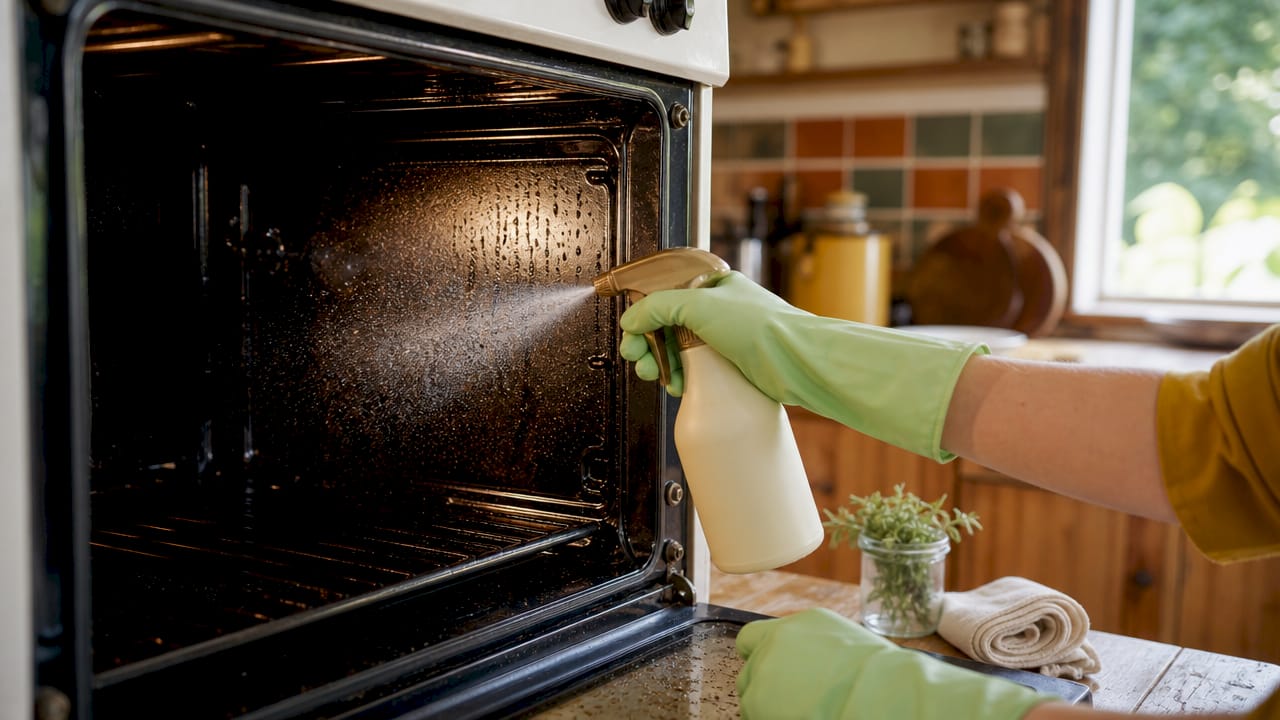
Enzyme-based products work by targeting grease molecules specifically. The enzymes break down fat at a molecular level, which means they are effective without being aggressive. Commercial eco-friendly products cost around $24 for a 16 oz bottle, and many come in refillable or recyclable packaging. That pricing sits above a DIY bicarbonate solution but well below the cost of a professional clean.
| Feature | Conventional chemical cleaner | Commercial eco-friendly cleaner |
|---|---|---|
| Active ingredient | Sodium hydroxide (caustic) | Enzymes or plant-based surfactants |
| Fumes | Strong, requires ventilation | Minimal to none |
| Dwell time | 20–30 minutes | 30–60 minutes |
| Safe for sensitive households | No | Yes |
| Packaging | Single-use plastic | Often refillable or recyclable |
| Cost | Lower upfront | Moderate |
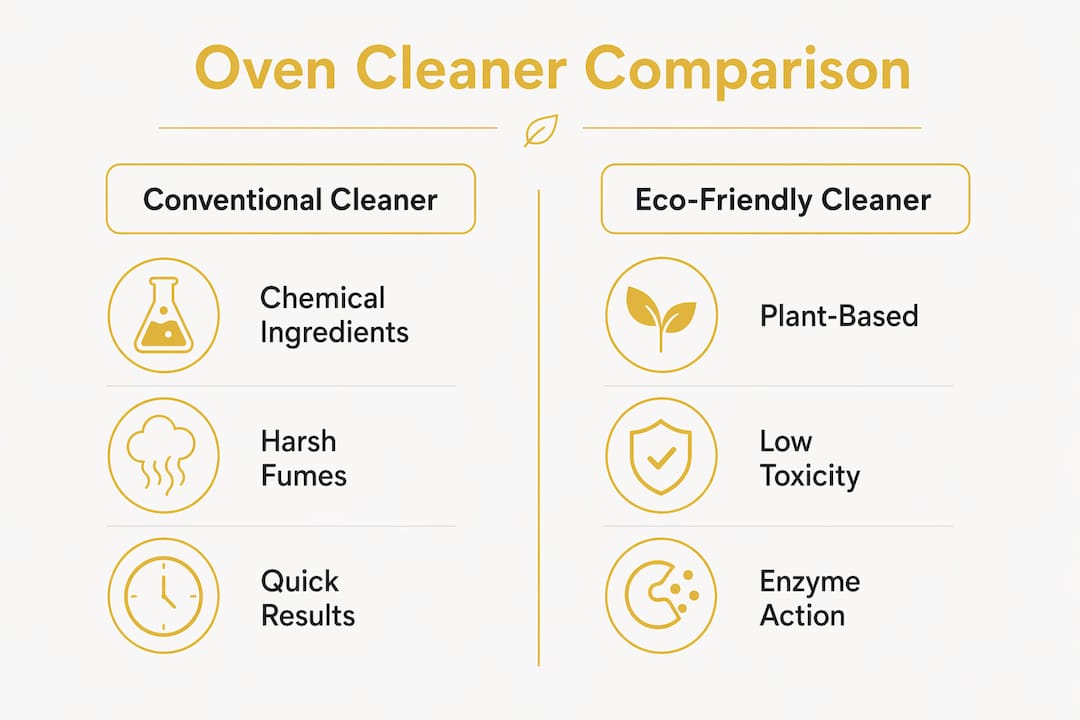
Commercial eco-friendly cleaners suit households that want faster results than the overnight DIY method but are not willing to use caustic chemicals. They are also the right choice when grime is too heavy for bicarbonate of soda alone.
Pro Tip: Read the product label before applying any commercial cleaner to a self-cleaning oven. Many eco-friendly sprays are not designed for pyrolytic oven coatings and can damage the surface.
Even with plant-based formulas, ventilation remains good practice. Open a window during application and wipe surfaces thoroughly before using the oven again.
How to safely and effectively use eco-friendly oven cleaners
Safe application is as important as choosing the right product. These steps apply whether you are using a DIY paste or a commercial plant-based cleaner.
- Always start cold. Never apply any cleaner to a warm oven. Heat accelerates chemical reactions unpredictably and increases fume risk even with eco-friendly products.
- Protect your hands. Wear washing-up gloves. Even plant-based surfactants can dry out skin with repeated contact.
- Avoid sensitive components. Keep all cleaners away from heating elements, the fan, and rubber door seals. Use a small pastry brush to apply paste with precision around edges.
- Clean racks separately. Soak oven racks in a bath of hot water and bicarbonate of soda for two hours, then scrub with a non-scratch pad. This avoids the need for any spray inside the oven cavity.
- Wipe thoroughly before use. After cleaning, wipe all surfaces with a clean damp cloth at least twice. Run the oven empty at 180°C for 10 minutes to burn off any remaining residue.
- Clean regularly. A monthly light clean with bicarbonate of soda prevents heavy build-up and means you will rarely need a commercial product at all.
Pro Tip: For households with pets, check that any commercial eco-friendly cleaner is certified free from essential oils such as tea tree or eucalyptus. These are plant-based but toxic to cats and dogs.
Families with young children benefit most from non-toxic oven cleaners that eliminate fume exposure. The absence of sodium hydroxide means no accidental skin burns if a child touches a surface before it is fully rinsed. For oven-safe cookware guidance that complements a non-toxic kitchen routine, it is worth checking material compatibility before every cook.
What are additional eco-friendly tips for a greener kitchen?
Oven cleaning is one part of a broader green kitchen routine. These complementary habits reduce indoor pollutants and keep your home safer for everyone in it.
- Switch to an eco-friendly glass cleaner for oven doors and kitchen windows. Plant-based glass cleaners leave no streaky residue and no chemical film near food preparation surfaces. The Thezoofamily blog covers eco-friendly glass cleaning in detail for anyone wanting a smudge-free finish without synthetic chemicals.
- Use a green all-purpose cleaner for worktops, hob surrounds, and splashbacks. A single plant-based spray replaces four or five conventional products and reduces the number of chemicals stored under your sink. The family guide to all-purpose cleaners from Thezoofamily is a practical starting point.
- Keep pets out of the kitchen during cleaning. Even eco-friendly products need time to dry and air out. Pets investigate surfaces with their tongues, so a 30-minute exclusion zone after any clean is a sensible habit.
- Ventilate consistently. Open a window whenever you clean, cook at high temperatures, or use any spray product. Good airflow reduces indoor air pollutants regardless of how green your cleaning products are.
Combining these habits with regular biodegradable oven cleaning creates a genuinely low-toxin kitchen environment. The cumulative effect matters more than any single product choice.
Key takeaways
The most effective eco-friendly oven cleaning strategy combines a regular bicarbonate of soda routine with a commercial plant-based product reserved for heavy grime, keeping your kitchen clean without caustic chemicals.
| Point | Details |
|---|---|
| Dwell time is non-negotiable | Leave bicarbonate of soda paste for at least 12 hours to break down baked-on grease effectively. |
| Know your oven’s interior material | Never use the baking soda and vinegar method on aluminium interiors due to corrosion risk. |
| Commercial eco cleaners fill the gap | Enzyme-based products handle heavy grime that DIY methods cannot shift, without caustic fumes. |
| Protect sensitive components | Keep all cleaners away from heating elements, rubber gaskets, and fan units to prevent damage. |
| Regular cleaning prevents heavy build-up | A monthly light clean means you will rarely need anything stronger than bicarbonate of soda. |
Why I always start with bicarbonate of soda
Most people reach for a commercial product first because it feels more powerful. I used to do the same. After years of testing both approaches, I am convinced the opposite order works better. Start with bicarbonate of soda and white vinegar for every routine clean. Reserve the commercial eco-friendly spray for the two or three times a year when grime has genuinely built up beyond what a paste can shift.
The patience required for the overnight method is actually its strength. You apply the paste, go to bed, and wake up to an oven that is 80% clean before you have touched a cloth. That is not slow. That is efficient. The mistake most people make is expecting instant results and giving up after 20 minutes.
The one thing I would add that most guides skip: always check whether your oven interior is aluminium before you start. Plenty of older ovens are, and the bicarbonate and vinegar reaction will leave marks you cannot reverse. Five seconds with the manufacturer’s manual saves a costly repair.
For busy parents especially, the eco-friendly cleaning tips at Thezoofamily are worth bookmarking. The tiered approach, natural methods first and commercial products only when necessary, is the most practical framework I have found for keeping a clean kitchen without compromising on safety.
— ALAIN
Thezoofamily and the greener home
Thezoofamily was built on the belief that caring for the planet starts at home, and in the small daily choices families make together.

Choosing a non-toxic oven cleaner is one of those choices. It protects the air your children breathe, keeps pets safe, and reduces the chemical load going down your drain. Thezoofamily shares practical, family-tested guidance on green home cleaning across the kitchen and beyond. Every camera sold plants a tree, and every article published aims to make sustainable living a little more straightforward for the families who want it.
FAQ
What is the best eco-friendly oven cleaner for families?
The bicarbonate of soda and white vinegar paste is the safest and most cost-effective option for routine cleaning. For heavy grime, an enzyme-based commercial cleaner offers a fume-free alternative without caustic chemicals.
How long does a natural oven cleaning solution take to work?
A bicarbonate of soda paste needs at least 12 hours of dwell time to break down baked-on grease effectively. Overnight application gives the best results with the least scrubbing effort.
Can I use a DIY oven cleaner if I have pets?
Yes, bicarbonate of soda and white vinegar are safe around pets once surfaces are wiped clean. Keep animals out of the kitchen during application and until all residue has been removed.
Is biodegradable oven cleaning as effective as conventional chemical cleaners?
Natural and plant-based methods work well on light to moderate grime. Conventional caustic cleaners dissolve heavy carbon deposits faster, but commercial eco-friendly enzyme products close that gap significantly for most domestic ovens.
How often should I clean my oven using eco-friendly methods?
A light clean with bicarbonate of soda once a month prevents heavy build-up. A deeper clean every three to four months keeps the oven in good condition without ever needing harsh chemicals.