

For Earth Day, simple recycled-material projects give children an immediate, hands-on way to practise reduce, reuse and recycle. Toilet-roll binoculars, egg-carton flowers, tin-can planters and seed-paper continents all work for ages 3 and up, take 15 to 45 minutes, and teach the same lesson: today’s rubbish can become tomorrow’s toy, plant pot or garden.
TL;DR:
- Using fewer projects allows children to complete their work without rescue, making the lesson of reuse more impactful than quick, disposable crafts.
- The seed-paper activity provides long-term educational value by encouraging children to observe plant growth weeks after creating their craft.
- Pre-cut templates and basic supplies streamline session flow and provide opportunities for children as young as three to successfully participate.
- Recycling and reusing materials like egg cartons and tin cans teach children that everyday waste can become something useful or beautiful.
- Limiting project complexity and emphasizing process over final appearance enhances understanding of the three Rs and fosters meaningful environmental awareness.
Table of Contents
- 12 easy earth day recycled art projects for home or classroom
- Materials, prep and safety for recycled-material crafts
- Running recycled crafts in a classroom setting
- Grow the Earth: a seed-paper project worth the extra step
- Why Thezoofamily backs nature-first crafting
- What actually matters when you run these projects
- Sources
12 easy earth day recycled art projects for home or classroom
These projects run from very simple (five minutes, one material) to slightly more involved (multiple steps, adult supervision). Pick two or three rather than attempting all twelve in one sitting. Younger children move faster through the first few; older ones enjoy the later, fiddlier builds.
- Toilet roll binoculars — Material: cardboard tubes. Age: 3+. Time: 15 minutes. Tape two tubes together, punch holes near the top, thread string through for a neck strap, then decorate with paint or stickers. Learning outcome: recognising a tube destined for the bin as a reusable shape.
- Egg-carton flowers — Material: cardboard egg cartons. Age: 3+. Time: 20 minutes. Cut individual cups from the carton, trim the edges into petal shapes, paint, and glue a pipe-cleaner or paper stem to the base. Learning outcome: seeing packaging as raw material rather than waste.
- Tin-can planters — Material: clean tin cans. Age: 4+ (adult handles any sharp rim). Time: 25 minutes. Wrap the outside in scrap paper or fabric, decorate, then fill with soil and a seedling or cutting. Learning outcome: connecting reuse directly to growing something living.
- Plastic-bottle hanging planters — Material: plastic bottles. Age: 5+. Time: 30 minutes. Cut a bottle horizontally, punch two holes near the rim for string, add drainage holes in the base, then plant. Learning outcome: understanding plastic’s long life and one way to extend its use.
- Recycled-crayon melts — Material: broken crayon stubs. Age: 5+ (oven step adult-only). Time: 30 minutes plus cooling. Sort crayon pieces into a silicone mould by colour family, bake at a low heat until melted, then cool and pop out new crayons. Learning outcome: a literal demonstration of recycling one worn object into a new one.
- Cardboard tube sea creatures — Material: cardboard tubes. Age: 4+. Time: 25 minutes. Flatten and cut the tube into fish or octopus shapes, paint, and add paper fins or googly eyes. Learning outcome: links craft to ocean plastic and marine habitat discussions.
- Seed-paper Earth — Material: scrap paper and seeds (full method below). Age: 5+. Time: 40 minutes plus drying overnight. Pulp paper, mix in seeds, press into a globe shape, dry, then plant. Learning outcome: closing the loop from waste paper to a living plant.
- Bottle-cap fish mosaic — Material: bottle caps. Age: 4+. Time: 30 minutes. Arrange washed caps by colour onto a cardboard fish outline and glue in place. Learning outcome: sorting and pattern-making using genuine waste items.
- Paper-roll stampers — Material: cardboard tubes. Age: 3+. Time: 20 minutes. Cut one end of the tube into a shape (a leaf, a star, a wave), dip in paint, and stamp onto paper. Learning outcome: repeated reuse of the same tool across a whole art session.
- No-sew T-shirt tote — Material: an old T-shirt. Age: 6+ (cutting needs adult support). Time: 30 minutes. Cut off the sleeves and neckline, then knot the bottom hem shut to form a bag. Learning outcome: turning worn clothing into something functional, no needle required.
- Bubble-wrap printing — Material: packaging bubble wrap. Age: 3+. Time: 20 minutes. Paint the bubbled side, press onto paper, and lift to reveal a textured print, ideal for an Earth-shaped background. Learning outcome: reusing packaging waste that would otherwise go straight to landfill.
- Tissue-box feet — Material: empty tissue boxes. Age: 4+. Time: 25 minutes. Cut foot-shaped holes in the box top, paint the box like an animal or monster, and children step in to “walk” through them. Learning outcome: a playful reminder that packaging has a second life before disposal.
Materials, prep and safety for recycled-material crafts
A basic supply kit covers most of the twelve projects above: PVA glue, child-safe scissors, poster paint and brushes, tape, string, markers, and a growing collection of washed containers.
Preparation makes the difference between a smooth session and a frustrated one. Clean containers thoroughly and let them dry fully before storing. Smooth any rough edges on tin cans with tape or sandpaper before handing them to children. For under-5s, pre-cut templates and pre-paint base shapes so little hands only need to assemble and decorate.
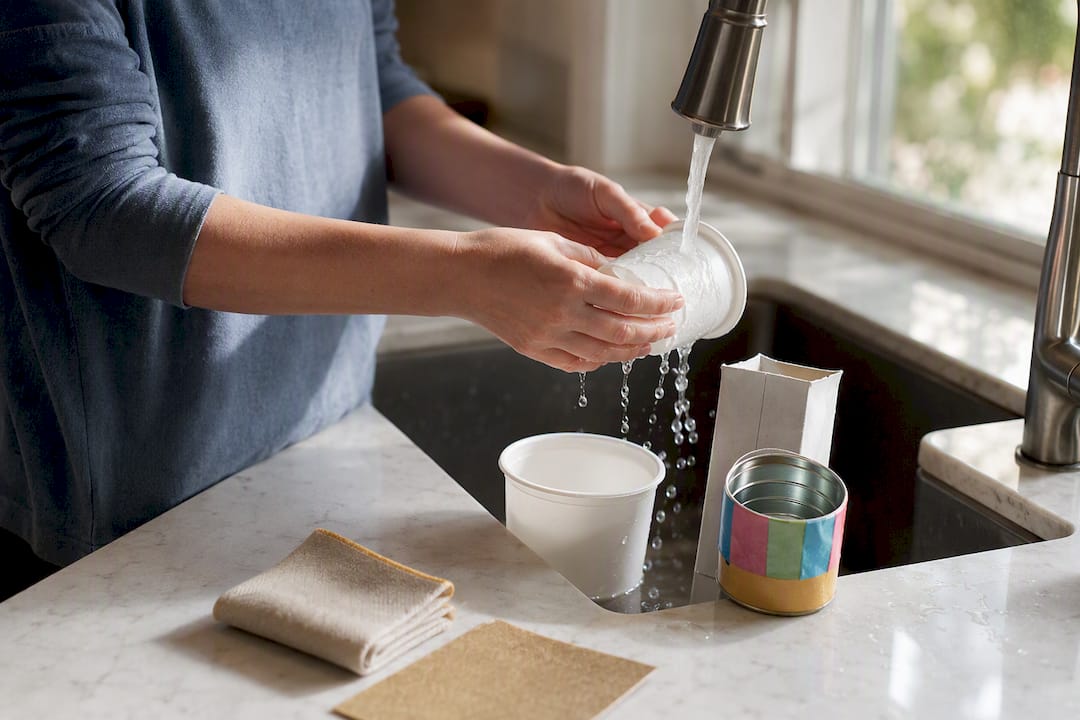
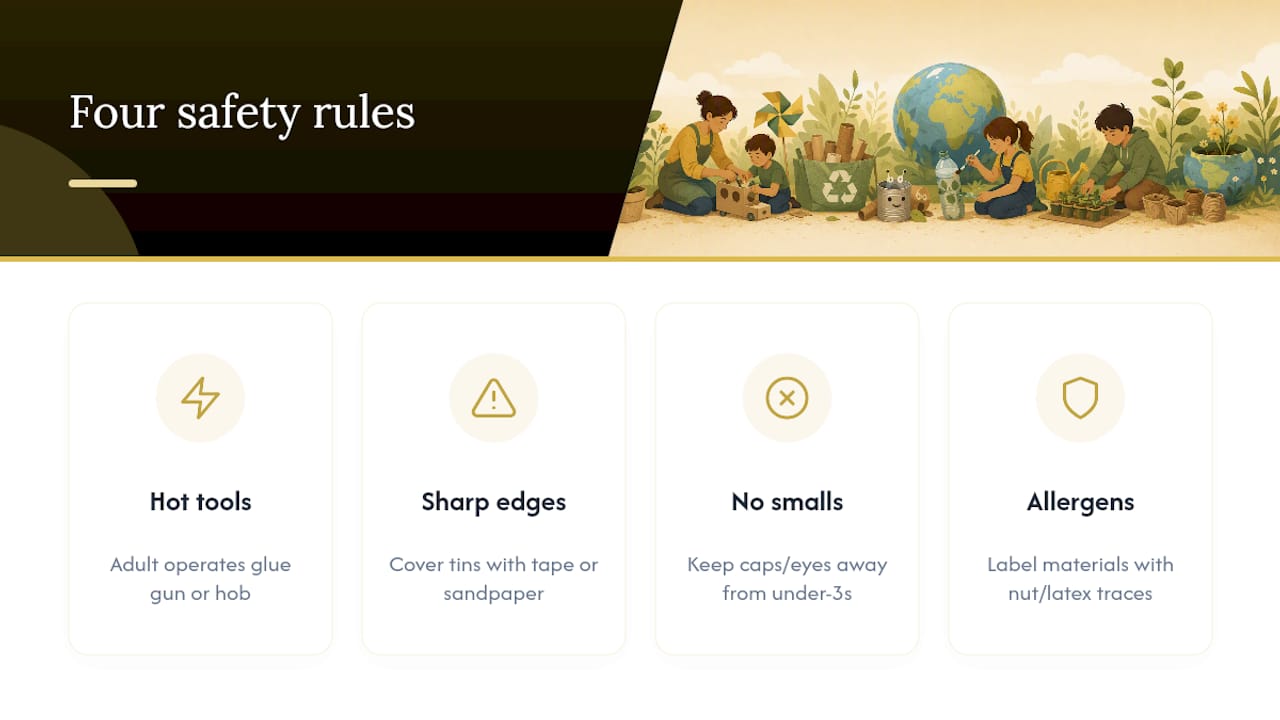
Safety basics: an adult should always manage the hot glue gun or hob, sharp tin edges get covered with tape, and anything with small detachable parts (bottle caps, googly eyes) stays away from under-3s who still mouth objects. Label any materials that may carry traces of nuts, latex, or other allergens if they arrive from home.
Short on a specific item? Swap scrap fabric for ribbon, use paper instead of thin plastic for younger groups, and ask families to send in clean recyclables rather than buying anything new, a move We Are Teachers recommends cutting prep time and boost buy-in.
Pro Tip: Send a note home a week before Earth Day asking each family to save one specific item, egg cartons for one group, tin cans for another. You will end up with a sorted, varied supply without a single shopping trip.
Running recycled crafts in a classroom setting
A single lesson fits neatly into three blocks: 10 minutes introducing the three Rs and the day’s material, 20 to 30 minutes of hands-on building, and 10 to 15 minutes sharing finished pieces.
- Choose a structure. Set up stations with a different project at each table, run one collaborative sculpture the whole class builds together, or split into small groups tackling the same project at different speeds.
- Try the collection challenge. A timed materials hunt, everyone digs through a shared recycling bin for two minutes before building, works well for raising energy before a group sculpture, an approach borrowed from a park-hosted recycled-sculpture activity.
- Check understanding, not polish. Ask each child to name one item they reused and explain what “reduce, reuse, recycle” means in their own words. The finished object matters less than whether they can answer that.
- Display the results. Line planters along a windowsill, hang paper-roll sea creatures as a corridor mobile, or photograph each piece for a simple portfolio that tracks a child’s environmental learning across the term.
Grow the Earth: a seed-paper project worth the extra step
Seed paper turns scrap paper into something that grows, and it is the one project on this list that keeps teaching long after the glue dries.
Materials: shredded scrap paper, a blender, water, a mould or cookie cutter shaped like a globe, a mesh screen, and a seed mix suited to your climate (wildflower or herb seeds both work well).
- Tear scrap paper into small pieces and soak in warm water for 10 minutes.
- Blend into a thick pulp, then stir in a handful of seeds.
- Press the pulp into a globe mould on the mesh screen, shaping rough continent outlines if you want the Earth look.
- Leave to dry flat for 24 to 48 hours, following the method Teach Beside Me sets out for its Grow the Earth project.
- Once fully dry, plant shallow, about 6mm of soil covering the paper, and water regularly. Most seed mixes germinate within one to two weeks.
For a class of 25, give each child their own small seed-paper disc to take home, or press one large collaborative globe into a shared classroom tray. Some craft roundups introduce this project by pointing out how much everyday rubbish households generate, Cricket Media cites a widely used illustrative figure of 63,000 garbage trucks’ worth of American waste daily, a number worth treating as a talking point rather than a precise statistic.
Why Thezoofamily backs nature-first crafting
An animal-themed range of cameras, walkie-talkies and binoculars for young children supports nature awareness and environmental care. That mission sits naturally alongside recycled crafts: both aim to get children noticing the natural world rather than just consuming from it.
For more project ideas that pair well with the twelve above, see 7 creative ideas for celebrating Earth Day and 8 creative recycled art projects, both built around the same reuse-first thinking.
What actually matters when you run these projects
Most Earth Day craft guides lean hard on novelty, an unusual project nobody has tried, a Pinterest-perfect result. That misses the point. The educator research behind projects like Project Learning Tree’s animal-themed builds consistently favours open-ended process over polished output, and that is the opposite of what most parents instinctively optimise for.
Here is what I’d prioritise instead: pick fewer projects and let children finish them without rescue. A pre-painted base or pre-cut template is not cheating, it is what lets a three-year-old complete something rather than abandon it half-built. The three Rs stick better through a finished tin-can planter that gets watered every day for a month than through six rushed crafts made in one afternoon and binned by June.
The seed-paper project earns its place precisely because it does not end at pickup time. Reuse becomes visible weeks later, in a windowsill sprout a child checks every morning. That slow payoff, not the craft itself, is the lesson worth protecting.
— ALAIN
Sources
For the full seed-paper method, see Teach Beside Me. For classroom formats and family-donation tips, see We Are Teachers and Project Learning Tree. For historical context, Jonathan Jones on Picasso traces recycled art back into fine-art tradition.
- Teach Beside Me — Grow the Earth seed-paper project
- We Are Teachers — Earth Day crafts & classroom activities
- Rose Kennedy Greenway — Build your own recycled materials sculpture