

A great backyard play area works because it’s zoned, not scattered: one patch for running and climbing, one for mess, one for calm. Start this weekend with three projects: a mud kitchen, a marked-out pea-gravel patio, and a swing hung with proper clearance, and measure your space before you buy a single thing. CPSC safety limits and Thezoofamily’s nature-play tools both fit neatly into that plan once the zones are drawn.
TL;DR:
- Building separate zones for move, messy, and quiet activities ensures a balanced, functional yard that adapts to children’s changing interests over time.
- Safety requires at least a six-foot clearance around play equipment and appropriate surfacing beneath climbing structures to prevent injuries.
- Incorporating layered elements for different age groups within each zone allows the yard to grow with children and reduces the need for frequent redesigns.
- Adding natural shade or retractable canopies over the areas where children spend the most time significantly improves sun protection without hindering play.
- Accessibility can be improved by using level pathways, raised tables, ramps, and sensory considerations to include children with disabilities effectively.
Table of Contents
- Backyard play area ideas that earn their space
- How to map your yard into three zones
- Safety rules that actually matter
- Small yards, rentals, and budget builds
- Designing for every age, from toddlers to tweens
- Nature play, observation, and The Zoofamily’s role
- Sun protection without losing play time
- Making play areas work for children with disabilities
- What actually keeps a play area in use
- Bring nature-watching into your play zones with Thezoofamily
- Sources
Backyard play area ideas that earn their space
Not every idea deserves a spot in a small yard. These fifteen have staying power because children return to them for years, not weeks.
- Mud kitchen. Build one from a pallet or a thrifted dresser with the drawers removed. Give it pots, a tap or watering can, and dirt within arm’s reach. This is the single project most likely to get daily use, because open-ended play with mud and water holds attention longer than almost anything with batteries.
- Pea-gravel play patio. A 6ft by 8ft rectangle edged with timber sleepers drains fast and stays tidy. Pea gravel tracks less indoors than sand, which matters more than it sounds once you’ve vacuumed a hallway twice in one week.
- Sand and water table. Choose a table at hip height for toddlers, waist height for school-age kids. Two tables side by side solve most sibling squabbles.
- A-frame or tree swing. Whichever you choose, keep a full 6ft clear on every side, following CPSC use-zone guidance.
- Balance logs or stepping stones. Keep them under 12 inches off the ground for anyone under five.
- Reading teepee. Add a lidded storage box nearby so books don’t warp in the rain.
- Raised kid garden bed. Line the base with chicken wire if pets dig, and pick sturdy plants like sunflowers and cherry tomatoes.
- Splash zone. A sprinkler mat or pop-up paddling pad avoids the plumbing and expense of a permanent water feature.
- Chalkboard fence panel. One coat of chalkboard paint on an existing fence board costs almost nothing.
- Hopscotch grid. Paint it straight onto a patio slab or the pea-gravel edging.
- Loose-parts bin. Fill a crate with logs, buckets, and offcuts. Rotate the contents monthly.
- Pikler triangle. A climbing frame scaled for toddlers, ideal near the mud kitchen for supervised messy-plus-climbing play.
- Natural small-world garden. A shallow tray of soil, pebbles, and mini figures for imaginative play.
- Deck box bench. Doubles as seating and hides toys by evening.
- DIY climbing wall panel. Bolt-on holds on a fence section work for older kids without needing a full structure.
How to map your yard into three zones
Split the yard into Move, Messy, and Quiet zones before buying anything. This is the planning method behind most successful small-yard layouts, and it stops you ending up with three swings and no mud kitchen.
- Move zone: swings, climbing, balance elements. Needs the most open ground and a 6ft equipment clearance.
- Messy zone: mud kitchen, sand, water, pea gravel. Site it near a hose or downpipe.
- Quiet zone: reading teepee, small-world tray, garden bed. Tuck it against a fence or shaded wall.
- Very small yards: shrink each zone to roughly 4ft by 6ft; even a tiny plot can hold all three.
- Medium yards: aim for a combined footprint around 12ft by 16ft across the three zones.
- Placement: put the whole area within sight of a kitchen or living room window, so supervision doesn’t mean standing outside the whole time.
- Checklist before you dig: check drainage after rain, note where afternoon shade falls, and leave a bench or chair spot for adults nearby.
Safety rules that actually matter
The single figure worth memorising: CPSC recommends a 6ft use zone in every direction around play equipment. That clearance quietly doubles or triples the footprint a swing or climbing frame actually needs, which is why so many home layouts feel cramped even when the equipment itself looks small on paper.
Fall-height matters as much as the equipment itself. Anything a child can climb above roughly waist height needs proper surfacing underneath, not just grass.
- Loose fill (bark, mulch, pea gravel) needs a generous starting depth, because it compresses and needs topping up over time.
- Rubber tiles or artificial turf with a shock pad cost more upfront but skip the annual top-up.
- Keep children under three at ground level entirely, and avoid any platform above 30 inches for that age group, per CPSC guidance.
Before the season starts, run a quick check: inspect swing hardware for rust, test that gate latches actually catch, and check sight lines from the house haven’t been blocked by new planting.
Small yards, rentals, and budget builds
Renting doesn’t rule out a proper play area. A pea-gravel patio built inside a freestanding timber frame lifts straight off the lawn at move-out. A mud kitchen on castors rolls into a shed for winter. Command-hook string lighting adds atmosphere without a single screw in the fence.
A basic weekend build doesn’t need to cost much. DIY playground builds are often achievable in a single weekend, and a sandbox or simple climbing frame tends to be the main cost driver rather than the finishing touches.
A lidded bench or deck box isn’t optional in a small yard. Tidy storage keeps a play area looking attractive by evening, which matters far more to adult buy-in than any single toy does.
Designing for every age, from toddlers to tweens
The trick to a yard that doesn’t need rebuilding every two years is layering: one toddler element, one big-kid element, and one tween element in each zone. In the Messy zone, that might mean a shallow sand tray for a toddler, a full mud kitchen for a six-year-old, and a loose-parts bin a ten-year-old can build with. Layering each zone with an element per age band means the yard grows with the children instead of being outgrown by them.
Elements can also be repurposed rather than removed. A toddler sandbox becomes a raised vegetable bed once the sand loses its appeal.
- Inspect hardware and surfacing depth every spring.
- Rotate the loose-parts bin monthly to keep it interesting.
- Top up loose-fill surfacing annually rather than waiting until it looks thin.
Pro Tip: Keep one box of “surprise” loose parts in the shed and swap it into the play zone every few weeks. It costs nothing and resets a bored ten-year-old’s interest in five minutes.
Nature play, observation, and The Zoofamily’s role
A backyard play area becomes richer once children are asked to notice things, not just move through them. Binoculars and simple cameras turn a quiet-zone bug hunt or bird-spotting session into a habit rather than a one-off. Thezoofamily designs its animal-themed cameras, walkie-talkies, and binoculars specifically for children aged three and up, built to sit naturally alongside a mud kitchen or reading teepee. For every camera sold, the company plants one tree, tying backyard play directly to the wider goal of restoring natural spaces.

Sun protection without losing play time
Shade planning belongs in the layout stage, not as an afterthought once summer arrives. Position the Quiet zone under an existing tree or against a shaded wall where possible, since natural shade beats a parasol that needs repositioning every hour as the sun moves.
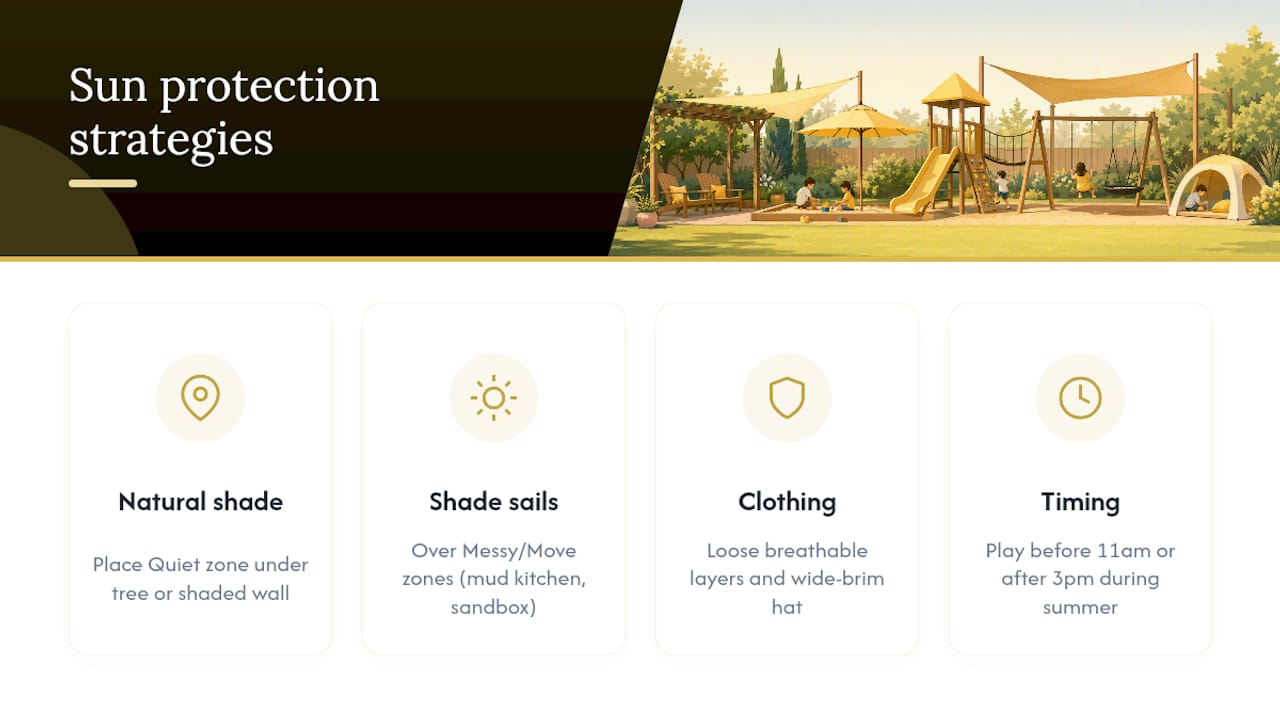
Where there’s no natural shade, a simple shade sail over the Messy or Move zone covers the areas where children linger longest, at the mud kitchen or sandbox rather than mid-run on the lawn. Retractable canopies work well over sand and water tables specifically, because they can be pulled back for drying out after rain.
Clothing and timing matter as much as structures. Loose, breathable layers and a wide-brimmed hat do more for comfort during peak sun hours than any amount of shade cloth, and shifting outdoor time to before 11am or after 3pm during summer cuts exposure without cutting play short. Keep water within reach in every zone, not just by the back door, so drinking becomes automatic rather than something a child has to interrupt play to ask for.
Pro Tip: A single well-placed shade sail over the Messy zone often does more good than shading the whole yard, because that’s where children sit still longest.
Making play areas work for children with disabilities
Accessibility works best when it’s built into the zone plan from the start rather than added on. Firm, level pathways between zones, rather than loose gravel throughout, let a wheelchair or walker move between the Move, Messy, and Quiet areas without getting stuck.
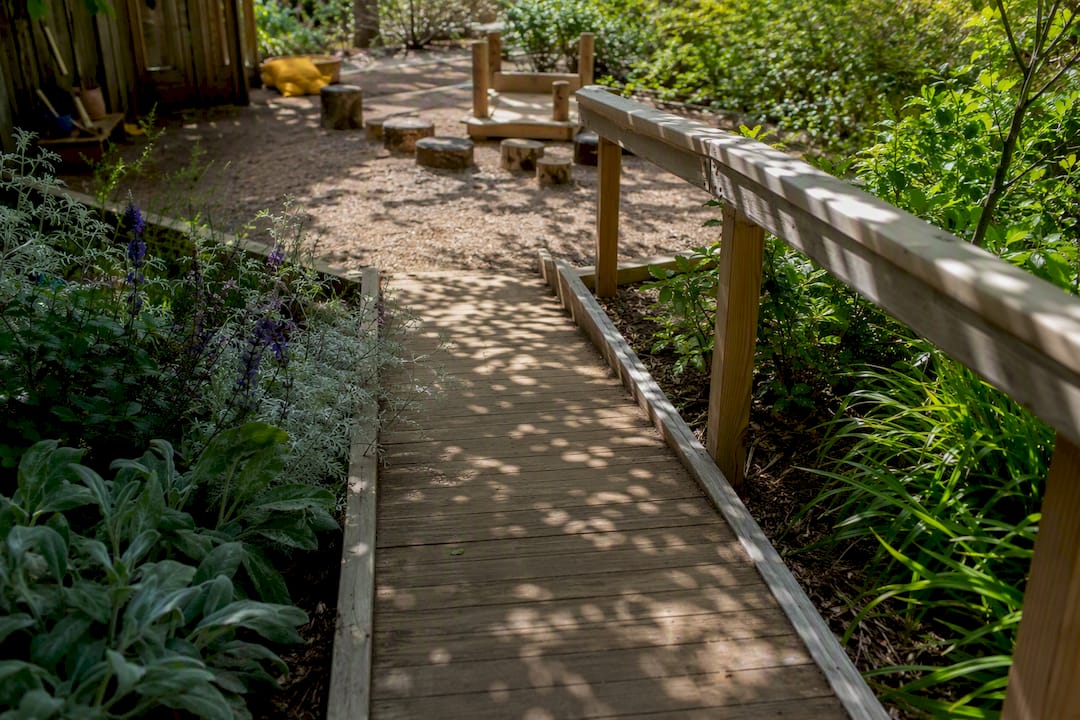
Raised sand and water tables at wheelchair height let children play from a seated position rather than being limited to standing tables. A mud kitchen built with a knee-clearance gap underneath the counter works the same way. Ramped rather than stepped access to any raised platform matters for both wheelchair users and children with balance difficulties, and a ramp doubles as a gentler route for toddlers too.
Sensory considerations count as much as physical ones. A quiet zone tucked away from the Move zone’s noise gives children with sensory sensitivities somewhere to retreat without leaving the yard entirely. Textured surfaces, chimes, and different-textured loose parts in the small-world garden add sensory variety for children who benefit from it, while a shaded, visually calm corner serves those who need less stimulation, not more.
What actually keeps a play area in use
The yards that stay loved for years aren’t the ones with the most equipment. They’re the ones someone spends ten minutes tidying every week and refreshes with a rotated loose-parts box, so there’s always something that feels slightly new. Layered zones survive because they flex with a child’s changing interests rather than locking the yard into one age group.
Set a weekly reminder, ten minutes, no more, to reset the loose-parts bin and check nothing’s broken. It’s the single habit that separates a play area still being used at year three from one gathering leaves by August.
— ALAIN
Bring nature-watching into your play zones with Thezoofamily
A well-zoned yard already teaches children to build, splash, and imagine. Thezoofamily adds the fourth layer: looking closely. Its animal-themed cameras and binoculars turn the Quiet zone into a spot for bird-watching or bug documentation, extending a five-minute glance into a proper habit of noticing the natural world, without adding a single square foot to your layout.
Every camera sold funds a tree planted, so the same purchase that deepens backyard play also restores the kind of green space children will eventually explore further afield. Browse the Thezoofamily range to find a camera or set of binoculars sized for your child’s age, and add one to the Quiet zone this weekend alongside the reading teepee.