

Zero waste cleaning means cleaning your home with less packaging, fewer products and tools you can reuse. You buy refills or concentrates, keep your containers, use cloths instead of disposables and clean little and often. This guide shows you how to start, what works, what does not, and which mixtures are unsafe.
TL;DR
- Buy fewer products. One all-purpose cleaner, a gentle scourer and a few cloths cover most jobs.
- Refill containers you already own and swap disposable wipes and sponges for washable cloths and brushes.
- Vinegar and baking soda clean well but are weaker than disinfectants. Use a proper disinfectant where hygiene matters.
- Never mix cleaning products, including “natural” ones such as vinegar and hydrogen peroxide.
- Wash your cloths and sponges often. Dirty tools spread bacteria.
Table of Contents
- What zero waste cleaning means
- Step 1: Clean out the cupboard first
- Step 2: Choose reusable tools
- Step 3: Use fewer, simpler products
- Step 4: Clean early and often
- Do zero waste methods work as well as conventional products?
- Mixtures you should never make
- Refills, concentrates and buying less packaging
- Cleaning with children at home
- Our perspective
- From the kitchen to the garden: gifts that last
- A simple starter plan
- FAQ
- Sources
What zero waste cleaning means
There is no single legal definition. In practice it has three parts: less packaging, fewer products and reusable tools.
An official US county guide recommends consolidating cleaners instead of using a separate product for every job. It also suggests buying in bulk, refilling your own containers and choosing durable tools such as mops, dusters and cloths over disposable ones.
The New South Wales government describes green cleaning in a similar way: fewer products and safer alternatives, which cuts waste and reliance on potentially harmful artificial chemicals.
Zero waste does not mean no waste at all. It means you cut what you can. Most homes can drop a large share of bottles, wipes and sponges without losing any cleanliness.
Step 1: Clean out the cupboard first
Before you buy anything, look at what you already have. Most households own a bathroom spray, a kitchen spray, a glass cleaner, a floor cleaner, a limescale remover and several half-used bottles.
- Group the products by job: kitchen, bathroom, floors, windows, laundry.
- Use up what you have. Do not pour products down the drain to “start fresh”.
- Keep the bottles in good condition. They become your refill containers.
- Decide which jobs one product can cover, then stop buying the rest.
Keep products in their original containers. The Wisconsin Poison Center advises storing cleaners in their original containers and following the label directions. If you refill a bottle, write on it what is inside and the date. Keep every product out of reach of children.
Step 2: Choose reusable tools
Tools are where a lot of household cleaning waste comes from. Wipes, paper towels and sponges go in the bin within days.
Cloths
The Hennepin County guide suggests old cut-up shirts or washcloths in place of most disposable tools. It recommends microfibre cloths to capture dust and leave surfaces streak-free. Old cotton towels and t-shirts cost nothing and work well for spills and general wiping.
Brushes, squeegees and mop heads
Germany’s Federal Environment Agency says microfibre cloths, brushes, squeegees, plungers and drain snakes can replace stronger chemicals through mechanical action. A squeegee on the shower screen after use reduces how often you need a limescale product. A drain snake removes a blockage without a chemical drain cleaner.
Do reusables really have a lower impact?
A 2025 life-cycle study based on hospital data found that reusable split-microfibre wipers and flat mops had 65 to 95% lower impacts than disposable equivalents across the categories assessed. The same study found laundry made up roughly 50 to 60% of the energy and global-warming impact of the reusable items.

The lesson for your home is simple. Reusables win, but only if you wash them sensibly. Run full loads, use a moderate temperature that suits the fabric, and do not wash two cloths on their own.
Look after your tools
Bacteria collect quickly on cleaning tools. The East Bay Municipal Utility District’s guide recommends washing rags, sponges and brushes in a washing machine weekly. It also advises using separate tools for toilets and for sinks and showers. Colour-code your cloths so the toilet cloth never reaches the kitchen.

Step 3: Use fewer, simpler products
You can make most cleaners from a short list of ingredients. The New South Wales guide describes what each one does:
| Ingredient | Best used for | Watch out for |
|---|---|---|
| Baking soda (bicarbonate of soda) | Deodorising and gentle scouring | Can scratch delicate surfaces if rubbed hard |
| White vinegar | Cutting grease, mild disinfecting | Concentrated vinegar essence is corrosive and can damage chrome fittings |
| Lemon juice | Mild bleaching and cleaning | Not a disinfectant |
| Pure soap | Biodegradable general cleaning | Leaves residue on some surfaces if overused |
| Washing soda | Removing grease and stains | Wear gloves and keep away from children |
The same guide warns that borax is toxic and should be kept away from children and pets. For a home with young children, we suggest leaving borax out altogether.
The German agency adds two cautions. Limonene in orange oil can trigger allergies, and concentrated vinegar essence is corrosive. It also says home-made cleaning is not automatically environmentally friendly or safe. Natural ingredients still need sensible use.
A simple all-purpose spray
The Hennepin County guide gives this recipe for an all-purpose cleaner:
- Pour ¼ cup (about 60 ml) of white vinegar into a 16-ounce (about 480 ml) spray bottle.
- Fill the bottle with water.
- Add 1½ teaspoons of non-antibacterial liquid dish soap.
Use it on worktops, sinks and tiles. Do not use vinegar on natural stone such as marble or granite, and test it on a hidden spot first. Label the bottle clearly.
Step 4: Clean early and often
The cheapest way to use less product is to let less dirt build up. The East Bay guide notes that prevention, frequent light cleaning and wiping up spills straight away reduce both effort and the amount of product you need.
Germany’s Federal Environment Agency gives similar advice: remove dirt promptly and dose cleaners sparingly. It also recommends concentrates and recognised environmental labels.
Some habits that help in a UK home:
- Wipe the hob after each use, while it is still warm.
- Put a doormat at each entrance to cut dust and mud.
- Squeegee the shower after use.
- Soak baked-on food in warm soapy water before scrubbing.
- Run the dishwasher full, not half empty.
Do zero waste methods work as well as conventional products?
For everyday dirt, yes. For killing germs, not always.
A comparative study of home disinfectants and natural alternatives found that vinegar and baking soda were less effective than commercial disinfectants against the pathogens tested. Of the products tested, only chlorine bleach and Lysol were effective against poliovirus. The study is from 2000, but it shows a basic limit: removing dirt and killing germs are different jobs.
So be clear about what you need:
- Cleaning removes dirt, grease and grime. Soap, water and a cloth do this well.
- Disinfecting kills germs. You need it only in specific cases, such as raw meat spills, a stomach bug in the house or a nappy-changing area.
The Wisconsin Poison Center advises cleaning visibly dirty surfaces with soap and water before disinfecting, following label directions and ventilating where possible. If you do need a disinfectant, use one in a concentrated or refill format, and use it only where it matters.
Mixtures you should never make
This is the most important safety section in the guide. Zero waste cleaning often means combining ingredients, and some combinations are dangerous.
A New Jersey health hazard alert states that:
- Bleach mixed with ammonia produces chloramine gases.
- Bleach mixed with acids such as vinegar produces chlorine gas.
- Hydrogen peroxide mixed with vinegar forms peracetic acid.
The American Cleaning Institute’s room guide gives the same rule: never mix cleaning products, and never reuse empty product containers. That applies to refills too. Rinse a bottle well and make sure it held nothing incompatible before you fill it.
If you feel unwell after using a product, get fresh air and call NHS 111 or, in an emergency, 999. Take the product label with you.
Sprays and your lungs
A CDC-hosted experimental study found that both conventional and green spray products created respiratory exposures to complex mixtures of volatile and non-volatile compounds. A thymol-based green product produced fewer volatile organic compounds. The authors noted that toxicity information was limited and that spraying should be avoided.
In practice: spray onto the cloth, not into the air. Open a window. Keep children and pets out of the room while you clean.
Germany’s agency also advises avoiding disinfectant cleaners, chlorine-based sanitary cleaners, corrosive acidic toilet cleaners and chemical drain cleaners in routine household cleaning.
Refills, concentrates and buying less packaging
Once your routine is set, buy in a way that creates less packaging.
- Refill pouches and bulk containers. You pour into your existing bottle. The pouch or tub is often recyclable, so check the label.
- Concentrates. You dilute a small amount at home, so less water travels in plastic.
- Solid formats. Tablets and bars you dissolve or rub on replace bottles.
- Refill shops. Many UK towns have one. You bring your own bottle and fill by weight or volume.
Check the claim before you buy. A “zero waste” label is not regulated as a standard, so look at what actually arrives: how much packaging, whether it is recyclable and how many bottles it replaces. The German agency recommends recognised environmental labels as a guide.
Cleaning with children at home
Young children change how you clean. They put things in their mouths, touch every surface and find every cupboard.
- Store all products, including home-made ones, high up or locked away.
- Keep products in original containers. A vinegar spray in a drink bottle is a risk.
- Let children help with safe jobs: wiping with a damp cloth, sorting washing, brushing the floor with a small brush.
- Wash surfaces they touch often, such as the highchair tray and toy shelves, with soap and water.
Small jobs teach children that things are cleaned, reused and looked after. Our guide on sustainable cleaning covers more of the basics.
Our perspective
We make cameras, walkie-talkies and binoculars for children aged 3 and up. We are not a cleaning brand, but the thinking behind zero waste cleaning is the thinking behind our products.
We design with animal references to spark a child’s interest in nature. We want a world where natural beauty is restored for future generations, which is why we plant one tree for every camera sold. A child who looks closely at a bird or a beetle is more likely to care what happens to it.
Cleaning is one of the first places a family can act on that. The habits are small. Buy less. Keep what you own in use. Choose durable over disposable. Teach children to do the same.
We suggest you start with one change, not ten. Swap one roll of paper towels for a stack of cloths. Refill one bottle. Once it feels normal, add another.
— ALAIN
From the kitchen to the garden: gifts that last
A zero waste home also looks at what comes in as gifts. A toy that lasts for years and gets passed on creates less waste than a pile of short-lived ones.
Our kids’ cameras are built for children aged 3 and up. The Zoo Friends camera costs €69.95. The Zoo Walkie-Talkie costs €54.95. Children can take them to the garden, the park or on a walk and look for animals and plants.
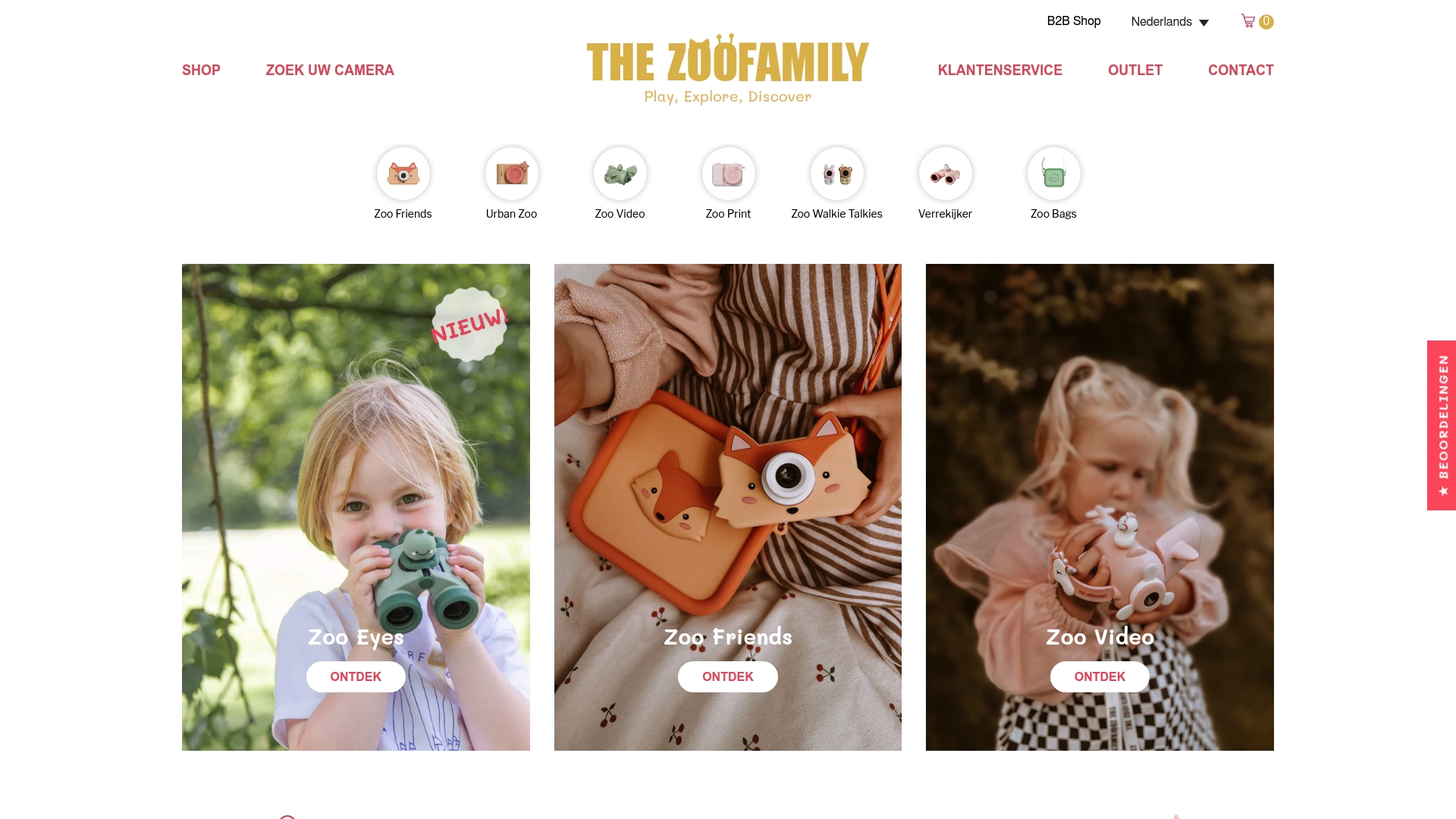
The camera accessories, including zoo sleeves at €9.95, protect the camera and help it last longer. Browse the full Zoofamily range to see every camera, walkie-talkie and binocular.
A simple starter plan
Here is a plan for the first month.
Week 1: Audit. List your products. Use up what you have. Stop buying duplicates.
Week 2: Tools. Cut old t-shirts into cloths. Buy one microfibre cloth set, one brush and one squeegee if you need them. Set up a weekly wash for cloths and sponges.
Week 3: Products. Make an all-purpose spray from the recipe above. Pick one refill or concentrate for the product you use most.
Week 4: Habits. Wipe as you go. Spray onto the cloth, not the air. Check your storage is safe for children.
After a month, review. If a job is not clean enough, add the right product for that job. Zero waste cleaning should leave your home clean, not just green.
FAQ
Is vinegar enough to clean my whole home?
No. Vinegar cuts grease and works as a mild disinfectant, but it is weaker than commercial disinfectants. It also damages some surfaces, such as natural stone, and concentrated vinegar essence is corrosive to chrome fittings. Use it for worktops, glass and tiles, and use a suitable product for jobs that need disinfecting.
Can I mix vinegar and bleach for stronger cleaning?
Never. Bleach mixed with acids such as vinegar produces chlorine gas. Bleach mixed with ammonia produces chloramine gases. Use one product at a time, rinse between products and ventilate the room.
Are reusable cloths really better than disposable wipes?
A 2025 life-cycle study found reusable microfibre wipers and mops had 65 to 95% lower impacts than disposable ones across the categories assessed. Laundry is a large share of the reusable impact, so wash full loads and do not over-wash. Wash cloths and sponges weekly so bacteria do not build up.
Is zero waste cleaning safe around young children?
It can be, with care. Natural ingredients still cause harm if swallowed or misused, and borax is toxic. Keep every product in its original or clearly labelled container, store it out of reach and keep children out of the room when you clean. If a child swallows a product, call NHS 111 or 999 in an emergency.
Sources
- Cleaning around the house, Hennepin County
- Easy green cleaning, NSW Office of Environment and Heritage
- Weniger ist mehr: umweltfreundlich reinigen, Umweltbundesamt
- Clean It! Safer House-Cleaning Methods that Really Work, EBMUD
- Bicomponent Split Microfiber Reusable Textile Products, MDPI Sustainability
- Antimicrobial activity of home disinfectants and natural products
- Hazard Alert: Mixing Cleaners, New Jersey Department of Health
- Advice for Cleaning and Disinfecting, Wisconsin Poison Center
- Respiratory quaternary ammonium and volatile organic exposures, CDC
- Room by Room Cleaning Guide, American Cleaning Institute