

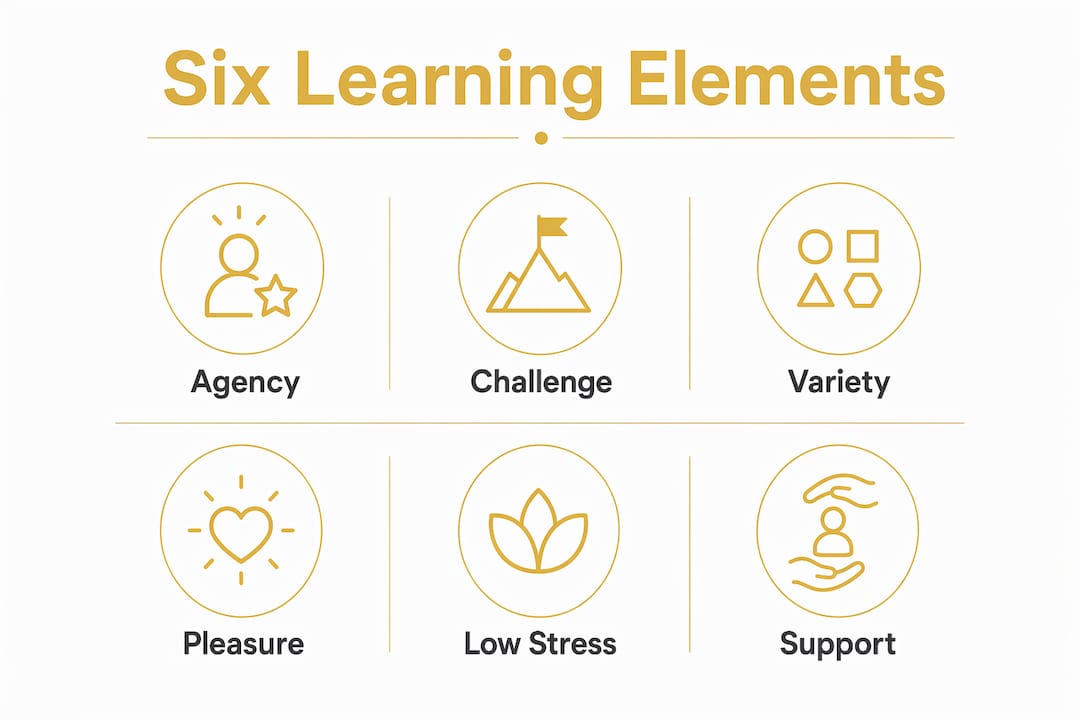
Learning fun is the deliberate combination of six core elements: agency, challenge, variety, pleasure, low stress, and peer interaction. These are not optional extras. Research observing 48 students aged 9–12 and 12 expert focus groups confirms that these elements, not gamification alone, drive genuine engagement. When children feel in control, appropriately stretched, and emotionally safe, they learn more and resist less. This article gives parents and educators a practical, research-backed framework for making education genuinely enjoyable for children aged 3–10, with real tools, language shifts, and activity ideas that work.
What makes learning fun for young children?
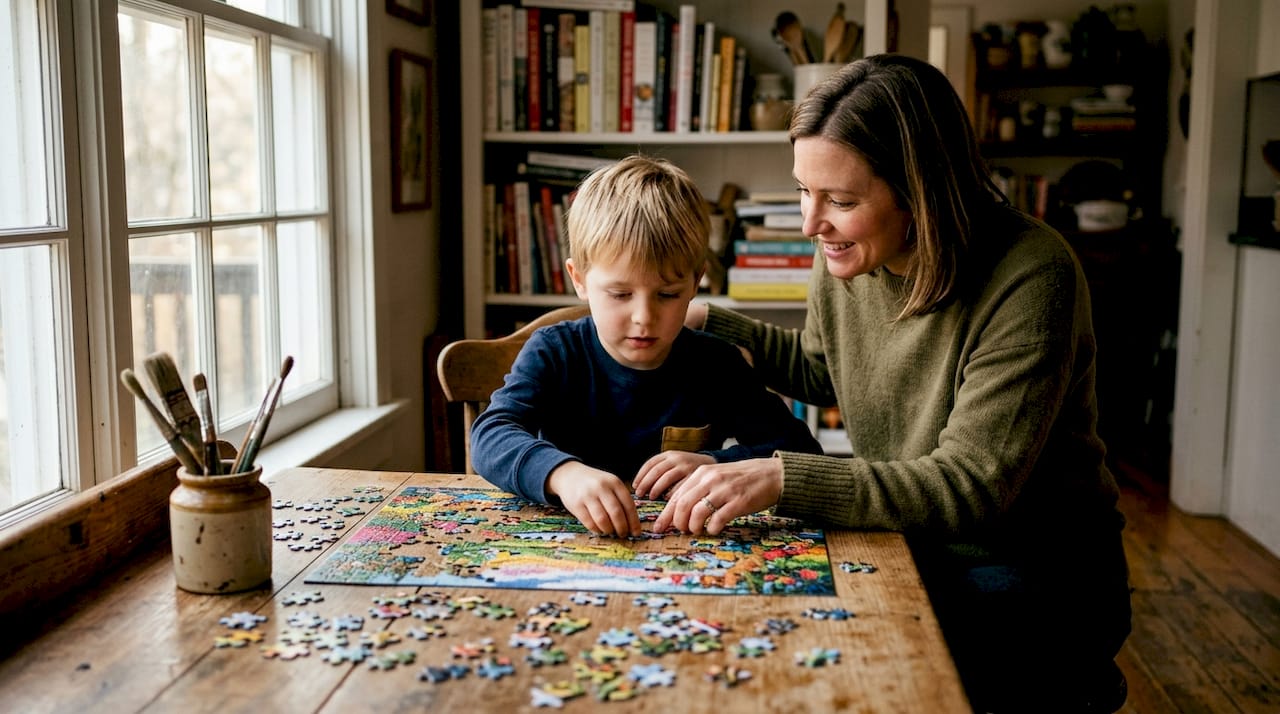
Learning fun is not the same as entertainment. Active participation drives real engagement: children who solve problems, make choices, and create things learn more than those who passively watch or play. That distinction matters enormously when planning activities.
The six elements below come directly from classroom observations and expert interviews. Each one is a lever you can pull today.
- Sense of agency. Children engage more deeply when they choose the topic, the format, or the pace. Offer two or three options rather than one fixed task.
- Appropriate challenge. Tasks that are too easy cause boredom. Tasks that are too hard cause anxiety. The sweet spot sits just beyond what a child can do comfortably alone.
- Diversity in methods. Rotating between drawing, building, storytelling, and movement keeps attention fresh and serves different learning styles.
- Pleasure. Laughter, curiosity, and delight are not distractions. They are signals that the brain is engaged and receptive.
- Low-stress climate. Positive emotions strengthen memory through dopamine, while stress and boredom trigger cortisol that impairs it. A calm, encouraging environment is a biological advantage.
- Peer interaction. Children learn from each other. Pair activities, group games, and shared projects build both knowledge and social confidence.
Pro Tip: Balance challenge and support by using the “just right” rule: if a child completes a task in under two minutes without help, make it harder. If they give up within one minute, simplify it.
How can parents and educators make learning enjoyable every day?
Practical strategies do not require expensive resources. The most effective approaches rely on structure, variety, and the right mindset. Hands-on activities with real-world connections create lasting engagement because children see why something matters, not just what it is.
- Turn lessons into explorations. Replace “we’re doing maths now” with “let’s figure out how many apples we need for everyone.” The task is identical. The framing changes everything.
- Use game-based learning. Board games, card games, and outdoor scavenger hunts teach counting, reading, and observation without children realising they are studying.
- Rotate creative activities. Storytelling, art, and music maintain engagement and serve children who learn better through movement or visual input than through text alone.
- Give children real choices. Let a child pick the book, the colour of the worksheet, or the order of tasks. Small choices build the sense of agency that research identifies as a core fun element.
- Build in physical breaks. For structured sessions, a proven timing model runs as follows: 10 minutes warm-up, 15 minutes new content, 5 minutes physical break, 15 minutes practice, 5 minutes break, 10 minutes wrap-up. This structure maintains attention across a full hour without fatigue.
- Celebrate effort, not just results. Praise the attempt, the persistence, and the improvement. Children who feel safe to fail try harder and stay engaged longer.
Pro Tip: For preschoolers aged 3–5, keep any single activity under 10 minutes. Attention spans at this age are short by design. Frequent switches between activities feel natural to them, not disruptive.
For families looking for ready-made ideas, Thezoofamily’s creative recycled art projects offer a practical starting point that combines making, nature, and imagination in one session.
Does technology make learning more engaging or less?
Technology makes learning more engaging when it demands active participation and less engaging when it replaces it. The difference lies in how the tool is used, not the tool itself.
| Approach | Effect on engagement |
|---|---|
| Interactive app with choices and feedback | High engagement, active participation |
| Passive video without interaction | Low engagement, passive consumption |
| Adaptive app that adjusts to child’s level | Sustained motivation, appropriate challenge |
| Repetitive drill app with no variation | Short-term compliance, rapid disengagement |
Giggle Academy is a strong example of technology done well. The AI-driven language learning app achieves over 95% speaking participation by combining gamified interactive lessons with adaptive pathways that adjust to each child’s pace and ability. That figure reflects what happens when technology requires children to produce language rather than simply consume it.
The risk with educational apps is the gamification trap: points, badges, and rewards feel fun but can replace intrinsic motivation with external reward-seeking. The best apps use game mechanics to support learning, not to substitute for it. Short, highly interactive sessions of 10–15 minutes outperform longer passive ones every time.
What language and mindset shifts help children embrace learning?
The words adults use around learning shape how children feel about it before a single activity begins. Replacing “school work” with “exploration” changes a child’s psychological response, reducing resistance and increasing enthusiasm. The content does not change. The emotional context does.
These language and mindset shifts make a measurable difference:
- Swap “work” for “discovery.” Say “let’s find out” instead of “you need to do this.” Curiosity is a more powerful motivator than obligation.
- Celebrate progress, not perfection. Recognising effort and consistency builds confidence and keeps children returning to challenging tasks rather than avoiding them.
- Reframe mistakes as information. “That didn’t work. What could we try differently?” teaches children that errors are part of the process, not evidence of failure.
- Use “yet” deliberately. “You can’t do it yet” is a growth mindset phrase that acknowledges current difficulty while keeping future success open.
- Encourage peer teaching. When a child explains something to another child, both learn. The explainer consolidates knowledge. The listener hears it in familiar language.
Focusing on effort and participation rather than grades reduces fear of failure and supports the kind of growth mindset that makes children genuinely curious rather than grade-anxious. This is especially important for children aged 3–7, when attitudes toward learning are still forming.
The environment matters as much as the language. A low-pressure, warm atmosphere where mistakes are expected and curiosity is celebrated produces children who associate learning with pleasure rather than performance.
Key takeaways
Making learning enjoyable for children aged 3–10 requires six specific elements: agency, challenge, variety, pleasure, low stress, and peer interaction, supported by consistent language that frames education as exploration rather than obligation.
| Point | Details |
|---|---|
| Six core elements drive fun | Agency, challenge, variety, pleasure, low stress, and peer interaction are research-confirmed drivers of engagement. |
| Active participation beats passive consumption | Children learn more when they solve, create, and choose rather than watch or listen passively. |
| Language shapes attitude | Replacing “work” with “exploration” reduces resistance and increases enthusiasm before an activity even starts. |
| Structure sustains attention | Breaking sessions into timed segments with physical breaks maintains focus across a full hour. |
| Effort praise builds motivation | Celebrating consistency and progress rather than results reduces fear of failure and encourages persistence. |
What I’ve learnt from watching children learn and resist it
The most common mistake I see parents and educators make is confusing a child’s reluctance with a lack of ability. Children rarely resist learning itself. They resist boredom, pressure, and the feeling that they have no say in what happens to them.
The research on the six core elements confirmed something I had already observed: variety is not a luxury. It is a necessity. A child who has been sitting and writing for 20 minutes is not being difficult when they start fidgeting. They are telling you something accurate about their nervous system.
What actually works is following the child’s lead more than most adults feel comfortable doing. Offer two activities and let them pick. Let them teach you something they know. Let them get it wrong without rushing to correct them. The moment a child feels genuinely in control of their learning, the resistance drops noticeably.
The other thing I would push back on is the idea that technology is either the answer or the problem. Giggle Academy’s participation rates show what is possible when an app is built around production rather than consumption. But the same child who thrives on that app will disengage from a passive video within minutes. The tool is not the variable. The demand for active thinking is.
My honest advice: experiment freely, observe closely, and trust that a child who is laughing and asking questions is learning, even if it does not look like a lesson.
— ALAIN
How Thezoofamily brings learning to life outdoors
Thezoofamily builds children’s cameras, walkie-talkies, and binoculars with animal-themed designs that connect children to the natural world. Every product is built to get children outside, observing, communicating, and creating.
The animal references are deliberate. They trigger curiosity about nature and give children a real reason to look closely at the world around them. For every camera sold, Thezoofamily plants one tree. That means a child’s first photograph contributes to something larger than the image itself. Parents and educators looking for engaging activities for kids will find curated ideas on the Thezoofamily website that combine hands-on play, creativity, and genuine connection with the natural world.
FAQ
What are the six elements that make learning fun?
Research identifies six core elements: agency, appropriate challenge, diversity in methods, pleasure, a low-stress climate, and peer interaction. These elements work together to create genuine engagement rather than surface-level entertainment.
How do I make learning fun for preschoolers?
Keep activities under 10 minutes, offer simple choices, and use movement, music, and hands-on materials. Preschoolers learn best through play and real-world exploration rather than structured instruction.
Is gamification the same as making learning fun?
Gamification is one tool, not the whole answer. Points and badges can motivate short-term compliance but often replace intrinsic curiosity with reward-seeking. True learning fun comes from active participation, choice, and appropriate challenge.
How does language affect a child’s attitude to learning?
Replacing words like “work” or “lesson” with “exploration” or “discovery” reduces psychological resistance and increases enthusiasm. The task stays the same. The emotional framing changes how a child approaches it.
How long should a learning session be for children aged 3–10?
For preschoolers, single activities should last under 10 minutes. For older children, a structured hour works well when broken into segments: warm-up, new content, physical break, practice, break, and wrap-up.