

Every british parent in a busy European city knows how quickly children’s curiosity can outgrow traditional toys. With over 60 percent of preschoolers now using technology for creative play, finding a camera suited for little hands becomes more than a shopping decision—it’s a step toward nurturing a love of nature and mindful exploration. This guide helps eco-conscious mothers choose nature-inspired cameras that encourage preschoolers’ creativity while supporting safe, sustainable choices.
Table of Contents
- What Makes A Camera Suitable For Preschoolers
- Key Types Of Preschooler-Friendly Cameras
- Essential Features For Young Photographers
- Safety Standards And Eco-Friendly Choices
- Common Mistakes Parents Should Avoid
Key Takeaways
| Point | Details |
|---|---|
| Select Age-Appropriate Cameras | Choose cameras that are robust, intuitive, and designed for children’s small hands to promote safe and enjoyable exploration. |
| Encourage Collaborative Learning | Engage with children during camera use to enhance their creativity and reinforce learning through shared experiences. |
| Prioritise Safety and Eco-Friendliness | Opt for cameras made from non-toxic materials with safety features to ensure both child protection and environmental responsibility. |
| Avoid Common Mistakes | Supervise camera usage, limit complex features, and maintain active participation to support healthy technological engagement and development. |
What Makes a Camera Suitable for Preschoolers
Selecting a camera for preschoolers requires understanding their unique developmental needs and creative potential. Developmentally appropriate interactive media experiences enhance young children’s ability to explore and express themselves through visual storytelling. The right camera becomes more than a device - it transforms into a creative tool that supports cognitive and motor skill development.
Key characteristics of an ideal preschool camera include robust physical design, intuitive controls, and safety features. Preschoolers need cameras that can withstand accidental drops, have simple one-touch buttons, and feature protective casings that prevent delicate internal components from damage. Ergonomic grips designed for small hands ensure children can comfortably hold and operate the device without frustration.
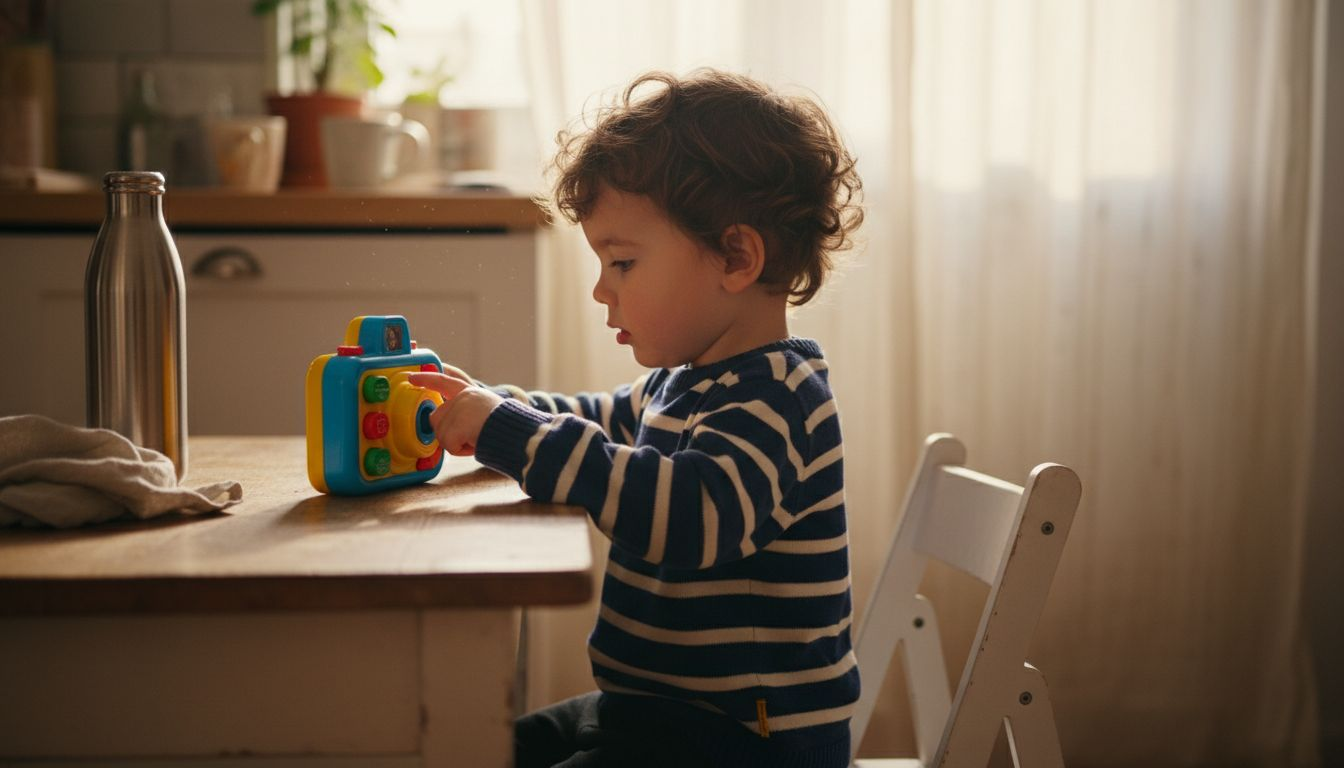
Beyond physical attributes, the most suitable cameras for preschoolers prioritise educational engagement and creative expression. Interactions with trusted caregivers remain crucial during technology experiences, so cameras should encourage collaborative learning and shared exploration. Look for features that promote storytelling, such as easy image review, basic editing capabilities, and the ability to capture multiple types of visual content.
Pro tip: Introduce camera use as a shared activity, spending time together exploring visual storytelling and helping your child understand how to capture meaningful moments.
Key Types of Preschooler-Friendly Cameras
Navigating the world of cameras for young children requires understanding the different types suitable for preschool-aged explorers. Point-and-shoot cameras remain an ideal option for novice photographers, offering simple operation and user-friendly features that perfectly match a child’s developmental capabilities. These compact devices provide an accessible entry point into visual storytelling, with intuitive controls that empower young learners to capture their world.
The primary camera types for preschoolers include dedicated kid-friendly cameras, modified point-and-shoot models, and supervised smartphone camera experiences. Digital cameras come in various formats, but compact point-and-shoot models offer the most age-appropriate functionality, featuring automatic settings that eliminate complex technical barriers. Key characteristics to consider include:
- Robust, drop-resistant design
- Large, simple buttons
- Bright, colourful exteriors
- Minimal advanced settings
- Lightweight construction
- Built-in safety features
Specialised preschool cameras often incorporate additional child-friendly elements like animal-themed designs, protective rubber casings, and simplified user interfaces. Some models include educational features that transform photography into an interactive learning experience, encouraging creativity while supporting motor skill development and visual awareness.
Here is a summary comparing the main types of preschooler-friendly cameras:
| Camera Type | Best For | Typical Features | Parental Involvement |
|---|---|---|---|
| Kid-dedicated models | First-time users | Durable, simple interface | Moderate to high |
| Modified point-and-shoots | Slightly older children | More settings, compact size | Moderate |
| Supervised smartphone usage | Tech-savvy families | Wide functionality, fragile | High |
Pro tip: Choose a camera with a wrist strap and protective case to help your preschooler feel confident and secure while exploring their new photographic adventure.
Essential Features for Young Photographers
Essential features for young photographers go far beyond simply capturing images, transforming cameras into powerful tools for creative exploration and learning. The ideal camera for preschoolers should blend technological simplicity with opportunities for imaginative expression, allowing children to develop visual storytelling skills through intuitive design and age-appropriate functionality.
Key design considerations for preschool cameras include:
- Ergonomic Design: Lightweight bodies with comfortable grips
- Intuitive Controls: Large, colour-coded buttons
- Durability: Shock-resistant construction
- Limited Settings: Minimal technical complexity
- Interactive Features: Basic editing and review capabilities
- Safety Mechanisms: Wrist straps and protective casings
The most effective cameras for young photographers encourage experiential learning by providing just enough technological support to spark curiosity without overwhelming developing cognitive skills. Playful design elements like animal-themed interfaces or nature-inspired colour schemes can transform the photographic experience into an engaging educational journey, helping children understand visual composition, light, and perspective through enjoyable exploration.
Pro tip: Select a camera that allows supervised interaction, turning photography into a shared learning experience that builds confidence and creative expression.
Safety Standards and Eco-Friendly Choices
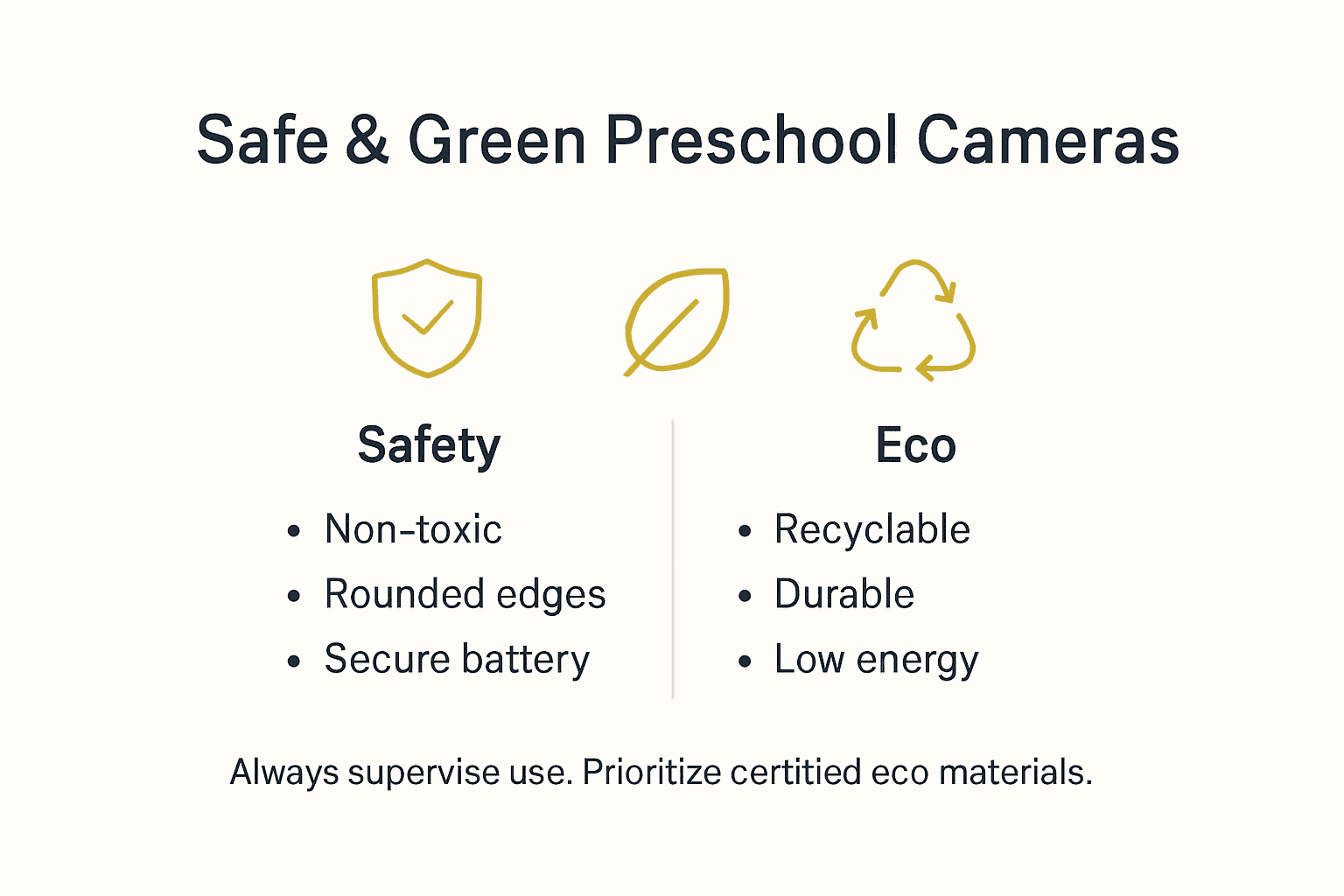
Safety standards for children’s technology represent a critical consideration for parents seeking responsible photography tools for preschoolers. The ideal camera must balance multiple dimensions of protection: physical safety, developmental appropriateness, and environmental consciousness. Modern eco-friendly cameras for young photographers prioritise non-toxic materials, sustainable manufacturing processes, and design principles that minimise potential risks.
Key safety considerations include:
- Material Selection: Non-toxic, BPA-free plastics
- Construction: Rounded edges and shatterproof components
- Size Design: No small detachable parts
- Battery Safety: Secure battery compartments
- Environmental Impact: Recyclable materials
- Manufacturing Process: Low-carbon production methods
Health and safety performance standards emphasise the importance of supervised technology interaction, particularly for preschool-aged children. Parents should seek cameras that not only protect physical safety but also support emotional and cognitive development. This means choosing devices with intuitive interfaces, limited screen time potential, and design features that encourage collaborative learning and creative exploration.
Pro tip: Prioritise cameras from manufacturers committed to transparent safety certifications and sustainable production practices, ensuring both child protection and environmental responsibility.
The table below highlights how essential features support preschoolers’ learning and safety:
| Feature | Child Benefit | Parental Assurance |
|---|---|---|
| Shock-resistant body | Less frustration after falls | Device lasts longer |
| Simple controls | Easy, independent use | Reduces need for constant help |
| Protective wrist strap | Confident exploration | Minimises loss or drops |
| Non-toxic materials | Safe handling during play | No exposure to harmful substances |
Common Mistakes Parents Should Avoid
Preschool technology supervision requires careful navigation to prevent common pitfalls that can compromise children’s safety and developmental experiences. Many parents inadvertently create barriers to healthy technological engagement by making uninformed choices about digital devices, particularly cameras designed for young children.
Common mistakes parents should be mindful of include:
- Unsupervised Use: Leaving children alone with devices
- Complex Technology: Selecting cameras with overly advanced features
- Screen Time Excess: Permitting unlimited digital interaction
- Neglecting Interaction: Treating cameras as passive entertainment
- Safety Oversight: Choosing devices with potential hazards
- Limited Guidance: Failing to demonstrate proper usage
Balanced media experiences are crucial for healthy child development, requiring parents to actively engage and create meaningful learning opportunities. This means transforming camera use from a solitary activity into an interactive, educational experience that supports creativity, motor skill development, and emotional connection. Parents should view technology as a collaborative tool for exploration, not a substitute for personal interaction.
Pro tip: Create a family photography project where you actively participate, turning camera time into a shared learning adventure that builds skills and strengthens relationships.
Spark Your Preschooler’s Creativity with Safe and Eco-Friendly Cameras
Choosing the right camera for preschoolers means balancing safety, simplicity and a touch of imaginative fun. The article highlights key challenges like providing robust designs, intuitive controls and eco-conscious choices that respect young users and the planet. Parents want devices that nurture creative storytelling while offering peace of mind through safety standards and durable construction.
At The Zoofamily, we understand these goals deeply. Our kids’ cameras are designed precisely to meet those developmental needs—featuring animal themes that engage little explorers and sustainable materials that protect their health and the environment. Each camera sold helps restore natural beauty by planting a tree, making your child’s creative journey part of a larger, greener mission. Discover how our kid-friendly cameras provide lightweight, shock-resistant fun that encourages learning and safe, shared use.
Do you want to empower your preschooler with a creative tool that is both safe and kind to nature?
Explore our collection today and take the first step towards memorable moments that also nurture the earth. Visit The Zoofamily to find out more and give your child the gift of creativity with responsibility.
Frequently Asked Questions
What features should I look for in a camera for preschoolers?
When choosing a camera for preschoolers, prioritise features such as ergonomic design, simple controls, durability, interactive features, and safety mechanisms. Look for lightweight bodies with large, colour-coded buttons, shock-resistant construction, and basic editing capabilities to enhance creativity and ensure safe handling.
Are there specific types of cameras suitable for young children?
Yes, the primary types of cameras suitable for preschoolers include dedicated kid-friendly cameras, modified point-and-shoot models, and supervised smartphone camera experiences. Each type has unique features that cater to the developmental needs of young users.
How can I ensure my child uses the camera safely?
To ensure safe camera use, select devices made from non-toxic materials with rounded edges and secure battery compartments. Additionally, supervise your child’s interactions with the camera, provide guidance on proper usage, and encourage collaborative learning through shared photography experiences.
What common mistakes should parents avoid when introducing cameras to their preschoolers?
Parents should avoid several common mistakes, including allowing unsupervised use of the camera, selecting overly complex technology, neglecting to engage with their child during camera use, and overlooking safety features. Instead, foster a guided, interactive experience to enhance learning and creativity.
Recommended
- Top caméras ludiques nature – Comparaison des 7 meilleures en 2025 – The Zoofamily
- Meilleurs gadgets plein air enfants – Comparatif 2025 – The Zoofamily
- Trouver Inspiration Dans La Nature : Stimuler La Créativité Enfantine – The Zoofamily
- Explaining Sustainability to Kids – Positive Impact Starts Early – The Zoofamily
- 7 Anwendungsbeispiele für Batterien im Alltag - accu.blog