

Did you know that households account for nearly 60 percent of global greenhouse gas emissions when considering their choices around food, energy, and waste? For families, small daily decisions can shape a healthier future and protect natural resources for generations. Understanding what sustainable living truly means helps parents and kids make mindful changes that fit their lives, turning eco-friendliness from a chore into a way to grow together and make a real difference.
Table of Contents
- Defining Sustainable Living For Families
- Family‑Friendly Eco Lifestyle Variations
- How Sustainable Habits Work At Home
- Eco Conscious Food, Waste, Energy Practices
- Practical Safety, Costs, And Compliance
- Alternatives And Common Pitfalls To Avoid
Key Takeaways
| Point | Details |
|---|---|
| Sustainable Living Defined | It emphasizes a holistic approach that intertwines environmental responsibility with family lifestyle choices for lasting generational impact. |
| Practical Home Strategies | Families can adopt specific practices like reducing energy consumption and implementing recycling systems to minimize their environmental footprint. |
| Cost and Safety Considerations | Families should consider financial implications and safety of eco-friendly products while implementing changes gradually for effective adaptation. |
| Avoiding Pitfalls | Awareness of greenwashing and the importance of thoughtful, incremental changes can prevent common mistakes in sustainable living efforts. |
Defining Sustainable Living For Families
Sustainable living represents a holistic approach to family lifestyle choices that prioritise environmental responsibility and long-term social well-being. According to research from the Eco-Families project, this lifestyle goes beyond individual actions to create meaningful generational impact, promoting green practices that benefit both families and wider communities.
At its core, sustainable living involves making conscious decisions across multiple domains of family life. This includes thoughtful choices about housing, transportation, food consumption, and clothing that efficiently use resources while minimising environmental harm. Understanding eco-friendly routines can help families transition towards more environmentally responsible living patterns.
Key elements of sustainable family living include:
- Reducing overall household waste
- Choosing renewable energy sources
- Supporting local and organic food systems
- Teaching children about environmental stewardship
- Minimising carbon footprint through mindful consumption
The ultimate goal of sustainable living extends beyond personal benefit. It represents a commitment to creating a healthier planet for future generations, where families actively participate in environmental preservation and social equity.
Family‑Friendly Eco Lifestyle Variations
Families today have multiple approaches to embracing a sustainable lifestyle, each tailored to different comfort levels, living situations, and environmental commitments. Eco-lifestyle variations range from gradual transitions to comprehensive sustainable transformations, allowing families to choose methods that best suit their unique circumstances.
Some popular family-friendly eco lifestyle approaches include:
Here is a summary of popular family eco-lifestyle approaches:
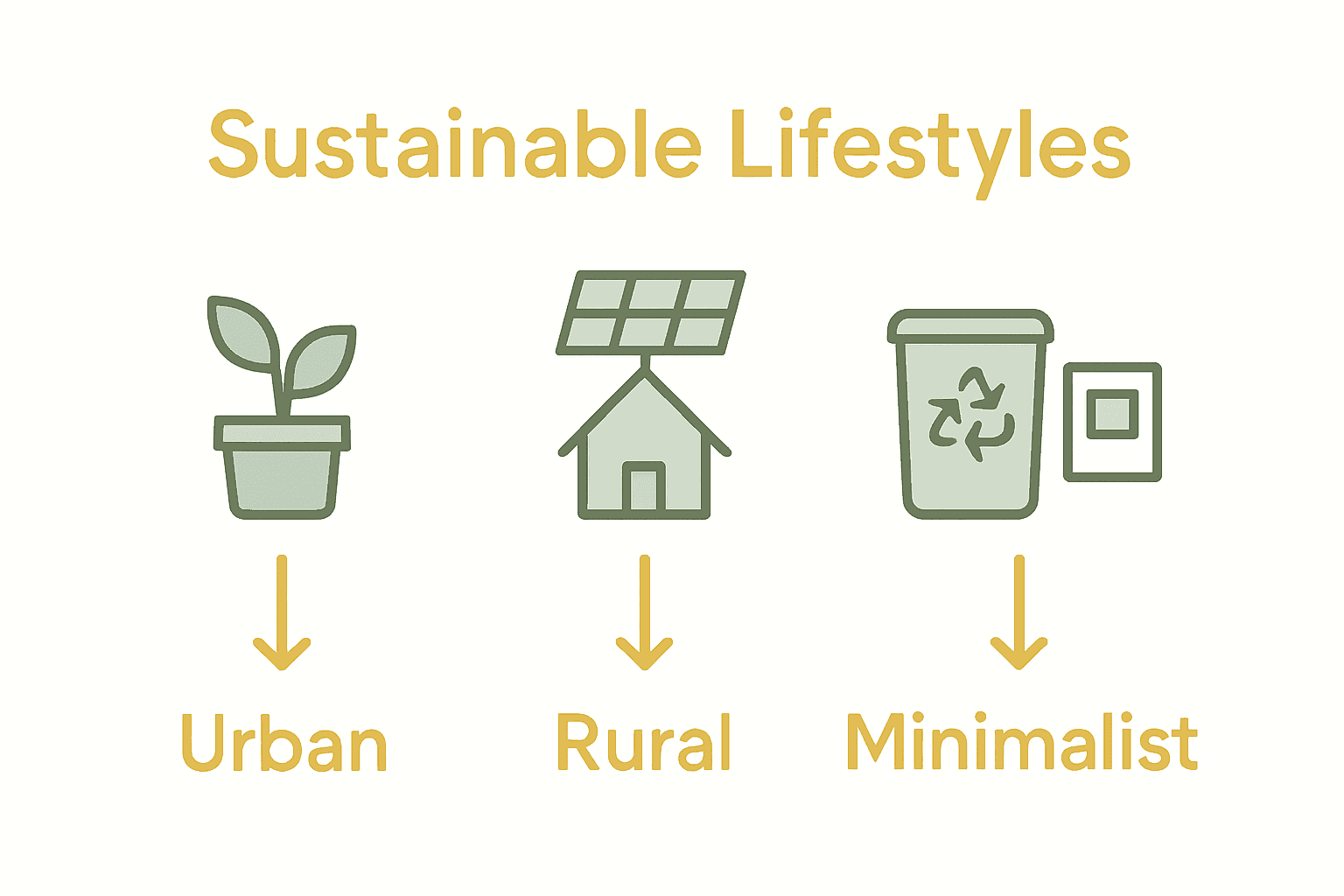
| Approach | Key Features | Suitable For |
|---|---|---|
| Urban Green Living | Vertical gardening Composting Energy-efficient appliances |
City flats & limited space |
| Rural Sustainability | Renewable energy Rainwater harvesting Small-scale farming |
Countryside homes & gardens |
| Minimalist Eco-Living | Reduced consumption Quality over quantity Focus on experiences |
Families seeking simplicity |
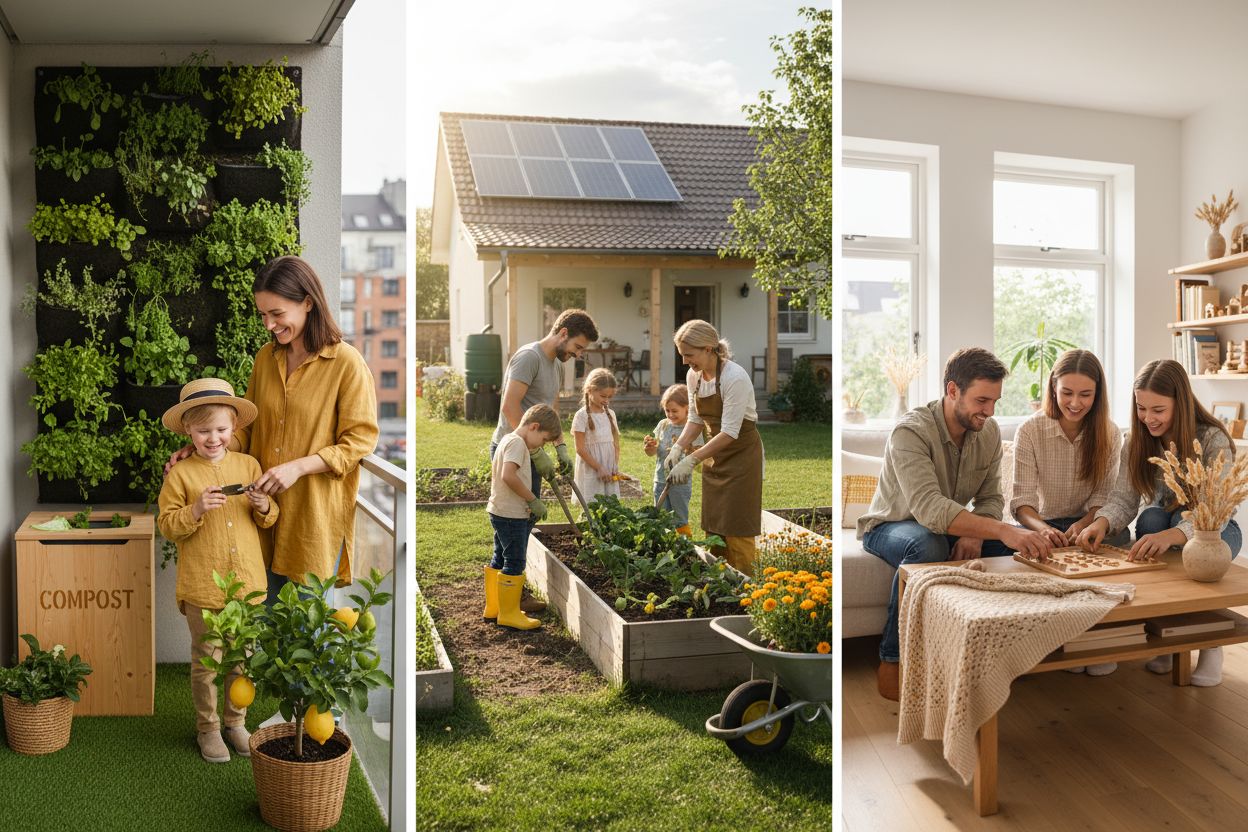
- Urban Green Living: Apartment dwellers maximising limited spaces through vertical gardening, composting, and energy-efficient appliances
- Rural Sustainability: Families with more land exploring options like renewable energy, rainwater harvesting, and small-scale organic farming
- Minimalist Eco-Living: Reducing consumption, choosing quality over quantity, and focusing on experiences rather than material possessions
Eco-friendly cleaning tips for European mums can provide practical starting points for families wanting to integrate sustainable practices into their daily routines. The key is finding an approach that feels manageable and authentic to your family’s values and lifestyle, rather than overwhelming yourselves with drastic changes.
Ultimately, sustainable living is about progress, not perfection. Every small step towards reducing environmental impact contributes to a healthier planet for future generations.
How Sustainable Habits Work At Home
Sustainable living begins at home, where families can implement practical changes that significantly reduce their environmental impact. According to UNICEF USA’s guide to sustainable living, adopting eco-friendly home practices is crucial for contributing to environmental preservation and teaching children important conservation principles.
Home sustainability involves creating systematic approaches to daily activities that minimize waste and conserve resources. Key strategies include:
- Reducing energy consumption through efficient appliances
- Implementing comprehensive recycling systems
- Choosing reusable products over single-use alternatives
- Minimizing water waste through smart consumption techniques
For families looking to integrate these practices, protecting the planet with children can be an engaging way to make sustainability a shared family mission. UNICEF’s research highlights that green parenting techniques, such as using reusable nappies and making conscious consumption choices, can create meaningful environmental impact right from the household level.
The most effective sustainable home habits are those that become natural, effortless routines. By gradually introducing these practices and making them enjoyable for all family members, households can transform their lifestyle while teaching valuable lessons about environmental responsibility.
Eco Conscious Food, Waste, Energy Practices
Families play a crucial role in sustainable living through mindful choices in food consumption, waste management, and energy usage. According to UNICEF USA’s sustainable living guide, eco-conscious practices can dramatically reduce environmental impact while teaching children valuable lessons about conservation and responsible living.
Food sustainability involves making strategic choices that minimize environmental strain. Key approaches include:
- Purchasing local and seasonal produce
- Reducing meat consumption
- Choosing organic and minimally packaged foods
- Growing small home gardens or participating in community gardening
- Minimizing food waste through smart meal planning
Waste reduction is another critical area where families can make significant differences. Strategies like composting, using reusable containers, and selecting products with minimal packaging can substantially decrease household waste. UNICEF’s green parenting tips highlight the importance of practices such as using reusable nappies, which can dramatically cut down on single-use product consumption.
Protecting the planet with children becomes an engaging family mission when energy conservation techniques are integrated into daily life. Simple actions like turning off unused electronics, using energy-efficient appliances, and understanding electricity consumption can transform households into models of environmental responsibility.
Practical Safety, Costs, And Compliance
Implementing sustainable living practices requires careful consideration of safety, financial implications, and regulatory compliance. According to UNICEF USA’s guide to sustainable living, families must balance environmental goals with practical considerations to ensure successful long-term adoption of eco-friendly strategies.
Cost management is a critical aspect of sustainable living. Families can approach eco-conscious choices strategically by:
- Conducting initial cost-benefit analyses
- Identifying long-term financial savings
- Exploring government incentives for green practices
- Investing in durable, energy-efficient products
- Gradually implementing changes to spread out expenses
Safety remains paramount when transitioning to sustainable practices. UNICEF’s green parenting tips emphasize the importance of thoroughly researching and verifying the safety of eco-friendly alternatives, ensuring that environmental choices do not compromise family well-being. This includes carefully selecting non-toxic materials, understanding product certifications, and maintaining rigorous safety standards.
Protecting the planet with children becomes more meaningful when families understand the regulatory landscape. Compliance with local environmental regulations, understanding potential tax benefits, and staying informed about evolving sustainability guidelines can help families make more informed and impactful choices.
Alternatives And Common Pitfalls To Avoid
Navigating sustainable living requires understanding both promising alternatives and potential missteps that can undermine environmental efforts. According to UNICEF USA’s guide to sustainable living, families must approach eco-friendly transitions with informed strategy and realistic expectations.
Common sustainability pitfalls families often encounter include:
- Greenwashing: Falling for marketing claims without substantive environmental benefit
- Overconsumption of ‘eco-friendly’ products
- Implementing changes too aggressively without proper planning
- Neglecting to calculate the true environmental impact of alternatives
- Assuming all sustainable options are automatically better
Practical alternatives offer more meaningful approaches to sustainable living. Families can explore options like:
- Purchasing second-hand or refurbished items
- Sharing and borrowing resources within community networks
- Investing in multi-purpose, durable products
- Prioritizing quality and longevity over frequent replacements
- Focusing on reducing consumption rather than simply replacing products
Protecting the planet with children becomes most effective when families approach sustainability as a thoughtful, incremental journey. The key is maintaining balance, avoiding extreme measures, and understanding that small, consistent changes often create more significant long-term environmental impact than sporadic, dramatic interventions.
Inspire Your Family’s Journey Towards Sustainable Living Today
Sustainable living for families can seem challenging with so many choices about how to reduce waste, save energy, and teach children about environmental stewardship. This Complete Guide to Sustainable Living for Families highlights practical steps that empower you to build eco-friendly habits at home without feeling overwhelmed. From embracing minimalist eco-living to discovering eco-conscious food and waste practices, every small effort contributes to protecting the planet for future generations.
At The Zoofamily, we understand the desire to connect your children with nature while fostering creative play that supports environmental values. Our kids’ cameras, walkie-talkies, and binoculars are designed to spark curiosity about wildlife and the natural world. Plus, with every camera sold, we plant a tree to help restore the natural beauty our children deserve. Start your family’s green journey now by exploring our eco-inspired products and learn more about how simple choices make a big difference at The Zoofamily or check out understanding eco-friendly routines and eco-friendly cleaning tips for European mums. Embrace this chance to give your children a brighter, greener future today.
Frequently Asked Questions
What are some simple changes families can make for sustainable living?
Families can start with reducing energy consumption by using energy-efficient appliances, implementing comprehensive recycling systems, and choosing reusable products instead of single-use items.
How does food sustainability contribute to a healthier environment?
Food sustainability involves purchasing local and seasonal produce, reducing meat consumption, and minimizing food waste. These practices lower the carbon footprint associated with food production and distribution.
What are common pitfalls to avoid when transitioning to sustainable living?
Common pitfalls include falling for greenwashing, overconsumption of ‘eco-friendly’ products, and making drastic changes without proper planning. It’s important to adopt changes thoughtfully and incrementally.
How can families balance safety with sustainable living practices?
Families should research and verify the safety of eco-friendly alternatives, ensuring that choices do not compromise well-being. This includes selecting non-toxic materials and understanding product certifications.