

More than 60 percent of urban parents worry their children do not spend enough time exploring nature, especially in crowded settings across France and Germany. As a british parent, you might feel the challenge of finding hands-on learning tools that excite young minds and encourage real outdoor discovery. This guide delivers practical strategies for creative family experiences that spark curiosity, deepen eco-awareness, and turn everyday outings into meaningful connections with the natural world.
Table of Contents
- Defining Hands-On Learning And Key Concepts
- Major Types Of Hands-On Learning Activities
- How Hands-On Learning Benefits Child Development
- Eco-Friendly Hands-On Experiences Outdoors
- Pitfalls To Avoid And Safety Considerations
Key Takeaways
| Point | Details |
|---|---|
| Hands-on Learning Engages Multiple Senses | This approach enhances knowledge acquisition by activating various sensory channels, promoting deeper understanding and retention. |
| Practical Activities Foster Cognitive and Emotional Growth | Engaging children in hands-on tasks boosts problem-solving skills and emotional resilience through real-world interaction. |
| Nature-based Learning Cultivates Environmental Awareness | Experiential outdoor activities help children connect with nature, fostering a sense of ecological responsibility. |
| Challenge Calibration and Safety Are Key | Balancing activity difficulty and ensuring safety supports effective learning while minimising frustration or risk. |
Defining hands-on learning and key concepts
Hands-on learning represents an educational approach that transcends traditional passive instruction, placing direct experience at the core of knowledge acquisition. This dynamic method encourages learners to actively engage with materials, environments, and real-world scenarios through physical interaction and experiential discovery. Practical learning strategies emphasise direct manipulation and sensory exploration as critical pathways to understanding complex concepts.
At its essence, hands-on learning transforms educational experiences from theoretical abstractions into tangible, memorable interactions. Children participating in this approach move beyond passive listening, instead exploring, experimenting, and constructing knowledge through direct engagement. By touching, manipulating, and investigating objects and environments, young learners develop deeper cognitive connections and more nuanced understanding of scientific, mathematical, and natural phenomena.
The pedagogical foundation of hands-on learning rests on several key principles. First, it recognises that children learn most effectively when multiple sensory channels are activated simultaneously. Second, it acknowledges that physical interaction promotes neural pathways associated with memory and comprehension. Third, this approach nurtures intrinsic motivation by making learning an active, enjoyable process where children become architects of their own understanding.
Pro tip: Start small by introducing one hands-on activity per week, gradually increasing complexity as your child’s engagement and curiosity grow.
Major types of hands-on learning activities
Hands-on learning encompasses a diverse range of educational approaches designed to engage children through active, experiential discovery. Comprehensive learning strategies highlight several critical activity types that transform traditional educational experiences into dynamic, interactive journeys of exploration and understanding.
Science-based hands-on activities represent a foundational category, including interactive experiments, problem-solving challenges, and manipulative investigations. These activities encourage children to observe, hypothesise, and test scientific concepts through direct engagement. Typical examples include botanical experiments where children grow plants, construct simple machines, conduct chemistry demonstrations, or explore ecological systems through direct observation and interaction.
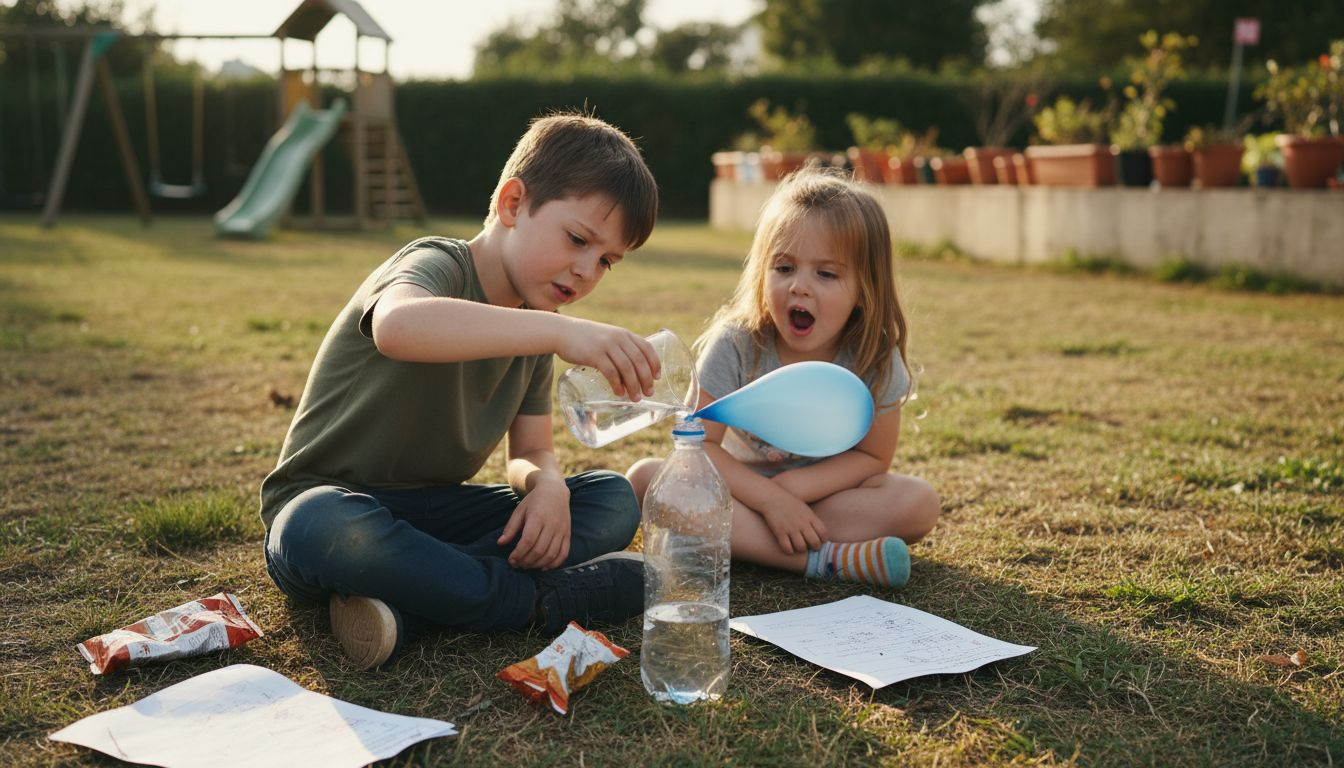
Nature-oriented hands-on learning activities offer profound opportunities for experiential education. Outdoor learning experiences encompass forest school programmes, wildlife observation, environmental conservation projects, and geographical exploration. These activities not only teach scientific concepts but also nurture environmental awareness, develop sensory skills, and foster a deep connection with the natural world. Children learn through direct interaction with ecosystems, understanding complex environmental relationships through tangible, memorable experiences.
Pro tip: Create a dedicated ‘exploration box’ with magnifying glasses, sketch pads, and collection containers to encourage spontaneous hands-on learning during outdoor adventures.
The following table summarises the main types of hands-on learning activities and their distinctive educational focus:
| Activity Type | Primary Setting | Main Educational Focus |
|---|---|---|
| Science-based | Indoors, classrooms | Concept exploration through experiments |
| Nature-oriented | Outdoor environments | Environmental awareness, sensory skills |
| Manipulative play | Home or schools | Fine motor development, spatial skills |
| Conservation projects | Gardens, parks | Ecological responsibility, group work |
How hands-on learning benefits child development
Cognitive Development emerges as a primary beneficiary of hands-on learning approaches, enabling children to transform abstract concepts into tangible understanding. Holistic child development research demonstrates that multi-sensory engagement dramatically enhances neural pathway formation, critical thinking skills, and problem-solving capabilities.
Emotional and social growth represent another crucial dimension of hands-on learning. Through direct interaction with environments and materials, children develop crucial interpersonal skills, emotional resilience, and self-confidence. These experiences teach children to navigate complex social scenarios, understand collaborative dynamics, and build robust communication skills that extend far beyond traditional classroom settings.
Physical skill development occurs simultaneously with cognitive and emotional growth. Manipulating objects, exploring natural environments, and engaging in hands-on activities strengthen fine and gross motor skills, hand-eye coordination, and spatial awareness. Children learn through physical exploration, developing muscular control, understanding cause-and-effect relationships, and building foundational movement competencies that support long-term physical development.
Pro tip: Create weekly hands-on learning challenges that integrate multiple developmental domains, encouraging children to explore, experiment, and discover through guided but unstructured play.
Here is a brief comparison of cognitive, social, and physical benefits delivered by hands-on learning:
| Domain | Core Benefit | Example Effect |
|---|---|---|
| Cognitive | Enhanced critical thinking | Improved problem-solving abilities |
| Social | Stronger communication skills | Better teamwork and empathy |
| Physical | Improved motor coordination | Greater spatial awareness |
Eco-friendly hands-on experiences outdoors
Nature-based learning environments offer transformative opportunities for children to develop profound ecological understanding and environmental consciousness. Outdoor learning strategies demonstrate that intentionally designed natural spaces can become powerful educational platforms where children directly engage with environmental systems, fostering both learning and sustainability awareness.
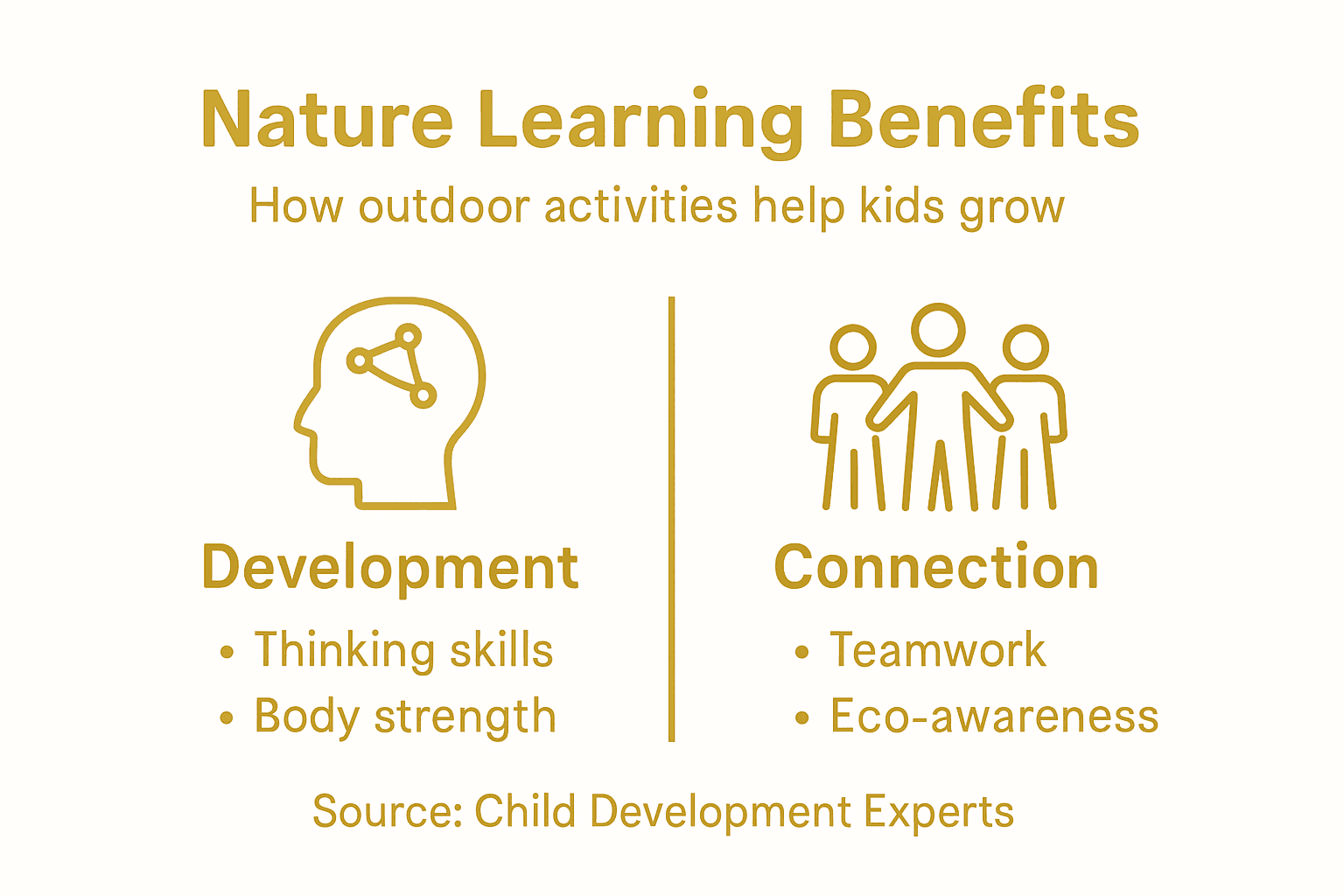
Eco-friendly outdoor experiences encompass a wide range of activities that encourage direct interaction with natural environments. These might include wildlife observation, habitat exploration, small-scale gardening projects, and conservation-oriented tasks that enable children to understand ecological relationships. By creating opportunities for hands-on investigation, children develop sensory awareness, learn about biodiversity, and begin to comprehend the intricate connections between human activities and environmental health.
Designing developmentally appropriate outdoor learning spaces requires careful consideration of children’s ages, abilities, and safety. Nature-based play environments should incorporate natural elements like stones, logs, native plants, and water features that stimulate curiosity and invite exploratory play. These spaces support spontaneous learning, physical movement, and emotional connection with the natural world, helping children develop a sense of environmental stewardship from an early age.
Pro tip: Create a family nature journal where children can document their outdoor discoveries, sketch observations, and reflect on their ecological learning experiences.
Pitfalls to avoid and safety considerations
Challenge Calibration represents a critical aspect of hands-on learning that requires nuanced understanding. Learning task difficulty must be precisely matched to children’s developmental stages and prior knowledge to prevent disengagement or overwhelming frustration. Activities pitched too simplistically risk boring children, while overly complex tasks might trigger anxiety and diminish their natural curiosity.
Safety considerations extend beyond physical protection to encompass emotional and psychological wellbeing. Research on children’s learning environments emphasises creating spaces that minimise potential risks while maximising supportive, inclusive interactions. This involves establishing clear boundaries, ensuring appropriate adult supervision, and maintaining an atmosphere of psychological safety where children feel empowered to explore without fear of criticism or failure.
Parental and educator supervision requires a delicate balance between protective oversight and allowing children sufficient autonomy to explore independently. Key safety strategies include conducting preliminary risk assessments of learning environments, ensuring age-appropriate equipment, maintaining constant but unobtrusive supervision, and teaching children basic safety protocols. Equally important is preparing adults to respond calmly and constructively to unexpected situations, transforming potential challenges into valuable learning experiences.
Pro tip: Develop a family safety checklist for outdoor and hands-on learning activities, involving children in creating and reviewing the guidelines to enhance their own risk awareness.
Empower Your Child’s Nature Connections with Hands-On Learning
The article highlights the challenge of engaging children effectively through hands-on learning, emphasising the importance of direct interaction with natural environments to foster deep ecological understanding and sensory development. If you are seeking to nurture your child’s curiosity while supporting their cognitive, social, and physical growth, integrating quality outdoor tools can transform every exploration into an unforgettable discovery. With The Zoofamily, you will find thoughtfully designed kids’ cameras, walkie-talkies, and binoculars that spark creativity and encourage children to become true architects of their own learning.
Discover how easy it is to make nature learning both fun and impactful by visiting The Zoofamily. For every camera purchased, a tree is planted, reinforcing your family’s commitment to restoring natural beauty for future generations. Begin your child’s journey towards environmental stewardship today with gear that complements hands-on science-based and nature-oriented activities perfectly. Explore more about our nature-inspired educational products at The Zoofamily and let your child experience the joy of learning through active exploration supported by reliable, eco-friendly tools.
Frequently Asked Questions
What is hands-on learning?
Hands-on learning is an educational approach that emphasises direct experience and active engagement through physical interaction with materials, environments, and real-world scenarios.
How does hands-on learning benefit children’s development?
Hands-on learning enhances cognitive abilities, improves social skills, and promotes physical development by allowing children to explore, experiment, and engage with their surroundings, leading to deeper understanding and improved coordination.
What types of activities are included in hands-on learning?
Hands-on learning activities can include science experiments, nature exploration, manipulative play, and conservation projects, all designed to encourage active participation and experiential discovery.
How can parents create safe hands-on learning experiences outdoors?
Parents can ensure safety by conducting risk assessments, providing appropriate supervision, and establishing safety protocols while encouraging children to explore and learn in outdoor environments.