

Natural sensory play is shaping how children learn by letting them get hands-on with mud, leaves, water, and even the simple feel of grass under their feet. Yet while many parents chase after the latest toys and learning apps, studies show that unstructured sensory experiences are crucial for neural pathway formation and sensory integration. Put simply, the greatest brain boost for kids could already be right outside your back door.
Table of Contents
- What Is Natural Sensory Play And Its Definition?
- The Importance Of Natural Sensory Play In Child Development
- Key Elements And Materials In Natural Sensory Play
- How Natural Sensory Play Engages The Senses
- Real-World Applications And Benefits Of Natural Sensory Play
Quick Summary
| Takeaway | Explanation |
|---|---|
| Natural sensory play enhances child development | It fosters neurological, cognitive, and emotional growth by engaging children with their natural environment. |
| Unstructured exploration promotes autonomy | Allowing children to explore freely develops their intrinsic motivation and creativity, crucial for their learning journey. |
| Diverse materials enhance sensory experiences | Using organic materials like leaves and stones encourages tactile exploration, supporting fine motor skills and sensory integration. |
| Natural settings improve problem-solving abilities | Engaging children in varied terrains helps develop spatial awareness and critical thinking through real-world challenges. |
| Accessible play areas fuel holistic growth | Parents can facilitate development without expensive equipment, simply by utilising gardens or local parks for sensory activities. |
What is Natural Sensory Play and its Definition?
Natural sensory play represents an immersive learning experience where children interact directly with environmental elements, engaging multiple sensory pathways simultaneously. This approach transforms ordinary moments into rich developmental opportunities by encouraging exploration through touch, sight, sound, smell, and movement within natural settings.
Understanding the Core Concept
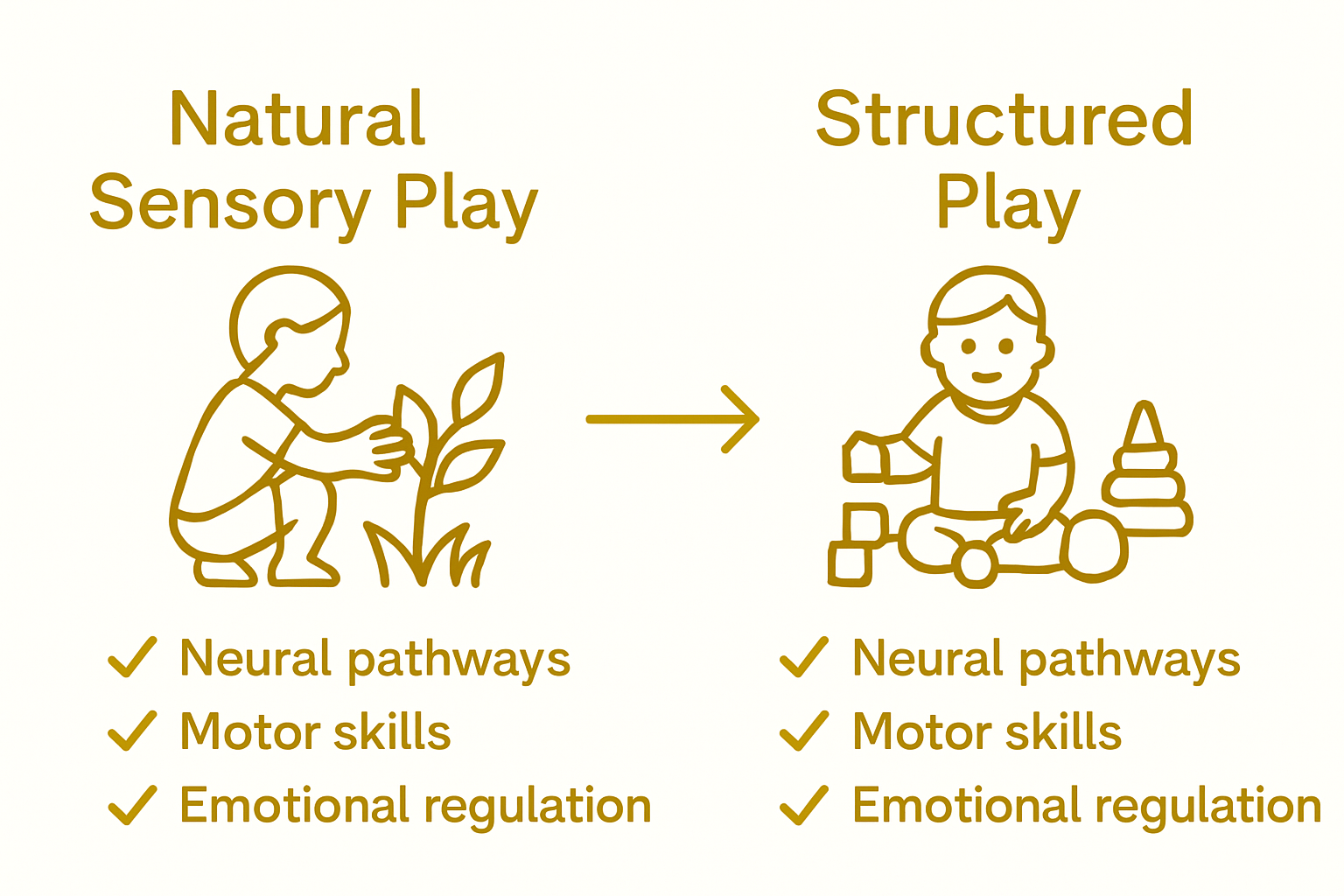
Natural sensory play differs fundamentally from structured play by allowing children unfiltered, open-ended interactions with organic materials. When children explore mud, handle leaves, listen to water flowing, or feel grass between their toes, they are participating in a profound learning process that stimulates cognitive and physical development. Research from Child Development Institute suggests that these unstructured sensory experiences are crucial for neural pathway formation and sensory integration.
Key characteristics of natural sensory play include:
- Direct engagement with natural materials like soil, water, stones, and plants
- Unstructured exploration without predetermined outcomes
- Multi-sensory stimulation through tactile, visual, and auditory experiences
- Child-led learning driven by curiosity and intrinsic motivation
Developmental Significance
Natural sensory play serves as a critical mechanism for childhood learning, offering far more than simple entertainment. By interacting with natural environments, children develop essential skills including spatial awareness, fine motor coordination, and environmental understanding. Childhood Brain Development: A Guide for Modern European Mums highlights how these experiences contribute to neurological growth and emotional regulation.
The beauty of natural sensory play lies in its simplicity and accessibility. Parents need not invest in expensive equipment; a garden, park, or even a small outdoor space can become a rich learning environment. By providing opportunities for unrestricted exploration, caregivers support holistic child development through experiences that are both enjoyable and intellectually stimulating.
Below is a table summarising the key characteristics that differentiate natural sensory play from structured or artificial play approaches.
| Characteristic | Natural Sensory Play | Structured/Artificial Play |
|---|---|---|
| Structure | Unstructured, child-led | Structured, adult-directed |
| Materials Used | Organic (leaves, mud, stones, water) | Manufactured toys, plastic, digital |
| Sensory Engagement | Multi-sensory with tactile, auditory, visual | Limited, often single-sensory |
| Learning Motivation | Curiosity and intrinsic motivation | External goals, rewards, or instructions |
| Developmental Focus | Holistic cognitive, physical, emotional | Specific skills or knowledge targets |
The Importance of Natural Sensory Play in Child Development
Natural sensory play transcends simple entertainment, serving as a fundamental mechanism for holistic childhood development. By engaging children in unstructured interactions with environmental elements, this approach supports critical neurological, cognitive, and emotional growth pathways.
Neurological and Cognitive Benefits
Children’s brains develop most rapidly during early years, with sensory experiences playing a crucial role in neural pathway formation. Research from Developmental Neuroscience indicates that multi-sensory interactions stimulate brain plasticity, enhancing cognitive functions such as problem-solving, spatial reasoning, and critical thinking.
Key cognitive advantages include:
- Enhanced neural connectivity through diverse sensory inputs
- Improved spatial awareness and motor skill development
- Increased capacity for creative thinking and abstract reasoning
- Strengthened neural networks supporting future learning capabilities
Emotional and Social Development
Beyond cognitive benefits, natural sensory play profoundly impacts emotional intelligence and social skills. When children explore natural environments collaboratively, they learn crucial interpersonal skills like communication, cooperation, and empathy. Making Learning Fun: Engaging Activities for Your Kids highlights how unstructured play environments foster emotional resilience and self-regulation.
These experiences allow children to process complex emotions, develop self-confidence, and understand environmental interactions. By encountering natural challenges like navigating uneven terrain or collaborating in outdoor activities, children build emotional adaptability and learn to manage uncertainty constructively.
Natural sensory play represents more than a recreational activity it is a critical developmental tool that supports comprehensive childhood growth. By embracing these rich, unstructured learning experiences, parents and educators can nurture children’s innate curiosity and support their holistic development through engaging, naturalistic interactions.
Key Elements and Materials in Natural Sensory Play
Natural sensory play transforms ordinary environments into dynamic learning landscapes by incorporating diverse, engaging materials that stimulate children’s sensory exploration and cognitive development. Understanding the right elements can turn any outdoor space into a rich developmental playground.
Organic Materials and Loose Parts
The foundation of natural sensory play lies in organic, open-ended materials that invite creativity and exploration. Research from Green Schoolyards America highlights the significance of loose parts that children can manipulate, transform, and reimagine.
Key organic materials include:
- Pine cones, acorns, and seed pods
- Smooth stones and pebbles
- Fallen leaves and bark fragments
- Sticks of varying lengths and textures
- Shells and natural clay
Terrain and Environmental Diversity
Effective natural sensory play environments go beyond materials, incorporating varied terrain and spatial experiences. Understanding the Benefits of Imaginative Play emphasizes how diverse landscapes challenge and engage children’s physical and cognitive capabilities.
Ideal environmental elements encompass:
- Gentle slopes and uneven ground
- Natural hiding spaces like shrub clusters
- Water interaction zones (shallow streams, puddles)
- Different ground textures (grass, sand, wood chips)
- Spaces that allow climbing, balancing, and exploration
By thoughtfully combining organic materials with dynamic environmental features, parents and educators can create immersive sensory experiences that support holistic child development.
This table outlines various categories of natural materials and environmental features commonly used in sensory play, alongside the specific developmental skills each helps to nurture.
| Material/Feature | Description | Developmental Benefit |
|---|---|---|
| Pine cones, Seed pods | Small, textured, organic items | Fine motor coordination |
| Stones, Pebbles | Smooth or rough, varied shapes and sizes | Tactile perception, sorting skills |
| Leaves, Bark fragments | Lightweight, seasonally diverse | Sensory adaptation |
| Sticks | Different lengths, flexible uses | Imaginative play, constructive skills |
| Water (streams, puddles) | Flowing, collectable, variable temperatures | Proprioception, scientific exploration |
| Gentle slopes, uneven ground | Variable terrain, changes in height | Balance, spatial awareness |
| Natural hiding spaces | Shrub clusters, secluded spots | Social play, risk assessment |
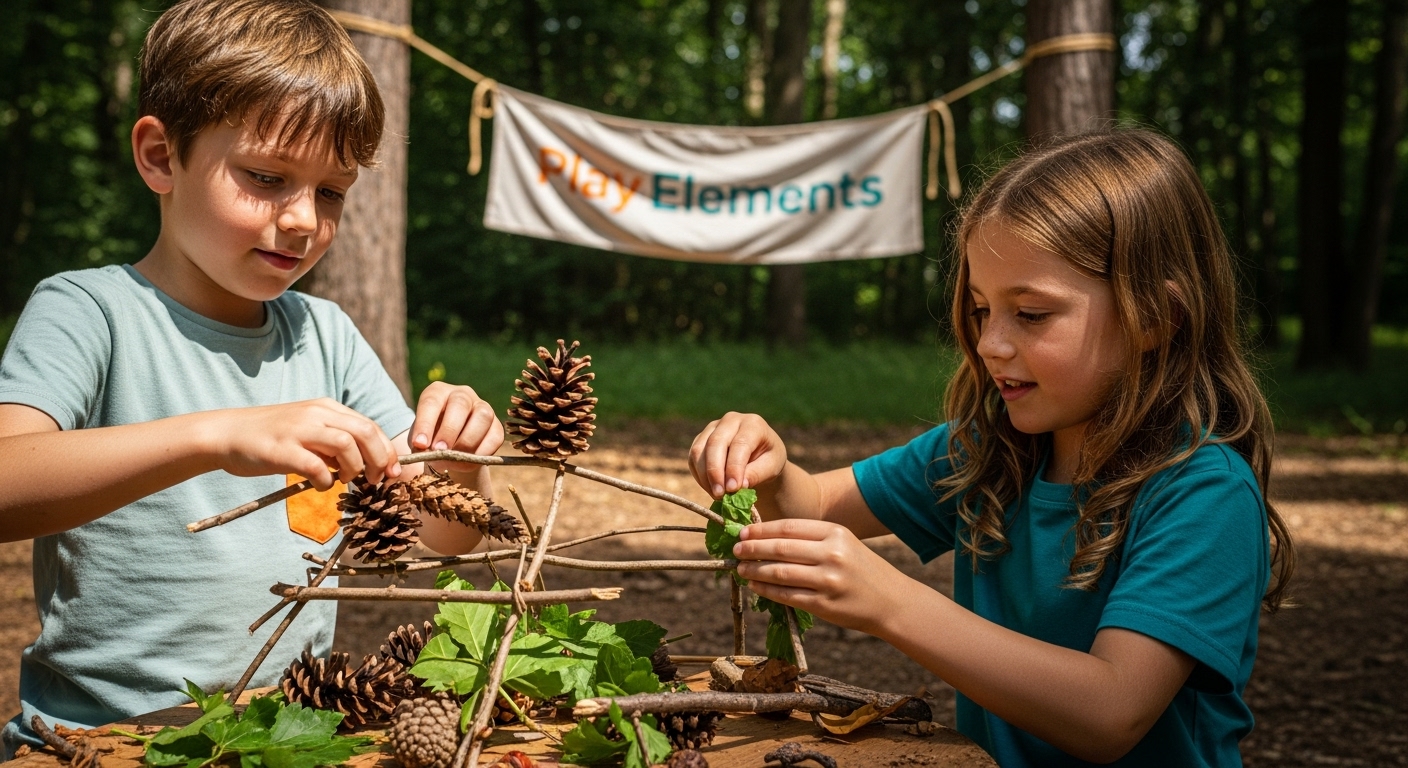 Natural sensory play is not about expensive equipment but about providing rich, open-ended opportunities for children to connect with their environment through meaningful, hands-on exploration.
How Natural Sensory Play Engages the Senses
Natural sensory play creates a comprehensive multisensory experience that goes far beyond traditional learning approaches, enabling children to process information through direct interaction with their environment. By engaging all sensory channels simultaneously, this approach transforms ordinary moments into powerful developmental opportunities.
Tactile and Kinesthetic Exploration
Touch represents the primary gateway for sensory learning, with natural environments offering incredibly rich tactile experiences. Textural variations found in nature stimulate nerve endings and develop critical neural connections. When children feel different surfaces like smooth river stones, rough tree bark, soft moss, or cool mud, they are not just touching but actively learning about material properties, temperature, and spatial relationships.
Tactile interactions provide essential developmental benefits:
- Enhanced fine motor skill development
- Improved proprioceptive awareness
- Greater understanding of physical world characteristics
- Strengthened neural pathways related to touch perception
Auditory and Visual Sensory Stimulation
Natural environments produce complex, dynamic soundscapes and visual landscapes that challenge and engage children’s sensory processing capabilities. 7 Astuces pour explorer la nature et decouvertes montessori emphasizes how unstructured outdoor experiences offer nuanced sensory inputs that structured play cannot replicate.
Children absorb intricate environmental sounds like rustling leaves, chirping birds, trickling water, and wind movements. These auditory experiences help develop sound discrimination, spatial hearing, and emotional regulation. Visual stimuli such as changing light patterns, moving shadows, and diverse colours contribute to visual processing skills and cognitive flexibility.
Natural sensory play represents a holistic approach to learning, where every interaction becomes an opportunity for sensory integration and cognitive growth. By embracing these rich, multisensory experiences, children develop a profound connection with their environment, building foundational skills that support lifelong learning and exploration.
Real-World Applications and Benefits of Natural Sensory Play
Natural sensory play extends far beyond simple entertainment, offering profound developmental advantages that support children’s holistic growth across multiple domains. By integrating purposeful sensory experiences into daily routines, parents and educators can unlock significant cognitive, physical, and emotional developmental pathways.
Educational and Cognitive Advantages
In educational contexts, natural sensory play serves as a powerful learning mechanism that transforms abstract concepts into tangible experiences. Research from the Cleveland Clinic demonstrates how sensory interactions build complex neural connections, facilitating advanced cognitive processing and learning capabilities.
Key educational benefits include:
- Enhanced problem-solving skills
- Improved spatial reasoning
- Advanced language development
- Increased capacity for abstract thinking
- Strengthened memory retention mechanisms
Therapeutic and Developmental Applications
Beyond traditional learning environments, natural sensory play offers significant therapeutic potential for children with diverse developmental needs. Occupational therapists and child development specialists recognise these experiences as crucial for supporting sensory integration, emotional regulation, and motor skill development.
Specific therapeutic applications encompass:
- Supporting children with sensory processing challenges
- Helping neurodivergent children develop coping strategies
- Reducing anxiety through structured sensory exploration
- Improving fine and gross motor skill coordination
- Enhancing emotional self-regulation capabilities
Natural sensory play represents a holistic approach to childhood development, transforming ordinary moments into extraordinary learning opportunities. By embracing these rich, multisensory experiences, caregivers can support children’s inherent curiosity, foster resilience, and nurture a lifelong love for exploration and discovery.
Bring Natural Sensory Play to Life with The Zoofamily
Do you wish your child could experience the benefits of real sensory learning outside, but worry about limited access to nature or engaging activities? This article has shown how crucial it is for children to interact directly with their environment, stimulating their curiosity through organic materials and unstructured exploration. Yet it can be hard to find the right tools to inspire sensory-rich outdoor play. That is where The Zoofamily steps in.
Unlock the world of natural sensory play with thoughtfully designed kids’ cameras, walkie-talkies, and binoculars that transform ordinary outdoor moments into true adventures. Our products are guided by nature-inspired animal motifs to encourage curiosity and a lasting bond with the planet. For every camera you choose, we plant a tree, creating a positive impact for children and the environment alike. Experience the difference at The Zoofamily or discover more about how we make learning fun for your kids. Give your child a real connection to the outdoors today – explore, discover, and grow with us.
Frequently Asked Questions
What is natural sensory play?
Natural sensory play is an immersive learning experience where children engage directly with natural elements, stimulating multiple senses through exploration and interaction with materials like soil, water, and plants.
Why is natural sensory play important for child development?
Natural sensory play is crucial as it supports neurological, cognitive, and emotional growth. It helps in developing fine motor skills, spatial awareness, and emotional intelligence while fostering creativity and problem-solving abilities.
How can parents create opportunities for natural sensory play at home?
Parents can create natural sensory play opportunities by incorporating organic materials such as leaves, stones, and water into outdoor play. They can also use diverse terrains, like gardens or parks, to enhance the sensory experience for their children.
What are some examples of materials used in natural sensory play?
Examples of materials include pine cones, acorns, smooth stones, fallen leaves, sticks, and natural clay. These open-ended materials encourage creativity and exploration in children’s play.