

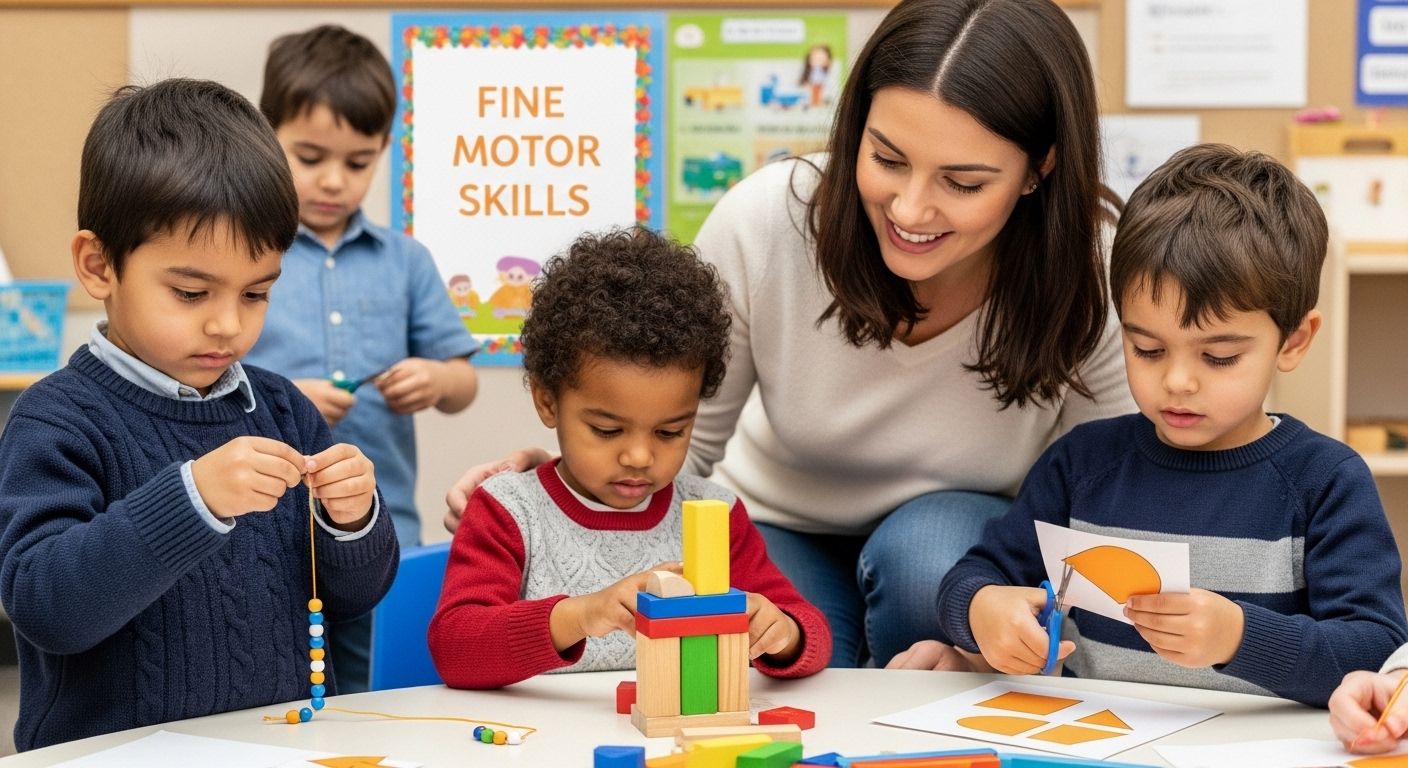
Fine motor skills shape the way children grip, pinch, and master everyday challenges that most adults never think twice about. Yet, studies show that early fine motor skill development can directly influence a child’s academic readiness and social behaviour. Many expect these skills are just about holding crayons or tying laces but the real surprise is how deeply they are tied to brain growth and future independence.
Table of Contents
- What Are Fine Motor Skills And Their Importance?
- The Role Of Fine Motor Skills In Childhood Development
- How Fine Motor Skills Develop Over Time
- Key Activities To Support Fine Motor Skill Growth
- Understanding The Impact Of Fine Motor Skills On Daily Life
Quick Summary
| Takeaway | Explanation |
|---|---|
| Fine motor skills are crucial for child development. | These skills enable precision in tasks that support cognitive, social, and academic growth in children. |
| Engaging activities foster fine motor skill growth. | Practices like crafts or daily chores enhance muscle coordination and hand control, leading to better skill development. |
| Poor fine motor skills can hinder academic performance. | Children with underdeveloped skills may struggle with writing, drawing, and classroom participation, affecting their learning. |
| Self-care skills build independence and confidence. | Mastering tasks such as dressing and eating independently boosts children’s self-esteem and autonomy in daily life. |
| Parental support is key to fostering skills. | Parents can create enriching environments and opportunities that enhance fine motor skill development through targeted activities. |
What are Fine Motor Skills and Their Importance?
Fine motor skills represent precise muscle movements involving small muscle groups, particularly in hands and fingers, enabling children to perform intricate tasks with accuracy and control. These skills are fundamental for a child’s physical and cognitive development, serving as critical building blocks for future learning and independence.
Understanding Fine Motor Skill Fundamentals
Fine motor skills involve coordinating small muscles to execute deliberate movements that require precision. According to Oregon State University, these skills significantly impact a child’s social behavior and executive function. Children develop these abilities through repeated practice and engagement with various activities that challenge their hand eye coordination.
Key components of fine motor skills include:
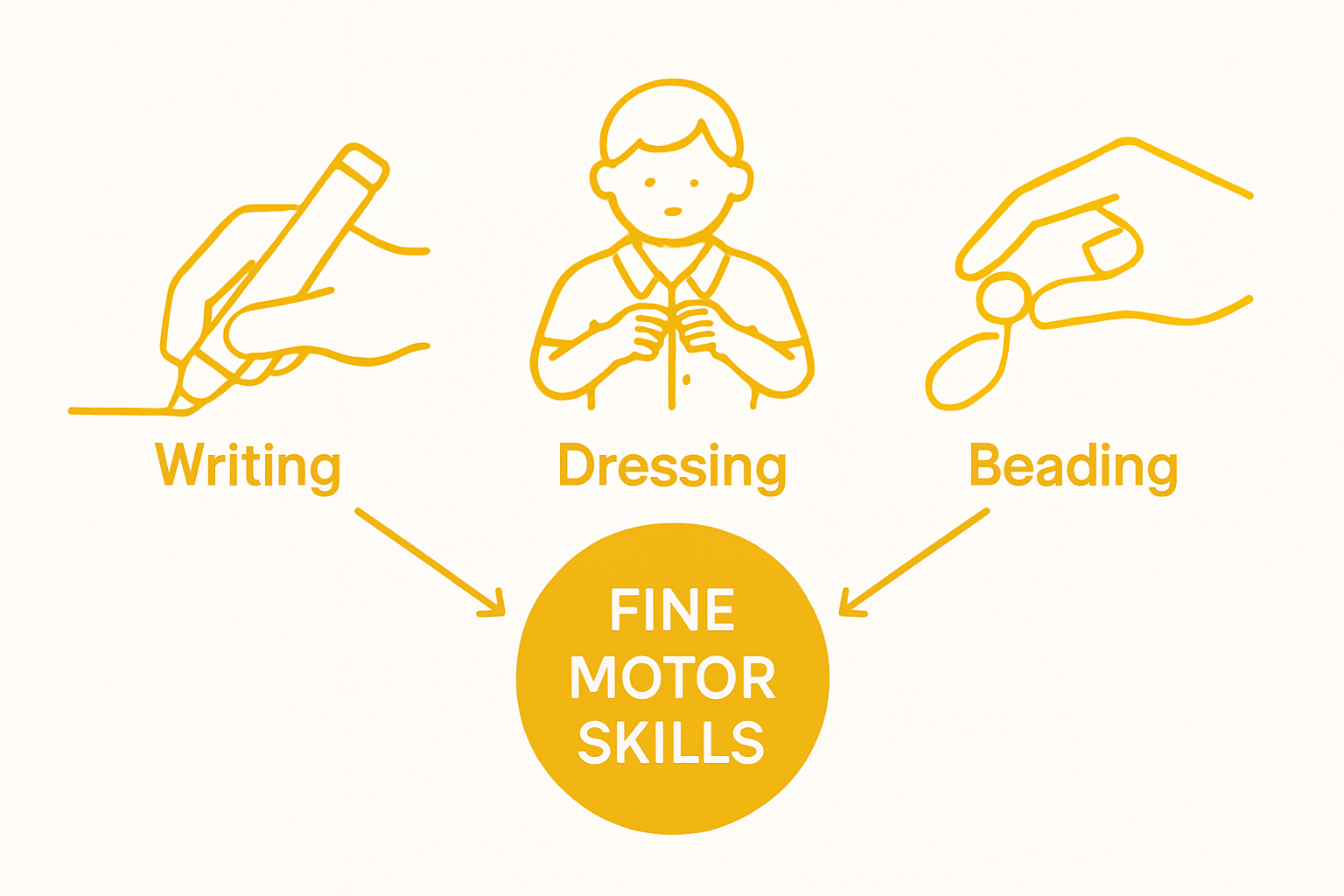
- Grasping objects with different grips
- Manipulating small items
- Using utensils and writing implements
- Buttoning clothing
- Tying shoelaces
- Cutting with scissors
The Developmental Significance of Fine Motor Skills
Developing fine motor skills is more than learning physical movements. These skills represent crucial neurological connections that support cognitive growth. When children practice intricate hand movements, they simultaneously develop neural pathways that enhance brain plasticity and problem solving capabilities.
Children who consistently develop fine motor skills demonstrate improved:
- Spatial awareness
- Hand eye coordination
- Concentration abilities
- Independent functioning
Research from the National Association for the Education of Young Children highlights that these skills are essential for academic readiness, enabling children to write, draw, and manipulate educational tools effectively. By supporting and encouraging activities that challenge these muscle groups, parents can significantly contribute to their child’s overall developmental trajectory.
The Role of Fine Motor Skills in Childhood Development
Fine motor skills play a pivotal role in a child’s overall developmental journey, extending far beyond simple hand movements. These intricate muscle control abilities serve as fundamental building blocks for cognitive, social, and academic progression, creating essential neural connections that support comprehensive childhood growth.
Cognitive and Academic Implications
Developing fine motor skills directly influences a child’s cognitive capabilities and academic performance. Research from the Children’s Hospital of Richmond demonstrates that children who develop strong fine motor skills exhibit enhanced learning potential across multiple domains. These skills create neurological pathways that support complex thinking processes, problem solving, and spatial reasoning.
Key cognitive benefits include:
- Enhanced concentration and attention span
- Improved visual processing abilities
- Better information retention and memory skills
- Advanced spatial understanding
Psychological and Social Development
Fine motor skill development extends beyond physical capabilities, significantly impacting psychological and social growth. Children who successfully master these skills often demonstrate increased self confidence and independence. Mastering tasks like tying shoelaces, drawing, or using utensils provides children with a sense of personal achievement and autonomy.
Social implications involve:
- Increased self esteem
- Better peer interaction through shared activities
- Enhanced emotional regulation
- Improved communication through precise movements
Parents can support this development by providing engaging activities that challenge and stimulate these muscle groups. Check out our guide on supporting childhood brain development to understand more about nurturing your child’s comprehensive growth. By recognising the profound impact of fine motor skills, parents can create environments that foster holistic childhood development, setting the stage for future learning and personal success.
How Fine Motor Skills Develop Over Time
Fine motor skill development is a gradual, sequential process that unfolds through distinct stages of childhood, with each phase building upon previous neurological and physical foundations. Understanding these developmental progressions helps parents and educators support children’s growth effectively and recognise typical milestones.
Early Childhood Developmental Stages
Research from the California Department of Education highlights how fine motor skills emerge systematically during early childhood. Infants initially develop rudimentary grasping reflexes, which progressively transform into intentional, precise movements. Babies typically begin with palmar grasps, where they clutch objects using their entire hand, eventually transitioning to more sophisticated pincer grips that allow manipulation of smaller items.
Key developmental milestones include:
- Birth to 6 months: Reflexive hand movements
- 6 to 12 months: Intentional reaching and grasping
- 12 to 18 months: Improved hand eye coordination
- 18 to 24 months: Basic tool manipulation
Neurological Progression and Skill Complexity
As children grow, their fine motor skills become increasingly complex, reflecting underlying neurological development. The brain creates sophisticated neural pathways that enable more intricate muscle control and coordination. These connections support children’s ability to perform progressively challenging tasks, from basic scribbling to detailed drawing and writing.
Progressive skill developments involve:
- Enhanced muscle control
- More precise hand movements
- Increased hand strength
- Better spatial understanding
Learn more about supporting your child’s imaginative play, which can significantly contribute to fine motor skill development. By understanding these developmental stages, parents can provide targeted activities that challenge and support their child’s growing capabilities, ensuring a robust foundation for future learning and physical coordination.
To illustrate the progressive development of fine motor skills throughout early childhood, the table below summarises key milestones and skill advancements by age range.
| Age Range | Developmental Milestone | Example Skill Progress |
|---|---|---|
| Birth to 6 months | Reflexive hand movements | Grasping objects reflexively |
| 6 to 12 months | Intentional reaching and grasping | Picking up toys, shaking |
| 12 to 18 months | Improved hand-eye coordination | Stacking blocks, finger food |
| 18 to 24 months | Basic tool manipulation | Scribbling, spoon use |
| Preschool (2-5 years) | Increased muscle control and precision | Scissor use, dressing |
| Early Primary (5-7) | Greater dexterity for complex tasks | Writing, tying shoelaces |
Key Activities to Support Fine Motor Skill Growth
Supporting fine motor skill development requires intentional, engaging activities that challenge children’s hand movements and muscle coordination. Parents and educators can create environments that naturally stimulate these critical developmental abilities through strategic, enjoyable interactions.
Creative Arts and Craft Techniques
According to the National Association for the Education of Young Children, artistic activities provide excellent opportunities for developing fine motor skills. Drawing, painting, cutting, and crafting not only entertain children but also systematically improve hand strength, precision, and coordination.
Recommended creative activities include:
- Colouring with different sized crayons
- Cutting paper with child safe scissors
- Creating collages using small pieces
- Threading beads or pasta onto strings
- Origami and paper folding
Everyday Practical Skill Building
Everyday household tasks and self care activities offer natural fine motor skill training. Children can develop muscle control and coordination through seemingly simple tasks that simultaneously build confidence and independence. These activities transform routine moments into valuable developmental opportunities.
Practical skill building activities involve:
- Setting the table with utensils
- Buttoning shirts and zipping jackets
- Pouring liquids carefully
- Using child safe kitchen tools
- Tying shoelaces
Explore our guide on nurturing childhood brain development to understand how these activities contribute to comprehensive cognitive growth. By integrating purposeful, enjoyable activities into daily routines, parents can effectively support their children’s fine motor skill progression, laying a strong foundation for future learning and physical capabilities.
Understanding the Impact of Fine Motor Skills on Daily Life
Fine motor skills are fundamental to performing everyday tasks with precision and independence, influencing numerous aspects of a child’s personal and academic experiences. These intricate muscle movements are essential for navigating complex physical and social environments, shaping a child’s ability to interact with the world around them.
To clarify the various ways fine motor skills support children’s daily life and academic experiences, the table below contrasts the types of activities involved with their broader impacts on growth and independence.
| Area of Impact | Example Activities | Benefits for Children |
|---|---|---|
| Self Care | Dressing, hygiene, eating | Builds confidence, autonomy, and self-sufficiency |
| Academic Performance | Writing, drawing | Enhances classroom engagement and learning capacity |
| Social Development | Group play, crafts | Supports peer interaction and communication |
| Practical Skills | Pouring, buttoning | Improves coordination and practical problem-solving |
Self Care and Personal Independence
Research from the National Institutes of Health highlights how fine motor skills directly impact children’s capacity for self care and autonomy. Tasks that might seem simple to adults require significant muscle coordination and control for children, making fine motor skill development crucial for building confidence and independence.
Key self care activities requiring fine motor skills include:
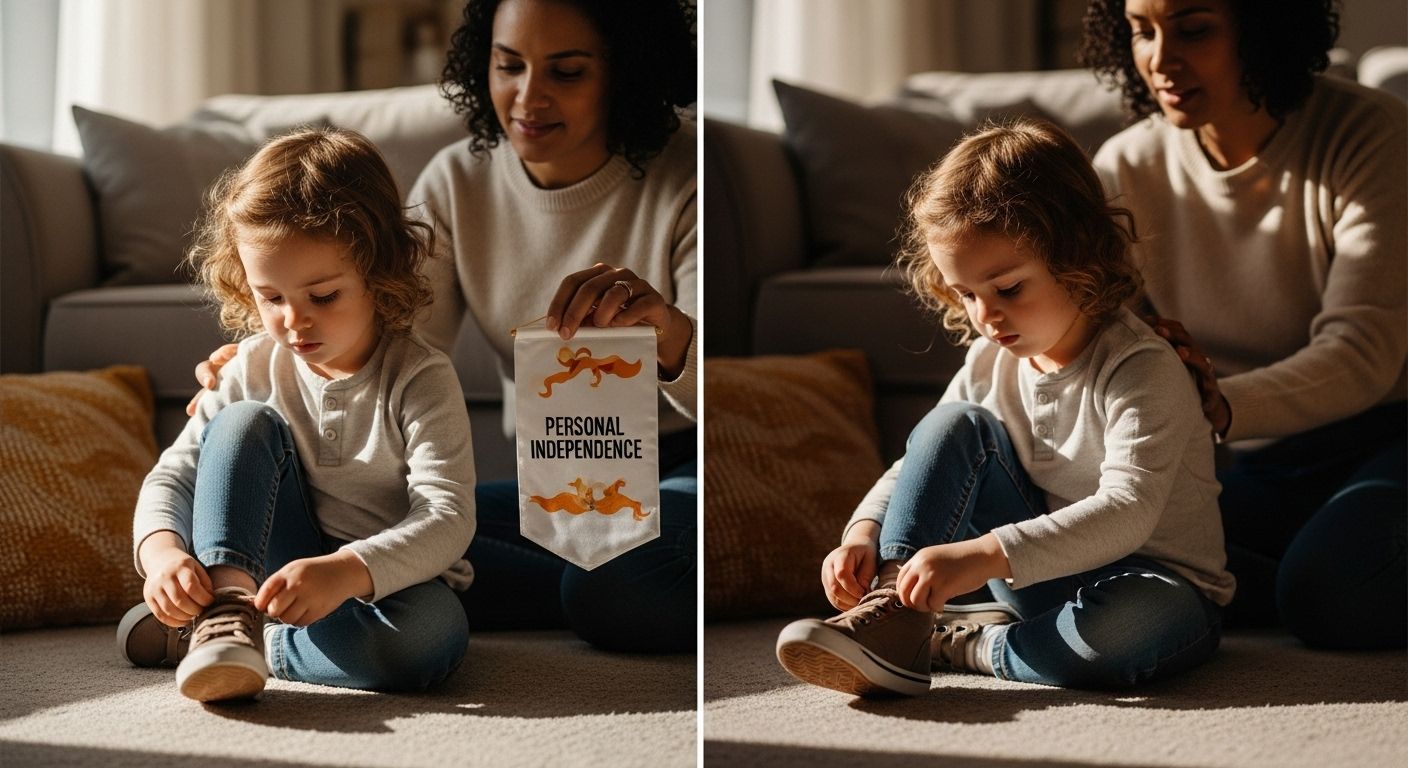
- Dressing independently
- Managing personal hygiene
- Eating with utensils
- Brushing teeth
- Tying shoelaces
Academic and Social Performance
Fine motor skills extend beyond physical tasks, significantly influencing academic performance and social interactions. Children with well developed fine motor skills can more effectively engage in classroom activities, write legibly, manipulate educational tools, and participate in collaborative play. These skills contribute to cognitive development, spatial reasoning, and social communication.
Academic and social implications involve:
- Improved handwriting
- Enhanced drawing and artistic expression
- Better engagement in classroom activities
- Increased confidence in group interactions
- More effective communication through precise movements
Explore our insights on eco friendly family routines to understand how developing skills can create holistic childhood experiences. By recognising the profound impact of fine motor skills, parents can provide targeted support that empowers children to navigate daily challenges with growing confidence and competence.
Empower Your Child’s Fine Motor Skills with Nature-Inspired Discovery
If you have been searching for creative ways to nurture your child’s fine motor skills after reading about their vital role in development, you are not alone. Many parents worry when they see their child struggling with tasks like grasping small objects, drawing or building confidence in practical daily routines. These early challenges, as discussed in our article, highlight the importance of supporting hand-eye coordination and muscle control to ensure a child’s academic and personal independence.
Now is the perfect time to introduce learning tools that do more than just entertain. At The Zoofamily, our nature-themed kids’ cameras, walkie-talkies, and binoculars help children practise fine motor skills in real, practical ways. Each device invites little hands to explore, discover, and create while connecting with the world outside. For every camera purchased, we even plant a tree, so your child’s development helps restore the planet too. Give your child lasting growth and spark their curiosity today with playful tools that support their unique journey. Visit us now and turn everyday exploration into meaningful skill-building.
Frequently Asked Questions
What are fine motor skills and why are they important for children?
Fine motor skills involve the precise coordination of small muscles, particularly in the hands and fingers. They are essential for tasks that require accuracy and control, impacting a child’s cognitive development, academic readiness, and independence.
How can parents support the development of fine motor skills in their children?
Parents can support fine motor skill development by engaging their children in activities that challenge hand coordination, such as drawing, crafting, and practical tasks like buttoning shirts or tying shoelaces. These activities can enhance muscle control and confidence.
At what age do fine motor skills typically start to develop in children?
Fine motor skills begin to develop in infancy. By 6 months, babies start intentional grasping, and by 18 months, they can manipulate tools. Significant developments occur progressively throughout early childhood, with skills becoming more complex as children grow.
What activities are effective for improving fine motor skills?
Effective activities for improving fine motor skills include creative arts like colouring and crafting, as well as everyday tasks like setting the table, using utensils, and self-care activities such as dressing and grooming. These activities provide enjoyable ways to enhance coordination and strength.
Recommended
-
[ Childhood Brain Development: A Guide for Modern European Mums
– The Zoofamily](https://thezoofamily.com/en/blogs/news/childhood-brain-development-guide-european-mums)
-
[ Understanding the Benefits of Imaginative Play
– The Zoofamily](https://thezoofamily.com/en/blogs/news/benefits-of-imaginative-play)
-
[ Bricolages avec coquillages : Créez des cadeaux uniques pour enfants
– The Zoofamily](https://thezoofamily.com/en/blogs/news/bricolages-avec-coquillages)
-
[ Understanding Eco Friendly Routines for Modern Families
– The Zoofamily](https://thezoofamily.com/en/blogs/news/understanding-eco-friendly-routines)