

Nearly 90 percent of brain growth takes place before age five, yet many people overlook the critical role play has in this rapid development. Far beyond simple fun, play lays the groundwork for lifelong skills like problem-solving, emotional balance, and social confidence. Research reveals that every playful moment helps children build strong neural connections, setting the stage for future learning and resilience.
Key Takeaways
| Point | Details |
|---|---|
| Importance of Play | Play is essential for childhood development, shaping cognitive, social, and emotional foundations essential for lifelong learning. |
| Types of Play | Different play types such as imaginative, physical, and constructive support various developmental strengths and milestones. |
| Creating Environments | Nurturing play environments should balance safety with exploration, providing sensory-rich materials and open-ended resources. |
| Misconceptions of Play | Understanding that play has significant educational value dispels myths and promotes environments conducive to holistic growth. |
Table of Contents
- Defining The Role Of Play In Childhood
- Recognizing Types Of Play And Stages
- How Play Supports Multiple Development
- Creating Nurturing Play Environments
- Common Play-Related Misconceptions & Risks
Defining The Role Of Play In Childhood
Play is far more than just a fun pastime for children - it’s a profound developmental mechanism that shapes cognitive, social, and emotional foundations. Discover more about imaginative play’s impact and how it transforms childhood learning experiences.
According to research from Wikipedia, play enables critical developmental processes through exploration, problem-solving, and imagination. Children rehearse real-life situations through symbolic actions, which promotes adaptability, coordination, and nuanced social skills across multiple developmental domains. This isn’t mere child’s play - it’s a sophisticated neural training ground where young minds construct understanding of their world.
The United Nations recognizes play as a fundamental child’s right, highlighting its significance beyond simple entertainment. Neuroscience confirms that early play builds neural pathways crucial for lifelong learning and behavioral patterns. Through play, children develop:
- Cognitive flexibility
- Emotional regulation skills
- Social interaction capabilities
- Problem-solving strategies
- Creative thinking approaches
By engaging in play, children aren’t just passing time - they’re constructing the intricate architecture of their future selves, one imaginative moment at a time.
Recognizing Types Of Play And Stages
Children’s play is a complex, dynamic process that evolves through fascinating stages, each revealing critical developmental milestones. Learn more about engaging play activities that can support your child’s growth and imagination.
According to research from The Bump, developmental experts like Mildred Parten have identified six distinct social play stages: unoccupied, solitary, onlooker, parallel, associative, and cooperative. These stages map a child’s progression from independent play to increasingly complex social interactions. Simultaneously, Jean Piaget’s cognitive development framework highlights play stages that correspond with evolving thinking: sensorimotor/practice play, symbolic/constructive play, and games with structured rules.
Beyond social and cognitive classifications, researchers recognize multiple play types, each nurturing different developmental strengths:
- Attunement Play: Early caregiver-infant interactions building attachment
- Physical Play: Developing motor skills and body coordination
- Constructive Play: Problem-solving through building and creating
- Imaginative Play: Exploring creativity and emotional expression
- Symbolic Play: Representing real-world scenarios through pretend actions
Understanding these play types helps parents create supportive environments that encourage holistic childhood development, transforming playtime into a powerful learning experience.
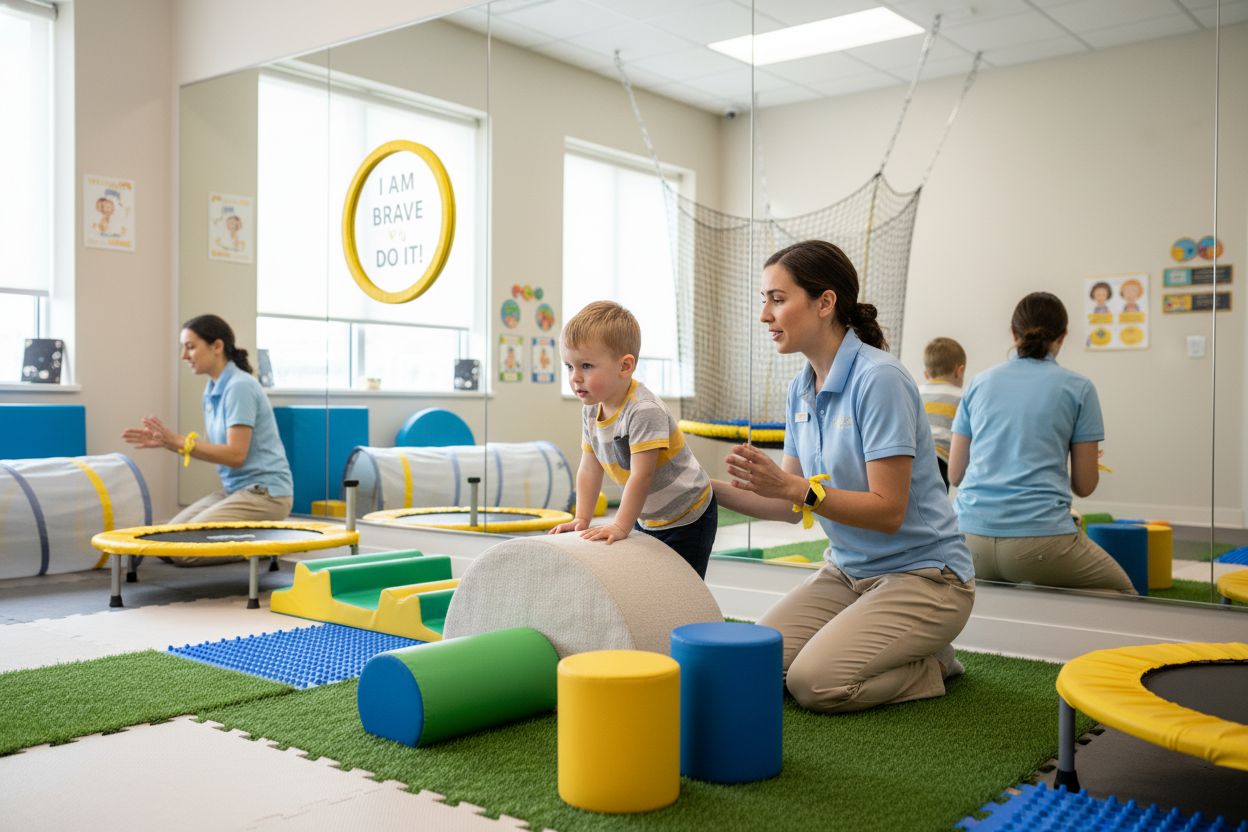
Here’s a comparison of key social and cognitive play stages:
| Stage Name | Description | Developmental Focus |
|---|---|---|
| Unoccupied Play | Random movements Little purposeful activity |
Early observation Motor exploration |
| Solitary Play | Plays alone, independent of others | Self-sufficiency Concentration |
| Onlooker Play | Watches others, may talk but not join in | Observation Learning social cues |
| Parallel Play | Plays near, but not with, peers | Awareness of others Social comfort |
| Associative Play | Interacts, shares, but no group goal | Communication Friendship formation |
| Cooperative Play | Organised group play with roles | Teamwork Problem-solving |
| Sensorimotor/Practice Play | Explores through senses and movement | Motor skills Cognitive basics |
| Symbolic/Constructive Play | Uses objects to represent ideas Builds or creates |
Imagination Planning skills |
| Games with Rules | Follows structured rules in play | Logic Self-regulation |
How Play Supports Multiple Development
Discover the fascinating ways play drives childhood development, where every game and interaction becomes a critical learning opportunity. Play is far more than entertainment - it’s a comprehensive developmental toolkit that nurtures every aspect of a child’s growth.
According to research from Wikipedia, learning through play integrates intellectual, social, emotional, and physical development in remarkable ways. It serves as a powerful mechanism for fostering crucial skills like language development, empathy, cooperation, problem-solving, and creativity. The brain processes play as a complex integration of cognitive and affective functions, particularly during early childhood years.
Unstructured free play offers profound developmental benefits across multiple domains:
- Social Skills: Learning cooperation, communication, and negotiation
- Emotional Resilience: Building confidence and managing complex feelings
- Cognitive Growth: Developing critical thinking and adaptability
- Physical Health: Enhancing motor skills and coordination
- Creative Expression: Encouraging imagination and innovative thinking
Research warns that deprivation of free play can lead to significant long-term challenges, including potential increases in anxiety, social maladjustment, and impaired brain development.
By understanding play’s multifaceted role, parents can transform seemingly simple interactions into powerful developmental experiences.
Creating Nurturing Play Environments
Designing the perfect play environment is an art that balances structure and freedom, creating spaces where children’s imagination and learning can flourish. Explore our guide to engaging play activities that transform ordinary spaces into extraordinary learning landscapes.
Research from Springer reveals critical insights into effective play environments. The most successful settings are those where educators and parents take a nuanced approach - providing gentle guidance without overwhelming children’s natural exploratory instincts. This means strategically creating spaces that invite curiosity while allowing children to direct their own play experiences, often termed ‘joining play on children’s terms’.
Key elements of nurturing play environments include:
- Sensory-Rich Materials: Natural elements like sand, mud, and earth
- Open-Ended Resources: Items that can be used in multiple imaginative ways
- Varied Terrain: Spaces that challenge and develop motor skills
- Minimal Adult Intervention: Gentle prompts instead of direct control
- Nature-Based Zones: Outdoor settings that stimulate STEAM learning
According to research from the National Center for Biotechnology Information, environments designed for children under three should prioritize hands-on experiences that support exploratory learning. By creating spaces that are simultaneously safe and stimulating, parents can transform ordinary rooms into dynamic developmental playgrounds that nurture cognitive, physical, and creative growth.
Common Play‑Related Misconceptions & Risks
Understand the nuanced world of children’s play and dispel myths that might inadvertently limit your child’s developmental potential. Play is not just about having fun - it’s a complex learning mechanism with profound implications for growth.
According to research from Twinkl, one of the most pervasive misconceptions is that play-based learning lacks structure or educational value. In reality, play supports critical academic readiness, fostering early literacy, numeracy, and complex thinking skills through natural, meaningful experiences. Parents often worry that unstructured play time might delay formal learning, when in fact, it’s a powerful preparatory environment for future academic success.
Key play-related misconceptions and risks include:
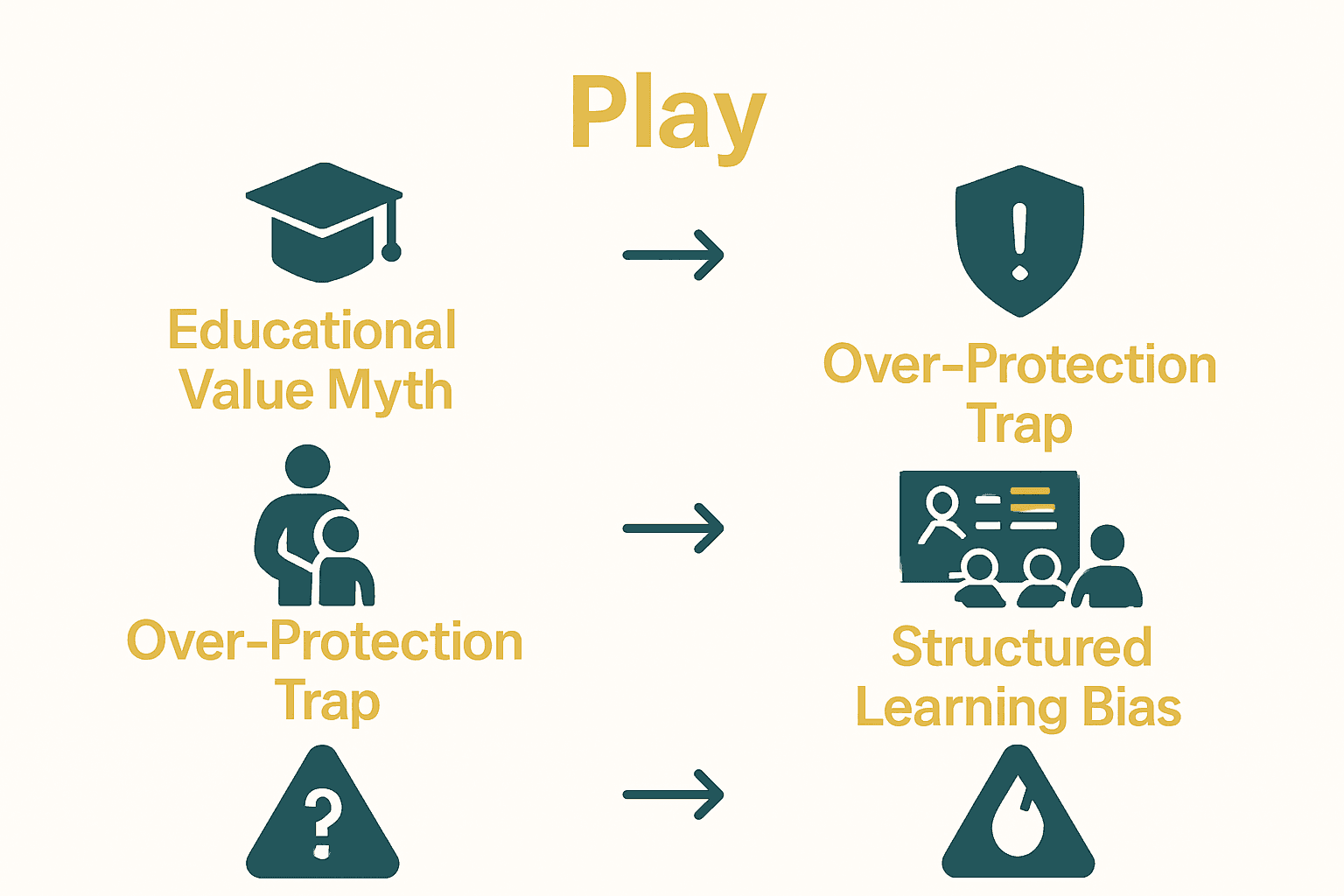
- Educational Value Myth: Believing play is separate from learning
- Over-Protection Trap: Eliminating all potential risks
- Structured Learning Bias: Prioritizing formal instruction over exploratory play
- Risk vs. Hazard Confusion: Misunderstanding manageable challenges
- Developmental Interference: Excessive adult intervention
Wikipedia’s research on free play highlights a critical distinction between risk and hazard. Manageable risks support child autonomy and resilience, whereas hazards represent genuine dangers. By understanding this nuance, parents can create environments that challenge children appropriately without exposing them to unnecessary threats, thus supporting holistic developmental growth.
Empower Play and Imagination With The Zoofamily
Play is the heart of childhood growth, yet parents often worry about how to transform natural curiosity into real learning opportunities. The article highlights the need for open-ended learning, stimulating environments, and nurturing a genuine connection with nature to unleash every child’s full potential. The big challenge is not just providing toys, but selecting resources that truly encourage imaginative play and foster a love for our planet.
Imagine a child exploring nature, building confidence, and making creative discoveries every day.
If you are passionate about nurturing your child’s development, now is the time to make play meaningful. At The Zoofamily, our unique animal-themed cameras, walkie-talkies, and binoculars transform playtime into a journey of exploration and learning. Every camera also helps restore the planet, as one tree is planted for each one sold. Discover how our products can support creative connections and purposeful play by starting your adventure with The Zoofamily. For more inspiration on making learning fun, visit our guide to engaging play activities and see how you can join families building a brighter future through play, discovery, and nature.
Frequently Asked Questions
What is the role of play in childhood development?
Play serves as a crucial mechanism for cognitive, social, and emotional development in children. It facilitates exploration, problem-solving, and imagination, allowing young minds to construct their understanding of the world.
What are the different types of play that support development?
There are various types of play, including attunement play, physical play, constructive play, imaginative play, and symbolic play. Each type nurtures different developmental skills, such as attachment, motor skills, creativity, and problem-solving.
What are the stages of play in children’s development?
The stages of play include unoccupied, solitary, onlooker, parallel, associative, and cooperative play. These stages illustrate a child’s progression from independent play to complex social interactions, while also aligning with cognitive development frameworks.
How can parents create a nurturing play environment?
Parents can create nurturing play environments by providing sensory-rich materials, open-ended resources, varied terrains, and minimizing adult intervention. These elements encourage curiosity and allow children to direct their own play experiences.