

Parenting today is genuinely harder than it was for previous generations, and that is not a feeling you need to second-guess. The parenting new challenges 2025 has brought, from relentless digital pressures to burnout that goes unacknowledged at work, have created a layer of complexity that simply did not exist before. 97% of parents report feeling stressed about parenting in the past month, and most believe that stress is already affecting their children. This guide will help you cut through the noise, understand what is actually happening, and find strategies that genuinely work.
Table of Contents
- Key takeaways
- Digital challenges: screen time and quality in 2025
- Parental burnout and the work-life balance crisis
- Handling parenting disagreements as a team
- Emerging parenting strategies for 2025 families
- My honest take on parenting today
- Tools to help you parent with more confidence
- FAQ
Key takeaways
| Point | Details |
|---|---|
| Screen quality matters more than time | Focus on what screens displace, such as sleep and play, rather than counting minutes alone. |
| Burnout is widespread | Nine in ten working parents report burnout. Seeking support is a sign of strength, not failure. |
| Disagreements are relational, not logistical | Most parenting conflicts stem from attachment needs, not the specific decision at hand. |
| Authoritative structure builds resilience | Warmth paired with calm, firm boundaries produces confident, self-sufficient children. |
| Connection beats perfection | Responsive relationships matter more to children’s development than perfect parenting decisions. |
Digital challenges: screen time and quality in 2025
The conversation around screens and young children has shifted significantly. For years, the debate was simple: how many hours per day is too many? Now, the framework is far more nuanced, and that is actually good news for parents who felt they were failing an arbitrary test.
The UK screen time guidance released in 2026 recommends no more than one hour of screen time per day for children aged 2 to 5, and advises avoiding screens during meals and in the hour before bedtime. But what sits behind that guidance is just as telling. The real concern is not the hour on the clock. It is what screens are crowding out. The new screen time framework now prioritises what activities screens displace, specifically sleep, physical activity, and face-to-face social interaction.
So what does problematic screen use actually look like? Watch for these signs in young children:
- Persistent irritability or meltdowns when screens are removed
- Choosing screens over physical play, even outdoors
- Difficulty falling asleep or changes in sleep quality
- Reduced interest in creative or imaginative play
- Shortened attention span during screen-free activities
If you recognise two or more of these patterns, it is worth rethinking the structure around device use, not out of guilt, but out of information.
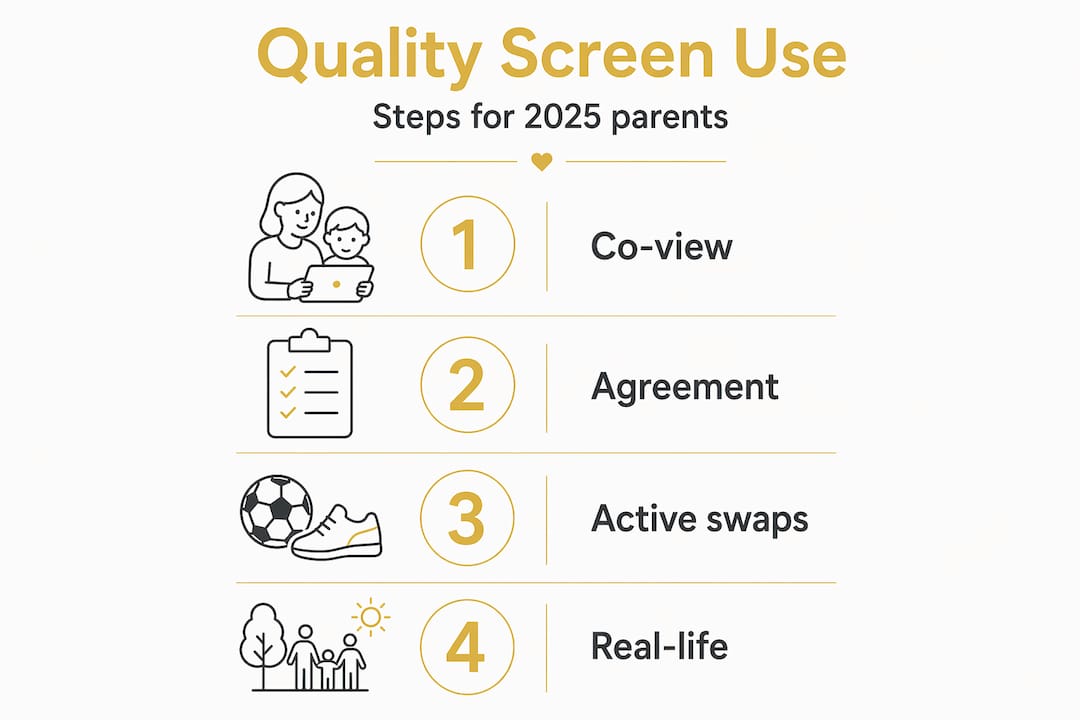
One of the most underused strategies is co-viewing. Watching or playing alongside your child and talking about what you see together transforms passive consumption into a social experience. Content selection also matters: slow-paced, interactive programming, where children are prompted to respond, has very different effects on development compared to fast-cut, passive video.
Pro Tip: Build a family screen agreement together rather than issuing rules from the top down. When children help set the boundaries, they are far more likely to respect them. Keep it visible, keep it simple, and revisit it every few months as your child grows.
For parents looking for practical ideas to replace screen time with something engaging, Thezoofamily’s guide on screen-free family time offers a useful starting point. Getting outdoors, using tools like binoculars and cameras that connect children to nature, gives kids an alternative that genuinely competes with a screen’s appeal.
New parenting trends 2025 point clearly towards this quality-first approach. Parents who focus less on policing minutes and more on building rich offline alternatives are reporting much less conflict around devices at home.
Parental burnout and the work-life balance crisis
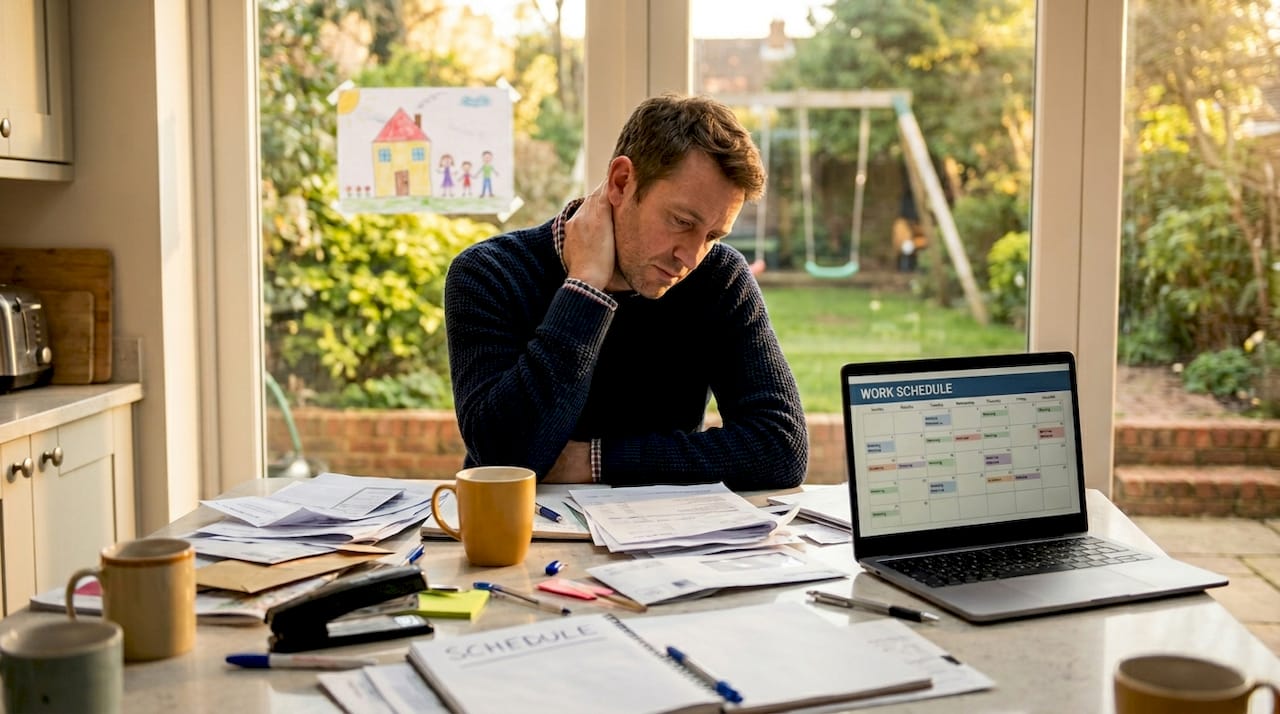
The statistics here are stark. 92% of working parents report burnout when balancing employment and family life, with 42% pointing to the rising cost of raising a family as a central factor. These are not isolated cases of individual weakness. This is a structural problem, and one of the most pressing parenting new challenges 2025 has put on the table for families.
Several forces are converging to create this pressure:
- Invisible labour: The mental load of managing children’s schedules, health, emotional needs, and schooling falls disproportionately, and invisibly, on one parent in many households.
- Financial stress: The cost of childcare, housing, and food has outpaced wage growth for many families, creating a persistent low-level anxiety that colours everything.
- Social media guilt: A 2026 survey of working parents found that guilt is ambient and frequent, driven by internal standards shaped in part by curated social media depictions of family life.
- Flexible work inequity: Flexible working arrangements help reduce guilt, but access to flexibility is deeply uneven, leaving many parents in demanding roles without any adjustment.
Parental burnout is also not just a personal issue. It affects workplace productivity, children’s emotional security, and the quality of partnership between co-parents. Employers are increasingly expected to take an active role, though progress remains slow.
On a practical level, the strategies that work tend to be structural rather than motivational. Scheduling non-negotiable rest in the same way you would schedule a meeting is more effective than vowing to “relax more.” Seeking peer support, whether through local parent groups or online communities, reduces the isolation that amplifies burnout. And naming the invisible labour with your partner, rather than absorbing it silently, creates the conditions for a more equitable split.
Pro Tip: If you are consistently feeling overwhelmed by the end of the week, try tracking your non-visible tasks for just five days. Write down every appointment booked, every form completed, every worry managed. Seeing the full list often changes the conversation at home more effectively than any argument could.
Handling parenting disagreements as a team
Co-parents rarely fight about the real issue. This is one of the least-discussed but most relieving insights available to parents navigating disagreements. According to attachment-informed therapy, most parenting conflicts are actually rooted in attachment needs: unmet needs for trust, respect, and connection between partners. The specific topic, whether it is screen limits or bedtime routines, is often just the surface.
Understanding this shift the whole approach. Here is a process worth trying when disagreements arise:
- Pause before responding. When a disagreement starts to escalate, both partners take a short break of at least five minutes. This is not avoidance. It is giving the nervous system time to settle so the conversation can actually be productive.
- Name the feeling, not just the position. Instead of arguing for your parenting approach, identify what you are feeling underneath it: worried, dismissed, unheard. Share that first.
- Separate the decision from the dynamic. Ask whether this disagreement is really about screen time, or whether it is about feeling like your perspective is never valued. Address the dynamic first.
- Use a ‘third chair’ protocol. Imagine an empty chair at the table representing your child’s long-term wellbeing. Both partners frame their arguments around what serves that chair, not who is right.
- Agree on a follow-up. After any difficult conversation, set a short, low-stakes check-in for the next day. This builds the habit of reconnecting after conflict rather than letting tension solidify.
Parenting disagreements that go unresolved do not stay confined to the adults. Children are remarkably sensitive to underlying tension in the household, and persistent conflict between parents directly affects their sense of security.
Emerging parenting strategies for 2025 families
Future parenting strategies are moving away from the extremes. Parents no longer need to choose between rigid control and total permissiveness. The evidence points clearly towards authoritative parenting, which balances genuine warmth with calm, consistent boundaries, as the approach that produces confident, resilient children.
Alongside this, there is a growing recognition of the value of what psychologists call “underparenting.” Rather than solving every problem for a child, underparenting means stepping back deliberately so children can experience struggle, frustration, and the satisfaction of figuring things out themselves. This is not neglect. It is one of the most protective things you can do for a child’s long-term mental health.
What children actually need most, according to psychologists studying modern parenting, is responsive relationships and calm, firm boundaries. Phone-free family times are one of the simplest and most effective ways to signal to a child: you have my full attention, and this space is safe.
Practical habits worth building into family life:
- Protect one daily ritual that is fully screen-free, even if it is just ten minutes over a meal.
- Let your child experience age-appropriate boredom. Unstructured time is where creativity and self-regulation develop.
- Practise mindful tech use yourself. Children notice when adults reach for a phone out of habit rather than necessity.
- Create routines around tools at Growing Balanced that help children visualise and own their daily structure.
Pro Tip: When navigating parenting changes 2025 has made unavoidable, the single most powerful thing is not a new technique. It is consistency. A predictable, warm environment, even an imperfect one, gives children the security to grow.
My honest take on parenting today
I have seen parents tie themselves in knots trying to do parenting correctly, as if there is a version that scores full marks. What I have learned, watching families navigate genuinely hard circumstances, is that the pursuit of perfect parenting is itself part of the problem.
The parents I see thriving are not the ones with the most rigid systems. They are the ones who have given themselves permission to adapt. When something stops working, they change it. They do not treat that as failure. They treat it as information.
The pressures described in this article, the screen dilemmas, the burnout, the partnership tensions, are all real. But they are also signs that parenting is evolving in response to a world that is genuinely changing. How to tackle parenting issues is less about finding the right answer and more about staying curious, staying connected, and staying honest with yourself and your co-parent about what is and is not working.
Imperfection is not the obstacle to good parenting. It is the raw material.
— ALAIN
Tools to help you parent with more confidence
Parenting in 2025 does not have to feel like a solo challenge. Thezoofamily builds products designed to give children a genuine alternative to screens: cameras, binoculars, and walkie-talkies that pull kids towards nature, curiosity, and real-world connection.

Whether you are working on healthy screen time habits or simply looking for ways to give your child experiences that a tablet cannot replicate, Thezoofamily has resources worth exploring. Every camera sold plants a tree, so your family’s screen-free adventures actively contribute to the world your children will grow up in. Start exploring at Thezoofamily.
FAQ
How much screen time is recommended for under-5s in the UK?
UK guidance recommends no more than one hour of screen time per day for children aged 2 to 5, avoiding screens during meals and the hour before bedtime.
What are the main signs of parental burnout?
Persistent exhaustion, emotional detachment from your children, and a sense that nothing you do is enough are the most common signs. 92% of working parents report experiencing burnout, so you are far from alone.
Why do co-parents argue so much about parenting decisions?
Most parenting disagreements are driven by attachment needs between partners, such as feeling unheard or disrespected, rather than the specific issue itself. Addressing the emotional dynamic first tends to resolve conflicts more effectively than debating the decision.
What is underparenting and is it beneficial?
Underparenting means deliberately stepping back so children can struggle and solve problems independently. Research suggests it builds resilience, creativity, and strong self-regulation skills over time.
What do children need most from parents in 2025?
Psychologists agree that responsive relationships and calm, consistent boundaries matter most. Full presence during daily rituals, even briefly, has a significant impact on a child’s sense of security.