

Earth Day is held every year on 22 April. It honours the environmental movement and raises awareness of the need to protect Earth’s natural resources for future generations, as National Geographic Education explains. It began in the United States in 1970 and is now marked in nearly every country. This guide covers the date, the history, the main facts and practical ways to celebrate with children.
TL;DR
- Earth Day is on 22 April every year. In 2027 it falls on a Thursday.
- The first Earth Day was in 1970. About 20 million Americans took part.
- Today it is observed by a billion people in nearly 200 countries.
- Families can plant a tree, clean up litter, take a nature walk or change one daily habit.
- Short, positive conversations paired with an action work best for young children.
Table of Contents
- What is Earth Day?
- When is Earth Day?
- How Earth Day began
- Earth Day facts at a glance
- Earth Day themes and recent campaigns
- Our view: start with nature, not with problems
- How to celebrate Earth Day with children
- How to talk to young children about the environment
- Everyday habits that last beyond 22 April
- Earth Day gifts that get children outside
- FAQ
- Sources
What is Earth Day?
Earth Day is an annual event for environmental protection. It looks back at what the environmental movement has achieved. It also gives schools, families, charities and governments a day to focus on current problems such as pollution, waste and climate change.
National Geographic Education describes it as both a celebration of past progress and a platform for education, policy and activism. There is no single way to take part. A class project, a community litter pick and a family walk all count.
Earth Day is not a public holiday in the United States, where it started. The Congressional Research Service states that it is not a federal holiday, even though several laws and resolutions refer to it. It is not a bank holiday in the UK either. Schools and workplaces choose how to mark it.
When is Earth Day?
Earth Day is always on 22 April. The date does not move, so the weekday changes each year. In 2026 it fell on a Wednesday, and in 2027 it falls on a Thursday.
Two other dates are often confused with it:
- International Mother Earth Day is also on 22 April. The United Nations designated it in 2009, according to the Congressional Research Service.
- World Environment Day is on 5 June. The same fact sheet lists it as a separate UN observance.
National Geographic Education also notes that some observances outside the United States may align with the spring equinox. The most widely used date is still 22 April.
How Earth Day began
The first Earth Day came out of public worry about pollution and the health effects of industrial development. EarthDay.org says the 1969 Santa Barbara oil spill helped draw public attention to the problem.
U.S. Senator Gaylord Nelson then called for nationwide teach-ins on university campuses. A young activist, Denis Hayes, was a key organiser, according to EarthDay.org.
The organisers picked 22 April for a practical reason. It was a weekday after the winter weather had ended and before final exams, so more students could join. The Congressional Research Service fact sheet records this. The first events were rallies, teach-ins and speeches organised locally across the country.
The effect was lasting. The U.S. National Archives says the first Earth Day helped create the political conditions for the Environmental Protection Agency and laws such as the Clean Air Act, Clean Water Act and Endangered Species Act.
Earth Day facts at a glance
| Fact | Detail | Source |
|---|---|---|
| First Earth Day | 22 April 1970 | NOAA |
| Participants in 1970 | About 20 million Americans | NOAA |
| Schools and colleges in 1970 | More than 2,000 colleges and universities and 10,000 public schools | NOAA |
| First global Earth Day | 1990, with more than 200 million participants in more than 140 countries | National Geographic Education |
| Reach today | A billion people in nearly 200 countries each year | National Archives |
| UN designation | International Mother Earth Day, 2009 | Congressional Research Service |
The 1970 event also strengthened support for the Clean Air Act and the Endangered Species Act, according to National Geographic Education.
Earth Day themes and recent campaigns
EarthDay.org sets a theme for each year. Its archive shows that Earth Day 2026 took place on Wednesday 22 April under the theme Our Power, Our Planet. The organisation says the theme reflects shared responsibility and that real change starts with local action.
The same page reports 13,634 communities organised, more than one billion people reached and more than 100 million tree-planting commitments for the 2026 campaign. Themes change every year, so check EarthDay.org each spring for the current one.
The local focus is useful for parents. You do not need a large event. A small action in your street, garden or school is in the spirit of the day.
Our view: start with nature, not with problems
We make cameras, walkie-talkies and binoculars for children aged 3 and up. Every product carries an animal design. We chose animals because they are often the first thing that makes a young child curious about nature.
In our experience, a child who has looked closely at a bird, a snail or a squirrel is more ready to care about where it lives. That is why we suggest starting Earth Day outdoors. Let the child look, find and photograph. The facts and the big issues can follow later.
This is also why we plant one tree for every camera sold. It is our way of linking a child’s first look at nature with a real action. Earth Day is a good day to talk about that link, and the other 364 days are good for it too.
ALAIN
How to celebrate Earth Day with children
You can mark the day in an hour or spread it over a weekend. These ideas come from environmental organisations and universities, and they suit children of different ages.
Plant a tree or a small garden
Planting is the activity named most often. The EarthDay.org children’s toolkit lists planting a tree among its family actions, and NOAA’s family guidance does the same. If you have no garden, a pot of herbs or wildflowers on a windowsill is a good start. Our own guide to wildlife-friendly gardens for children shows how to make a space that attracts insects and birds.

Join or run a litter pick
A short clean-up in a park or on a street gives children a clear task. Yale Sustainability lists litter clean-ups, leaf-jewellery crafts, painted stones and a family photo walk among its child-friendly ideas. Take gloves and bags, and let children sort what you find into recycling and rubbish.
Go on a nature walk or scavenger hunt
Khan Academy Kids suggests combining Earth Day learning with nature books, environmental videos and an outdoor scavenger hunt for young children. Make a list of things to find: a feather, a pine cone, three different leaves, a bug under a log. If you live near woodland, our guide to animals in European forests can help you name what you see.
Take photos of nature
A child-sized camera turns a walk into a mission. Children choose what to look at, frame it and decide what is worth keeping. See our article on introducing children to nature photography for simple starting points. You can print the best photos and make a small wall display about the nature near your home.
Talk about plastic, food and water
The EarthDay.org toolkit uses simple questions about water, food, plastic, recycling and composting. Ask your child where the water in the tap comes from, what happens to leftover food, and what can go in the recycling bin. These questions turn a global issue into daily choices a child can understand.
Use free teaching resources
If you want more structure, there are free resources. NASA provides an Earth Day toolkit with activities, handouts, posters and videos. The National Literacy Trust offers Earth Day activities built around reading, writing and speaking for UK schools. For more ideas, see our post with seven creative ideas for celebrating Earth Day with kids.
How to talk to young children about the environment
Children often hear about climate change before they can understand it. The Australian Psychological Society advises caregivers to keep conversations age-appropriate, positive and focused on solutions. It also advises pairing the talk with an action, such as a nature walk, a clean-up, composting or an educational film.
In practice, this means:
- Ask what your child already knows before you explain anything.
- Use short, concrete examples, such as a bird caught in litter, rather than large figures.
- End on something the child can do the same day.
- If a child seems worried, stay calm and talk about what people are doing to help. If worry continues, speak to your GP or your child’s school.
Everyday habits that last beyond 22 April
Earth Day works best as a starting point. Several official bodies list the same small habits for families:
- Reduce, reuse and recycle. NOAA recommends all three, and Haleakalā National Park adds reusable bottles and lunch containers.
- Save water and energy. Turn off taps and lights, and use efficient bulbs, as NOAA suggests.
- Travel lightly. Walk, cycle, carpool or take the bus when you can.
- Buy with less packaging. Use reusable bags and choose items that come with less wrapping.
- Compost and garden. Food scraps can feed a compost bin, and a garden gives children a place to watch the seasons.
- Volunteer locally. National Geographic Kids suggests community litter clean-ups and recycling drives.
Private gardens and small plots matter for wildlife too. This piece on private land and rare frogs looks at practical conservation actions that individuals and families can take.
Earth Day gifts that get children outside
Parents often look for a gift linked to Earth Day or to a child’s first interest in nature. We design our products for children aged 3 and up, with animal themes meant to spark interest in the natural world. For every camera sold, we plant one tree.
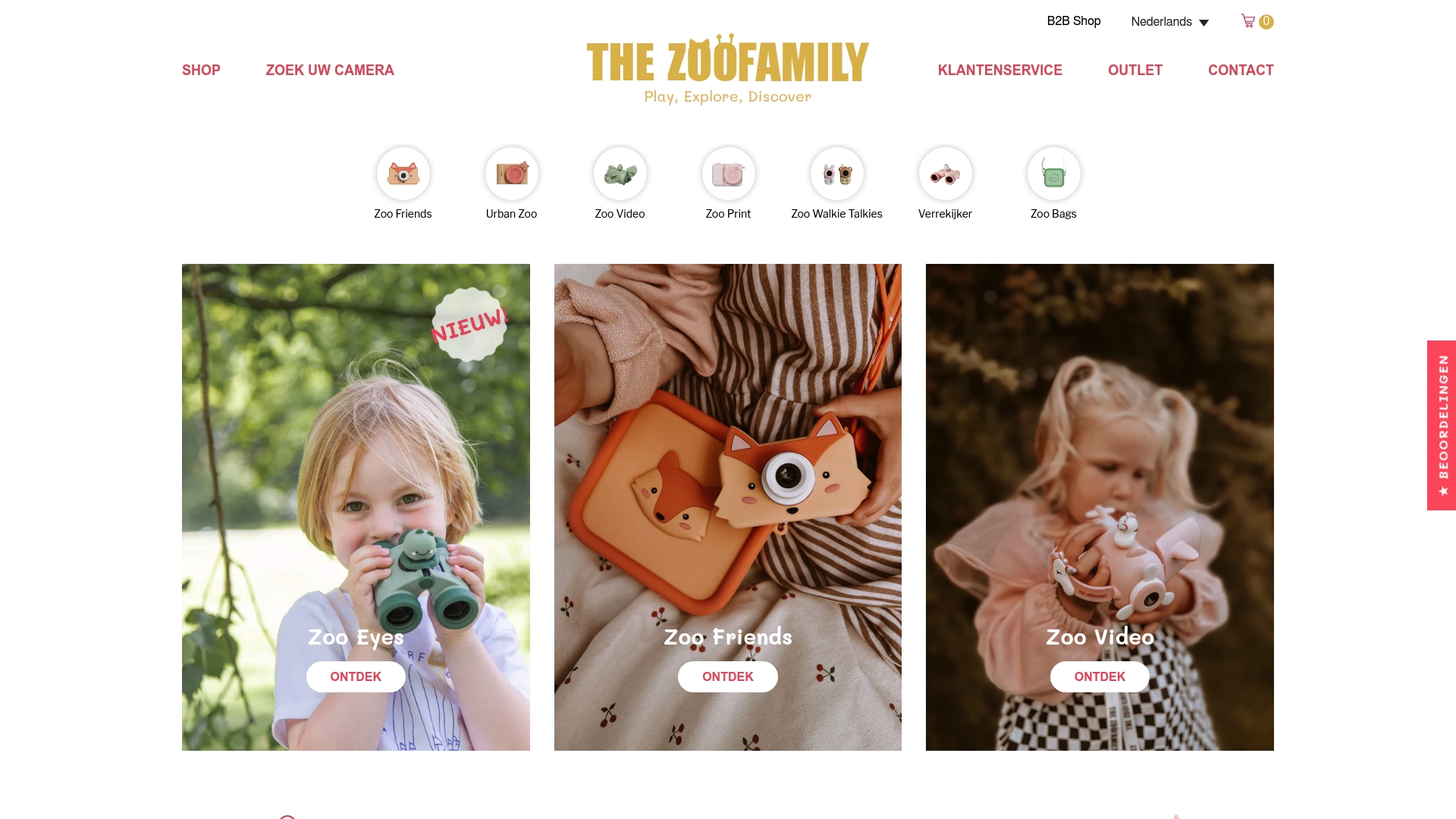
Our kids’ cameras start with Zoo Friends at €69.95. Zoo Print, an instant print camera, costs €109.95. Our Zoo Walkie Talkies cost €54.95 and suit outdoor games and scavenger hunts. Zoo eyes binoculars cost €39.95. You can see the full range on our shop.
FAQ
What is the purpose of Earth Day?
Earth Day raises awareness of the need to protect natural resources and honours what the environmental movement has achieved. It also encourages people to act, from planting trees to supporting policy changes. EarthDay.org says real change starts with local action.
Is Earth Day the same as World Environment Day?
No. Earth Day is on 22 April and began in the United States in 1970. World Environment Day is on 5 June. The Congressional Research Service lists them as separate observances.
How can I celebrate Earth Day with a young child?
Choose one outdoor activity and one conversation. A nature walk with a scavenger hunt, a small planting project or a short litter pick all work for ages 3 and up. Keep it short, positive and hands-on.
Do I need to do something big on Earth Day?
No. Organisations such as EarthDay.org stress local action. A small change at home, such as a reusable bottle, a compost bin or a tree planted in the garden, counts and can continue all year.
Sources
- Earth Day, National Geographic Education
- Earth Day: Fact Sheet, Congressional Research Service
- The History of Earth Day, EarthDay.org
- When Was the First Earth Day?, NOAA
- Earth Day, U.S. National Archives
- Earth Day 2026 archive, EarthDay.org
- My First Earth Day Toolkit, EarthDay.org
- Protecting Our Planet Starts with You, NOAA
- Earth Day Activities for Kids, Yale Sustainability
- Earth Day Activities for Kids, Khan Academy Blog
- Earth Day Toolkit, NASA Science
- Earth Day teaching activities, National Literacy Trust
- How to talk to children about climate change, Australian Psychological Society
- Earth Day Every Day, Haleakalā National Park
- Earth Day, National Geographic Kids