

The easiest recycled art starts in your own kitchen bin. Toilet roll tubes, egg boxes, cereal boxes, clean plastic bottles, jars and old magazines are enough for dozens of projects. This guide shows what to save, three projects with steps, which ideas suit which ages, where adults need to step in, and how to turn a pile of rubbish into a habit your children enjoy.
TL;DR
- Keep a box in the kitchen for clean cardboard, cartons, bottle tops and jars. Children then have materials ready whenever they want to make something.
- Start with cardboard tubes and egg boxes. They suit most children from about age 3 and need little more than paint, glue and scissors.
- Cutting, hot glue, hammers and irons are adult jobs. Give younger children the painting, stamping and decorating.
- Show the results on a shelf or the fridge, and photograph them so the project lasts after the model is recycled.
- Recycled art teaches children that materials can be used again, which is a first step towards caring about nature.
Table of Contents
- What you can use: a materials list by type
- Set up a collection bin that children use
- Three recycled projects, step by step
- Recycled art ideas by age
- Safety: what adults handle
- Making recycled art about nature
- Display what they make
- Clean-up without the stress
- From craft table to the great outdoors
- FAQ
- Sources
What you can use: a materials list by type
Children do not need special supplies for recycled art. PBS KIDS for Parents groups more than 50 upcycling ideas by material, from toilet roll maracas and egg carton turtles to cereal box cityscapes and milk carton bird feeders. Good Housekeeping makes the same point: the glass, plastic and cardboard items for these crafts are usually already in the house or cheap to buy.
Here is a practical way to sort what you collect.
| Material | Typical projects | Adult help needed |
|---|---|---|
| Toilet and kitchen roll tubes | Animals, binoculars, butterflies, maracas, bird feeders | Light cutting |
| Egg boxes | Flowers, turtles, caterpillars, penguins, paint palettes | Little or none |
| Cereal and shoe boxes | Castles, cityscapes, robots, dolls’ houses | Cutting doors and windows |
| Plastic bottles | Plant pots, fish, fireflies, sensory bottles | Cutting the bottle |
| Jars and tins | Pencil pots, lanterns, wind chimes, shakers | Checking edges, any hammering |
| Bottle tops and corks | Magnets, mosaics, mandalas, bugs | Gluing small magnets |
| Magazines and newspaper | Collage, papier-mâché, woven placemats | Little or none |
The Reuse Arts & Crafts Guide 2025, published in Australia, shows how far this goes. Its projects for preschool and primary children include a desk tidy, a stars and moon mobile, a woven placemat, a plastic bag skipping rope, a recycled mosaic, a bottle cap mandala and a papier-mâché globe. It also lists “wastruments” such as a shaker, a drum and a glass jar xylophone.
Set up a collection bin that children use
A project is easier when the materials are already to hand. A few habits make the difference:
- Keep a dedicated box. Put clean, interesting recyclables in it instead of the recycling bin. Rinse and dry anything that held food or drink first.
- Let children do the sorting. When they decide whether something goes in the craft box or the bin, they start to see packaging as material.
- Offer a small selection. A tray with a few tubes, a box and some bottle tops invites more ideas than a mountain of everything.
- Plan the finish. The Reuse guide suggests taking finished crafts apart at the end so each material can be disposed of correctly. It also suggests using pencils, felt tips or watercolours so that card and paper stay recyclable. Heavy glitter and plastic glue make that harder.
The same guide points to community re-use centres, often called tip shops in Australia, as a source of textile offcuts, beads, foam, ribbons and card. In the UK, charity shops and community scrap stores can serve the same purpose for ribbon, buttons and fabric scraps.
Three recycled projects, step by step
Toilet roll animals (ages 2 to 3 with help, 4+ on their own)
This is the first project to try, because the tube is already a body.
- Collect: one tube per animal, scrap paper, paint or felt tips, googly eyes, glue and child-safe scissors.
- Colour the tube. Paint is the usual choice. Younger children can use felt tips if you want to skip drying time.
- Cut ears, wings or tails from scrap paper. An adult can draw the shapes. Children aged 4 and over can cut them.
- Glue the parts on and add the eyes. Pipe cleaners make tails and antennae.
Where it goes wrong: the glue. A little goes a long way, and tubes soak up paint, so let a coat dry before adding paper parts. A rabbit, a fox and a koala make a good first set, and animal themes give children something to talk about while they work.
Egg box flowers and creatures (ages 3+)
- Cut the cups apart. An adult cuts the box into single cups, which is the only step needing sharp scissors.
- Paint each cup in bright colours and let it dry.
- Add a stem. Use a pipe cleaner or a paper straw pushed through the base of the cup.
- Make a bunch and stand it in a jar or a lump of modelling clay.
Turn the same cups upside down and you have caterpillars, turtles or penguins. The cups also work as a paint palette, which saves buying one.
Cardboard box castle or city (ages 4+)
- Choose a large box for the base and smaller boxes or tubes for towers.
- Prepare the cutting. Cut windows and doors beforehand for younger children. Older children can help with cutting under close supervision.
- Build and tape. Masking tape is easier for small hands than glue and holds well.
- Paint and decorate. Add paper flags, bottle top windows and foil for armour.
This one can run over several days. A castle that stays on the table encourages play, which is the point.
Recycled art ideas by age
Suitable projects depend less on the craft than on how much of it an adult prepares. Here is a practical guide.
| Age | What children can do | What an adult does |
|---|---|---|
| 2 to 3 | Stamp, press, paint tubes and boxes, stick on pre-cut pieces | Cuts, glues small parts, stays hands-on throughout |
| 4 to 5 | Paint, decorate, tear paper, assemble with tape, cut simple shapes with child-safe scissors | Handles hot glue and any sharp tools |
| 6 to 8 | Follow several steps alone, build bigger models, weave and collage | Supervises cutting, helps with hammering or heat |
| 9 and over | Design their own models, combine materials, make instruments | Is nearby for heat and sharp tools |
The Netmums collection of 24 ideas for UK families is a good example of how simple it can be. It includes kitten plant pots made by cutting a plastic bottle so the higher points become ears, then letting children draw faces and decorate them with paint, glue and buttons.
Safety: what adults handle
Recycled materials are cheap, but some are not child-proof. Keep these points in mind:
- Scissors and craft knives. Cutting card, plastic and tins is the adult’s job for younger children. Let older children help only with close supervision.
- Hot glue. Keep it for adults, or use a fabric or child-safe glue for younger children.
- Small parts. Bottle tops, beads, googly eyes and buttons are choking hazards for children under 3. Keep them away from toddlers.
- Tins and jars. Check for sharp rims before you hand anything over, and use plastic or card containers with the youngest.
- Heat. Fusing plastic needs an iron. The Amazeum activity guide rates it best for ages 6 and over, with adult supervision. It describes cutting at least three pieces of plastic bag or packaging to the same size, sandwiching them between two sheets of parchment paper, and ironing on a low or medium setting in small, slow circles until they fuse.
The result is a sheet of plastic that can be cut and sewn like fabric, which turns a single-use bag into a purse or bookmark. The guide describes it as giving a one-use material new life.
Making recycled art about nature
Themes keep children interested longer than a pile of tubes does. Animals work particularly well: a bird feeder from a milk carton, a toilet roll butterfly, fish from water bottles, bugs from corks. Each one starts a conversation about the real animal.
For ideas on taking that interest outdoors, these nature activities for families cover organising a day outside with children. A walk to see which birds visit the feeder you built closes the loop between making and observing.
If you want more projects, our own post on creative recycled art projects has eight to try. Our guide to celebrating Earth Day with kids adds ideas for the occasion.
Display what they make
Finished pieces need somewhere to go. A shelf, the fridge door or a wall tells a child that the work matters. Because cardboard models do not last forever, take a photograph before anything goes back in the recycling. A printed photo of the castle lasts longer than the castle, and a child who takes the picture themselves chooses what they are proud of.

Clean-up without the stress
Messy play is easier with a little set-up:
- Cover the table with a washable mat or newspaper.
- Use a muffin tin or ice cube tray to portion paint and small pieces.
- Keep wet wipes and a towel within reach.
- Make tidying a game, such as seeing who can sort the recyclables fastest.
Our view: from recycling bin to curiosity about nature
We design The Zoofamily products with animal references, because we think an animal is the easiest way to get a child interested in nature. Recycled craft works the same way. A child who turns a tube into a fox is already thinking about the fox.
That is why we pair making with looking. Build the bird feeder, then watch who visits. Make the butterfly, then go and find a real one. Our kids’ cameras are designed to give children a way to record what they find outside, and for every camera sold we plant one tree.
Our advice is simple: save the materials, let children lead, and keep a picture of everything they make.
ALAIN
From craft table to the great outdoors
Once your children have built a few animals, a camera lets them capture the real ones. The Zoo Friends camera, at €69.95, is one of our animal-themed kids’ cameras for children aged 3 and over. Our range also includes Zoo Print at €109.95, Zoo video at €79.95, and zoo eyes binoculars at €39.95. For one camera sold, we plant one tree.
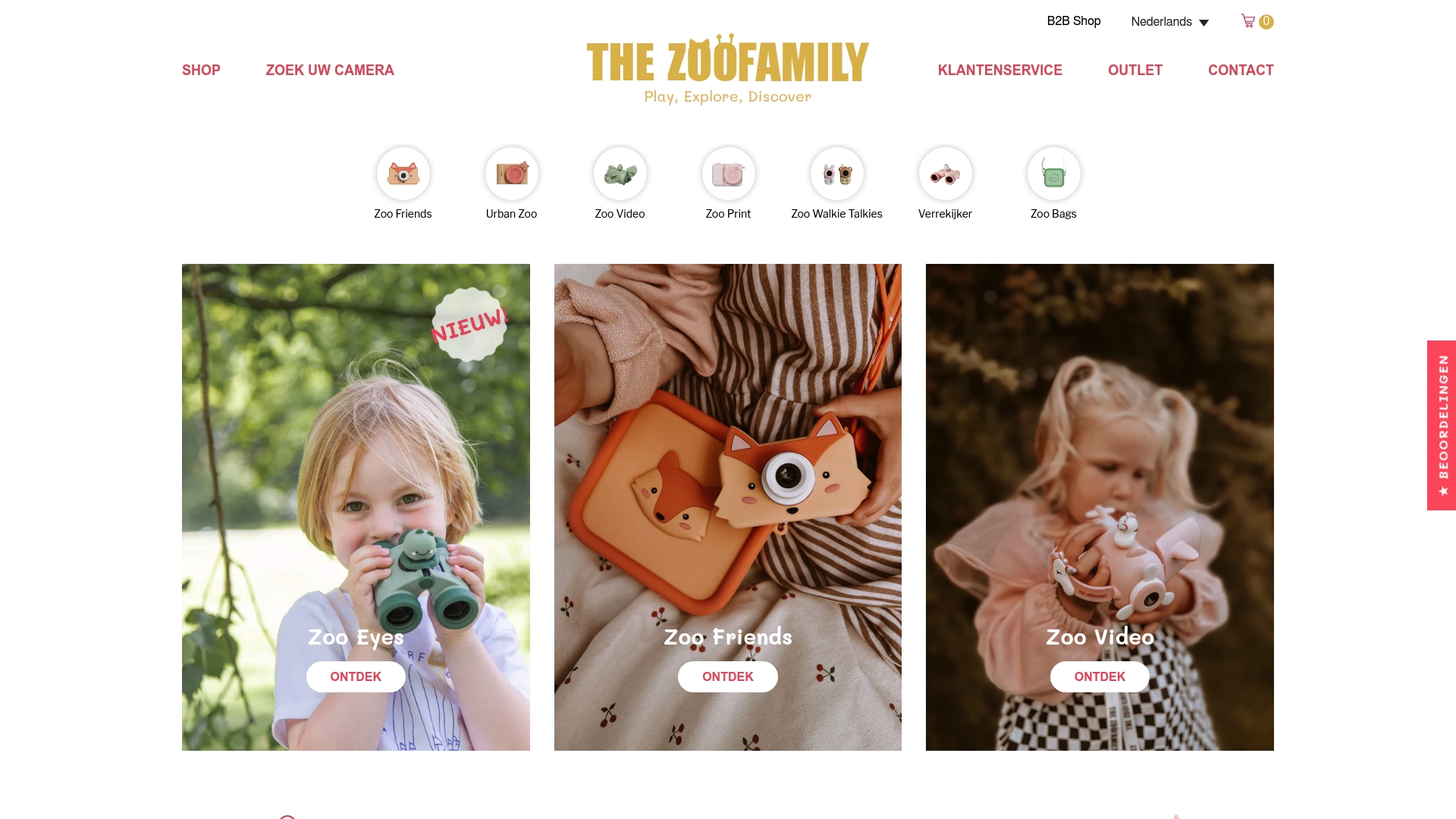
See the Zoo Friends collection or browse all kids’ cameras. Small extras such as zoo sleeves (€9.95) and zoo bags (€19.95) are on the shop page.
FAQ
What is the easiest recycled craft for a young child?
Toilet roll animals and egg box flowers are the simplest. They need only paint, glue and paper, and children as young as 2 or 3 can paint and stamp with an adult’s help. An adult should do the cutting.
Which recycled materials should I avoid?
Avoid anything dirty, sharp or too small for the child’s age. Rinse and dry containers first, check tin rims, and keep buttons, bottle tops and beads away from children under 3.
Can recycled crafts go back in the recycling bin afterwards?
Often yes, if you take them apart. The Reuse Arts & Crafts Guide suggests separating each material and using pencils, felt tips or watercolours so card and paper stay recyclable. Check your local council’s rules for what it collects.
How do I keep the craft box from taking over the kitchen?
Use one box with a lid, keep only clean items, and empty it of anything you have not used in a few weeks. Offering a small selection each session also keeps children focused.
Sources
- DIY Upcycling Activities, PBS KIDS for Parents
- 30 Easy Recycled Crafts for Kids, Good Housekeeping
- Reuse Arts & Crafts Guide 2025
- 24 easy recycled craft ideas for kids, Netmums
- Fused Plastic activity guide, Amazeum