

Outdoor science does far more for children than just getting fresh air as studies show hands-on nature experiences can boost long-term memory by up to 75 percent compared to classroom learning. Most people imagine outdoor science as complicated projects that require special kits and endless setup. Yet the real magic happens with simple activities like documenting insects, measuring rainfall, or growing plants right outside your door.
Table of Contents
- Observe And Document Nature’s Wonders
- Conduct Simple Weather Experiments
- Create A Mini Garden And Learn About Growth
- Explore Water Science With Diy Rain Gauge
- Discover Insects And Their Ecosystems
- Build A Birdhouse And Study Local Birds
- Organise A Nature Scavenger Hunt
Quick Summary
| Takeaway | Explanation |
|---|---|
| Encourage systematic nature observation | Guide children to document their findings in a field notebook for improved research skills. |
| Conduct engaging weather experiments | Use simple tools to teach children about meteorological principles through hands-on activities. |
| Create a mini garden for biological learning | Gardens provide practical experiences with growth, responsibility, and ecological interactions through plant care. |
| Build a birdhouse to study avian ecology | Constructing a birdhouse offers insights into animal behaviour and biodiversity while fostering practical skills. |
| Organise nature scavenger hunts | Design scavenger hunts to enhance observation skills and environmental literacy through playful exploration. |
1: Observe and Document Nature’s Wonders
Turning outdoor spaces into scientific laboratories creates extraordinary learning opportunities for children. Nature observation transforms ordinary walks into exciting investigative journeys where kids become young researchers exploring the living world around them.
Children naturally possess curiosity about their environment. By encouraging systematic observation and documentation, parents can help nurture budding scientific skills. These outdoor science activities teach children critical research techniques while connecting them intimately with natural ecosystems.
Scientific documentation requires careful attention and specific tools. Prepare your young investigator with essential equipment:
- A sturdy field notebook
- Pencils or waterproof markers
- Magnifying glass
- Small collecting containers
- Camera or smartphone (with parental supervision)
When exploring outdoor environments, guide children to make detailed observations. Encourage them to record specific details about plants, insects, weather patterns, and animal behaviours. For instance, they might track butterfly movements, sketch leaf structures, or measure precipitation levels.
According to National Geographic Education, citizen science projects demonstrate how amateur researchers contribute meaningful data to scientific understanding. Children can participate in global research initiatives by documenting local wildlife, tracking seasonal changes, or monitoring biodiversity in their immediate surroundings.
Teaching children scientific documentation develops multiple skills simultaneously. They learn careful observation, pattern recognition, record-keeping, and develop a profound respect for natural systems. These outdoor science activities transform passive experiences into active learning opportunities that stimulate intellectual curiosity and environmental awareness.
Remember to make documentation fun and age-appropriate. Young scientists should feel excited about their discoveries, not overwhelmed by complex methodologies. Celebrate their observations, ask open-ended questions, and help them connect their findings to broader ecological concepts.
2: Conduct Simple Weather Experiments
Weather experiments offer children an engaging pathway to understanding meteorological principles through hands-on outdoor science activities. By transforming complex atmospheric phenomena into accessible investigations, parents can spark scientific curiosity and help children comprehend environmental dynamics.
Meteorological exploration allows children to interact directly with scientific concepts, moving beyond textbook learning into practical experimentation. These activities transform ordinary backyard spaces into dynamic research environments where young scientists can observe, measure, and analyse weather patterns.
Prepare for your weather investigation with these essential tools:
- Thermometer
- Clear glass jar
- Ruler or measuring tape
- Notebook for recording observations
- Plastic containers
- Stopwatch or timer
Children can explore fascinating weather phenomena through simple experiments. Cloud formation, wind measurement, and precipitation tracking become interactive learning experiences that connect theoretical knowledge with tangible observations.
According to Science Buddies, weather experiments help children develop critical scientific skills like hypothesis formation, systematic observation, and data interpretation. By engaging with meteorological principles directly, children learn to approach scientific inquiry with curiosity and structured thinking.
Simple experiments like creating a water cycle model or measuring wind speed using homemade instruments can transform abstract atmospheric processes into concrete learning opportunities. These activities not only educate but also cultivate an appreciation for environmental complexity.
Encourage children to document their experiments systematically. Record keeping helps them understand scientific methodology, track changes, and develop analytical thinking skills. By making weather science interactive and enjoyable, parents can nurture a lifelong interest in environmental understanding and scientific exploration.
3: Create a Mini Garden and Learn About Growth
Creating a mini garden transforms outdoor science activities into a captivating journey of biological discovery. Plant cultivation becomes an immersive learning experience where children witness the miraculous processes of growth, reproduction, and ecosystem interactions firsthand.
Gardening offers more than just a pleasant hobby. It provides children with a profound understanding of biological systems, teaching patience, responsibility, and the intricate relationships between living organisms. By nurturing their own plants, children develop a deeper connection with natural processes and environmental dynamics.
Prepare for your mini garden adventure with these essential items:
- Small pots or containers
- Potting soil
- Seeds (vegetables, herbs, or flowers)
- Watering can
- Plant labels
- Gardening gloves
- Small trowel
Children can explore various scientific concepts through gardening. Seed germination, plant nutrition, and ecological interactions become tangible learning experiences. Watching seeds transform into living plants teaches children about biological cycles, photosynthesis, and the fundamental principles of life.
According to Royal Horticultural Society, gardening helps children develop multiple skills beyond scientific understanding. They learn motor skills, develop mathematical thinking through measurement, and cultivate environmental awareness.
Experimental approaches can enhance the learning experience. Encourage children to create controlled experiments by comparing plant growth under different conditions. They might investigate how light, water, or soil type affects plant development, turning their mini garden into a scientific laboratory.
Documenting the garden’s progress through photographs, drawings, and written observations helps children develop research skills. They learn to track changes, make predictions, and understand the long-term processes of biological systems. This systematic approach transforms gardening from a simple activity into a comprehensive scientific exploration.
4: Explore Water Science with DIY Rain Gauge
Understanding precipitation patterns transforms ordinary outdoor spaces into scientific laboratories where children can explore hydrological processes. A DIY rain gauge offers an engaging method for young scientists to measure and track rainfall, turning atmospheric phenomena into interactive learning experiences.
By constructing their own measurement tool, children develop practical skills in scientific observation, data collection, and environmental monitoring. These outdoor science activities encourage critical thinking and provide tangible insights into meteorological systems.
Gather these materials to create your rain gauge:
- Clear plastic bottle
- Scissors
- Permanent marker
- Ruler
- Waterproof tape
- Stones or pebbles
Water measurement becomes an exciting adventure when children design and implement their own scientific instruments. The process teaches multiple scientific principles, including volume calculation, systematic recording, and data interpretation.
According to National Weather Service, accurate rainfall measurement helps communities understand environmental changes and predict potential ecological impacts. By introducing children to these concepts early, parents cultivate scientific curiosity and environmental awareness.
The rain gauge experiment extends beyond simple measurement. Comparative analysis allows children to track rainfall variations across different periods, understand seasonal changes, and develop hypotheses about local climate patterns. They learn to transform raw data into meaningful scientific observations.
Encourage children to maintain a rainfall journal, recording daily measurements and observing patterns. This practice develops mathematical skills, enhances scientific literacy, and helps them understand the interconnected nature of environmental systems. Through hands-on exploration, children transform passive learning into active scientific discovery.
5: Discover Insects and Their Ecosystems
Insect observation offers children a fascinating gateway into understanding complex biological interactions and ecological systems. Entomological exploration transforms ordinary outdoor spaces into vibrant research environments where young scientists can discover the intricate world of tiny creatures.
Children possess natural curiosity about insects, making this an ideal outdoor science activity that combines learning with excitement. By approaching insect study systematically, parents can help children develop scientific observation skills and environmental appreciation.
Prepare for insect exploration with these essential tools:
- Magnifying glass
- Clear collecting containers
- Notebook for observations
- Pencil
- White sheet or ground cloth
- Protective gloves
Ecosystem interactions become tangible when children observe insects in their natural habitats. They can learn how different species contribute to environmental balance, understanding complex relationships between organisms and their surroundings.
According to National Geographic Education, insects play crucial roles in pollination, decomposition, and food chain dynamics. By studying these small creatures, children gain insights into broader ecological principles that govern natural systems.
Encourage children to document their findings through detailed sketches, written descriptions, and photographic records. Scientific documentation helps them develop systematic observation skills and understand the importance of precise research methodologies.
Insect studies can reveal extraordinary biological diversity. Children might discover how ants collaborate, observe butterfly metamorphosis, or track bee pollination patterns. These experiences transform passive learning into active scientific exploration, nurturing a profound respect for the intricate living systems surrounding us.
6: Build a Birdhouse and Study Local Birds
Building a birdhouse transforms outdoor spaces into interactive scientific laboratories where children can explore avian ecology and animal behaviour. This engaging activity combines woodworking skills, ecological understanding, and direct wildlife observation into a comprehensive learning experience.
By constructing and maintaining a birdhouse, children develop multiple scientific and practical skills. They learn about habitat creation, bird species characteristics, and the critical role different animals play in local ecosystems. Wildlife conservation becomes a tangible concept through hands-on participation.
Gather these materials for your birdhouse project:
- Untreated wooden boards
- Hammer
- Nails
- Saw
- Measuring tape
- Pencil
- Protective gloves
- Sandpaper
Children can transform basic construction into a scientific investigation by documenting bird interactions. They might track nest-building activities, record species visiting the birdhouse, and observe feeding patterns. These observations help develop systematic research skills and environmental awareness.
According to Cornell Lab of Ornithology, citizen science projects involving bird observation contribute valuable data to global ecological research. Children become part of a broader scientific community by carefully recording and sharing their wildlife observations.
Encourage children to create detailed field journals documenting bird behaviours, species identification, and seasonal changes. This practice develops scientific documentation skills while fostering a deeper connection with local wildlife. They learn to distinguish between different bird species, understand migration patterns, and appreciate the complexity of natural systems.
Birdhouse construction and observation offer more than just a science project. They provide children with a profound understanding of biodiversity, ecological interdependence, and the importance of creating supportive environments for local wildlife.
7: Organise a Nature Scavenger Hunt
Nature scavenger hunts transform outdoor exploration into an exciting scientific adventure, engaging children’s curiosity and observational skills. Environmental discovery becomes an interactive game where learning happens through playful investigation, encouraging children to connect with their natural surroundings.
Scavenger hunts provide a structured yet dynamic approach to outdoor science activities. Children develop critical thinking, observation, and classification skills while experiencing the joy of scientific exploration. You can learn more about creating engaging photography-based hunts to enhance the experience.
Prepare for your nature scavenger hunt with these essential items:
- Notebook for recording findings
- Pencil or waterproof markers
- Magnifying glass
- Small collecting containers
- Printed scavenger hunt list
- Camera or smartphone
- Protective gloves
Scientific exploration becomes an exciting challenge when children transform their surroundings into a living laboratory. They can search for specific items like unique leaf shapes, different types of insects, rock variations, or evidence of animal activity.
According to National Wildlife Federation, nature scavenger hunts help children develop environmental literacy and create meaningful connections with local ecosystems. These activities encourage detailed observation and foster a deeper understanding of biodiversity.
Design the scavenger hunt to include educational objectives. Encourage children to not just find items, but to document their discoveries, sketch observations, and develop hypotheses about what they encounter. This approach transforms a simple game into a comprehensive scientific exploration.
By making scientific discovery fun and interactive, parents can nurture children’s natural curiosity about the world around them. Nature scavenger hunts prove that learning can be an exciting, hands-on adventure that extends far beyond traditional classroom environments.
Below is a comprehensive table summarising the main outdoor science activities for children featured in this article, alongside their key learning outcomes and resources required.
| Activity | Core Benefit | Main Learning Outcome | Essential Resources |
|---|---|---|---|
| Observe and Document Nature | Develops research and critical observation skills | Systematic documentation of natural phenomena | Field notebook, magnifying glass, camera |
| Conduct Simple Weather Experiments | Fosters understanding of meteorological principles | Hands-on exploration of weather patterns | Thermometer, jars, measuring tools |
| Create a Mini Garden | Encourages responsibility and biological curiosity | Understanding plant growth and biological processes | Pots, soil, seeds, gardening tools |
| Explore Water Science with DIY Rain Gauge | Teaches hydrological observation and data collection | Measuring and analysing precipitation | Plastic bottle, ruler, waterproof tape |
| Discover Insects and Their Ecosystems | Inspires curiosity about ecology and animal behaviour | Identification and study of insect roles in ecosystems | Magnifying glass, containers, observation kit |
| Build a Birdhouse and Study Local Birds | Connects woodworking with ecological investigation | Understanding avian biodiversity and behaviour | Wooden boards, tools, field journal |
| Organise a Nature Scavenger Hunt | Makes learning interactive while honing observation skills | Environmental literacy and classification through play | Scavenger hunt list, notebook, camera |
Unleash Real Discovery with The Zoofamily
If you are inspired by these outdoor science activities yet worry your child might miss out on observing the wonders of nature up close, you are not alone. Many parents know the frustration of children losing interest or struggling to capture the beauty they find outdoors. Nurturing curiosity through scientific documentation and direct observation is so much easier when children have the right tools in their hands. Imagine your child’s eyes lighting up as they spot birds, explore insects, or photograph unique patterns during a nature scavenger hunt.
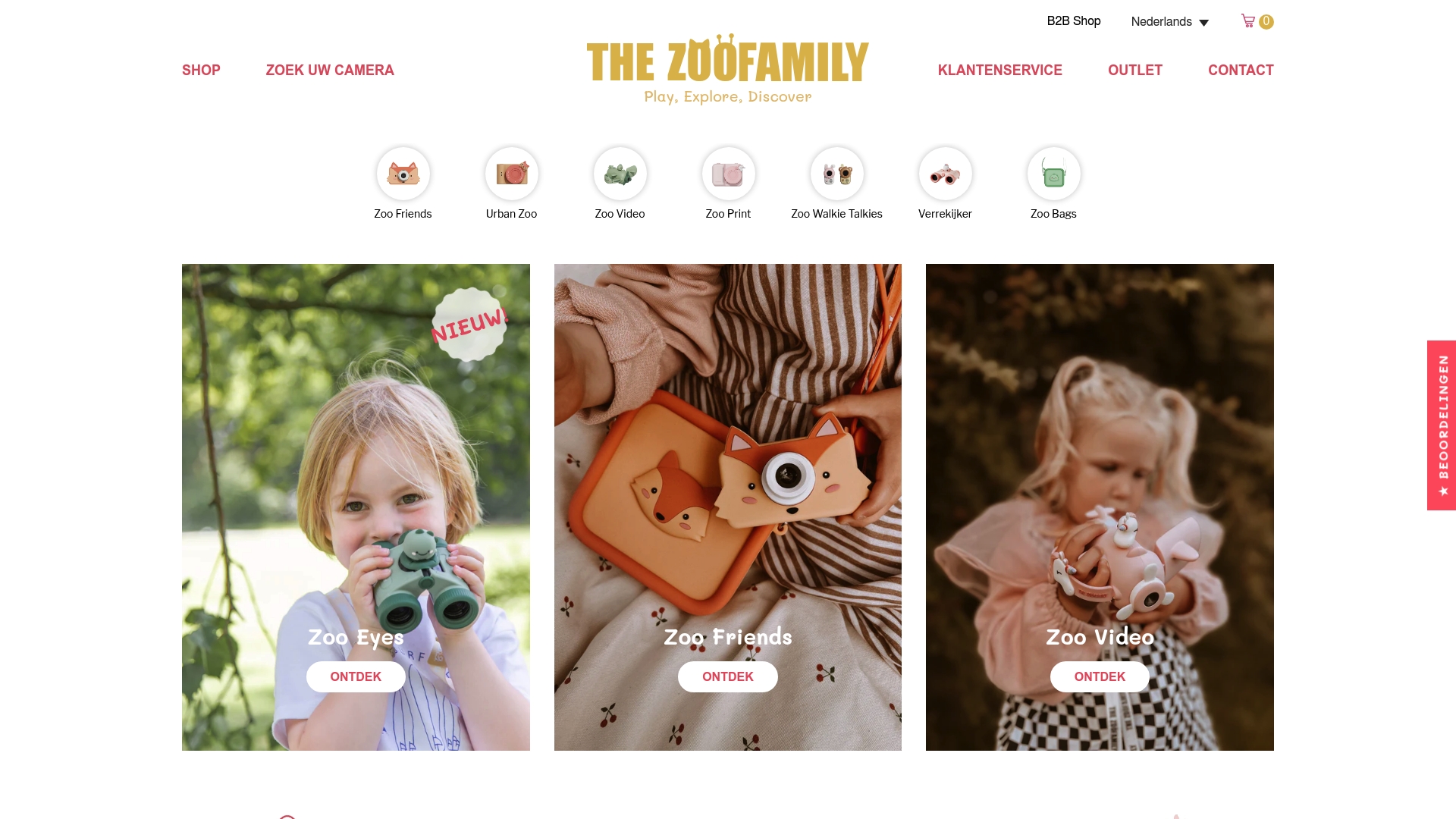
Empower your young scientist with gear designed to spark real excitement. The Zoofamily offers kids’ cameras, walkie-talkies, and binoculars with playful animal references, specially created to help your child explore, document, and share their discoveries. For every camera sold, one tree is planted, so your purchase supports hands-on learning and the restoration of natural beauty. Visit The Zoofamily Home to discover our full selection, or read our tips for making photography scavenger hunts unforgettable. Give your child the gift of curiosity and the tools to turn every outdoor adventure into a memory. Explore with them now so their passion for nature can flourish.
Frequently Asked Questions
What are some easy outdoor science activities for kids?
Engage kids with activities like nature observation, creating a mini garden, or conducting weather experiments. Start by choosing one activity and gathering the necessary tools to facilitate exploration and discovery.
How can I encourage my child to document their findings during outdoor science activities?
Encourage your child to keep a detailed notebook where they record observations, drawings, and photographs during each activity. Set specific times during your adventure to pause and write, such as after discovering a new plant or insect.
What essential tools do I need for weather experiments?
Essential tools for weather experiments include a thermometer, clear glass jar, and ruler. Gather these items before starting your experiments to ensure a smooth and interactive learning experience for your children.
How can a nature scavenger hunt enhance my child’s learning experience?
A nature scavenger hunt promotes critical thinking and observational skills by motivating children to seek specific items in their environment. Create a scavenger hunt list that encourages exploration and recording findings, turning a simple game into a comprehensive learning opportunity.
What biological processes can children learn by creating a mini garden?
Children can learn about seed germination, plant nutrition, and ecological interactions through mini gardening. Involve them in planting seeds and maintaining the garden, which will teach them about growth cycles and the importance of nurturing living things.
How can observing insects contribute to a child’s understanding of ecosystems?
Observing insects helps children recognise their roles in pollination, decomposition, and food webs within ecosystems. Set up an observation area with collecting containers and a magnifying glass to allow detailed exploration of these vital creatures.