

Every mother searching for meaningful gifts knows how important it is to spark creativity and a love for nature in children. For eco-conscious families in Western Europe, durable digital cameras offer more than just fun—they are powerful educational tools for creative learning and environmental discovery. With designs made to withstand rough play and easy controls for small hands, these cameras encourage kids to observe their world and express themselves while learning about the beauty of nature around them.
Table of Contents
- Defining Durable Digital Cameras For Children
- Types Of Durable Digital Cameras Explained
- Features Making A Camera Truly Hard-Wearing
- Eco-Conscious And Educational Benefits For Kids
- Risks, Drawbacks, And Alternatives To Avoid
Key Takeaways
| Point | Details |
|---|---|
| Durable Design is Essential | Children’s digital cameras must have robust construction and intuitive features to withstand active use and support creativity. |
| Variety of Camera Types Available | Cameras range from basic point-and-shoot models to advanced action cameras, catering to different age groups and creative interests. |
| Educational and Environmental Benefits | Cameras teach children about their surroundings while promoting responsible consumption and creativity in documenting nature. |
| Mindful Digital Engagement Needed | Parents should establish guidelines around usage to prevent excessive screen time and ensure a balanced approach to technology. |
Defining Durable Digital Cameras For Children
Durable digital cameras for children represent more than just photographic devices; they are powerful educational tools designed to nurture creativity and visual literacy. These specialised cameras are engineered to withstand the energetic and sometimes unpredictable handling by young users while providing an engaging platform for learning and self-expression.
Key characteristics of child-friendly digital cameras include:
- Robust construction to survive accidental drops
- Simplified user interfaces
- Ergonomic designs tailored for small hands
- Child-safe materials and rounded edges
- Intuitive controls that encourage independent exploration
Research demonstrates that digital cameras enhance children’s developmental skills, serving as more than mere technological gadgets. These devices help children develop critical cognitive abilities by allowing them to document their world, tell visual stories, and explore artistic expression.
Designing cameras specifically for children involves understanding their unique interaction with technology. Manufacturers focus on creating devices that are not just durable, but also intuitive and engaging. The goal is to transform a simple camera into a tool that sparks curiosity, encourages observation, and supports holistic learning.
Pro tip: When selecting a digital camera for children, prioritise robust construction and simple, child-friendly features over advanced technological specifications.
Types Of Durable Digital Cameras Explained
Children’s digital cameras represent a diverse ecosystem of technological tools designed to support creativity and learning across different developmental stages. Cameras range from simple point-and-shoot models to advanced action-oriented devices, each tailored to specific age groups and creative needs.
The primary categories of durable digital cameras for children include:
- Entry-level point-and-shoot cameras with basic controls
- Waterproof and rugged outdoor exploration cameras
- Instant print cameras for immediate visual feedback
- Action cameras for active and adventurous children
- Hybrid digital-analog cameras with interactive features
Designing cameras for young photographers requires careful consideration of usability, durability, and engagement. Younger children benefit from cameras with large buttons, simple interfaces, and fun visual filters, while older children might prefer devices offering more sophisticated image capture and manual control options.
Each camera type serves a unique developmental purpose. Instant cameras engage younger children by providing immediate tangible results, waterproof models encourage outdoor exploration and nature photography, and action cameras support active learning and movement-based creativity.
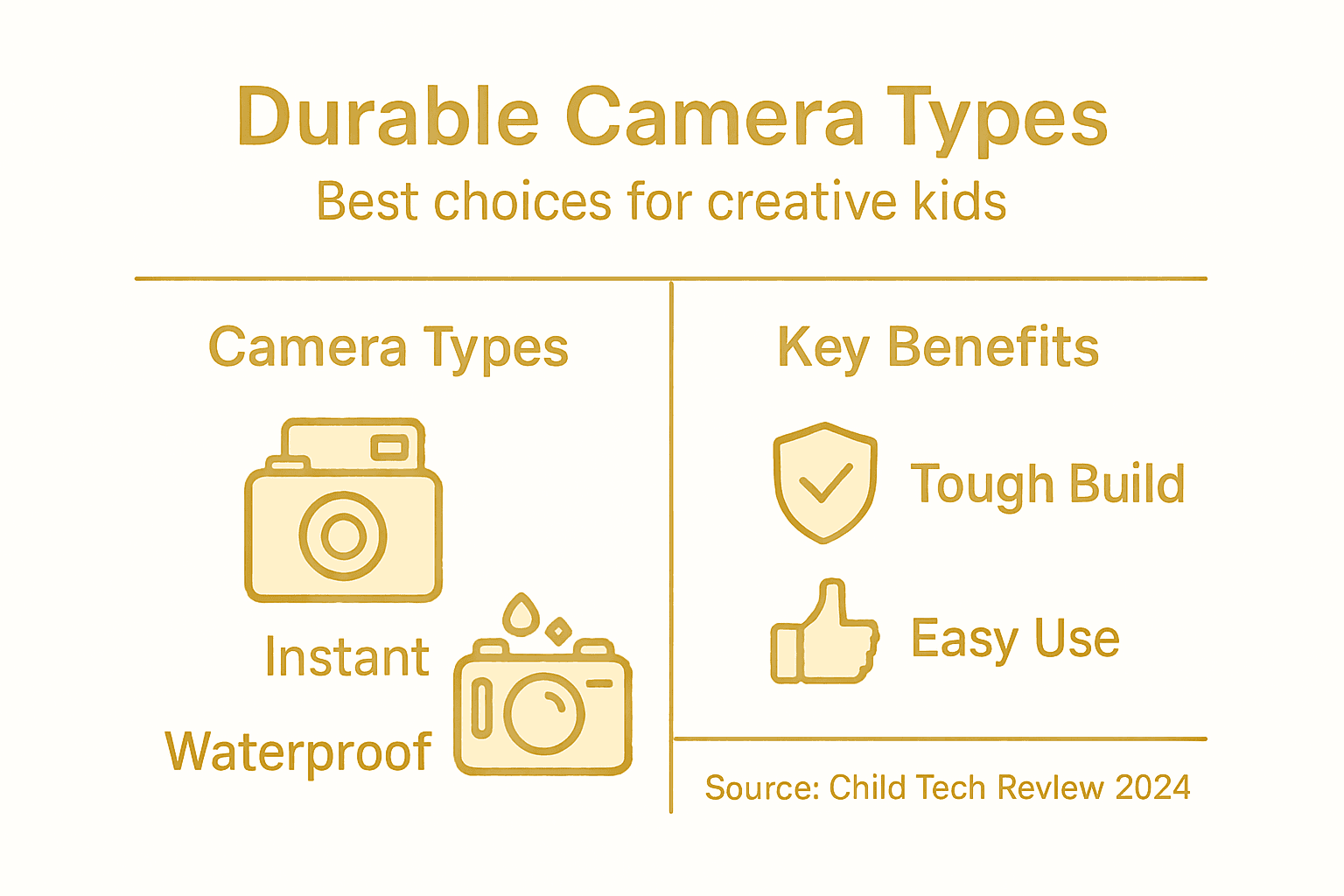
To better understand which camera might suit a child’s needs, see this comparison of main camera types:
| Camera Type | Ideal Age Group | Key Advantage | Typical Use Case |
|---|---|---|---|
| Point-and-Shoot | 3–7 years | Extremely simple operation | Everyday snapshots |
| Instant Print | 5–10 years | Immediate tangible photos | Scrapbooking, sharing prints |
| Waterproof Rugged | 6–12 years | Withstands outdoor elements | Nature trips, pool use |
| Action Camera | 7–14 years | Captures high activity shots | Sports, cycling, playground |
| Hybrid Digital-Analogue | 8–14 years | Offers creative features | Experimentation, artistic use |
Pro tip: Consider your child’s age, interests, and motor skills when selecting a digital camera to ensure the most appropriate and engaging learning experience.
Features Making A Camera Truly Hard-Wearing
Durability in children’s digital cameras goes far beyond simple construction, representing a complex interplay of design elements engineered to withstand active young users. Robust cameras incorporate multiple protective features that transform them from fragile electronic devices into reliable creative companions.
Key hard-wearing characteristics include:
- Shock-absorbing rubber exterior shells
- Water and dust resistance ratings
- Reinforced corner protection
- Drop-tested construction standards
- Compact, lightweight designs
- Large, sealed button interfaces
- Anti-shake image stabilisation technology
Materials play a crucial role in camera durability. Most hard-wearing children’s cameras utilise specialised polymer composites and rubberised coatings that provide multiple layers of protection against impacts, moisture, and everyday rough handling. These advanced materials create a protective barrier without compromising the camera’s functionality or aesthetic appeal.
Ergonomic design further enhances durability by considering how children physically interact with technology. Strategically placed grips, lightweight configurations, and intuitive control layouts reduce the likelihood of accidental drops while making the camera feel comfortable and natural in small hands.
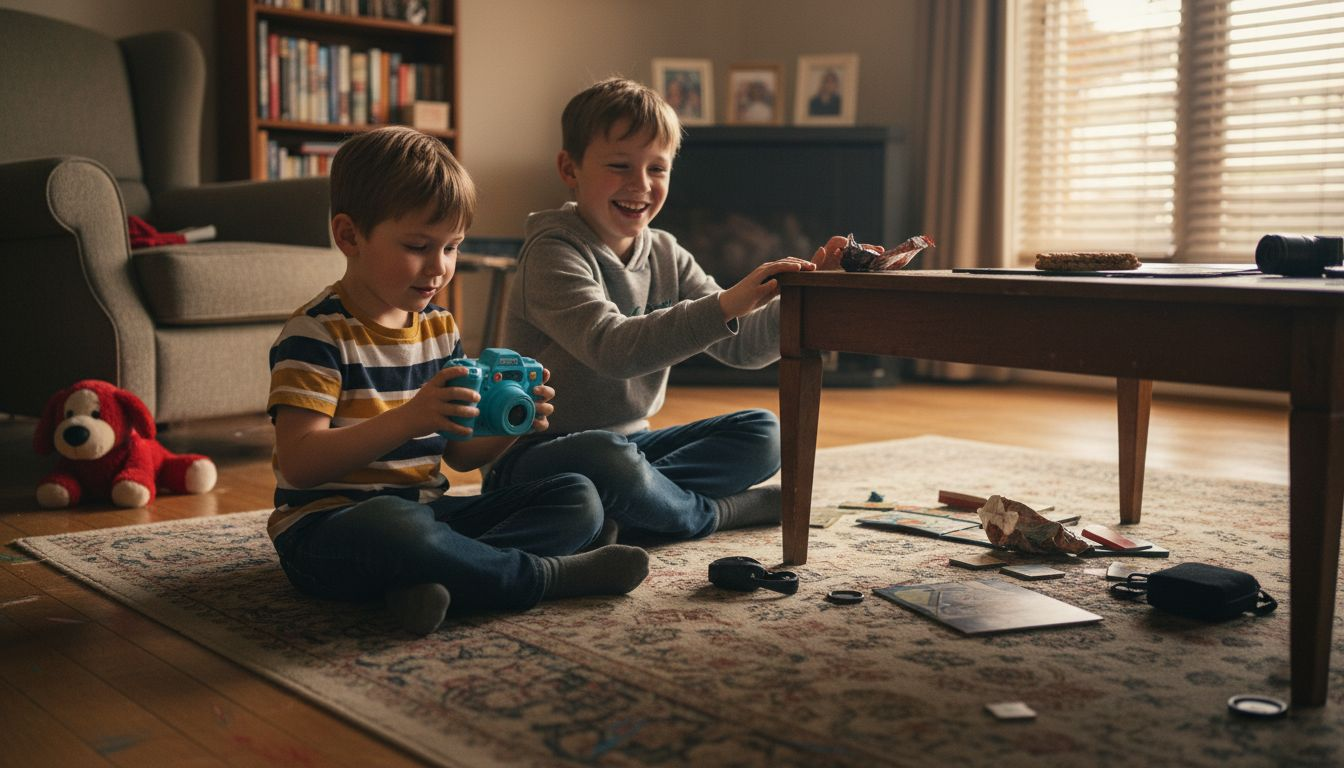
Here is a quick summary of how durability features benefit children:
| Durability Feature | Benefit for Children | Example in Use |
|---|---|---|
| Shock-absorbing Shell | Reduces risk from drops | Survives playground falls |
| Sealed Buttons | Blocks dirt and moisture | Use in sandpits or rain |
| Lightweight Design | Easier handling for small hands | Less likely to drop |
| Anti-shake Technology | Produces clearer images | Sharp photos during play |
Pro tip: Always check manufacturer drop-test ratings and water resistance specifications before purchasing a children’s camera to ensure maximum durability.
Eco-Conscious And Educational Benefits For Kids
Digital cameras offer far more than simple photographic experiences for children; they represent powerful tools for environmental education and creative exploration. Sustainable photography practices increasingly emphasise ecological awareness through intentionally designed learning experiences that connect technology, creativity, and environmental stewardship.
Key educational benefits of eco-friendly digital cameras include:
- Developing observational skills about natural environments
- Encouraging exploration and appreciation of biodiversity
- Teaching responsible technology consumption
- Promoting visual storytelling about environmental themes
- Building empathy towards ecological systems
- Cultivating mindful technological interactions
- Supporting creative documentation of natural landscapes
These cameras serve as transformative educational instruments that go beyond traditional learning methods. By providing children with tools that are both technologically engaging and environmentally conscious, parents and educators can nurture a generation of environmentally aware individuals who understand the delicate balance between technological innovation and ecological preservation.
Moreover, sustainable camera design teaches children valuable lessons about responsible consumption. Durable, long-lasting devices with modular components demonstrate how technological products can be designed to minimise waste and environmental impact, introducing complex sustainability concepts through tangible, age-appropriate experiences.
Pro tip: Choose cameras from manufacturers committed to sustainable production practices and encourage children to document environmental discoveries during their learning journeys.
Risks, Drawbacks, And Alternatives To Avoid
Digital cameras for children are not without potential challenges that parents and educators must carefully navigate. Digital devices present complex developmental considerations requiring thoughtful, balanced approaches to technology integration.
Primary risks associated with children’s digital camera usage include:
- Potential excessive screen time
- Risk of reduced physical activity
- Possible eye strain and digital fatigue
- Exposure to inappropriate online content
- Disruption of traditional play experiences
- Privacy and data security concerns
- Potential social interaction limitations
Healthy alternatives and mitigation strategies can help parents maintain technological engagement while protecting children’s holistic development. Supervised camera use, establishing clear digital boundaries, and integrating physical outdoor activities can transform potential drawbacks into meaningful learning experiences.
Parental guidance remains crucial in managing digital camera interactions. By setting clear usage guidelines, encouraging creative non-digital play, and maintaining open communication about technology, parents can help children develop balanced, healthy relationships with digital tools.
Pro tip: Implement structured screen time limits and regularly rotate between digital and analog creative activities to maintain healthy technological boundaries.
Inspire Eco-Friendly Creativity With Durable Cameras From The Zoofamily
The article highlights the challenge of finding digital cameras that are both durable and eco-conscious to support children’s creativity while fostering environmental awareness. Many parents seek devices that survive active use, encourage outdoor exploration, and teach responsible technology consumption through sustainable design and robust features. The Zoofamily understands these key pain points by offering kid-friendly cameras built to endure rough handling, spark curiosity about nature, and reinforce environmental stewardship.
Discover how you can empower your child’s creativity without compromising on durability or ecological values. Each camera from The Zoofamily is thoughtfully designed with animal inspirations to connect kids with the natural world — and for every camera sold, one tree is planted. Explore our unique collection and encourage your child to document their environmental adventures safely and joyfully. Start your journey today at The Zoofamily and give your child the perfect blend of fun, learning, and care for the planet.
Frequently Asked Questions
What are durable digital cameras designed for children?
Durable digital cameras for children are specially engineered photographic devices that can withstand rough handling while providing an engaging platform for creativity and learning. They typically have robust construction, simplified user interfaces, and child-safe materials.
What types of durable digital cameras are available for kids?
There are several types of durable digital cameras for children, including entry-level point-and-shoot cameras, waterproof and rugged outdoor cameras, instant print cameras, action cameras, and hybrid digital-analog cameras, each suited to different age groups and creative needs.
How do the durability features of children’s cameras enhance their usability?
Durability features, such as rubberised shells, water resistance, and shock-absorbing designs, help protect cameras from drops and adverse conditions, making them easier and safer for children to use during active play and exploration.
What are the educational benefits of using digital cameras for children?
Using digital cameras can enhance children’s observational skills, encourage exploration of nature, promote visual storytelling, and foster empathy towards ecological systems, all contributing to holistic learning and environmental awareness.
Recommended
- Meilleurs gadgets plein air enfants – Comparatif 2025 – The Zoofamily
- Best eco-friendly kids cameras – Expert Comparison 2025 – The Zoofamily
- Understanding Eco Friendly Mops: A Greener Choice – The Zoofamily
- Initier à la photographie écologique pour enfants facilement – The Zoofamily
- Understanding Eco Friendly Video Production for Filmmakers