

Independent exploration for kids is the process where children engage actively and autonomously with their environment to build creativity, problem-solving skills, and confidence. Unlike structured lessons, it places the child in the driving seat, letting curiosity direct the learning. Developmental psychology consistently shows that child-led discovery supports vocabulary growth, emotional expression, and physical engagement with the world. Thezoofamily was built on exactly this belief: that children who connect with nature through their own senses grow into more resilient, creative people. This guide gives you the practical tools to make that happen.
What does independent exploration for kids actually require?
Independent exploration is the recognised term in developmental psychology for self-directed, child-led engagement with the environment. Parents often call it “free play” or “self-guided activities for children,” but the research treats it as a distinct developmental process. Children’s independent exploration supports multiple developmental domains at once, including vocabulary, emotional regulation, and physical coordination. That breadth is what separates it from simple entertainment.
The first requirement is a dedicated space. A corner of the garden, a patch of woodland, or even a cleared kitchen table works well. The space does not need to be large. It needs to be safe, predictable, and free from adult interruption.
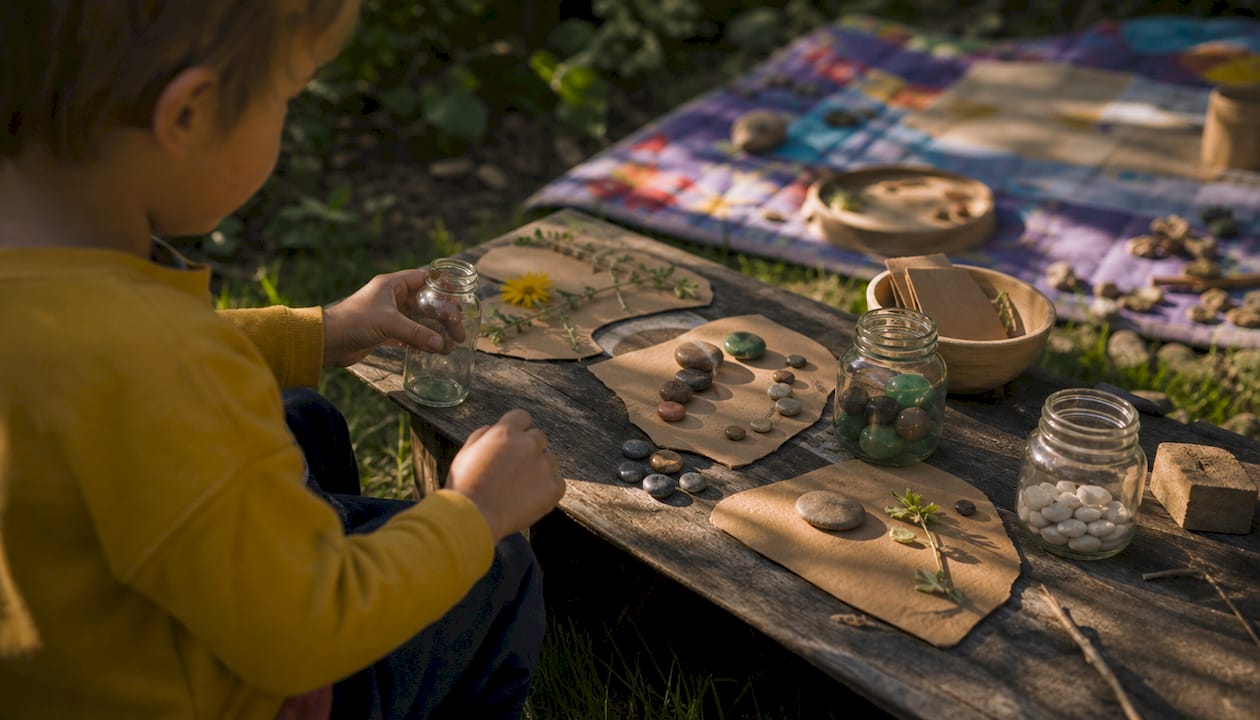
The second requirement is open-ended materials. Egg cartons, magnifying glasses, small notebooks, and natural objects like stones and leaves all qualify. Minimal open-ended materials yield high engagement and critical thinking through child-led discovery. Finished products are not the goal. The process of noticing, sorting, and questioning is.
The third requirement is the right tools for outdoor adventures. For structured outdoor programmes, physical readiness matters. Outdoor adventure camps for children aged 5–15 typically include physical requirements such as a minimum weight of 45–75 lbs for certain activities. That figure signals that parents should match activity intensity to their child’s physical stage, not just age.
| Tool or resource | Purpose | Age range | Cost indicator |
|---|---|---|---|
| Open-ended natural materials | Sensory discovery and sorting | 2+ | Free |
| Busy bins with rotating toys | Sustained independent play | 2–8 | Low |
| Browser-based outdoor mission apps | Self-guided outdoor learning | 5–12 | Free |
| Structured adventure camps | Physical skills and confidence | 5–15 | £215–£230 per week |
| Kids’ cameras and binoculars | Nature observation and photography | 4+ | Varies |
Pro Tip: Set up two or three busy bins in different rooms so your child can move between them independently. Rotate the contents weekly to keep the novelty alive without buying anything new.
How can parents use the proximity method to foster independent play?
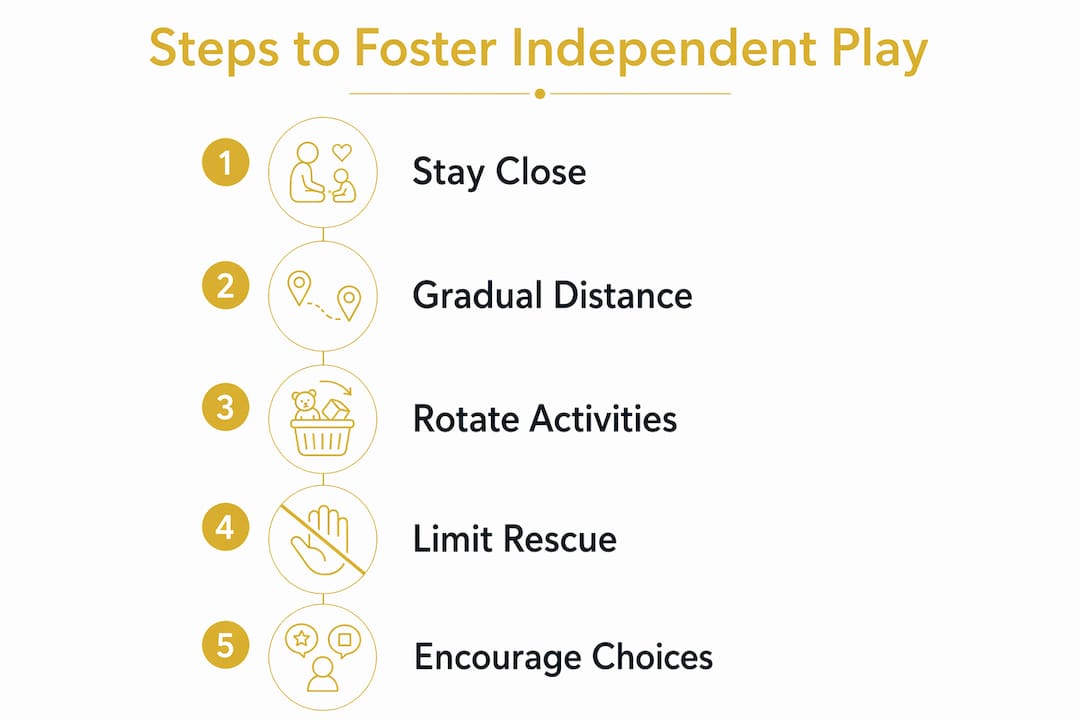
The proximity method is a gradual technique where parents stay physically close while children play independently, then slowly increase the distance over time. It works because it respects attachment. Children feel secure enough to focus on their own activity when a trusted adult is nearby. Parental proximity reduces clinginess while actively promoting independence. That combination is the psychological core of the method.
The steps below move from maximum support to genuine independence. Progress at your child’s pace, not a fixed schedule.
- Set up a busy bin next to your workspace. Place a container of age-appropriate activities beside you while you work or read. Your child plays independently, but you are visible and present.
- Extend the session by two to three minutes each day. Do not intervene unless there is a safety issue. Let your child work through mild frustration. That friction builds the capacity for sustained focus.
- Move the busy bin one metre away. Once your child plays confidently beside you, shift the bin slightly further. Stay in the same room but reduce eye contact.
- Introduce a second location. Place a busy bin in an adjacent room with a clear sightline. Visit briefly every few minutes at first, then stretch the gap.
- Transition to fully independent sessions. At this stage, your child initiates play without prompting and sustains it for meaningful stretches of time.
The muscle of independent play builds gradually with consistent practice supported by nearby parental presence. Skipping steps is the most common mistake. Parents who push for full independence too quickly trigger the clinginess they are trying to reduce.
The second common mistake is rescuing too fast. When a child says “I’m bored,” that is not a crisis. Boredom is the starting point for creative thinking. Wait two minutes before responding. Most children solve their own boredom within that window.
Pro Tip: Label each busy bin with a simple picture so your child can choose independently. That small act of choosing builds decision-making confidence before the play even begins.
What are the best outdoor exploration activities for children?
Outdoor adventures for kids do not require expensive equipment or elaborate planning. The most effective exploration projects for kids use the environment itself as the material. Here are five activities that work across a wide age range.
- Nature colour hunt. Give your child an egg carton and ask them to fill each section with something from the garden that matches a different colour. Simple materials like egg cartons encourage children to lead discovery, promoting critical thinking rather than following instructions. The activity takes under ten minutes to set up and can run for an hour.
- Photography scavenger hunt. Hand your child a kids’ camera and a list of things to photograph: something rough, something round, something that moves. Thezoofamily’s photography scavenger hunt tips give parents a ready-made framework for this activity. The camera transforms the child into an active observer rather than a passive walker.
- Self-guided outdoor missions. Browser-based platforms offer 50+ outdoor missions for children aged 5–12, with no sign-up required and missions lasting 5–15 minutes each. Younger children do not need to read. That accessibility removes a major barrier for parents of pre-readers.
- Wildlife observation log. Give your child a small notebook and ask them to record every living thing they spot during a 20-minute walk. Birds, insects, and plants all count. Thezoofamily’s nature scavenger hunt ideas extend this into a structured family activity when you want more guidance.
- Zip-lining and climbing at adventure camps. For older children, structured outdoor programmes offer zip-lining, rock climbing, and aerial courses. Adventure camps for children aged 5–15 design these activities specifically to build independence, confidence, and physical skills in a supervised setting.
Safety considerations matter most for activities away from home. Always brief your child on boundaries before they start. Use walkie-talkies for older children exploring larger spaces so they can stay in contact without needing a mobile phone.
How do you troubleshoot common challenges with independent exploration?
Every parent hits obstacles when building their child’s capacity for self-guided activities. The challenges below are the most frequent, and each has a direct solution.
- Clinginess. Return to an earlier step in the proximity method. Clinginess signals that the distance increased too fast, not that the child cannot manage independence.
- Short attention spans. Reduce the complexity of the activity, not the duration of the session. A simpler task holds attention longer than a complicated one.
- Safety concerns outdoors. Define a clear physical boundary before the session starts. Use a visual marker like a garden fence or a chalk line. Children respect boundaries they can see.
- Loss of motivation. Rotate activities every few days. Busy bins with rotating contents maintain children’s interest and encourage sustained independent play. The same principle applies to outdoor activities.
- Temperament differences. Some children are naturally cautious. Adapt the pace of independence-building to your child’s temperament rather than comparing progress with siblings or peers.
Establishing a routine is the single most effective long-term strategy. A consistent daily window for independent exploration, even 20 minutes, builds the habit faster than occasional long sessions. Celebrate small wins visibly. When your child completes a nature log or finishes a photography hunt, display the results. Recognition reinforces the behaviour.
“The goal is not a child who plays alone. The goal is a child who trusts their own curiosity enough to follow it.”
Age matters when choosing activities. A five-year-old needs a busy bin and a garden. A twelve-year-old needs a camera, a mission, and a boundary. Match the activity to the developmental stage, and the motivation takes care of itself.
Key takeaways
Independent exploration builds creativity, problem-solving, and confidence most effectively when parents use the proximity method, open-ended materials, and consistent outdoor routines.
| Point | Details |
|---|---|
| Start with the proximity method | Stay close while your child plays, then increase distance gradually over days or weeks. |
| Use open-ended materials | Egg cartons, notebooks, and natural objects drive deeper thinking than structured toys. |
| Rotate activities regularly | Changing busy bin contents and outdoor missions weekly sustains motivation and focus. |
| Match activities to age and stage | Physical readiness and temperament determine the right level of challenge, not age alone. |
| Celebrate visible progress | Displaying a nature log or photography collection reinforces the habit of independent exploration. |
Why I think we underestimate the outdoors
Parents often focus on the proximity method indoors, which makes sense as a starting point. But the real shift happens outside. When I look at what consistently produces confident, curious children, it is not the busy bin in the kitchen. It is the child who has spent time genuinely alone with a patch of grass, a camera, and no agenda.
The outdoors removes the adult-designed environment entirely. There is no correct answer to what a child finds under a stone or photographs in a hedge. That absence of a right answer is exactly what builds resilience. Children who learn to encourage exploration through nature develop a tolerance for uncertainty that structured play simply cannot replicate.
Open-ended materials matter most when they connect to something real. A magnifying glass pointed at a leaf does more than a worksheet about plants. A kids’ camera pointed at a bird does more than a nature documentary. The difference is agency. The child chose to look. That choice is the whole point.
— ALAIN
Thezoofamily resources for curious young explorers
Thezoofamily designs kids’ cameras, walkie-talkies, and binoculars with one purpose: to put the right tools in a child’s hands at the moment curiosity strikes. Every camera sold funds the planting of one tree, so your child’s outdoor adventures contribute directly to the natural world they are learning to love.
The Thezoofamily blog offers parent-tested activity guides, scavenger hunt frameworks, and nature observation ideas that connect directly to the themes in this article. Whether your child is just starting with a busy bin or ready for a full photography mission, Thezoofamily’s activity guides give you a clear next step. The tools are built for children aged 4 and up, designed to spark the kind of independent curiosity that lasts well beyond childhood.
FAQ
What is independent exploration for kids?
Independent exploration for kids is child-led, self-directed engagement with the environment that builds creativity, problem-solving, and confidence. It differs from structured play because the child, not the adult, directs the activity.
What age can children start independent play?
Children can begin simple independent play from around age two, starting with busy bins placed near a parent. The proximity method allows gradual independence-building that suits children as young as 18 months.
How long should an independent exploration session last?
Start with 5–10 minutes for toddlers and extend sessions as confidence grows. Self-guided outdoor missions typically run 5–15 minutes, making them a practical starting point for children aged 5–12.
How do I stop my child being clingy during independent play?
Clinginess signals that independence was introduced too quickly. Return to an earlier step in the proximity method, staying physically closer until your child plays confidently, then increase distance again more slowly.
What outdoor activities best support independent exploration?
Nature colour hunts, photography scavenger hunts, and wildlife observation logs are the most accessible starting points. For older children, structured adventure camps offering climbing and zip-lining build physical confidence alongside independent thinking.