

Designing a backyard playground in a small space feels challenging when you want to foster creativity, physical development, and connection with nature. Many parents struggle to balance safety, engagement, and limited square footage whilst creating an outdoor environment that genuinely inspires their children. This guide walks you through practical DIY solutions that transform compact gardens into vibrant play spaces, incorporating natural elements like mud kitchens, climbing logs, and gardening plots that encourage open-ended exploration and imaginative play.
Table of Contents
- Planning Your DIY Small Backyard Playground
- Choosing Materials And Natural Features For Creativity And Play
- Building And Safety Tips For Your DIY Playground Structures
- Encouraging Diverse Play And Nurturing Creativity Outdoors
- Explore More Small Backyard Play Ideas With The Zoofamily
Key takeaways
| Point | Details |
|---|---|
| Natural elements boost creativity | Mud kitchens, loose parts, and gardening areas promote resourceful, open-ended play experiences |
| Zone planning ensures safety | Designing distinct areas for different ages and activities reduces injury rates by 15% |
| Proper construction prevents failures | Load-bearing hardware and 36-inch post depths ensure structural stability |
| Flexible spaces maximise engagement | Rotating materials and adaptable zones sustain interest across developmental stages |
| Nature play enhances learning | Outdoor environments support mathematics skills, self-regulation, and collaboration |
Planning your DIY small backyard playground
Start by evaluating your garden’s unique characteristics. Measure the available space, noting sunlight patterns throughout the day and identifying any slopes or uneven terrain. These factors influence where you position active play structures versus quieter creative zones. Morning sun works brilliantly for gardening areas, whilst shaded spots suit mud kitchens and reading nooks.
Creating developmentally appropriate environments forms the foundation of effective playground design. The National Program for Playground Safety recommends tailoring features to children’s physical and cognitive abilities. A toddler needs low platforms and simple climbing challenges, whereas older children thrive with more complex structures that test coordination and strength.
Designing distinct zones prevents conflicts and enhances safety. Research indicates that playgrounds with separate areas for different age groups create safer play environments. Allocate one section for active climbing and swinging, another for imaginative play with a mud kitchen or playhouse, and a third for quieter activities like gardening or nature observation.
Pro Tip: Sketch your garden layout on graph paper, marking existing features like trees, fences, and garden beds. This visual reference helps you plan equipment placement and identify natural shade or shelter opportunities before purchasing materials.
Consider these essential planning elements:
- Accessibility paths connecting different play zones
- Sight lines allowing supervision from windows or seating areas
- Drainage patterns to avoid waterlogged play surfaces
- Proximity to water sources for gardening and mud kitchen activities
- Buffer zones between active structures and hard surfaces
Match playground features to your children’s developmental stages:
| Age Group | Appropriate Features | Safety Considerations |
|---|---|---|
| Toddlers (1-3 years) | Low platforms, sand play, sensory gardens | Maximum 60cm platform height, enclosed spaces |
| Preschoolers (3-5 years) | Climbing logs, simple swings, mud kitchens | Soft landing surfaces, rounded edges |
| School age (5+ years) | Rope ladders, balance beams, tricycle paths | Challenge without excessive risk, proper spacing |
Integrating playground activities for preschoolers requires balancing physical challenges with creative opportunities. Position climbing structures near open grass for running games, and place creative stations like mud kitchens close to gardening plots where children can harvest ingredients for imaginative cooking.
Explore safer DIY backyard play ideas that prioritise both engagement and injury prevention. Proper planning eliminates hazards whilst maximising every square metre of your garden.
Choosing materials and natural features for creativity and play
Selecting sustainable, weather-resistant materials ensures your playground withstands British weather whilst remaining safe for children. Untreated hardwood like oak or sweet chestnut resists rot naturally without toxic preservatives. Avoid pressure-treated timber near areas where children might have prolonged skin contact, particularly around sand play or seating.
Mud kitchens represent one of the most valuable additions to small playgrounds. These simple structures, consisting of old pots, utensils, and a work surface, encourage open-ended play and resourcefulness. Children develop fine motor skills whilst mixing, pouring, and creating imaginary meals from natural materials. Position your mud kitchen near a water source and incorporate shelving for storing collected natural treasures like stones, leaves, and sticks.
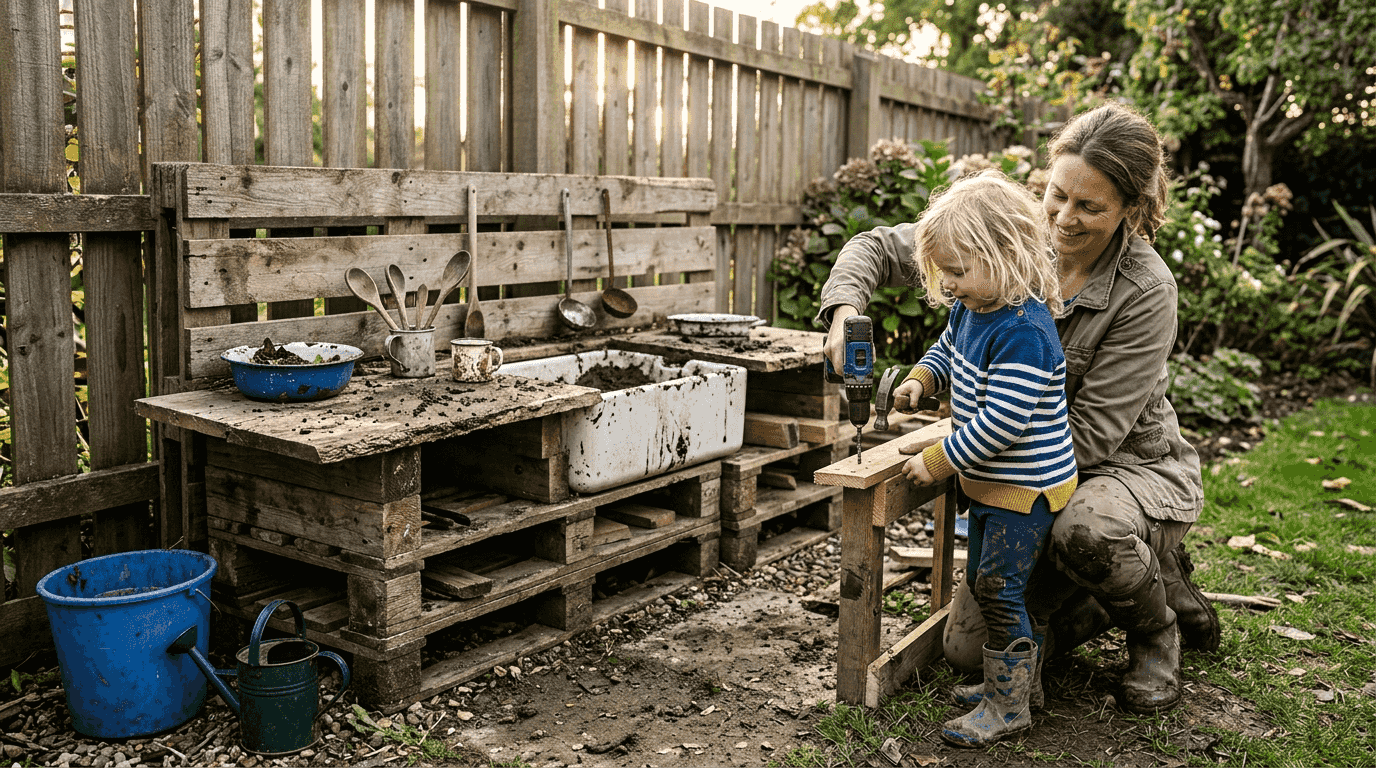
Pro Tip: Build your mud kitchen from reclaimed materials like pallets or old furniture. Sand rough edges thoroughly and apply child-safe wood oil to protect surfaces whilst maintaining the natural aesthetic.
Environmental play features significantly impact outdoor engagement. Studies show that gardening areas, playhouses, climbing structures, and tricycle paths create diverse opportunities that increase time spent outdoors. Even compact gardens accommodate multiple features through clever vertical design and multi-purpose structures.
Incorporate these natural elements for maximum creative potential:
- Climbing logs arranged horizontally for balance practice and vertical for scrambling
- Collection of smooth river stones, pinecones, and driftwood as loose parts
- Native wildflower patches attracting butterflies and bees for observation
- Willow structures or living tepees that grow and change seasonally
- Sensory herb gardens with mint, lavender, and rosemary for tactile exploration
Natural loose parts transform static playgrounds into dynamic learning environments. Children rearrange stones to create patterns, build stick structures, and incorporate natural materials into imaginative scenarios. Rotate these elements seasonally, introducing conkers in autumn, blossom in spring, and shells collected from summer beach trips.
“Natural materials offer infinite possibilities because they lack prescribed functions. A stick becomes a wand, a sword, a fishing rod, or a paintbrush depending entirely on the child’s imagination.”
Local plants enhance sensory experiences whilst teaching children about native ecosystems. Ornamental grasses rustle in wind, providing auditory interest. Textured plants like lamb’s ear offer tactile discovery. Berry-producing shrubs like blackcurrants serve dual purposes, creating seasonal interest and edible harvests for mud pie creations.
Ground surfaces require careful consideration. Bark chips provide excellent cushioning for fall zones beneath climbing structures whilst maintaining natural aesthetics. Sand creates versatile play opportunities for digging and construction. Artificial grass works well for high-traffic pathways, though natural turf encourages biodiversity and sensory connection.
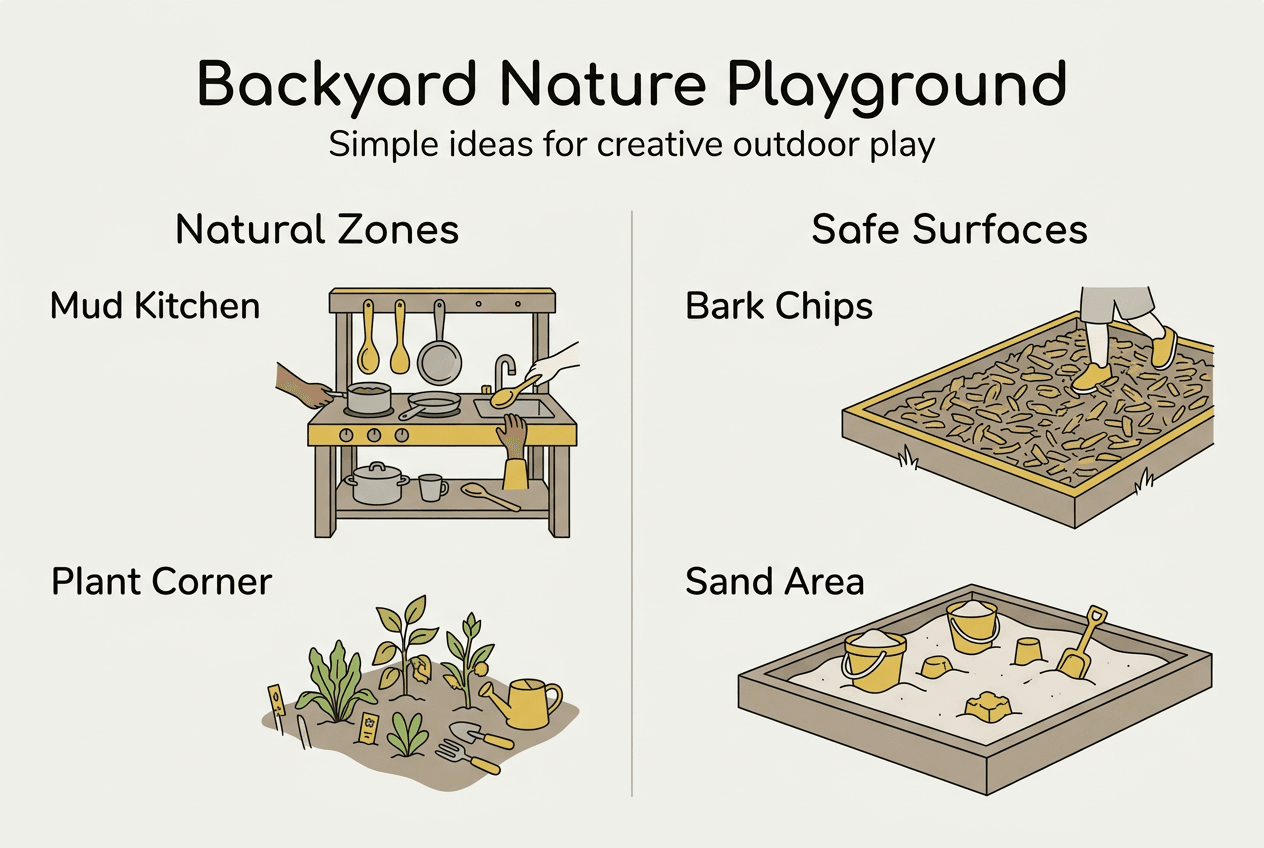
Discover more natural playground ideas that blend seamlessly into garden environments whilst providing rich play experiences. The right material choices create spaces that feel like natural extensions of your garden rather than artificial additions.
Building and safety tips for your DIY playground structures
Proper construction techniques separate safe, durable playgrounds from potential hazards. Hardware selection proves critical for load-bearing connections. Using deck screws for structural joints creates serious failure risks because they lack the shear strength required for dynamic loads. Instead, use carriage bolts with washers and lock nuts for all connections supporting weight.
Foundation depth directly impacts structural stability. Posts set 36 inches deep resist lateral movement and frost heave that destabilises shallow installations. Dig post holes with a clamshell digger, set posts in concrete or compacted gravel, and ensure vertical alignment before backfilling.
Pro Tip: Create a concrete collar around posts rather than filling the entire hole. This technique allows drainage whilst providing stability, preventing wood rot from prolonged moisture contact.
Understanding dynamic loads prevents structural failures. Multiple children create forces exceeding static weights by four times, particularly during active play like swinging or jumping. Design platforms and connections to handle these amplified forces, not just the weight of stationary children.
Follow this construction sequence for safe playground structures:
- Mark post locations with stakes and string, verifying measurements and square corners
- Excavate post holes to required depth plus 15cm for drainage gravel
- Set posts in concrete, checking plumb with a spirit level on adjacent sides
- Allow concrete to cure 48 hours before attaching horizontal members
- Install cross-bracing to prevent racking and distribute loads
- Add decking or platforms, ensuring proper joist spacing and support
- Sand all surfaces smooth and round sharp edges thoroughly
- Apply child-safe wood treatment or leave untreated hardwood to weather naturally
Compare fastener options for different applications:
| Fastener Type | Best Use | Load Capacity | Cost |
|---|---|---|---|
| Carriage bolts | Structural connections, high-load joints | Excellent | Moderate |
| Lag screws | Ledger boards, angled connections | Good | Moderate |
| Deck screws | Non-structural attachments, trim | Poor | Low |
| Galvanised nails | Sheathing, temporary bracing | Fair | Low |
Regular inspections catch problems before they become dangerous. Check monthly for:
- Loose bolts requiring tightening
- Cracked or splintered wood needing replacement
- Worn rope or chain showing fraying
- Rust on metal components indicating moisture damage
- Ground surface degradation creating trip hazards
“Playground safety isn’t a one-time achievement but an ongoing commitment. Seasonal weather changes, active play, and natural material degradation all require vigilant monitoring and prompt repairs.”
Protective finishes extend playground lifespan whilst maintaining safety. Choose water-based, non-toxic sealants formulated for children’s play equipment. Avoid traditional wood stains containing volatile organic compounds that off-gas in sunlight. Natural oils like linseed or tung oil provide weather protection without chemical concerns.
Fall zones require particular attention. Maintain minimum depths of impact-absorbing materials: 30cm of bark chips beneath structures up to 1.5 metres high, increasing to 45cm for taller installations. Extend fall zones 1.8 metres beyond structure edges in all directions where children might dismount or fall.
Explore additional backyard play safety ideas covering everything from proper swing installation to creating safe boundaries around active play zones. Thorough construction practices and ongoing maintenance create playgrounds that remain safe throughout years of enthusiastic use.
Encouraging diverse play and nurturing creativity outdoors
Flexible playground design accommodates multiple play styles simultaneously. Create zones supporting exploratory play where children investigate natural materials, physical play involving climbing and balancing, and imaginative play with props and open-ended materials. This variety ensures different personalities and developmental stages find engaging activities.
Rotating loose parts maintains novelty and sustained interest. Introduce seasonal collections like autumn leaves and conkers, winter pine branches, spring flowers, and summer grasses. Children discover fresh creative possibilities with each rotation, preventing boredom whilst teaching seasonal awareness.
Pro Tip: Store loose parts in weatherproof containers near play areas. Label containers with pictures for pre-readers, encouraging independent selection and tidy-up routines that build responsibility.
Involving children in gardening and outdoor projects develops ownership and care. Assign each child a small plot for growing vegetables, flowers, or herbs. The process of planting, watering, and harvesting teaches patience, responsibility, and biological cycles. Children show remarkable dedication to projects they help create and maintain.
Nature play delivers measurable developmental benefits. Research demonstrates that outdoor environments enhance mathematics skills, self-regulation, and collaboration whilst maintaining reading proficiency. These cognitive gains occur naturally through play rather than structured instruction, making outdoor time both enjoyable and educational.
Surveys reveal practical family impacts. Studies found that 85% of parents with natural playgrounds reported increased family outdoor time and enhanced child creativity. These spaces become gathering points where parents and children share experiences, strengthening family bonds through shared outdoor adventures.
Encourage social play through these strategies:
- Design structures accommodating multiple children simultaneously
- Include cooperative games requiring teamwork like building projects or treasure hunts
- Create gathering spaces with logs or stumps arranged for group activities
- Establish outdoor art stations where children collaborate on nature crafts
- Plan regular outdoor family activities like campfire storytelling or stargazing
Balance structured and unstructured play opportunities. Whilst climbing structures and swings provide defined activities, open spaces and loose parts allow children to invent their own games and rules. This freedom develops problem-solving skills, negotiation abilities, and creative thinking that structured play alone cannot provide.
Document your children’s outdoor adventures through photography and nature journals. These records celebrate achievements, track developmental progress, and create lasting memories. Children love reviewing photos of past projects, often inspiring new creative directions for current play.
Seasonal activities maintain year-round engagement:
- Spring: Planting seeds, observing emerging insects, creating blossom art
- Summer: Water play, camping in garden tents, nature scavenger hunts
- Autumn: Collecting leaves for pressing, building stick structures, harvesting vegetables
- Winter: Ice experiments, bird feeding stations, frost pattern observations
Weather shouldn’t limit outdoor time. Equip children with appropriate clothing and embrace messy play. Jumping in puddles, playing in light rain, and exploring frost patterns create memorable experiences whilst building resilience and weather awareness.
Explore creative natural playground ideas that evolve with your children’s changing interests and abilities. Review playground activities for young children that can be adapted for small spaces and incorporated into your existing setup.
The ultimate goal extends beyond physical play structures. You’re creating an outdoor classroom where children develop confidence, creativity, and connection with the natural world. These experiences shape environmental awareness and outdoor appreciation that persist throughout their lives.
Explore more small backyard play ideas with The Zoofamily
Transforming your compact garden into an engaging nature playground requires inspiration, practical guidance, and quality tools that support outdoor exploration. The Zoofamily specialises in resources that help parents create meaningful outdoor experiences connecting children with nature.
Our blog offers extensive project ideas, from building mud kitchens to designing sensory gardens that maximise small spaces. Discover detailed guides on natural playground ideas featuring sustainable materials and creative approaches that blend seamlessly into garden environments. Learn techniques for creating mud pie stations that become focal points for imaginative play.
The Zoofamily provides cameras, binoculars, and walkie-talkies designed specifically for young explorers. These tools encourage nature observation, outdoor adventures, and creative documentation of backyard discoveries. Every camera sold plants one tree, supporting our commitment to environmental restoration for future generations.
Frequently asked questions
How can I make a small backyard playground safe for different ages?
Design separate zones with age-appropriate challenges, using low platforms and simple features for toddlers whilst providing complex climbing structures for older children. Install soft landing surfaces like bark chips beneath all elevated structures and maintain clear sight lines for supervision. Conduct monthly inspections checking for loose connections, worn materials, and emerging hazards. Separate play zones reduce injury rates by preventing collisions between children of different sizes and abilities.
What natural features are best for encouraging creative play outdoors?
Mud kitchens, gardening plots, and collections of loose natural parts like stones, sticks, and pinecones provide the richest creative opportunities. These elements encourage open-ended, resourceful play without prescribing specific uses, allowing children’s imaginations to direct activities. Climbing logs, playhouses, and sensory herb gardens add variety whilst maintaining natural aesthetics. Rotate seasonal materials to sustain interest and introduce new creative possibilities throughout the year.
How do I maintain and inspect my DIY backyard playground?
Check structures monthly for loose bolts, cracked wood, frayed ropes, and worn surfaces that require immediate attention. Tighten all hardware connections and replace damaged components before they become safety hazards. Keep ground surfaces clear of debris and replenish bark chips or sand as they compress or disperse. Apply child-safe wood sealant annually to protect against weather damage, and trim vegetation encroaching on play zones. Regular maintenance prevents small issues from developing into costly repairs or dangerous failures.
Can nature play impact my child’s learning and development?
Outdoor play delivers significant cognitive and social benefits beyond physical development. Research shows that nature-based activities enhance mathematics skills, self-regulation, and collaboration whilst maintaining reading proficiency. Children develop problem-solving abilities through unstructured exploration and learn environmental awareness through direct interaction with plants, insects, and weather patterns. These experiences foster intrinsic motivation for learning that structured indoor activities often cannot replicate, creating foundations for lifelong curiosity and environmental stewardship.