

Walkie talkies might seem like simple toys, but these gadgets have powered real-life adventures and kept families connected for generations.
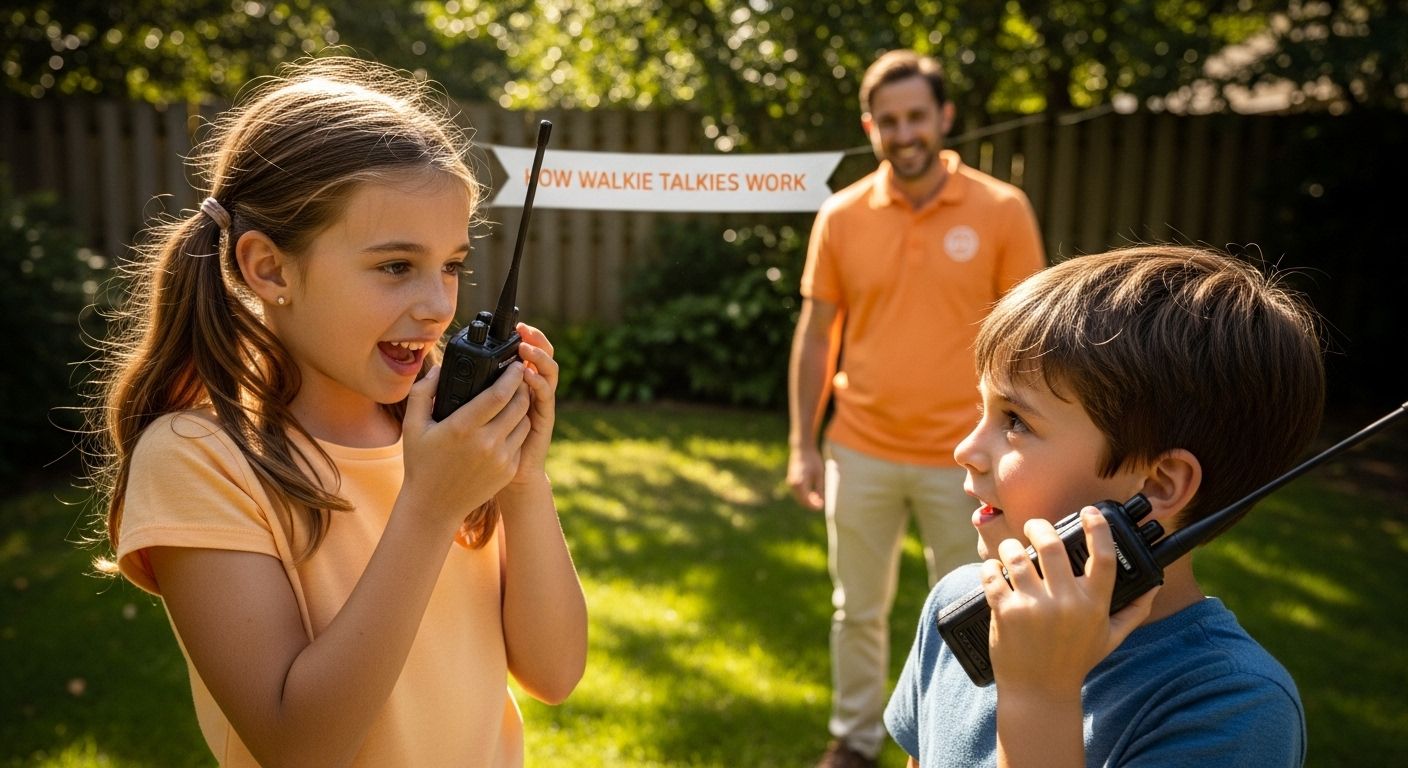
Imagine this. Professional settings like emergency services and construction sites depend on walkie talkies every day for rapid, reliable communication. Yet the magic of these portable radios is not just their use on the job. They turn childhood games and family outings into safe yet thrilling explorations, letting anyone experience the wonder of instant connection without the need for phones or the internet.
Table of Contents
- What Are Walkie Talkies And Their Uses?
- Why Walkie Talkies Matter For Families And Play
- The Science Behind Walkie Talkies: How They Communicate
- Key Components Of Walkie Talkies Explained
- Practical Applications Of Walkie Talkies In Everyday Life
Quick Summary
| Takeaway | Explanation |
|---|---|
| Walkie talkies enable instant communication | They allow wireless conversations without relying on mobile networks or the internet, making them versatile communication devices. |
| Ideal for family bonding activities | Families can use walkie talkies during outdoor activities, enhancing communication and creating shared experiences. |
| Promote learning through play | Children gain hands-on knowledge of communication technology, improving language and social skills in an interactive manner. |
| Critical for professional safety | Essential in various work environments, these devices ensure quick and reliable communication in construction, events, and emergencies. |
| Battery-powered and user-friendly | Walkie talkies are portable and easy to use, making them perfect for various situations, from outdoor adventures to professional settings. |
What Are Walkie Talkies and Their Uses?
Walkie talkies are portable, handheld communication devices that allow people to talk to each other wirelessly over short to medium distances. These fascinating gadgets work like miniature radio stations that you can carry in your hand, enabling instant communication without the need for mobile phone networks or internet connections.
The Basic Science Behind Walkie Talkies
At their core, walkie talkies operate using radio wave technology. They function as two-way radios that can both transmit and receive audio signals across specific frequency bands. When you press the talk button, your voice gets converted into radio waves that travel through the air, allowing another person with a matching walkie talkie to hear your message almost instantly.
According to SciStarter, these devices are incredibly versatile communication tools used across multiple settings. The fundamental mechanism involves:
- Converting sound waves into radio signals
- Transmitting these signals over a specific radio frequency
- Receiving and converting radio signals back into sound
Practical Uses for Kids and Families
Walkie talkies are not just communication devices but also exciting tools for adventure and learning. Children can use them during outdoor activities, camping trips, or backyard games to stay connected with family members. They provide a sense of independence while ensuring safety through constant communication.
Professional settings like emergency services, construction sites, and outdoor expedition teams rely heavily on walkie talkies. For kids, they offer an engaging way to understand basic communication technology and practice responsible communication skills. By using walkie talkies, children learn about radio waves, signal transmission, and the importance of clear, concise communication.
The magic of walkie talkies lies in their simplicity and ability to bridge distances instantly, making them a fascinating tool for both play and practical communication.
Why Walkie Talkies Matter for Families and Play
Walkie talkies are more than just communication devices they are powerful tools for family bonding, learning, and creating memorable experiences. These portable gadgets transform ordinary moments into exciting adventures, encouraging children to explore, communicate, and develop crucial life skills through interactive play.
Enhancing Family Communication and Connection
In an era dominated by digital screens, walkie talkies offer a refreshing and engaging way for families to interact. They provide a unique platform for parents and children to communicate during outdoor activities, camping trips, or simple backyard games. Unlike smartphones, walkie talkies promote direct, immediate communication without the distractions of notifications, social media, or internet browsing.
According to UNICEF, engaging in communication activities with children helps develop essential skills such as:
- Language development
- Thinking and planning abilities
- Decision-making skills
- Social interaction capabilities
Learning Through Play and Technology
Walkie talkies introduce children to basic communication technologies in a fun and interactive manner. By using these devices, kids learn about radio waves, signal transmission, and the principles of wireless communication. They understand technical concepts through hands-on experience, transforming learning from a theoretical exercise into an exciting, practical adventure.
The devices also teach children important communication etiquette, such as taking turns speaking, using clear and concise language, and respecting communication protocols. These skills are transferable to many real-world scenarios, helping children develop confidence and effective communication strategies.
Moreover, walkie talkies encourage outdoor play and physical activity. They motivate children to move, explore, and engage with their environment, supporting holistic development and creating opportunities for family members to spend quality time together away from digital distractions.
The Science Behind Walkie Talkies: How They Communicate
Walkie talkies represent a fascinating example of wireless communication technology, transforming human speech into invisible radio waves that travel through the air. These remarkable devices leverage fundamental principles of electromagnetic communication to enable instant, portable conversations across distances.
The Basics of Radio Wave Transmission
At the heart of walkie talkie communication is radio wave technology. When someone speaks into a walkie talkie, the device converts sound waves into electrical signals. These electrical signals are then transformed into radio waves of specific frequencies, which can travel through the air at the speed of light, carrying the audio information from one device to another.
According to GPS.gov STEM Curriculum, radio wave communication involves several critical steps:
- Converting sound into electrical signals
- Modulating these signals onto a specific radio frequency
- Transmitting the encoded signals through the air
- Receiving and decoding signals at the destination device
Understanding Frequency and Range
Walkie talkies operate on specific radio frequency bands, typically within the Very High Frequency (VHF) or Ultra High Frequency (UHF) ranges. The chosen frequency determines how far the signal can travel and how well it penetrates obstacles like walls or trees. Lower frequencies generally travel further and penetrate obstacles more effectively, while higher frequencies offer clearer audio but shorter transmission distances.
The push-to-talk mechanism is another crucial aspect of walkie talkie communication. When a user presses the talk button, the device switches from receiving to transmitting mode, allowing them to send a message. This simple yet ingenious design ensures that only one person can speak at a time, mimicking the natural turn-taking of human conversation.
Understanding the science behind walkie talkies reveals how simple electronic components can create powerful communication tools that connect people across physical spaces.
Key Components of Walkie Talkies Explained
Walkie talkies might seem simple from the outside, but they contain a complex network of electronic components working together to enable wireless communication. Understanding these key parts helps demystify how these fascinating devices transform human speech into radio signals and back again.
The Essential Electronic Architecture
Every walkie talkie comprises several critical components that work in harmony to send and receive messages.
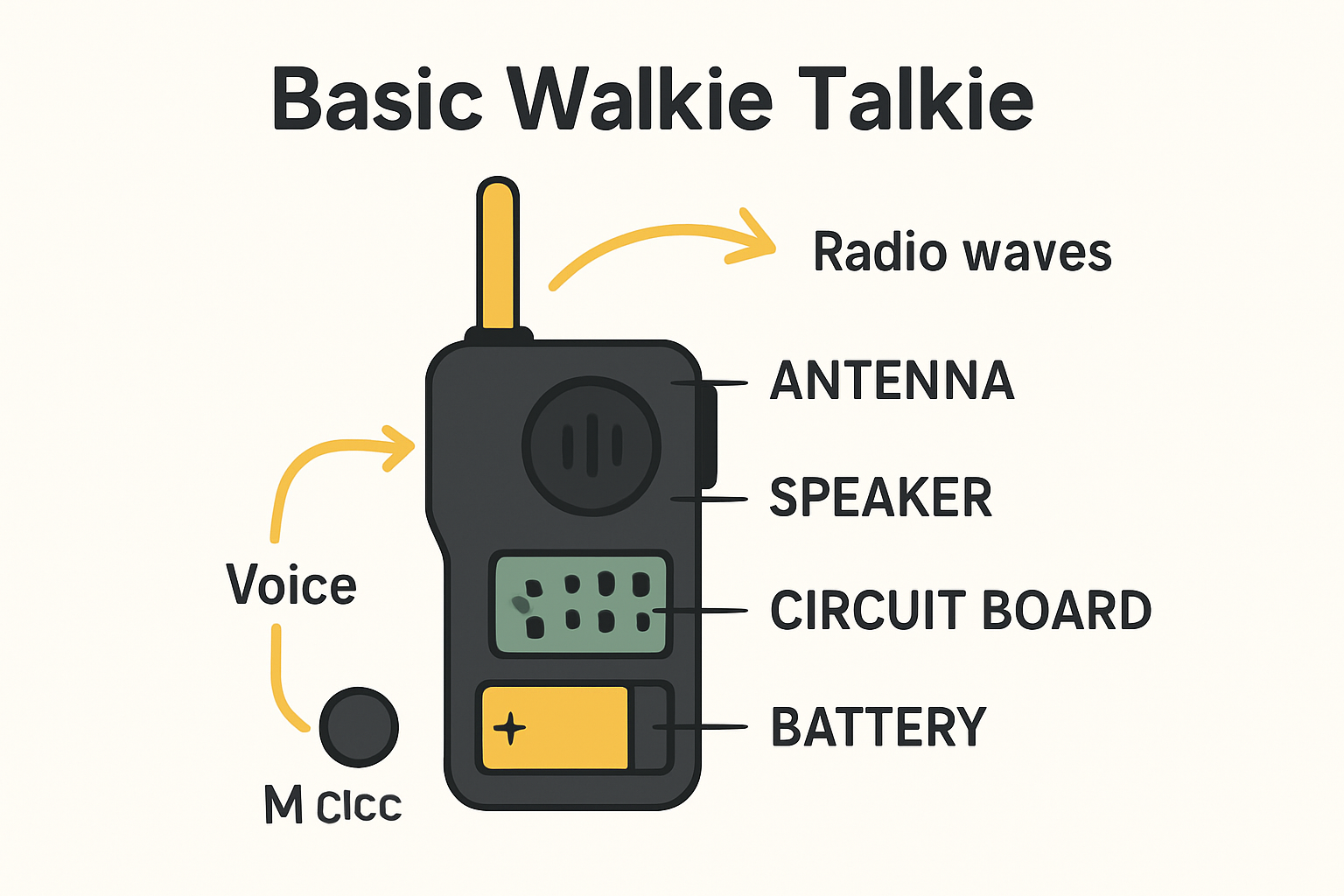
The core elements include the microphone, speaker, antenna, circuit board, and battery. Each component plays a unique and essential role in the communication process, transforming sound waves into electrical signals and then into radio waves.
According to Global Security Technical Resources, the primary components function as follows:
- Microphone: Converts sound waves into electrical signals
- Antenna: Transmits and receives radio waves
- Circuit Board: Processes and modulates signals
- Speaker: Transforms received radio signals back into sound
- Battery: Provides electrical power to all components
Signal Processing and Transmission Mechanics
The circuit board serves as the brain of the walkie talkie, managing signal processing with remarkable efficiency. When you press the talk button, the microphone captures your voice and converts it into electrical signals. These signals are then amplified and modulated onto a specific radio frequency by the circuit board, allowing transmission through the antenna.
The push-to-talk mechanism is a clever design that switches the device between receiving and transmitting modes. This ensures that only one person can communicate at a time, mimicking the turn-based nature of face-to-face conversations. The antenna plays a crucial role in this process, acting as both a sender and receiver of radio waves.
Batteries provide the essential electrical energy that powers all these intricate processes, enabling portable communication across various distances and environments. Modern walkie talkies use rechargeable batteries, making them more environmentally friendly and cost-effective for families and adventurers.
Practical Applications of Walkie Talkies in Everyday Life
Walkie talkies are versatile communication tools that extend far beyond simple play, finding significant utility in numerous real-world scenarios.
Here is a comparison table summarising the typical uses and benefits of walkie talkies for families and professionals, making it easier to distinguish between recreational and work-related applications.
| Use Case | Who Uses Them | Main Benefits |
|---|---|---|
| Outdoor Family Adventures | Families/Children | Safe, instant communication, independence, easy use |
| Camping/Hiking | Families/Groups | Works without mobile network, improves coordination |
| Construction Sites | Professionals | Reliable communication in loud/large environments |
| Emergency Services | Professionals | Rapid, dependable communication, ensures safety |
| Event Management | Professionals | Easy team coordination, immediate updates |
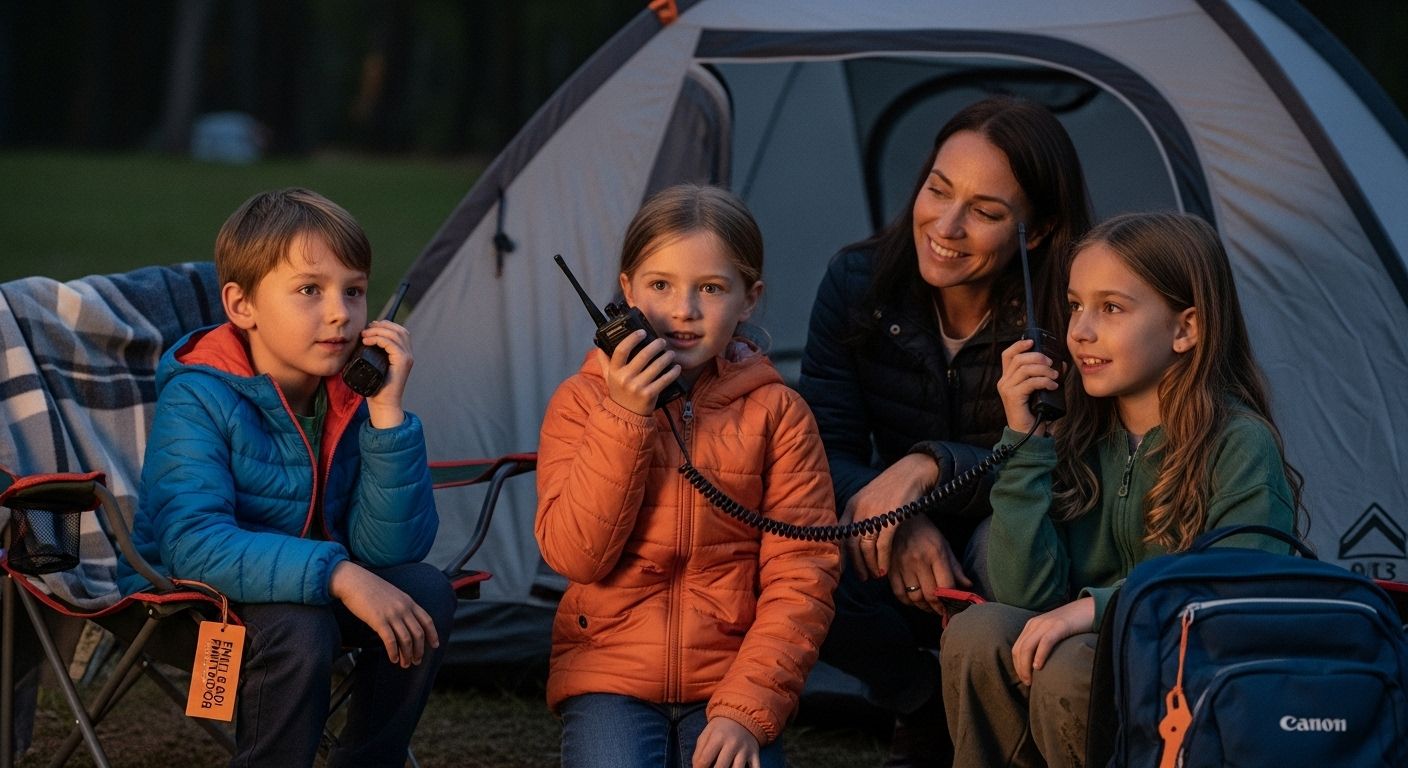
These compact devices offer immediate, reliable communication across various settings, making them invaluable for families, professionals, and emergency responders.
Family and Outdoor Adventures
For families engaging in outdoor activities, walkie talkies provide a practical communication solution. During camping trips, hiking expeditions, or theme park visits, these devices enable parents to maintain contact with children without relying on mobile networks. They are especially useful in areas with limited cellular coverage, ensuring safety and coordination during group activities.
According to the Institute for Childhood Preparedness, walkie talkies offer several key advantages in group settings:
- Instant communication across distances
- No dependency on cellular networks
- Battery-powered reliability
- Simple, user-friendly operation
- Robust design for outdoor environments
Professional and Safety Applications
Beyond recreational use, walkie talkies are critical tools in professional environments. Construction sites, event management teams, security personnel, and emergency services rely on these devices for quick, direct communication. In educational settings, staff can use walkie talkies to coordinate activities, respond to emergencies, and maintain a safe environment.
The push-to-talk functionality makes walkie talkies particularly effective in scenarios requiring immediate, clear communication. Their durability, long battery life, and ability to function in challenging environments make them superior to smartphone communication in many professional contexts.
Whether used for family adventures, professional coordination, or emergency preparedness, walkie talkies remain a reliable, versatile communication tool that bridges distances and ensures immediate connection when it matters most.
Turn Every Walkie Talkie Lesson into a Real-World Nature Adventure
Understanding the science behind walkie talkies is only the beginning. Many families struggle to find engaging ways for their children to discover both communication skills and a genuine connection with nature. This article explores how wireless technology inspires learning and encourages outdoor play, but turning those lessons into action can be a challenge. Children are naturally curious, and when given the right tools such as animal-themed devices, they can nurture both their love of discovery and care for the planet.
Let your child experience hands-on learning and foster respect for the world around them today. With The Zoofamily, you can find not only high-quality kids’ walkie talkies designed to spark imagination, but also thoughtful toys that support environmental efforts. For every camera sold, we plant one tree, making each purchase a step towards restoring natural beauty. Give your family the gift of creative exploration and join us in building a better future. Visit our main site now and see how magical learning can be.
Frequently Asked Questions
What are the main components of a walkie talkie?
A walkie talkie typically includes a microphone to capture sound, a speaker to transmit audio, an antenna for sending and receiving radio waves, a circuit board for signal processing, and a battery for power.
How do walkie talkies transmit communication?
Walkie talkies convert sound waves into electrical signals, which are then modulated into radio waves of specific frequencies. These waves travel through the air, allowing two devices to communicate instantly.
What are some fun ways for kids to use walkie talkies?
Kids can use walkie talkies during outdoor adventures, such as camping trips or backyard games, to stay in touch with family members. They can also play games that involve communication, encouraging teamwork and social skills.
How can walkie talkies enhance communication skills for children?
Using walkie talkies teaches children about turn-taking in conversation, clear communication, and listening skills. It also introduces basic principles of radio technology in a fun and engaging way.
Recommended
-
[ Zoo Walkie Talkie - Unicorn x Fox
– The Zoofamily](https://thezoofamily.com/en/products/walki-talki-fox-unicorn)
-
[ Zoo Walkie Talkie - Unicorn x Unicorn
– The Zoofamily](https://thezoofamily.com/en/products/walki-talki-unicorns)
-
[ Zoo Walkie Talkie - Fox x Fox
– The Zoofamily -
[ Zoo Walkie Talkie - Rabbit x Bear
– The Zoofamily](https://thezoofamily.com/en/products/walkie-talkie-set-rabbit-bear)