

Over 80 percent of british parents say their children spend less time outdoors today than they did as kids. With screen time rising and structured routines dominating daily life, the chance for authentic sensory exploration is slipping away. Understanding how sensory play in nature sparks learning, imagination, and emotional growth reveals practical ways to nurture childhood wonder beyond indoor walls.
Table of Contents
- Defining Sensory Play In Nature
- Types Of Sensory Activities Outdoors
- Developmental Benefits For Children
- Safety, Supervision And Environmental Care
- Encouraging Nature Play At Home
Key Takeaways
| Point | Details |
|---|---|
| Engagement of Senses | Sensory play in nature engages children’s five senses, facilitating immersive learning through exploration of natural environments. |
| Developmental Growth | Outdoor sensory activities promote cognitive and motor skill development, enhancing children’s understanding of ecological systems. |
| Safety and Supervision | Careful supervision and clear safety guidelines are essential to ensure a safe and enriching sensory play experience for children. |
| Encouraging Exploration | Creating sensory-rich environments at home and outdoors fosters curiosity and a deeper connection with nature for children. |
Defining Sensory Play in Nature
Sensory play describes an immersive learning approach that engages children’s five primary senses through direct interaction with natural environments. These unstructured interactions with natural elements enable young learners to explore, discover, and understand their surroundings through tactile, visual, auditory, and olfactory experiences.
When children participate in sensory play outdoors, they encounter a rich tapestry of stimuli that traditional indoor settings cannot replicate. Imagine a child feeling rough tree bark, listening to rustling leaves, watching a ladybird crawl across a stone, or smelling fresh grass after rainfall. Such experiences stimulate neural pathways, encouraging cognitive development and sensory integration far beyond conventional learning methods.
The fundamental principle of sensory play in nature centres on providing open-ended, child-led exploration. Different sensory activities stimulate multiple developmental domains, including fine motor skills, spatial awareness, emotional regulation, and scientific curiosity. Children learn through direct experience, developing an intuitive understanding of natural systems by touching soil, observing insects, hearing bird calls, and engaging with the environment as an interactive classroom.
Here is a summary of how different senses are engaged during outdoor sensory play:
| Sense Engaged | Common Outdoor Experiences | Skills Developed |
|---|---|---|
| Touch | Feeling tree bark, moss, soil | Fine motor skills, tactile awareness |
| Hearing | Listening to birds, rustling leaves | Auditory discrimination, focus |
| Sight | Observing insects, cloud shapes | Visual tracking, observation |
| Smell | Scent of grass, flowers, earth | Sensory memory, emotional responses |
Pro Tip for Nature Exploration: Start small with sensory play by creating a simple ‘nature discovery bag’ containing safe items like smooth stones, interesting leaves, and soft feathers. Encourage your child to touch, examine, and discuss each item, transforming an ordinary walk into an extraordinary sensory learning adventure.
Types of Sensory Activities Outdoors
Nature exploration offers a remarkable range of sensory experiences that transform outdoor environments into dynamic learning landscapes for children. Engaging with natural water sources and creating outdoor obstacle courses provides immersive opportunities for multisensory development through hands-on interaction with the environment.
Tactile experiences form a cornerstone of outdoor sensory activities. Children can explore varied textures by touching smooth river stones, rough tree bark, soft moss, and damp soil. Barefoot walking on different ground surfaces like grass, sand, and pebbles stimulates nerve endings and provides rich sensory feedback, helping develop spatial awareness and balance.

Auditory and visual sensory play involves listening to natural soundscapes and observing wildlife movements. Activities like bird watching, identifying animal tracks, listening to wind rustling through leaves, and tracking insect movements engage children’s observation skills. These experiences help develop concentration, pattern recognition, and an intuitive understanding of ecological systems, transforming simple outdoor moments into profound learning opportunities.
Pro Tip for Sensory Exploration: Create a ‘sensory scavenger hunt’ by challenging your child to find and collect items with different textures, colours, and shapes during nature walks. Encourage them to describe their discoveries, turning exploration into an engaging, educational adventure.
Developmental Benefits for Children
Sensory play in nature offers profound developmental advantages that extend far beyond simple entertainment. Preschool children can experience biological phenomena firsthand, enhancing their understanding of living systems through direct, immersive interactions with the natural world. These experiences stimulate cognitive growth by encouraging children to observe, explore, and comprehend complex ecological relationships.
Motor skill development represents a critical benefit of outdoor sensory play. Children naturally engage their physical capabilities by navigating uneven terrain, climbing rocks, balancing on fallen logs, and manipulating natural objects. These activities challenge and refine gross and fine motor skills, improving coordination, spatial awareness, and muscular strength in ways that structured indoor environments cannot replicate.
Outdoor sensory activities support comprehensive child development by activating multiple sensory pathways simultaneously. By engaging touch, sight, hearing, and movement, children build neural connections that enhance cognitive processing, emotional regulation, and problem-solving abilities. Imaginative play emerges naturally as children interact with unpredictable natural environments, fostering creativity and adaptability.
Pro Tip for Developmental Growth: Design open-ended nature exploration experiences that allow your child to lead their own discovery process. Provide minimal guidance, encouraging independent exploration and letting curiosity drive their learning journey.
Safety, Supervision and Environmental Care
Ensuring child safety during outdoor sensory play requires a delicate balance between exploration and protection. Parents and caregivers must create an environment that allows children to engage with nature while maintaining careful supervision and understanding potential risks. Adapting outdoor activities to accommodate individual abilities becomes crucial, especially for children with diverse needs, ensuring inclusive and safe experiences for all children.
Prior to outdoor sensory play, comprehensive preparation is essential. This includes conducting a preliminary site assessment to identify potential hazards such as uneven terrain, poisonous plants, sharp objects, or dangerous wildlife. Parents should establish clear boundaries, teach children basic safety rules, and equip themselves with essential first-aid supplies. Appropriate clothing, sun protection, insect repellent, and hydration are critical components of a safe outdoor sensory experience.
Environmental care represents another fundamental aspect of responsible nature play. Children should be taught to respect natural habitats, follow ‘leave no trace’ principles, and understand the importance of preserving ecological systems. This involves gentle interaction with plants and creatures, avoiding damage to living organisms, and developing a sense of stewardship towards the natural world. Teaching children to observe without disrupting, to collect only photographs and memories, helps cultivate a sustainable approach to outdoor exploration.
Pro Tip for Safe Nature Play: Establish a family ‘nature code’ that outlines expectations for outdoor behaviour, including safety guidelines and environmental respect. Review and practice these rules together, transforming safety instructions into an engaging family ritual.
Encouraging Nature Play at Home
Creating sensory-rich environments at home transforms ordinary spaces into extraordinary learning opportunities for children. Parents can design indoor and outdoor areas that invite natural exploration, using simple materials like potted plants, rock collections, sensory bins filled with natural elements, and carefully curated spaces that stimulate curiosity and discovery.
Outdoor spaces present incredible potential for sensory play, even in small gardens or balconies. Parents can design dynamic outdoor challenges using natural materials such as creating mud kitchens, constructing miniature fairy gardens, establishing butterfly-friendly plant zones, or developing temporary nature exploration stations. These spaces encourage children to interact directly with natural elements, observe seasonal changes, and develop a profound connection with the living world around them.
Indoor nature play can be equally engaging by bringing natural elements inside. Consider creating dedicated sensory corners with collections of pinecones, smooth stones, interesting leaves, and seasonal botanical specimens. Nature journaling, pressed flower collections, and window herb gardens offer additional opportunities for children to explore, observe, and interact with natural materials, even when outdoor access is limited. These activities help children develop observational skills, scientific curiosity, and a deep appreciation for ecological systems.
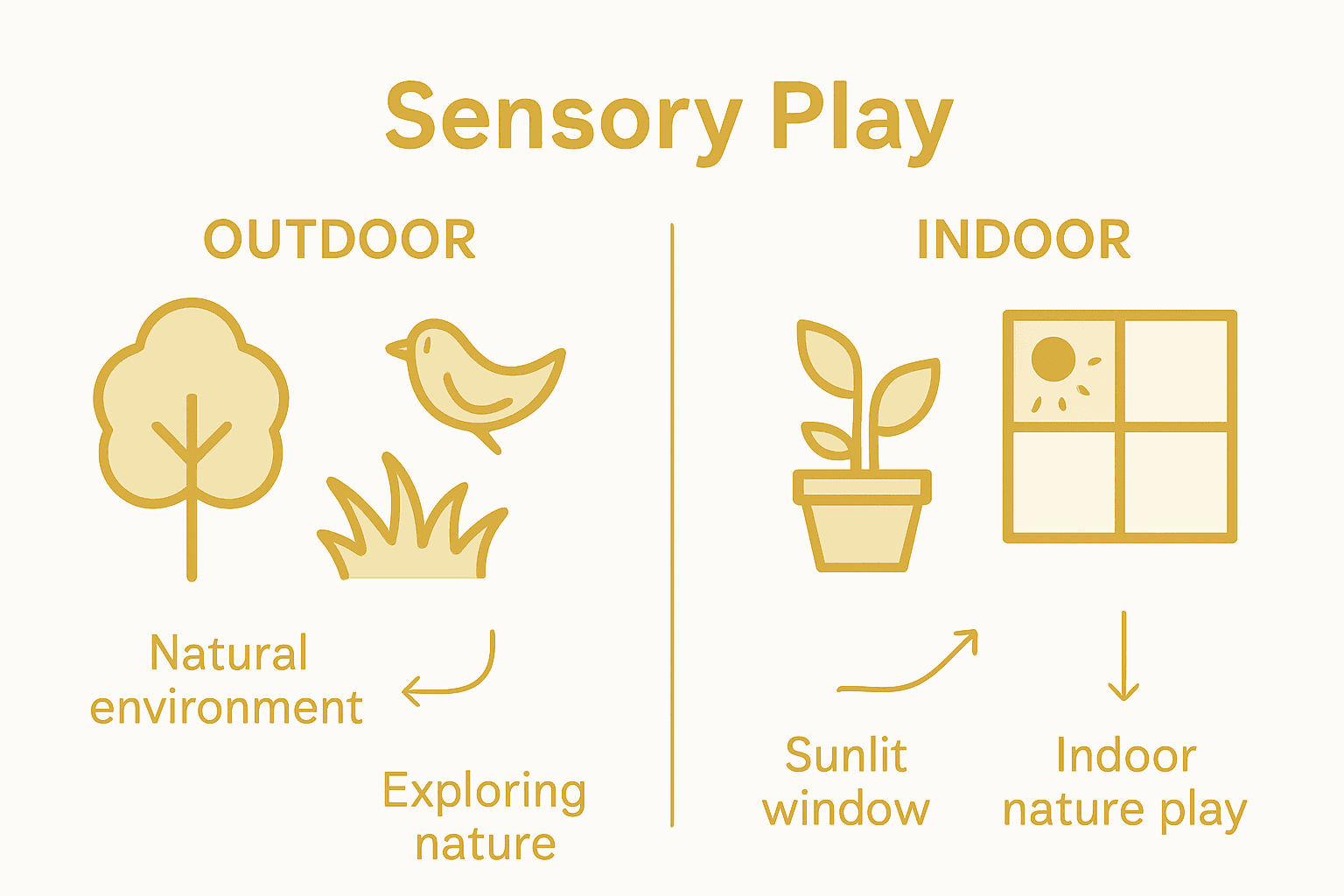
The following table compares indoor and outdoor sensory play environments:
| Environment Type | Unique Features | Example Activities |
|---|---|---|
| Outdoor | Natural stimuli, changing conditions | Mud kitchen, animal tracking |
| Indoor | Controlled, safe, year-round | Nature bins, pressed flowers |
Pro Tip for Home Nature Play: Establish a ‘nature discovery shelf’ where children can display and rotate their natural collections, encouraging ongoing exploration and creating a dedicated space that celebrates their outdoor discoveries.
Ignite Your Child’s Love for Nature with The Zoofamily
Sensory play in nature unlocks young minds by engaging their senses and promoting deep connection with the environment. Yet many parents face the challenge of sparking curiosity and providing tools that make outdoor exploration exciting and educational. If you want to encourage tactile, auditory, and visual discovery on nature adventures while nurturing motor skills and creativity, The Zoofamily offers a perfect solution. Our kids’ cameras, walkie-talkies, and binoculars are designed to seamlessly blend play with learning, helping children explore natural beauty up close and fostering a lifelong bond with the planet.
Discover how you can transform everyday nature walks into moments of wonder and growth. Each product sold supports reforestation efforts because we believe in restoring nature for future generations. Start cultivating your child’s sensory experiences with tools made for natural discovery. Visit The Zoofamily today and explore our range that inspires creativity and connection. Take the first step to enhance your child’s outdoor play and developmental journey now.
Frequently Asked Questions
What is sensory play in nature?
Sensory play in nature is an immersive learning approach that engages children’s five primary senses through direct interaction with natural environments, allowing them to explore and understand their surroundings through tactile, visual, auditory, and olfactory experiences.
How does outdoor sensory play benefit child development?
Outdoor sensory play stimulates cognitive growth, enhances motor skills, and fosters emotional regulation. It encourages children to engage with their environment, helping them develop spatial awareness, fine motor abilities, and problem-solving skills through hands-on interactions with nature.
What types of sensory activities can children do outdoors?
Children can participate in a variety of activities including tactile exploration of different natural textures, auditory experiences like listening to birds and rustling leaves, visual observation of wildlife, and olfactory engagement with scents like grass and flowers. These activities promote multisensory development.
How can parents encourage sensory play at home?
Parents can create sensory-rich environments at home by setting up nature discovery shelves, sensory bins filled with natural elements, or indoor nature corners. Outdoor spaces can be transformed into areas for mud kitchens or butterfly gardens to encourage direct interaction with nature.
Recommended
- Understanding the Benefits of Imaginative Play – The Zoofamily
- Childhood Brain Development: A Guide for Modern European Mums – The Zoofamily
- 7 Astuces pour explorer la nature et decouvertes montessori – The Zoofamily
- Making Learning Fun: Engaging Activities for Your Kids – The Zoofamily
- What Is Gaming Culture and Why It Matters Today – Moonlight Dreams