

Recording family adventures is the practice of capturing and preserving memories from outdoor activities and experiences through photos, videos, and storytelling. Most families lose these memories within two generations unless they record them intentionally. The good news is that you do not need professional equipment or hours of spare time. Simple tools, the “10-Minute Rule,” and a few consistent habits are enough to build a lasting archive your children will treasure for life.
What does recording family adventures actually involve?
Recording family adventures means more than pointing a camera at your children and pressing a button. It is the deliberate combination of photography, short video clips, voice memos, and storytelling that together create a full picture of your family’s outdoor life. The process works best when it feels natural rather than forced.
Most family stories disappear within two generations unless someone records them on purpose. A single 15-minute recorded conversation about a shared memory can preserve tone, laughter, and detail that no photograph captures alone. That is the real value of documenting family trips: you are not just saving images, you are saving the feeling of being there.
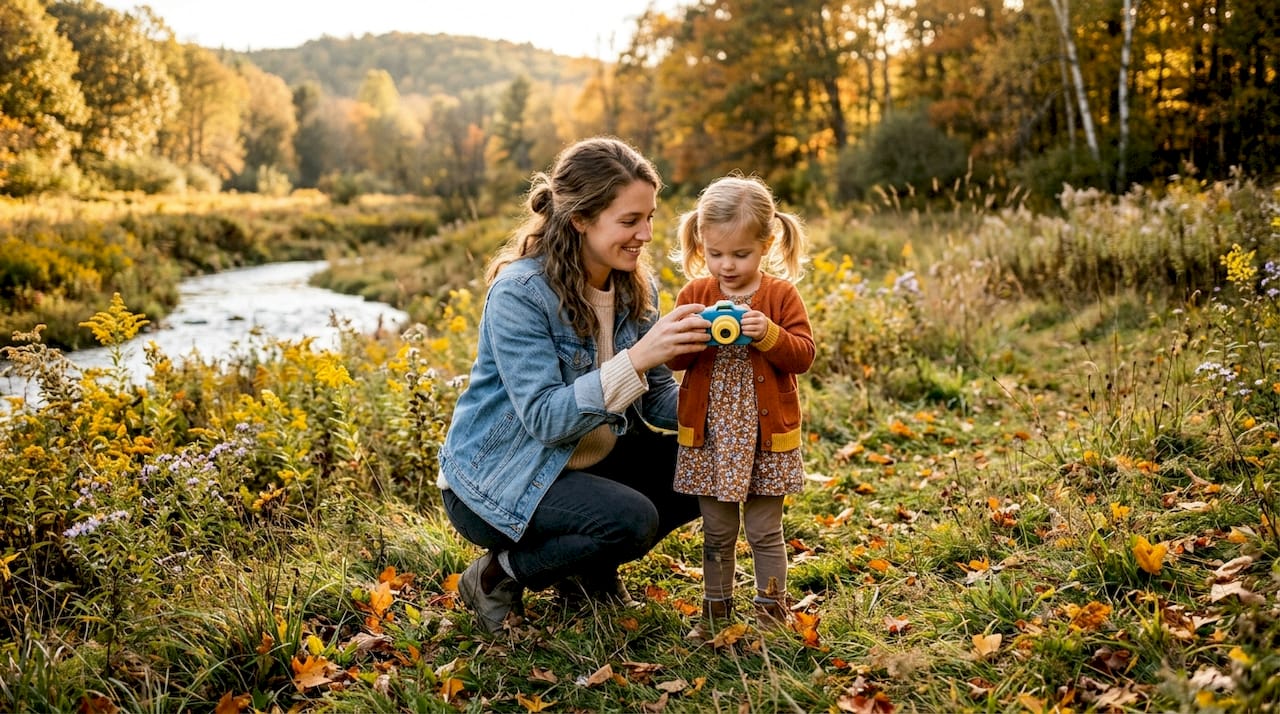
Family adventure photography, as professionals define it, focuses on natural interaction and storytelling in outdoor settings rather than stiff, posed portraits. The same principle applies when you do it yourself. Authenticity beats perfection every time.
What equipment do you need to get started?
The best gear for capturing family memories is the gear you already carry. Smartphones provide sufficient quality for spontaneous moments, and compact cameras add versatility without bulk. Parents who wait for the “right” camera miss the moments happening right now.
Devices worth having
- A smartphone with a reliable camera app
- A compact, child-friendly camera for older children to use themselves
- A pair of binoculars for spotting wildlife (doubles as a reason to stop and observe)
- A small waterproof case or clip for hiking and water activities
Storage and organisation from day one
Scattered storage is one of the main causes of lost family memories. Choose a single cloud service, whether that is Google Photos, iCloud, or Amazon Photos, and stick to it. Name your folders consistently using the format “Month Year, Family Name” so that every file is retrievable in seconds. Set your phone to back up automatically so nothing slips through the gaps.
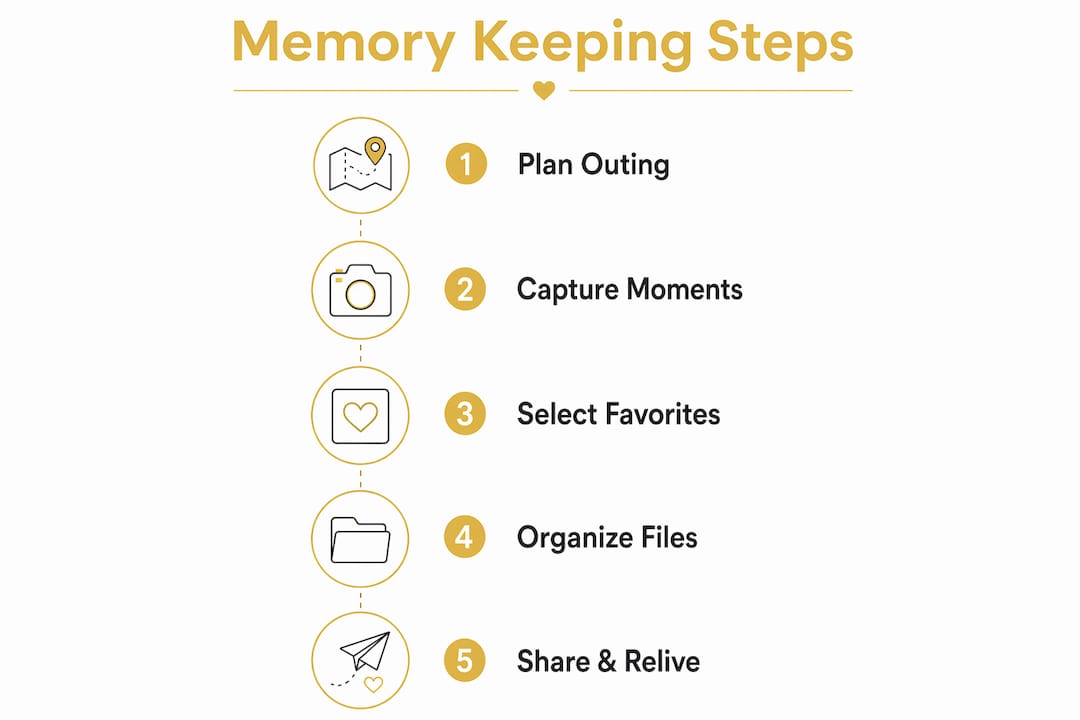
Pro Tip: Create a dedicated folder on your phone called “Keepers” and move your favourite shots there immediately after each outing. This takes 60 seconds and saves hours of sorting later.
A simple workflow prevents data overload. After each adventure, spend five minutes deleting obvious duplicates before you upload. That single habit keeps your archive clean and usable from the start.
How do you capture genuine moments during an outing?
The most cherished images come from in-between, unposed moments rather than staged group shots. Children do not need to behave perfectly for a photo to be meaningful. A muddy boot, a shared snack, or a child peering through binoculars tells a richer story than a forced smile at a viewpoint.
The 10-Minute Rule in practice
The “10-Minute Rule” is a daily documentation habit: spend just 10 minutes after an adventure writing a short note, selecting your best photos, or recording a voice memo. Monthly photo dumps prevent thousands of random images from piling up, and the 10-minute habit keeps the process from feeling like a chore. Applied consistently, it builds a detailed family archive without burnout.
Step-by-step approach for each outing
- Before you leave: Set an intention. Decide on one or two moments you want to capture, such as the children’s first reaction to a new place or a wildlife sighting.
- During the adventure: Shoot candidly. Follow your children rather than directing them. Capture the details: hands, feet, expressions, and the landscape around them.
- Short video clips: Record 15–30 second clips of key moments rather than long, unwatched videos. These are far easier to edit into highlight reels later.
- Voice memos: Record a 2-minute voice note on the drive home while memories are fresh. Children love contributing their own version of events.
- After the adventure: Apply the 10-Minute Rule. Select your best shots, delete the rest, and add a brief caption or note to your favourites.
Involving children in the process pays dividends beyond memory-keeping. Children involved in reflective activities like documenting adventures show improved memory retention and communication skills. Handing a child-friendly camera to your seven-year-old and asking them to document “what they found most interesting” produces photos you would never think to take yourself. Thezoofamily designs its kids’ cameras specifically for this kind of independent, nature-led exploration.
Pro Tip: Try a photography scavenger hunt on your next outing. Give each child a list of things to photograph, such as something red, something tiny, or something that moves. The results are always surprising and genuinely personal.
Building micro-routines of 5–10 minutes around storytelling or short clips makes the whole process sustainable. Families who try to document everything end up documenting nothing. Keep it small, keep it regular.
How do you organise your archive without getting overwhelmed?
Effective memory-keeping relies on curation, not quantity. 15–25 photos suffice for a weekend trip, and 40–60 cover a longer holiday without overwhelming your archive. That number tells a complete story. More than that, and the meaningful shots get buried.
A monthly maintenance routine that works
- At the end of each month, run a “photo dump” session of no more than 20 minutes.
- Delete duplicates and blurry shots first.
- Move your best images into the correctly named folder.
- Add a short text note to the folder describing the month’s highlights.
- Back everything up to your chosen cloud service before closing.
Batching editing and maintenance into short, regular sessions prevents the archive from becoming unmanageable. One 20-minute session per month beats a six-hour annual panic every time.
Naming conventions that save time
| Folder name format | Example | Why it works |
|---|---|---|
| Month Year, Trip Name | “July 2026, Lake District” | Instantly searchable by date and location |
| Month Year, Family Name | “August 2026, Smith Family” | Works for general monthly dumps |
| Year, Event | “2026, Summer Camping” | Useful for annual highlight collections |
Using a central cloud storage system with consistent naming conventions prevents data loss and makes your archive retrievable when you actually want to use it. Scattered storage across multiple devices and apps is the single biggest reason families lose their memories.
What are the best ways to share and relive your memories?
Capturing family memories is only half the work. Sharing and revisiting them is what makes the effort worthwhile. Families who build regular rituals around their archives get far more value from the time they invest in documentation.
Physical photo albums remain one of the most powerful formats for family adventure photography. A printed album from a single year’s adventures sits on a shelf, gets picked up, and sparks conversations that a digital folder never does. Services like Artifact Uprising and Chatbooks turn your phone photos into printed books with minimal effort.
Digital options work well for extended family. A shared album on Google Photos or iCloud lets grandparents follow along in real time without you needing to send individual messages. Set up a shared album once and add to it after every outing.
- Compile your 15–30 second video clips into a yearly highlight reel using a free editing app. A 3–5 minute video set to a favourite family song becomes a tradition children ask to watch every year.
- Create a private family travel blog or digital journal using a platform like Day One or Notion. Write one paragraph per adventure and attach your best three photos. Over five years, this becomes an extraordinary record.
- Integrate storytelling into mealtimes. Ask each family member to share their favourite moment from the last outing. Documenting family life as a lifestyle habit, woven into existing routines like dinner conversation, keeps it sustainable and genuinely enjoyable.
Pro Tip: Involve children in choosing the photos for the annual album. Letting them pick their own favourites gives you an honest window into what they actually valued about each adventure, which is often not what you expect.
For families who want to go further, creative photo challenges during nature outings give children a sense of ownership over the family’s visual story. When children feel like contributors rather than subjects, they engage more deeply with the memories themselves.
Key takeaways
Consistent, simple habits produce a richer family archive than any expensive camera or elaborate system ever will.
| Point | Details |
|---|---|
| Use what you have | Smartphones capture authentic moments as well as professional cameras for everyday adventures. |
| Apply the 10-Minute Rule | Spend 10 minutes after each outing selecting photos and adding a short note to prevent backlog. |
| Curate, do not hoard | Limit yourself to 15–25 photos for a weekend trip and 40–60 for a longer holiday. |
| Name folders consistently | Use “Month Year, Trip Name” so every file is searchable and retrievable in seconds. |
| Involve your children | Giving children a camera or a documentation role improves their memory retention and engagement. |
Why I stopped trying to capture everything
The biggest mistake I see families make is treating every outing like a film shoot. They spend so much time framing the perfect shot that they miss the moment itself. I have done it myself: standing at the edge of a waterfall with my phone raised while my children were already splashing in the shallows without me.
What changed my approach was accepting that authentic photos happen during in-between moments. The shot of my daughter examining a beetle on a log, taken without her knowing, is worth more than any posed family portrait. Imperfect moments are not failures. They are the actual story.
The other shift was giving my children their own cameras. Thezoofamily’s kids’ cameras are built for exactly this: durable, nature-themed, and sized for small hands. When children document their own perspective, you end up with a record of the adventure that no adult would ever think to create. That is the archive worth keeping.
Memory-keeping should feel like a gift you give your future self, not a task you dread. Keep the system small, keep it honest, and let the imperfect moments in.
— ALAIN
Gear and inspiration from Thezoofamily
Families who want to make memory-keeping a genuine habit need tools that work for children, not just adults.
Thezoofamily designs kids’ cameras, binoculars, and walkie-talkies with nature exploration at their core. Every camera sold plants one tree, so your family’s adventures contribute to restoring the natural world your children are learning to love. Whether you are looking for a first camera for a young explorer or photography tips for children to spark creativity outdoors, Thezoofamily has the resources and the gear to support you. Visit thezoofamily.com to find the right tools for your family’s next adventure.
FAQ
What is the easiest way to start recording family adventures?
Start with your smartphone and the 10-Minute Rule: spend 10 minutes after each outing selecting your best photos and writing a short note. This single habit prevents backlog and keeps your archive manageable from day one.
How many photos should I keep from a family trip?
15–25 photos tell a complete story for a weekend trip, and 40–60 suffice for a longer holiday. Keeping fewer, better images prevents your archive from becoming overwhelming and makes your memories easier to revisit.
Do children benefit from being involved in documenting adventures?
Children involved in reflective activities like documenting adventures show improved memory retention and communication skills. Giving them a camera or asking them to contribute voice memos makes the process more engaging for the whole family.
What is the best way to organise family photos long-term?
Use a single cloud storage service and name every folder using the format “Month Year, Trip Name.” Run a short monthly curation session to delete duplicates and move your best shots into the correct folder before the backlog grows.
How do I share family adventure memories with extended family?
Set up a shared album on Google Photos or iCloud and add to it after every outing. This lets grandparents and extended family follow along without requiring individual messages or file transfers.