

What is play-based learning and why does it matter?
Play-based learning is a child-centred approach where play is the primary way children explore, discover, and build skills. It is voluntary, interactive, and driven by the child’s own curiosity.
Article 31 of the United Nations Convention on the Rights of the Child recognises play as a fundamental right. The UN reinforced this in 2024 by designating 11 June as the annual International Day of Play. In the UK, the State of Play interim report (2025) states that play-based learning should be a policy priority to help overcome social and educational barriers.
Key reasons play-based learning matters:
- Builds confidence, resilience, and social skills through low-stakes interaction
- Supports language development, memory, and creative thinking
- Helps children regulate emotions and develop empathy
- Prepares children for school, work, and community life
- Connects children to the natural world through outdoor exploration
At Thezoofamily, this connection to nature sits at the heart of everything. Products like kids’ cameras and binoculars are designed to spark curiosity outdoors and build a genuine relationship between children and their environment.
Table of Contents
- How play supports cognitive and socio-emotional development
- Educational approaches that favour play-based learning
- How you can support play-based learning at home
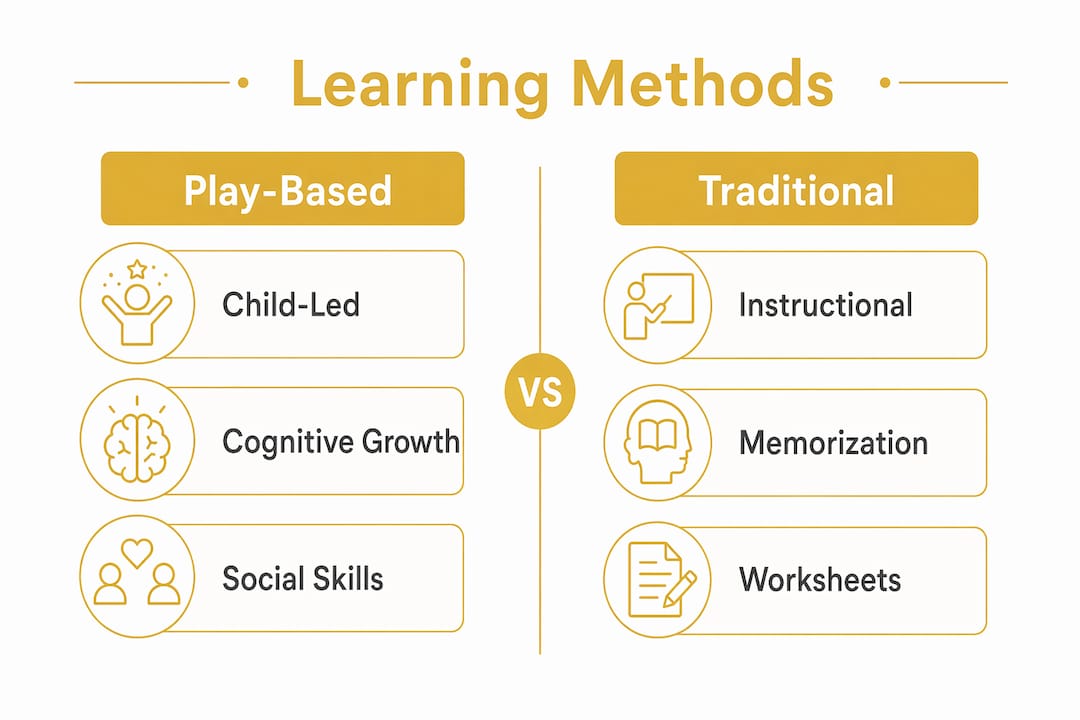
- Play-based learning versus traditional learning methods
- Key takeaways
How play supports cognitive and socio-emotional development
Play directly stimulates the prefrontal cortex and promotes production of proteins essential for neuron growth and synaptic connections. Play deprivation has the opposite effect, negatively impacting brain development and problem-solving ability.
Beyond brain development, play builds the social and emotional skills children carry into adult life. Research from UCL confirms that play-based interactions with peers, siblings, and caregivers have strong positive associations with emotional resilience and social competence. Simply providing toys is not enough. It is the quality of interaction during play that drives development.
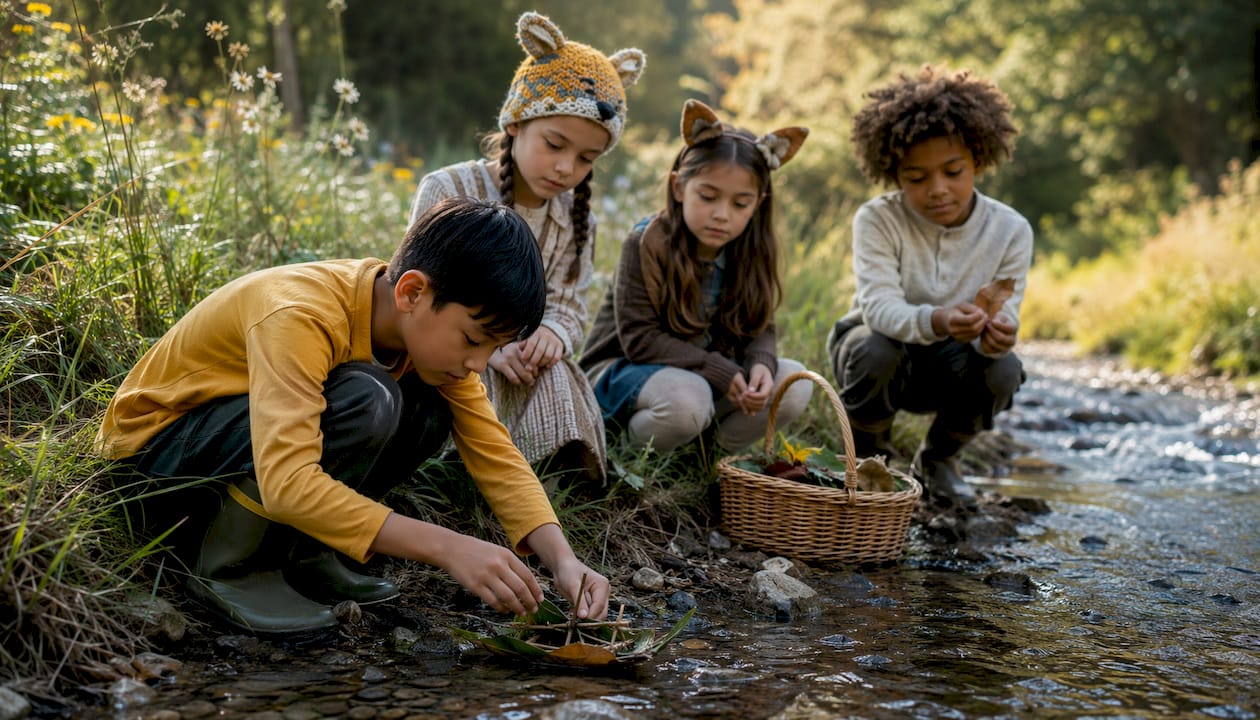
Creative outdoor play adds another layer. Exploring nature through animal-themed play builds environmental awareness and encourages children to observe, question, and care for the world around them.
Educational approaches that favour play-based learning
Several well-established approaches place play at the centre of learning:
- Montessori education uses child-directed activity and hands-on materials to build independence and concentration.
- Reggio Emilia treats children as capable learners who construct knowledge through exploration and collaboration.
- Inquiry-based learning encourages children to ask questions and investigate, with the teacher guiding rather than directing.
- Guided play sits between free play and direct instruction. Research from IES confirms that for children under eight, guided play outperforms direct instruction for teaching academic content.
The most effective approach combines brief periods of direct instruction within a play-rich environment, particularly for skills like phonics and number recognition.
How you can support play-based learning at home
You do not need a classroom to make play meaningful. These practical steps work at home and outdoors:
- Follow your child’s lead. Let them choose the activity. Child-directed play builds confidence and self-regulation.
- Ask open-ended questions. “What do you think happens next?” encourages thinking without directing the answer.
- Go outside regularly. Nature play builds eco-awareness in children and supports physical development.
- Join in. Caregiver participation during play enriches learning beyond what toys alone can provide.
- Allow boredom. Unstructured time develops planning, flexibility, and creativity.
Play-based learning versus traditional learning methods
Traditional instruction focuses on direct teaching, rote memorisation, and worksheets. Play-based learning is child-led, active, and social. Research shows that joyful learning environments support wellbeing and multi-dimensional growth in ways that heavily academic approaches do not.
Play produces deeper understanding, better recall, and skills that transfer to new situations. Traditional methods can be effective for specific content areas, but a balance with play-based approaches gives children the best outcomes overall.
Key takeaways
Play-based learning builds cognitive, social, and emotional skills that direct instruction alone cannot replicate, making it a priority for children’s development from birth through the early school years.
| Point | Details |
|---|---|
| Play is a child’s right | Article 31 of the UN Convention on the Rights of the Child recognises play as fundamental. |
| Brain development depends on play | Play stimulates the prefrontal cortex and supports neuron growth; deprivation harms development. |
| Guided play beats direct instruction | For children under eight, guided play is more effective than direct instruction for academic content. |
| Caregiver involvement matters | Quality interaction during play drives development more than the toys themselves. |
| Outdoor play builds nature connection | Creative outdoor play fosters environmental awareness and supports physical and cognitive growth. |