

Every family faces the challenge of balancing festive fun with caring for the planet, especially when raising children in busy European cities. Adopting sustainable holiday traditions gives you a chance to reconnect with what matters most while teaching your children to value creativity and environmental responsibility over excess. Discover simple yet meaningful ways to celebrate that nurture your children’s imagination and respect nature, turning every holiday into a memorable, planet-friendly experience.
Table of Contents
- Defining Sustainable Holiday Traditions For Families
- Types Of Eco-Friendly Family Celebrations
- Engaging Children In Nature-Focused Festivities
- Creative Seasonal Crafts With Minimal Waste
- Common Mistakes To Avoid In Green Holidays
Key Takeaways
| Point | Details |
|---|---|
| Emphasise Meaningful Experiences | Sustainable holiday traditions prioritise relationships and creativity over material goods, fostering lasting memories. |
| Adopt Mindful Consumption | Question purchases and favour quality, locally sourced, and seasonal items to reduce environmental impact. |
| Encourage Family Participation | Engage children in sustainable practices like making decorations or wrapping gifts to instil values of resourcefulness and care for the planet. |
| Plan Ahead for Sustainability | Sustainable celebrations require thoughtful preparation throughout the year to minimise last-minute waste and stress. |
Defining Sustainable Holiday Traditions for Families
Sustainable holiday traditions are fundamentally different from the consumer-driven celebrations many of us grew up with. Rather than measuring success by the size of the gift pile or the elaborateness of decorations, they centre on creating meaningful moments that align with your environmental values. Thoughtful festive practices that minimise environmental impact whilst maximising genuine connection are what truly make holidays memorable for children. Your family’s sustainability approach isn’t about deprivation or missed joy. Instead, it’s about redirecting that energy toward experiences, relationships, and creative endeavours that stick with your children far longer than any plastic toy ever would.
What makes these traditions distinctly sustainable involves several interconnected elements. First, there’s mindful consumption, which means questioning every purchase before it enters your home. This doesn’t mean buying nothing. It means being intentional: choosing quality items that last, selecting gifts that encourage creativity or outdoor exploration, and favouring experiences over things. Second, sustainable traditions embrace local and seasonal food choices. Rather than importing exotic ingredients or buying heavily packaged convenience foods, you work with what grows near you during the season. A festive meal built around locally sourced ingredients teaches children where food originates whilst supporting your community. Third, DIY decorations from natural or recycled materials replace the single-use plastic garlands and mass-produced ornaments cluttering shop shelves. Think hand-painted wooden decorations you use year after year, paper snowflakes your children craft, or foraged branches decorated with dried fruit and ribbon. This approach transforms decoration-making into quality time with your children whilst creating heirlooms they’ll actually treasure.
Families shape sustainability by adapting traditions in ways that strengthen both environmental responsibility and intergenerational bonds. When your children participate in wrapping gifts with newspaper or fabric scraps instead of virgin wrapping paper, composting food scraps rather than binning them, or making decorations from materials already in your home, they absorb powerful lessons about resourcefulness and respect for the planet. These actions aren’t chores. They’re conversations. They’re moments where your children understand that caring for the environment isn’t something distant or abstract—it’s woven into how your family celebrates together. The beauty of redefining holiday traditions lies in discovering that simplicity creates space for what genuinely matters: laughter around the table, children engrossed in a creative project, and the quiet satisfaction of knowing your celebrations aren’t contributing to the landfill crisis.
Pro tip: Start small by changing just one element of your holiday celebration this year—perhaps switching from store-bought wrapping to fabric gift wraps or creating one homemade decoration together—then build from there as your family discovers what resonates most.
Types of Eco-Friendly Family Celebrations
Eco-friendly family celebrations come in many shapes and sizes, each offering distinct ways to honour special moments whilst respecting the planet. The beauty of sustainable celebrations lies in their flexibility—you can adapt them to your family’s unique situation, budget, and values. Whether you’re planning an intimate garden gathering or a larger community event, the core principle remains the same: intentional choices that reduce environmental harm whilst maximising joy and connection. The most successful sustainable celebrations often blend several approaches, creating a celebration that feels authentic to your family rather than forced or performative.
Nature-based and outdoor celebrations stand out as one of the most straightforward eco-friendly options. When you hold gatherings in parks, gardens, or natural spaces, you eliminate the need for extensive artificial decorations. A birthday celebration in your local woods requires no plastic bunting or balloons; the natural canopy becomes your backdrop. Similarly, seasonal gatherings aligned with nature’s rhythms reduce pressure to source out-of-season ingredients or decorations. A spring equinox celebration uses emerging flowers and fresh greens already growing nearby. A winter solstice gathering embraces candlelight and foraged branches rather than energy-intensive electric lights. Waste reduction strategies incorporated into your event planning, from reusable tableware to composting programmes, transform how your family approaches celebration logistics.
Community and multi-family celebrations offer another compelling model. Rather than each household hosting separate events with duplicated decorations and food preparation, neighbours or extended family members combine resources and celebrate together. This approach dramatically reduces per-household waste and energy use whilst strengthening your community bonds. You might rotate hosting responsibilities, share decoration-making tasks, or plan collaborative menus where each family contributes locally sourced ingredients. Some families organise themed celebrations centred around environmental activities: a zero-waste picnic where everyone brings food in reusable containers, a nature scavenger hunt that doubles as a celebration, or a gift exchange focused on experiences rather than physical items. These celebrations simultaneously teach children about environmental responsibility and build meaningful relationships within your community.
Inside your home, minimalist celebrations with handmade elements create powerful memories without environmental cost. When eco-friendly routines become part of your family structure, celebrations naturally reflect these values. Decorations crafted from items already in your home—painted paper chains, fresh flowers from your garden, dried citrus slices, and paper snowflakes—cost nothing financially and nothing environmentally. Gift-giving shifts toward experiences like concert tickets, cooking classes, adventure outings, or one-on-one time with loved ones. Food preparation becomes a celebration in itself, with children involved in sourcing from local markets, preparing traditional recipes from scratch, and plating meals thoughtfully. These quieter celebrations often generate the deepest memories because children focus on the people present and activities shared rather than material acquisitions.
Pro tip: Choose one celebration type that aligns with your family’s lifestyle first—whether that’s outdoor gatherings, community events, or home-based celebrations—then build your sustainable traditions around that foundation rather than trying to overhaul everything simultaneously.
Here is a comparison of popular eco-friendly family celebration approaches, highlighting their unique benefits and challenges:
| Celebration Type | Unique Advantages | Common Challenges |
|---|---|---|
| Nature-based Outdoor Gatherings | No need for artificial décor, close to nature | Weather dependency, accessibility issues |
| Community or Multi-family Events | Shared resources reduce waste, build bonds | Coordination among participants |
| Minimalist Home Celebrations | Highly personal, low environmental impact | Requires creativity, limited space |
Engaging Children in Nature-Focused Festivities
Getting your children genuinely excited about nature-focused celebrations requires moving beyond passive observation into active participation. When children become creators, explorers, and contributors rather than spectators, they develop a tangible connection to the natural world that lasts far beyond the holiday season. Nature-focused festivities work because they satisfy children’s innate curiosity whilst teaching environmental values through experience rather than lecture. Your role shifts from entertainment provider to co-explorer, discovering alongside your children rather than directing from the sidelines. This approach transforms ordinary nature interactions into memorable celebrations that children will want to repeat year after year.
Hands-on nature activities form the heart of engaging celebrations. Eco-friendly holiday activities include nature clean-up walks where children collect litter together, turning environmental care into a festive outing rather than a chore. Your children might decorate a local park area with bird-friendly markers, or create a “treasure hunt” where they photograph natural items instead of collecting them, preserving the ecosystem whilst building observation skills. Planting activities work beautifully as holiday traditions. Rather than a single potted plant, create a family garden project where each child plants seeds or bulbs during a winter celebration, then watches them flourish through spring. This teaches patience, seasonality, and the rewarding cycle of growth that no shop-bought gift can replicate.
More contemplative nature rituals create equally powerful moments. Consider establishing traditions like collecting rainwater together during storms, which children can use to water indoor plants whilst making silent wishes—a ritual that blends gratitude, patience, and environmental awareness. Sunrise or sunset watching together becomes a celebration of natural beauty, requiring nothing but presence and attention. Photography scavenger hunts encourage children to truly see their surroundings, noticing details they’d normally miss. Rather than collecting specimens, they capture images of patterns, colours, insects, and plants, creating a record of local biodiversity whilst honouring the principle of leaving nature undisturbed. Crafting with natural materials found during walks—leaf letters, branch collages, or flower pressing—transforms foraged items into lasting keepsakes that remind children of their outdoor adventures.
The beauty of nature-focused festivities lies in their adaptability across different living situations. Urban families can celebrate by exploring local parks, community gardens, or green spaces with the same enthusiasm as countryside families exploring woodlands. Apartment dwellers can create window-box gardens, observe birds and insects from balconies, or participate in neighbourhood nature projects. The key is regularity and intention. When you establish these celebrations as part of your family’s rhythm—whether that’s a monthly nature walk celebration, seasonal planting ceremonies, or weekly photography hunts—children begin viewing environmental care and nature connection as central to how your family celebrates together rather than as separate activities.
Pro tip: Invest in tools that deepen nature engagement, such as binoculars or a quality camera, which give children ownership over their explorations and make discoveries feel more consequential and exciting.
Creative Seasonal Crafts With Minimal Waste
Seasonal crafting with your children doesn’t require a trip to the craft shop or a cupboard full of new supplies. The most meaningful holiday decorations and gifts often come from materials already sitting in your home, waiting to be transformed. When you engage your children in creating with discarded or natural materials, you’re simultaneously teaching them resourcefulness, creativity, and environmental responsibility. These crafts become conversations about consumption and care that stick with children far more effectively than any lecture about sustainability ever could. The process itself becomes the celebration, with your children discovering that the best art comes from imagination rather than expense.
Upcycled and reclaimed materials form the foundation of zero-waste seasonal crafting. Old candles that have burned down can be remelted and poured into new containers with fresh wicks, creating personalized scented decorations at a fraction of the environmental cost of shop-bought alternatives. Wine corks become tiny plant holders or printed stamps for decorations. Glass jars transform into lanterns with battery-powered lights. Magazines and newspapers provide colourful paper for papier-mâché, collage work, or hand-rolled gift decorations. Sustainable craft practices using recycled materials reduce consumption whilst fostering creative problem-solving in children. They learn to see potential in what others discard, developing an entirely different relationship with waste. Bottle caps become magnets or game pieces. Old t-shirts get cut into strips for weaving. Cardboard boxes become gift boxes, puppet theatres, or construction materials. This approach teaches children that creativity thrives within constraints rather than expanding with unlimited resources.
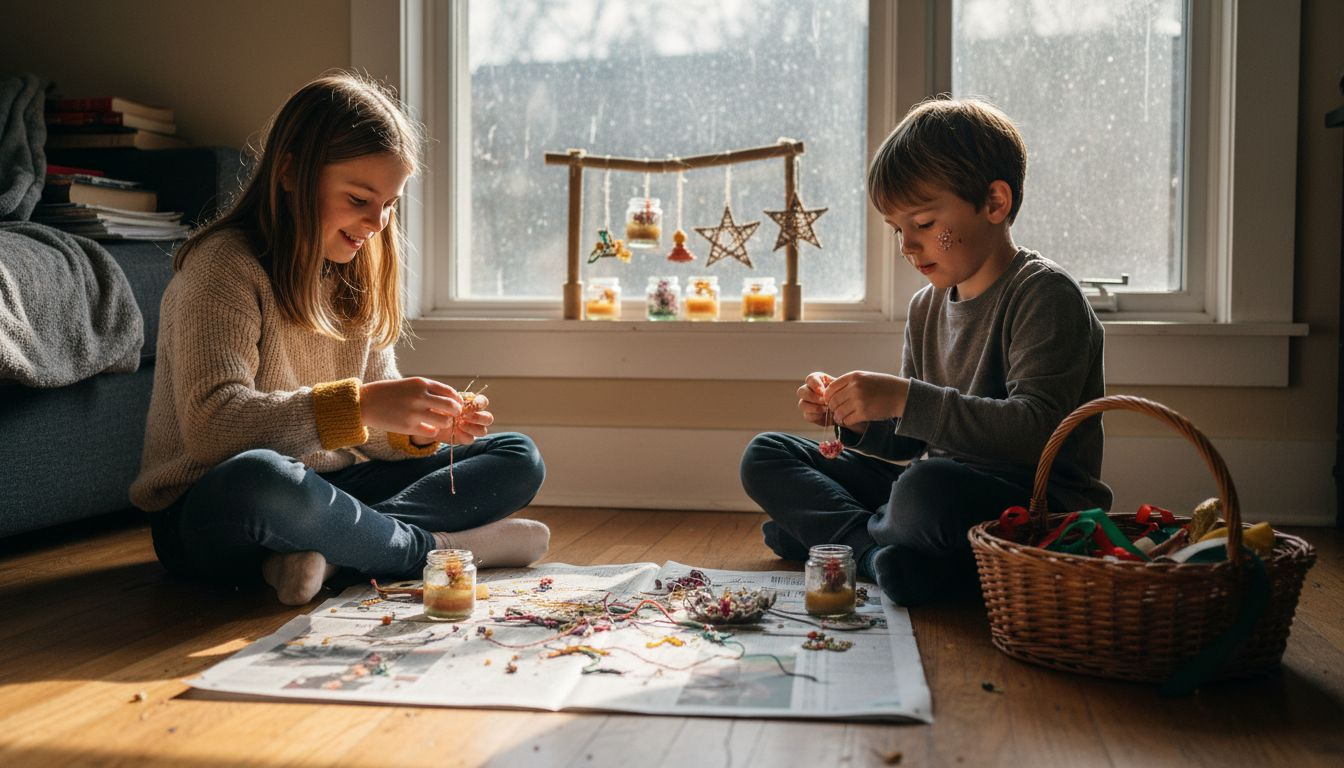
Natural materials gathered from your surroundings offer equally compelling craft possibilities. Seasonal leaves press beautifully between book pages, then transform into artwork, bookmarks, or gift wrapping. Dried flower heads, seed pods, and grasses become wreaths, garlands, or centrepieces without any cost beyond the effort of collection. Pinecones dipped in white paint or glitter create winter decorations that echo natural beauty rather than plastic imitations. Small twigs bundle into rustic picture frames or wall hangings. Acorns, conkers, and nuts become paint palettes or decorative elements. Creating seed bombs from soil, seeds, and clay engages children in a craft project that literally plants the future—combining art-making with environmental restoration. These natural crafts work beautifully across seasons. Spring brings fresh flowers and new leaves for pressing and arranging. Summer offers wildflowers and seed pods. Autumn provides an abundance of leaves, conkers, and branches. Winter brings evergreen clippings and dried seed heads. By aligning your crafts with seasonal availability, you reinforce children’s understanding of natural rhythms whilst eliminating the need to purchase craft supplies.
The beauty of minimal-waste crafting lies in its flexibility and accessibility. You don’t need a dedicated craft space or expensive materials. A kitchen table, your children’s hands, and what you already have at home suffice perfectly. Involve your children in collecting materials during nature walks—this exploration becomes part of the craft experience. Let them decide what projects excite them rather than following complicated instructions. A child who tears tissue paper into confetti and glues it onto cardboard creates something meaningful because they made it, not because it matches an adult’s vision. These crafts cost nothing financially, generate no waste, and produce items your children value deeply. When your daughter wears a necklace she made from dried pasta and painted herself, or hangs a wreath on her bedroom door crafted from foraged materials, these items carry weight that mass-produced alternatives never achieve.
Pro tip: Create a “craft bin” throughout the year by saving interesting items like cardboard tubes, egg boxes, clean plastic containers, and fabric scraps, then draw from this collection when seasonal crafting inspiration strikes rather than purchasing new materials.
Common Mistakes to Avoid in Green Holidays
The road to sustainable celebrations is littered with good intentions that crumble under holiday pressure. You start the season determined to stay true to your environmental values, then find yourself buying single-use decorations because they’re convenient, ordering excessive takeaway food because cooking feels overwhelming, or generating mountains of packaging waste without thinking twice. These aren’t character flaws. They’re predictable patterns that happen when we treat holidays as separate from our everyday lives, a time when normal rules don’t apply. Understanding these common pitfalls helps you navigate the holiday season with intention rather than guilt, making conscious choices before the chaos takes over.
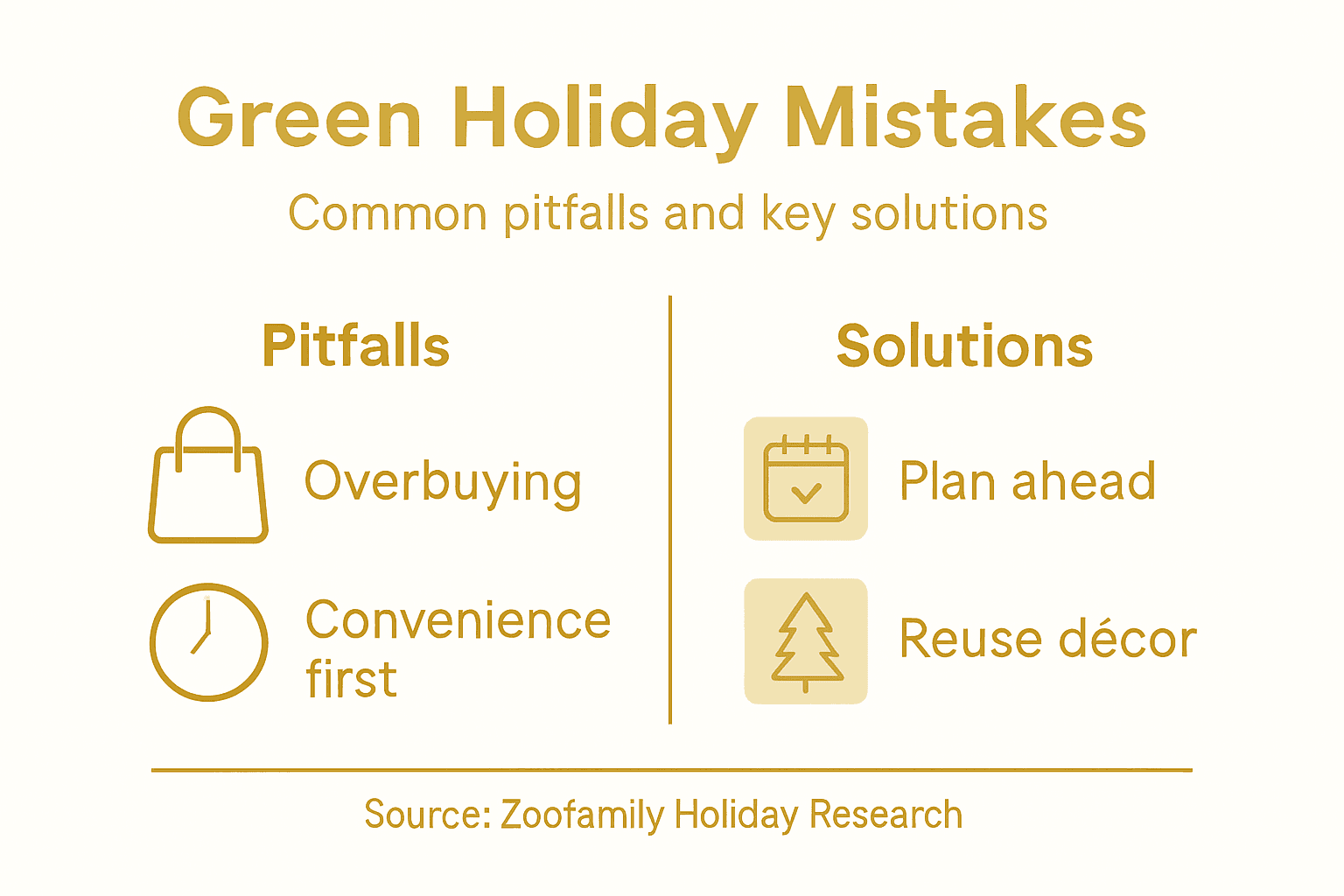
The biggest mistake most families make is treating holidays as a break from environmental responsibility. Research shows people adopt significantly less sustainable behaviours during celebrations, viewing holidays as time off from obligations including environmental care. This mental shift happens unconsciously. You recycle diligently all year, then find yourself tossing multiple plastic bags into the bin during the festive period without hesitation. Holiday consumption patterns reveal increased purchasing, neglected recycling due to perceived lack of infrastructure, and convenience prioritised over green choices. The solution isn’t willpower or guilt. It’s reframing. Your values don’t change because the calendar does. Sustainable holidays aren’t a different version of celebration—they’re simply celebrations aligned with what you actually believe matters. When you view green choices as your baseline rather than a temporary burden, the season feels less restrictive and more authentic.
Excessive consumption creeps in through multiple channels during the holidays. You purchase decorations you’ll use once, buy far more food than your family will eat, acquire gifts driven by tradition rather than genuine thoughtfulness, and generate waste that far exceeds your normal monthly total. The mistake lies in thinking bigger equals better. A table laden with excessive food doesn’t create a better celebration—it creates leftovers, guilt, and wasted resources. The solution involves radical simplification. Plan your menus carefully, buying ingredients for specific dishes rather than stocking up on everything. Choose gifts that align with your child’s genuine interests rather than filling a quota. Decorate with items you’ll keep and reuse rather than purchasing throwaway seasonal items. When you consciously limit consumption, you often discover the celebration feels more intentional and meaningful, not diminished.
Another critical mistake is underestimating the power of habits and social pressure. Your family’s traditions might include practices that actively contradict your environmental values, yet you continue them because “that’s what we’ve always done.” Perhaps your parents sent excessive gifts, so you replicate that pattern. Maybe your neighbourhood exchanges elaborate gift baskets, so you feel obligated to participate. This gap between pro-environmental attitudes and actual behaviours happens because convenience and social norms often override good intentions. Addressing this requires honest conversations with your family and community. Discuss why you’re shifting toward sustainable celebrations. Invite others to join rather than judge them for not changing. Often, people are relieved to hear someone else suggesting scaled-back, more meaningful traditions. You might discover your extended family actually prefers spending time together without excessive gifts, but nobody wanted to be the first to suggest it.
A final common mistake involves underestimating the importance of planning. Sustainable holidays require more intentional preparation than conventional ones. You can’t decide on 23 December that you’ll make minimal-waste celebrations and expect seamless results. Start planning in autumn. Gather craft materials throughout the year. Research local food sources. Discuss traditions with your family. This advance work transforms sustainable celebrations from stressful last-minute scrambles into genuinely enjoyable experiences. When you plan ahead, you have options. When you scramble, you grab whatever’s convenient, which usually means plastic-wrapped, mass-produced, environmentally destructive choices.
Below is a summary of typical pitfalls to avoid when aiming for a green holiday, with advice on how to counter each:
| Pitfall | Why It Happens | Strategy to Avoid |
|---|---|---|
| Treating holidays as eco “time off” | Perceived as a period free from routine | View sustainability as everyday |
| Excessive festive consumption | Social expectations, impulsive buying | Plan menus and gifts carefully |
| Sticking to unsustainable traditions | Habit and peer pressure | Discuss changes openly |
| Last-minute sustainable planning | Lack of preparation or resources | Prepare materials throughout year |
Pro tip: Choose one or two sustainable practices to prioritise each year rather than overhauling everything simultaneously, then build gradually as those practices become automatic, preventing overwhelm and increasing the likelihood your changes stick.
Embrace Meaningful Eco-Friendly Celebrations with The Zoofamily
Creating sustainable holiday traditions can feel challenging when balancing mindful consumption, engaging nature-based activities, and fostering genuine family connections. The article highlights the importance of redirecting energy towards experiences that inspire creativity, resourcefulness, and respect for the natural world — all without overwhelming your family with complexity or waste.
At The Zoofamily, we understand these challenges deeply. Our thoughtfully designed kids’ cameras, binoculars, and walkie-talkies spark children’s curiosity about nature and encourage hands-on exploration — helping your family build lasting bonds during nature-focused festivities. Each purchase supports reforestation efforts, reinforcing your commitment to restoring natural beauty for generations to come. Discover how you can nurture your children’s love for the planet while building unforgettable memories by visiting The Zoofamily. Start your sustainable holiday journey today and take a meaningful step towards celebrations that truly matter.
Frequently Asked Questions
What are sustainable holiday traditions?
Sustainable holiday traditions focus on creating meaningful celebrations that minimise environmental impact, prioritising experiences, relationships, and creativity over consumerism.
How can I engage my children in eco-friendly holiday practices?
Involve your children in hands-on activities like nature clean-up walks, crafting decorations from natural or recycled materials, and planting projects to foster a strong connection with the environment.
What are some examples of zero-waste decorations for holidays?
You can create decorations using upcycled materials, such as repurposed glass jars, paper snowflakes made from old newspapers, and handmade ornaments crafted from natural items collected during walks.
How can I avoid excessive waste during holiday celebrations?
Planning menus and gifts thoughtfully, using reusable tableware, and focusing on experiences rather than physical items can help reduce waste during holiday celebrations.
Recommended
- Understanding Eco Friendly Routines for Modern Families – The Zoofamily
- Comment protéger la planète au quotidien avec ses enfants – The Zoofamily
- Eco Friendly Cleaning Tips For Busy European Mums – The Zoofamily
- Meilleurs gadgets plein air enfants – Comparatif 2025 – The Zoofamily
- Understanding Eco-Friendly HVAC Solutions for Your Home - HVAC Service and Repair | Louisville, KY | Project Heating & Cooling