

Wetlands are among the most productive ecosystems on Earth. The Ramsar Convention defines them broadly: swamps, marshes, peatlands, estuaries, seagrass beds, mangroves, and even rice paddies all qualify. The UN Millennium Ecosystem Assessment valued their global services as extremely high, making them worth more, in aggregate, than most countries’ annual GDP. The Environment Agency and the RSPB both cite wetlands as critical to UK water management and wildlife recovery. Yet the UK has lost a significant proportion of its wetland area over the past two centuries, mostly to drainage and agriculture.
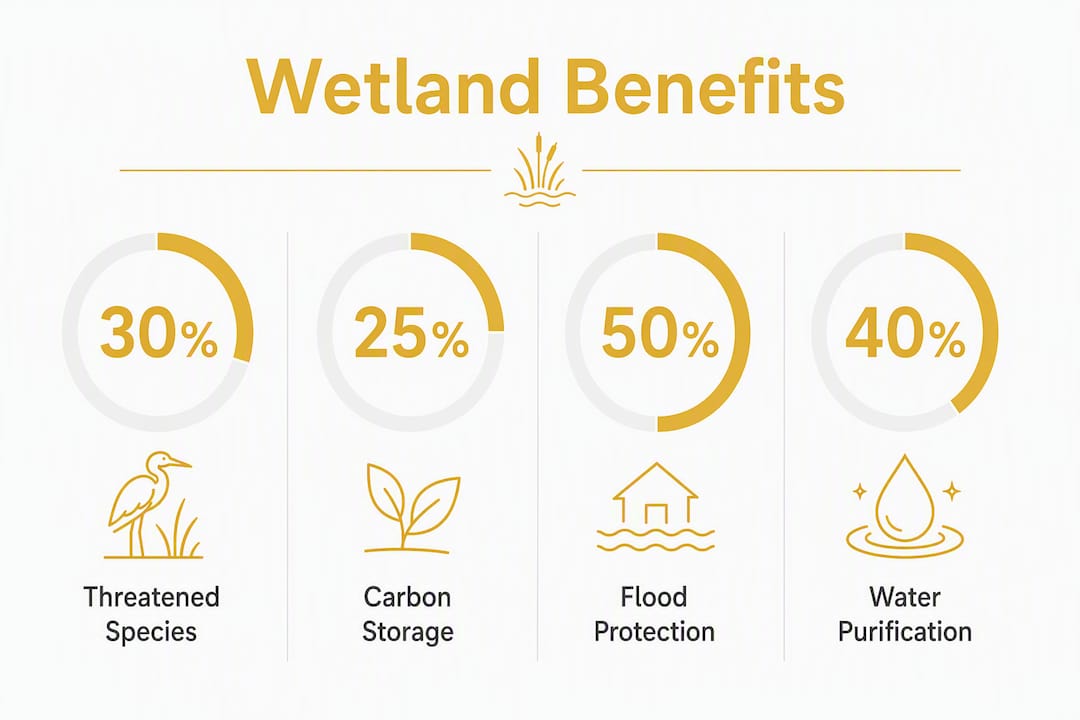
- Wetlands support a significant proportion of threatened and endangered species worldwide.
- They store floodwater, filter pollutants, and recharge groundwater supplies.
- Coastal wetlands provide substantial storm protection value in assessed US contexts.
- Peatlands and saltmarshes lock away carbon that took thousands of years to accumulate.
The case for protecting these habitats is not sentimental. It is practical and economic.
Table of Contents
- Why are wetlands so important for biodiversity?
- How do wetlands regulate climate and store carbon?
- How do wetlands improve water quality and support drought resilience?
- Do wetlands really protect against floods?
- What economic and social value do wetlands provide?
- What threatens UK wetlands today?
- How can you help protect and restore UK wetlands?
- How do wetlands actually work? A short science brief
- Key takeaways
- Why wetlands matter to Thezoofamily
- Further reading and useful sources
Why are wetlands so important for biodiversity?
Wetlands are biologically productive and often support higher biodiversity than adjacent terrestrial ecosystems, because they offer both aquatic and terrestrial resources within a single habitat patch. A single reedbed can provide nesting sites for bitterns, feeding grounds for otters, and nursery habitat for pike, all within a few hectares.
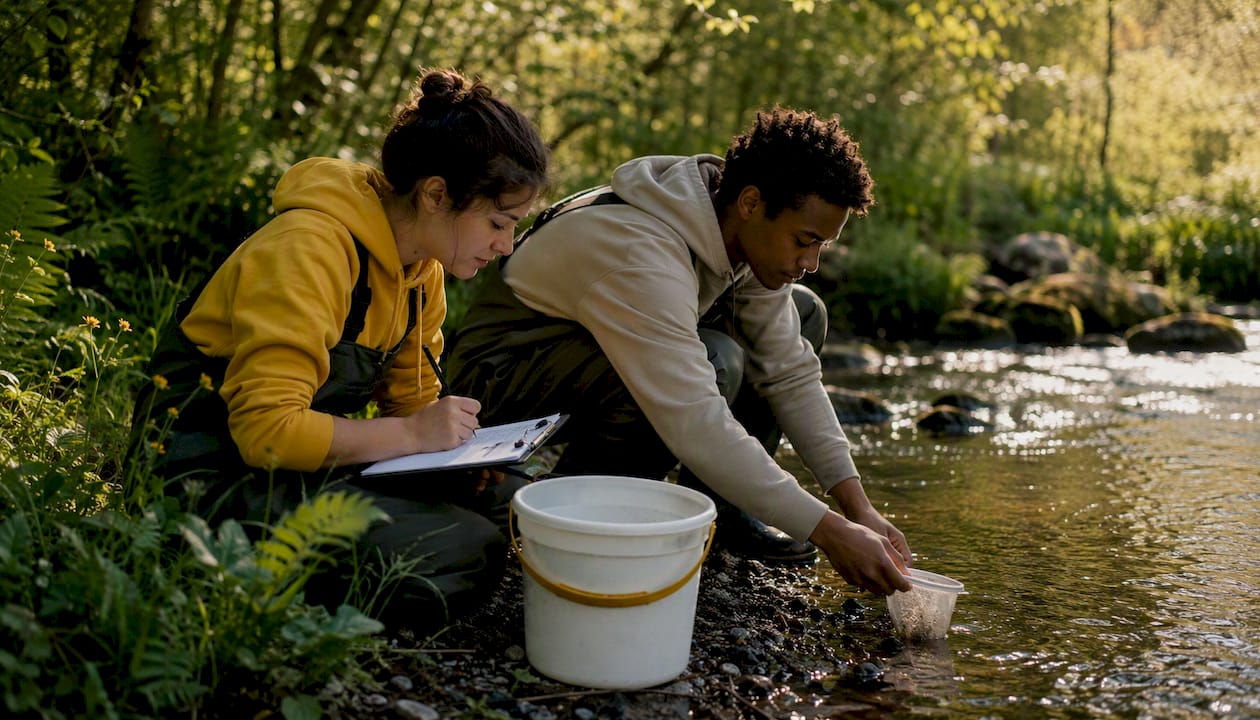
The variety of wetland types matters as much as their extent. Mudflats attract wading birds such as dunlin and knot during migration. Peat bogs support specialist plants like sundew and sphagnum moss, which in turn shelter rare invertebrates. Saltmarshes provide spawning and nursery grounds for commercially important fish species. Each habitat type adds a different layer of ecological function, and losing one type cannot be compensated for by preserving another.
Wetlands also serve as critical stopover points for migratory birds travelling along the East Atlantic Flyway. Without these refuelling stations, species such as the bar-tailed godwit cannot complete journeys of thousands of kilometres. The RSPB manages reserves specifically to maintain these corridors, and the Wildfowl and Wetlands Trust (WWT) operates nine UK wetland centres where visitors can observe species that depend on these habitats year-round.
- Birds: Bittern, bearded tit, avocet, lapwing, and numerous migratory waders rely on UK wetlands.
- Fish and invertebrates: Freshwater mussels, water voles, and juvenile sea bass use wetlands as nursery grounds.
- Plants: Rare species such as marsh helleborine and fen orchid are found almost exclusively in wetland habitats.
- Amphibians: Great crested newts, a protected species in the UK, depend on wetland ponds for breeding.
Pro Tip: WWT and RSPB both run volunteer survey programmes. Joining a bioblitz or bird count at a local reserve is one of the most direct ways to observe wetland biodiversity and contribute data that informs conservation decisions.
How do wetlands regulate climate and store carbon?
Wetlands are not uniform carbon stores. The mechanism and rate of storage vary considerably by type, and that distinction shapes how they fit into the UK’s climate strategy.
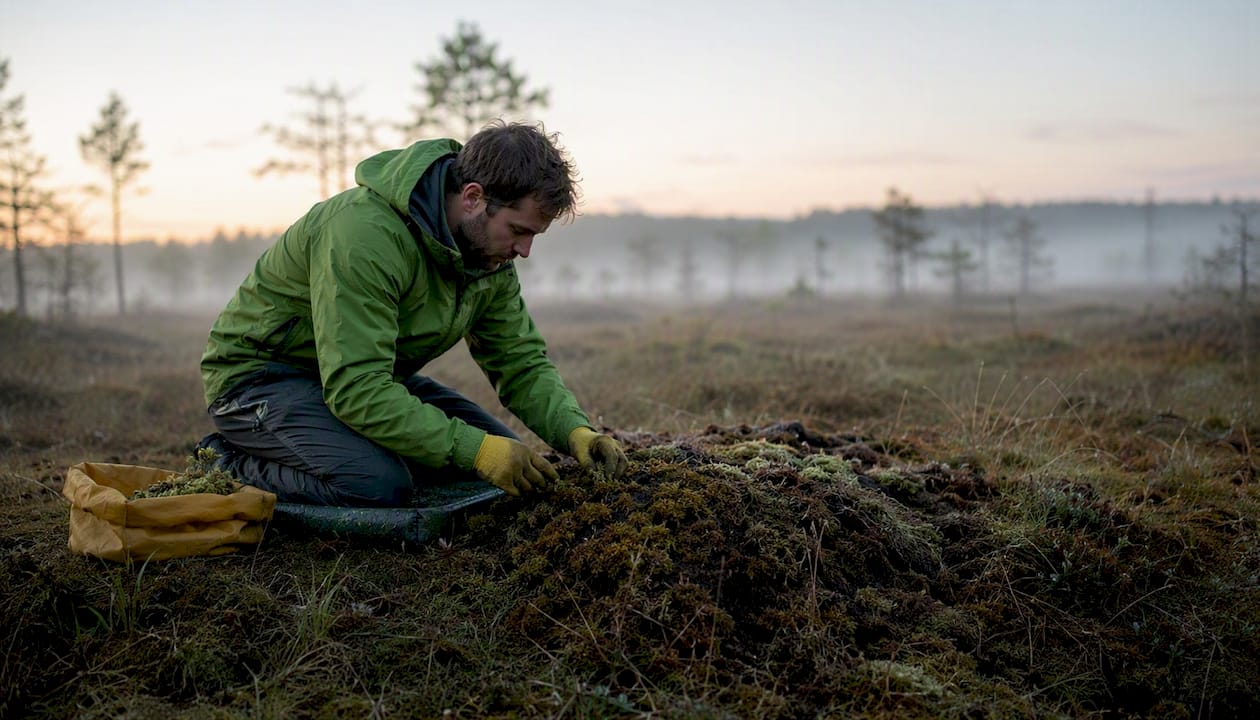
Peatlands accumulate carbon slowly over millennia. In waterlogged, oxygen-poor conditions, plant material decomposes so slowly that carbon builds up as peat. UK peatlands, particularly the blanket bogs of Scotland, Wales, and northern England, hold an estimated carbon stock that dwarfs that of all UK forests combined. When peat is drained for agriculture or cut for horticulture, that carbon is released as CO₂ and methane, turning a long-term sink into an active source.
Coastal wetlands work differently. Saltmarshes and seagrass beds trap fine sediment and organic matter, burying carbon in stable marine soils. This “blue carbon” accumulates faster per hectare than many terrestrial forests, and the carbon is locked away in conditions that resist decomposition for centuries.
Carbon storage by wetland type: Permanently flooded wetland communities sequester substantially more carbon than transitional or seasonally dry systems, because continuous waterlogging suppresses the microbial activity that would otherwise release stored carbon as greenhouse gases.
- Peatlands: Long-term carbon accumulation over thousands of years; highly vulnerable to drainage.
- Saltmarshes: Fast-accumulating blue carbon; also protect coastlines from erosion.
- Seagrass beds: Store carbon in sediments; support fish nurseries simultaneously.
- Mangroves: Globally significant carbon sinks; not native to the UK but relevant in international conservation.
Protecting intact peat and restoring degraded coastal wetlands is one of the most cost-effective climate actions available to the UK government and to local authorities. The Ramsar Convention’s technical guidance, and the work of researchers such as William J. Mitsch, consistently place wetland protection near the top of nature-based climate solutions.
How do wetlands improve water quality and support drought resilience?
Wetlands act as natural water treatment systems. Sediment settles out as water slows on entering a wetland. Nitrogen compounds are converted to harmless nitrogen gas through denitrification by soil bacteria. Plants absorb phosphorus and heavy metals directly. Microbial communities in wetland soils break down many organic pollutants before they reach rivers or groundwater.
These processes are not marginal. The US EPA describes wetlands as among the most effective natural systems for protecting and improving water quality, noting that they perform functions comparable to engineered treatment facilities at a fraction of the cost. In agricultural catchments across the UK, buffer strips of wetland vegetation along riverbanks reduce nitrate run-off measurably, lowering the treatment burden on downstream water companies.
Drought resilience is a less-discussed benefit. Wetlands store water during wet periods and release it slowly, maintaining baseflow in rivers during dry spells. This groundwater recharge function keeps chalk streams and lowland rivers flowing through summer droughts, supporting both ecology and water supply abstraction. As UK summers become drier and more variable, this buffering capacity grows in value.
- Sediment trapping reduces turbidity and protects aquatic habitats downstream.
- Denitrification removes excess nitrogen from agricultural run-off before it reaches rivers.
- Plant uptake sequesters phosphorus, reducing algal bloom risk in lakes and estuaries.
- Groundwater recharge from wetlands sustains river flows during summer low-water periods.
Do wetlands really protect against floods?
Yes, and the mechanism is straightforward. A single acre of wetland can store a considerable volume of water, absorbing rainfall and runoff that would otherwise move rapidly downstream, raising river levels and increasing flood risk to towns and farmland. Wetlands release this stored water slowly, flattening the flood peak and reducing the speed and volume of water reaching vulnerable areas.
Coastal wetlands add a second layer of protection. Saltmarshes dissipate wave energy before it reaches sea walls or cliffs, reducing erosion and the cost of maintaining hard coastal defences. In the UK, managed realignment projects, where sea walls are deliberately breached to allow saltmarshes to re-establish, have demonstrated measurable reductions in wave energy reaching inland areas.
Economic scale: An assessment cited in Ramsar reporting estimated that coastal wetlands provide storm protection services worth US$23.2 billion per year in a US context. Per-hectare values from that analysis underline why coastal wetland loss translates directly into higher infrastructure spending.
- Floodplain wetlands slow and store peak flows, reducing downstream flood damage.
- Saltmarshes reduce wave energy and coastal erosion, lowering sea-defence maintenance costs.
- Restored floodplain connectivity cuts flood peaks more cost-effectively than many engineered alternatives.
- The Environment Agency increasingly incorporates natural flood management, including wetland restoration, into its flood-risk strategies for English river catchments.
What economic and social value do wetlands provide?
The economic case for wetlands goes well beyond flood protection. Ramsar factsheet analysis shows that converting wetlands to agriculture or aquaculture typically produces significantly lower long-term benefits than conservation, once ecosystem services are properly accounted for. That gap reflects the full range of services wetlands deliver.
Fisheries are the most direct provisioning service. Coastal and estuarine wetlands serve as nursery grounds for species that support commercial and recreational fishing industries. Freshwater wetlands support angling, one of the most popular outdoor activities in the UK, with significant economic activity attached to it. Reed harvesting for thatching, peat extraction (now heavily restricted), and wildfowling are traditional land uses tied directly to wetland habitats.
Recreation and nature tourism add further value. WWT’s nine UK centres attract hundreds of thousands of visitors annually, generating income for local economies. Birdwatching, walking, and photography at wetland reserves contribute to rural tourism in areas that have few alternative economic drivers.
Cultural and educational value is harder to quantify but real. Wetlands feature in local traditions, folklore, and landscape identity across the UK, from the Somerset Levels to the Norfolk Broads and the Flow Country of Caithness and Sutherland. For children, direct contact with wetland wildlife builds the kind of nature connection that shapes long-term environmental attitudes.
- Fisheries: Nursery and feeding grounds for commercially and recreationally important species.
- Recreation: Birdwatching, angling, walking, and photography at reserves and nature parks.
- Tourism: WWT and RSPB reserves generate local economic activity in rural areas.
- Cultural identity: Wetland landscapes are embedded in UK regional heritage and land-use traditions.
What threatens UK wetlands today?
The UK has lost a large proportion of its wetland area since the mid-twentieth century, primarily through agricultural drainage. Lowland fens, wet meadows, and floodplain marshes were systematically drained after the Second World War to increase food production, supported by government subsidies. The result was rapid habitat loss across England, Wales, and lowland Scotland.
Current pressures are more varied. Nutrient run-off from agriculture and sewage discharges raises phosphorus and nitrogen levels in wetland water bodies, driving algal blooms that reduce oxygen and kill aquatic life. Peat extraction for horticulture has damaged large areas of lowland raised bog, though the sale of peat-based compost to amateur gardeners is being phased out in the UK. Invasive species, particularly Himalayan balsam and signal crayfish, alter wetland structure and displace native species.
Climate change adds pressure from two directions. Increased rainfall intensity raises the risk of flash flooding that can scour wetland habitats. Sea-level rise threatens low-lying coastal wetlands, including saltmarshes and grazing marshes, with inundation or salinisation faster than natural landward migration can compensate.
- Agricultural drainage and land conversion remain the primary historical cause of UK wetland loss.
- Nutrient pollution from farming and sewage degrades water quality in surviving wetlands.
- Peat extraction has damaged lowland raised bogs, releasing stored carbon.
- Invasive species alter habitat structure and reduce native biodiversity.
- Sea-level rise threatens coastal wetlands faster than natural processes can compensate.
How can you help protect and restore UK wetlands?
Protection starts with legal designation. The UK’s 175 Ramsar sites cover internationally important wetlands, and most are also designated as Sites of Special Scientific Interest (SSSIs), giving them statutory protection under UK law. Natural England and its counterparts in the devolved administrations enforce SSSI protections and advise on management. The Environment Agency oversees water quality and flood-risk management in England, with wetland restoration increasingly embedded in its catchment strategies.
Restoration methods vary by habitat type. Rewetting drained peatlands, by blocking drainage ditches and raising water tables, is the most cost-effective way to reduce peat carbon emissions and restore bog biodiversity. Managed coastal realignment creates new saltmarsh where sea walls are set back. Reconnecting rivers to their floodplains restores natural flood storage and creates wet grassland habitat. Reedbed creation, often on former agricultural land, provides habitat for bitterns and marsh harriers within a few years of establishment.
Greenpeace UK campaigns for stronger legal protections for peatlands and opposes policies that would allow further drainage or extraction. The RSPB manages over 200 reserves in the UK, many of them wetlands, and funds restoration work through membership income. WWT leads practical restoration projects and runs public engagement programmes that connect families and schools to wetland habitats.
At an individual level, the actions that matter most are reducing pollutant run-off, supporting local conservation groups, and creating garden habitats that connect to wider green networks. Creating a wildlife-friendly garden reduces hard surfaces that increase run-off and provides stepping-stone habitat for wetland-associated species like frogs and hedgehogs. Teaching children about water conservation builds habits that reduce household pressure on freshwater systems. Understanding garden wildlife habitats helps you make planting choices that support local biodiversity.
Pro Tip: Contact your nearest WWT or RSPB reserve to ask about volunteer days. Practical tasks like scrub clearance, ditch management, and species surveys are open to beginners and directly support habitat quality at sites that matter for UK wetland conservation.
How do wetlands actually work? A short science brief
William J. Mitsch’s framework organises wetland values at three scales: population (individual species and communities), ecosystem (nutrient cycles and hydrology), and global (climate regulation and carbon storage). That structure helps explain why a single site can deliver services that matter locally, regionally, and globally at the same time.
Hydrology is the foundation. Wetlands form where water is present long enough to create waterlogged or flooded conditions. Water enters through rainfall, river flooding, groundwater upwelling, or tidal inundation. It leaves through evapotranspiration, drainage, and groundwater recharge. The balance between inputs and outputs determines whether a site is permanently flooded, seasonally wet, or intermittently inundated, and that hydrological regime controls everything else.
Biogeochemical cycles run differently in waterlogged soils. Without oxygen, decomposition slows dramatically. Anaerobic bacteria take over, driving denitrification (converting nitrate to nitrogen gas) and sulphate reduction. These processes remove pollutants from water and, in peatlands, allow organic matter to accumulate faster than it breaks down.
Carbon dynamics follow directly. In anoxic peat soils, plant material accumulates over centuries. Peat depth and soil carbon density determine how much carbon a site holds and how vulnerable it is to release if drained. Coastal sediments trap organic carbon in stable, oxygen-poor conditions, making saltmarshes and seagrass beds effective long-term stores.
Careful, spatially explicit measurement of peat depth, soil carbon density, and hydrological regime is needed to determine whether a site is a net carbon sink or source after disturbance.
- Inundation and waterlogging create the anaerobic conditions that slow decomposition and allow carbon accumulation.
- Denitrification by soil bacteria removes excess nitrogen from agricultural run-off.
- Sediment trapping in slow-moving wetland water removes particulates and associated pollutants.
- Peat accumulation requires continuous waterlogging; even partial drainage can reverse the process.
Key takeaways
Wetlands deliver irreplaceable services for biodiversity, climate stability, and water security, and protecting them costs far less than replacing what they provide.
| Point | Details |
|---|---|
| Biodiversity value | Wetlands support at least one third of all threatened and endangered species worldwide. |
| Carbon storage | Peatlands store carbon accumulated over millennia; drainage converts them from sinks to emission sources. |
| Flood protection | A single acre of wetland can store about 3 acre-feet of water, providing substantial buffering against downstream flooding, while coastal wetlands offer storm protection services valued at US$23.2 billion per year in assessed US contexts. |
| Economic case | Wetland conversion produces 60–75% lower long-term benefits than conservation in studied cases. |
| Individual action | Creating wildlife-friendly gardens and volunteering with WWT or RSPB directly supports local wetland health. |
Why wetlands matter to Thezoofamily
Wetlands are where children often have their first real encounter with wild nature: a frog at the pond edge, a heron standing still in shallow water, the sound of a reed warbler. Those moments build the kind of curiosity that lasts. At Thezoofamily, our products, binoculars, cameras, and walkie-talkies, are designed to help children look closely at the natural world and connect with it directly. For every camera sold, we plant a tree, because we believe that restoring natural habitats and raising children who care about them belong together. Wetlands sit at the centre of that mission. They are the habitats most at risk, most productive, and most in need of the next generation’s attention.
Further reading and useful sources
These sources are reliable starting points for anyone who wants to go deeper on wetland science, UK policy, or conservation practice.
- UN Millennium Ecosystem Assessment — The foundational global assessment of ecosystem services, including the US$15 trillion wetland valuation; essential background for understanding the economic argument.
- Environment Agency (UK) — The statutory body responsible for water quality, flood risk, and environmental regulation in England; publishes guidance on natural flood management and wetland restoration.
- Wildfowl and Wetlands Trust (WWT) — The UK’s leading wetland conservation charity; runs nine visitor centres, conducts research, and coordinates practical restoration projects.
- Royal Society for the Protection of Birds (RSPB) — Manages over 200 UK reserves, many of them wetlands; publishes species data and runs volunteer programmes open to all ages.
- Greenpeace UK — Campaigns for stronger legal protection of UK peatlands and opposes policies that accelerate wetland loss.
- Mitsch WJ: Wetland ecosystem services (peer-reviewed) — Peer-reviewed framework organising wetland values at population, ecosystem, and global scales; useful for understanding the science behind conservation arguments.
- US EPA: Why are wetlands important? — Clear, evidence-based summary of wetland functions; US-focused but the ecological principles apply directly to UK habitats.