

The best indoor activities for children aged 3 and up are the ones that mix movement, making and a little imagination, and that use things already in the house. Pair one active game with one quiet task, give the day a simple theme, and let your child lead. Below you will find games with rules, crafts, age guides, safety checks and ideas that use animals and nature as a starting point.
TL;DR
- Start with an active game (obstacle course, freeze dance, balloon volleyball), then follow it with a quiet activity such as baking, puzzles or drawing.
- Most of the best ideas need no equipment: hide-and-seek, I Spy, scavenger hunts and animal charades.
- Match the activity to age. Ages 3 to 5 enjoy pretend play and easy crafts. Ages 6 to 9 enjoy building, experiments and stop-motion films.
- Keep indoor play safe: cushions on hard floors, low obstacle courses, non-toxic craft materials and no small parts for under-3s.
- A theme makes a long day easier. An animal safari at home, for example, turns ordinary games into a story.
Table of Contents
- Why a plan for indoor days helps
- Active indoor games that burn energy
- Games with no equipment at all
- Screen-free creative projects
- Ideas by age
- Animal and nature games for indoors
- Safety checks before you start
- A simple plan for a long wet afternoon
- Fun indoor ideas that also make good gifts
- Our view: give children a reason to play
- FAQ
- Sources
Why a plan for indoor days helps
A wet afternoon with an energetic child goes better when you have two or three ideas ready. Children get restless when they have no direction, and parents end up reaching for a screen. You do not need a long list. You need a few activities you can start in two minutes.
A useful rule comes from IndySchild: energy-burning games work best on rainy days, and they pair well with a calmer activity such as baking, puzzles or reading. Run the active game first. The quiet one is then much easier to start.
Active indoor games that burn energy
These games need space on the floor and little else. Most take five to fifteen minutes, and children usually ask to play them again.
Indoor obstacle course
Use cushions, chairs, blankets and cardboard boxes. Children crawl under, climb over and step between. TeamGroupNames gives about 10 to 15 minutes of set-up and 30 to 60 minutes of play for ages 18 months to 6 years. Keep the course low, put cushions on hard or carpeted floors and avoid sharp furniture edges.
The Floor Is Lava
The floor is lava, and players must move only on furniture, pillows or rugs. wikiHow describes a version for ages 4 and up in which players have five seconds to climb onto a safe spot. For younger children, make the safe islands cushions on the floor and add a stuffed-animal rescue mission.
Freeze dance and musical chairs
Play music and let everyone dance. When the music stops, everyone freezes. It is a good way to practise self-control while having fun. Findmykids describes musical chairs this way: set out one chair fewer than the number of children, dance while the music plays, sit when it stops, and the child left standing is out. Repeat with fewer chairs until one child remains.
Balloon games
Balloons are slow and soft, so they suit small rooms. Throw one into the middle of a circle and keep it off the floor. For two players, make balloon tennis with wooden spoons or paper-plate bats. wikiHow also describes balloon volleyball, where a paper streamer taped across the room acts as the net.
Indoor bowling
Set up plastic bottles as skittles and roll a soft ball. One point for each bottle knocked down, and the most points after an agreed number of rounds wins. Findmykids gives the same rules.
Animal moves
Children love to copy animals: hop like a frog, stomp like an elephant, creep like a cat. PBS KIDS for Parents suggests a 15-minute animal dance where children imitate their favourite animals. On a cold day, BBC Bitesize recommends following Supermovers videos for up to 30 minutes. You need only a small area of non-slippery floor and loose clothing.
Games with no equipment at all
Sometimes you have nothing prepared. These work anywhere.
- Hide-and-seek. UNICEF advises setting boundaries before play and adjusting the space to your child’s age.
- I Spy. Say something like “I spy with my little eye something that is blue”, or ask for three things that are round. Children can ask for more clues.
- Circle storytelling. Each family member adds one sentence to a story. The silliest stories are the best.
- Shadow puppets. Shine a torch at a wall and make animals with your hands, as suggested by Fight Against Screens.
- Sock puppets and a family band. UNICEF suggests puppets from old socks and a band using pots and pans.
Screen-free creative projects
Creative play keeps children busy for longer, and it gives them something to show at the end of the day.
Simple art ideas
Parents.com suggests secret messages written in white crayon and revealed with watercolour paint, stapled flip books with stick figures, and a town built from blocks and boxes. It also suggests a sticky wall made from contact paper, which children can decorate with paper shapes. You can also keep a rainy-day bin of colouring books, slime and small toys, and bring it out only on wet days. The bin stays exciting because it is rare.

If you want to use things from the recycling box, our guide to creative recycled art projects has ideas for cardboard, tubes and paper.
Sensory play for younger children
A tray of rice or dry beans, with tweezers, spoons and small shovels, can keep a preschooler busy. Supervise closely and keep small items away from children under 3. If you want to know why this kind of play matters, this guide to sensory play and child development explains it for parents.

Process art for the youngest
For ages 2 to 5, I’m The Chef Too says the goal should be the experience, not the finished product. Use stickers, chunky crayons and sticky contact paper, and avoid precise cutting. Older children, aged 10 to 12, prefer projects that look cool and make something they can use or wear.
Baking and cooking
Baking is a good quiet activity after a lively game. Netmums suggests a rainy-day bake-off. Younger children can stir, tip and decorate, while you handle the oven.
Ideas by age
Children change quickly, so an idea that suits a four-year-old may bore an eight-year-old. IndySchild groups activities by age. Here is a short version for the 3+ range.
| Age | What works well |
|---|---|
| 3 to 5 | Pretend play, easy crafts, dress-up, cooking with help, beginner scavenger hunts |
| 6 to 9 | Science experiments, building projects, board games, baking, stop-motion films |
| 10 and over | Unplugged coding games, friendship bracelets, vision boards, video projects led by the child |
For playdates with several children, HelloPlaydate suggests obstacle courses, blanket-fort movie time, LEGO build challenges and board game tournaments. For a large group, I’m The Chef Too recommends the station method: one small bin per table, holding only the supplies needed for that craft. It cuts the chaos.
Animal and nature games for indoors
Children aged 3 and up are very interested in animals, and that interest carries into indoor play. These ideas keep a bit of the outdoors in the room.
Guess the animal
UNICEF describes this game. Write or draw animal names on small papers and fold them into a container. Take turns picking one and acting it out while the family guesses. In a second version, players make animal noises instead.
Home safari
Hide soft toys around the house and give your child a list of animals to find. Make it a scavenger hunt with clues, or give your child a pair of paper-tube binoculars. Tick off each animal on the list. For a longer game, build a den from blankets and call it the safari camp.

Photo hunt
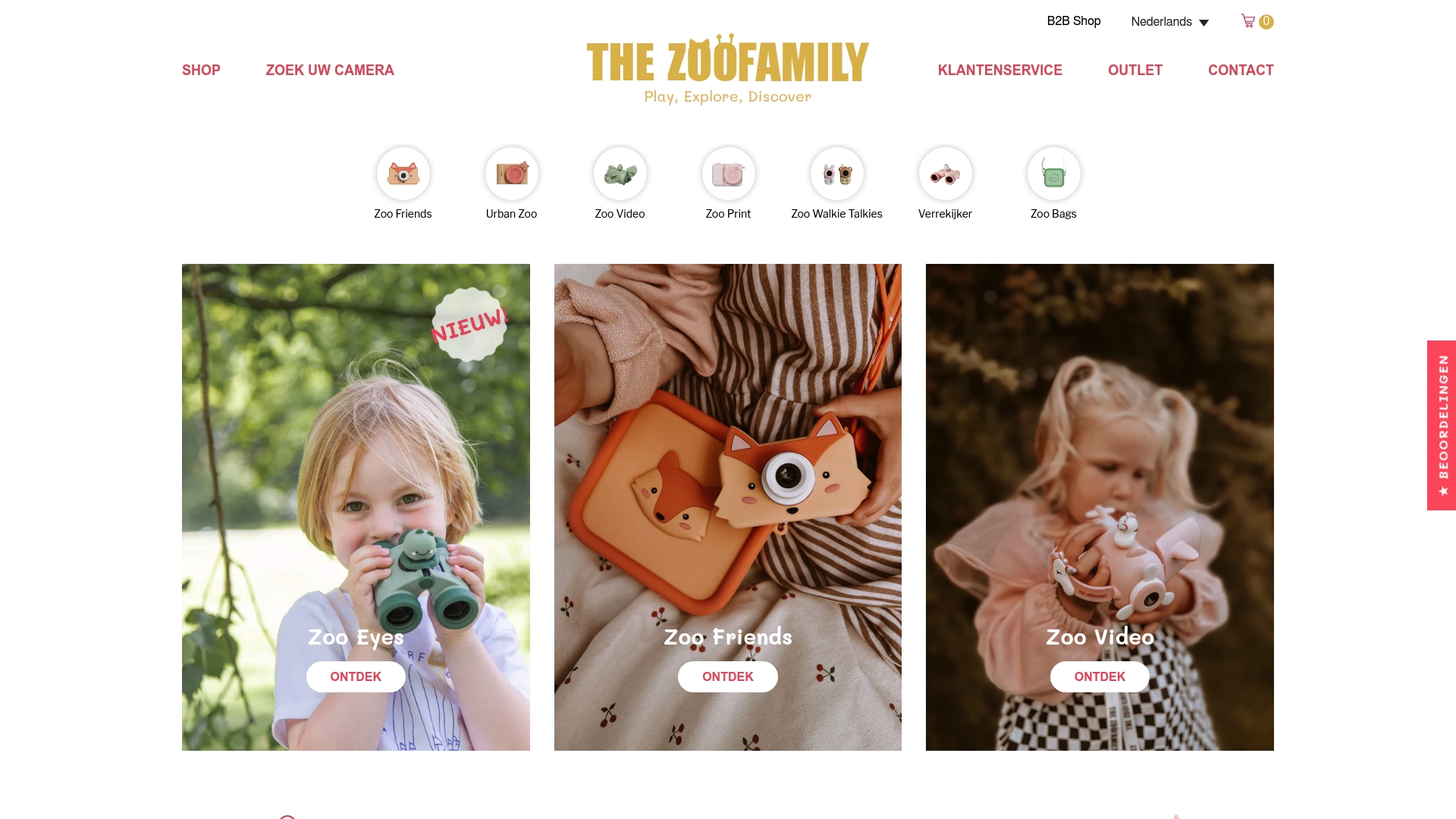
Give your child a camera and a list: something round, something red, something with fur, something that starts with B. A photo scavenger hunt turns the whole house into a new place. Our kids’ cameras are made for children aged 3 and up and have animal designs, so the game fits into a safari story. Afterwards, look through the pictures together and let your child tell the story behind each one.
Make a home movie
Parents.com lists making a home movie among its rainy-day ideas. Choose a short story, make costumes from clothes you already have, and film it in one room. Our Zoo Video camera is one way to film it.
Walkie-talkie missions
Send one child to another room with a walkie-talkie and give instructions: find the blue cushion, hide under the table, count three red things. The game works well in a larger house or flat, and it turns hide-and-seek into a team game. See our walkie-talkie collection for the ones we make.
For more themed ideas, our post on rainy day ideas for kids lists seven more.
Safety checks before you start
Indoor play is low risk, but a few checks make it safer.
- Floors. Rugs should not slide or create a tripping hazard. The ECERS-3 space and furnishings checklist lists this together with sturdy furniture in good repair.
- Home hazards. The same checklist says to keep outlet covers in place, cords out of reach, spills cleaned up, and medicines and cleaning products locked away.
- Obstacle courses. Supervise closely, put cushions on hard floors and keep the course low.
- Craft materials. Alberta Health Services advises non-toxic materials, water-based paints and glues, and no powdered clay, solvents or aerosol sprays. Keep small choking-hazard items away from children under 3.
- Scissors and glue. Supervise them, especially for children under 3.
A simple plan for a long wet afternoon
If you want a ready schedule, try this one for children aged 4 to 7.
- 10 minutes: freeze dance to start moving.
- 30 minutes: build an obstacle course or a home safari.
- 20 minutes: snack break, or baking together.
- 30 minutes: a quiet craft such as a flip book, or a photo hunt with a camera.
- 15 minutes: circle storytelling or a puzzle to wind down.
Change it to suit your child. If a game is going well, let it run. If it is not, move on.
Fun indoor ideas that also make good gifts
If you are looking for a present for a child aged 3 and up, think about gifts that start a game rather than end one. A camera, a pair of binoculars or a walkie-talkie each leads to many different indoor and outdoor games, and none of them needs a screen of its own.
Here is what we make, with our published prices:
| Product | Price |
|---|---|
| Zoo Friends camera | €69.95 |
| Urban Zoo camera | €89.95 |
| Zoo Video camera | €79.95 |
| Zoo Print camera | €109.95 |
| Zoo Walkie-Talkie | €54.95 |
| Zoo Light night light | €39.95 |
| Zoo Eyes binoculars | €39.95 |
| Zoo Bags | €19.95 |
| Zoo Sleeves | €9.95 |
Every product has an animal design, made to spark an interest in nature. For each camera sold, we plant one tree. You can see all of them in our kids’ camera collection, or start from our shop.
Our view: give children a reason to play
Children do not need a long list of activities. They need a reason to start. An animal, a mission or a small story is often enough.
That is why we design our cameras, walkie-talkies and binoculars with animals. A child who has a camera in hand goes looking for something to photograph. A child with binoculars watches the room, or the garden, more closely. A child with a walkie-talkie is part of a team. These tools turn a rainy afternoon into an expedition.
We also believe that interest in animals grows into care for nature. That is why one tree is planted for each camera sold. We want children to enjoy the world around them now, and we want that world to be there for them later.
ALAIN
FAQ
What can we do indoors on a rainy day with a child aged 3 to 5?
Try pretend play, dress-up, easy crafts, a simple obstacle course and a beginner scavenger hunt. Add a short, quiet activity such as drawing or baking with help. Keep each activity to 10 to 20 minutes, and switch when interest fades.
How can I entertain my child indoors without a screen?
Use games that need only people and space: hide-and-seek, I Spy, circle storytelling and animal charades. Creative projects such as flip books, white-crayon messages and sensory trays also work well. UNICEF has a list of screen-free ideas for families.
Which indoor games need no equipment?
Hide-and-seek, I Spy, freeze dance, Simon Says and guess the animal need nothing at all. You can also make shadow puppets with a torch. An obstacle course can be built from furniture and cushions you already have.
How do I keep indoor play safe?
Put cushions on hard floors, keep obstacle courses low and watch for tripping hazards such as loose rugs. Use non-toxic, water-based craft materials. Keep small items away from children under 3, and supervise scissors, glue and paint.
Sources
- 65 Indoor Activities to Keep Restless Kids Happy on Rainy Days, Parents.com
- 100+ Fun Things to Do With Kids at Home, IndySchild
- Rainy Day Activities for Kids That Actually Work, TeamGroupNames
- Fun Games to Play With Kids, wikiHow
- 25 Fun Indoor Games for Kids to Play at Home, Findmykids
- Rainy Day Activities, PBS KIDS for Parents
- 11 things to do with kids on dark, wintry, rainy days, BBC Bitesize
- Screen-free activities for children, UNICEF Parenting
- 11 Activities for Kids at Home (No Supplies Needed), Fight Against Screens
- 15+ Easy Crafts for Large Groups of Kids, I’m The Chef Too
- 105 indoor activities for kids, Netmums
- 42 Playdate Ideas Kids Actually Love, HelloPlaydate
- Arts & Crafts Safety, Alberta Health Services
- ECERS-3 Space & Furnishings Checklist
- Sensory Play and Child Development: A Parent’s Guide