

More than 60 percent of urban families in France and Germany say they want their children to learn about sustainability in meaningful ways, yet it often feels like a british concept reserved for textbooks rather than daily life. As a mother striving for eco-friendly habits, you know how important it is to connect these ideas to your child’s world. This guide reveals practical, accessible steps to nurture environmental awareness, making sustainability clear and relevant for young minds.
Table of Contents
- Defining Sustainability for Children
- Types of Sustainable Habits Kids Can Learn
- How Nature and Everyday Choices Connect
- Creative Activities That Inspire Planet Care
- Key Mistakes to Avoid When Teaching Sustainability
Key Takeaways
| Point | Details |
|---|---|
| Understanding Sustainability | Sustainability involves making informed choices to protect the planet and instil responsibility in children as active stewards of the Earth. |
| Promoting Sustainable Habits | Teaching children sustainable practices fosters critical thinking and encourages them to engage in resource conservation, waste reduction, and community involvement. |
| Connecting Actions to Nature | Everyday choices, from conserving water to choosing local produce, help children recognise their impact on the environment and promote ecological responsibility. |
| Avoiding Common Pitfalls | Education about sustainability should focus on solutions and empowerment rather than instilling fear, ensuring that children feel capable of making a positive difference. |
Defining Sustainability for Children
Sustainability might sound like a complex concept, but it’s truly about creating a healthier world for future generations. At its core, sustainability means understanding how our daily actions impact the planet and making choices that protect our environment. For children, this translates into learning how they can be responsible stewards of the Earth, starting right in their own homes and communities.
When we discuss sustainability with young minds, we’re essentially teaching them about ecological balance and responsible living. Early childhood education for sustainability emphasises children’s remarkable capacity to understand and engage with environmental challenges when provided appropriate learning opportunities. This means moving beyond simply teaching about the environment to encouraging active participation and advocacy.
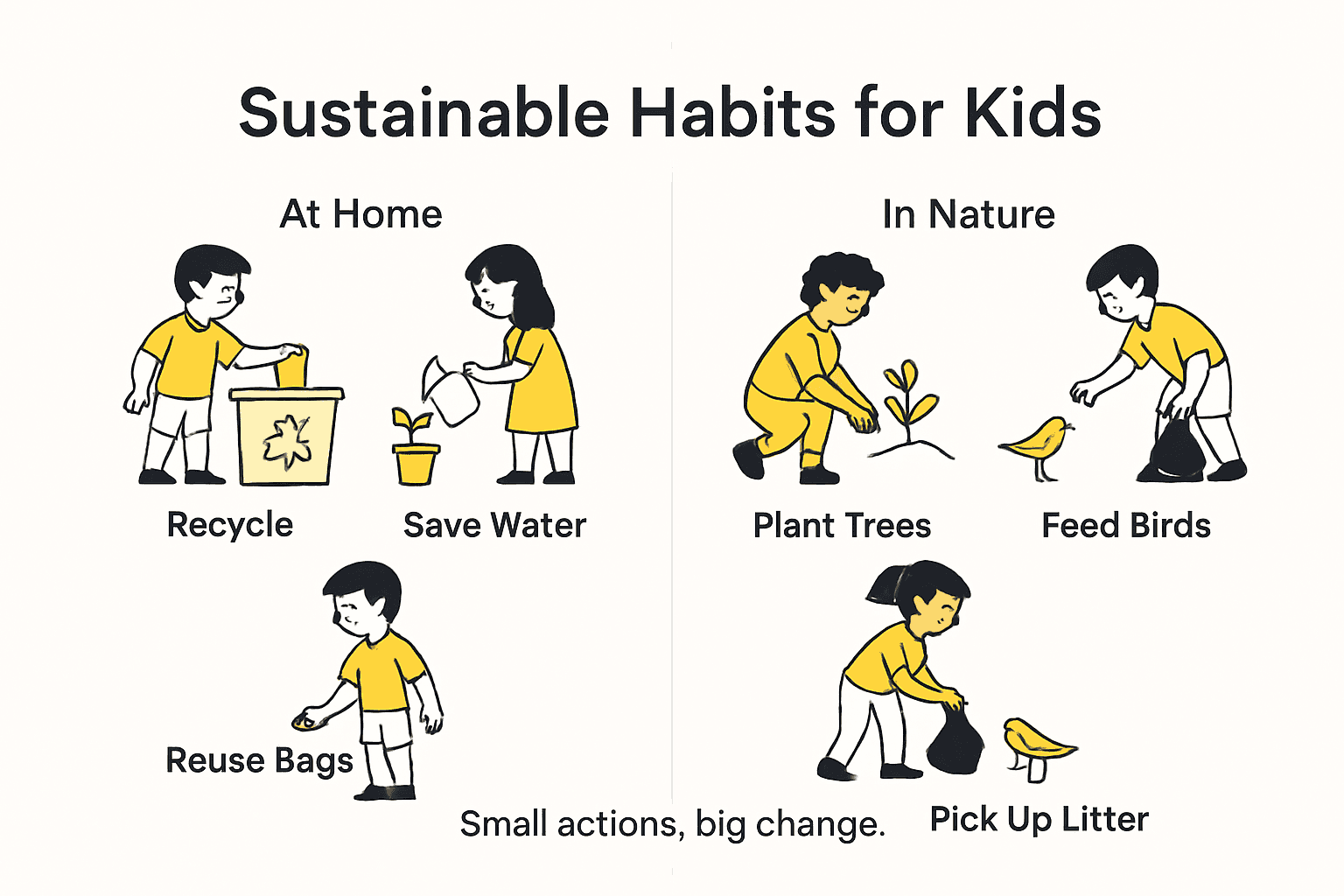
Children can grasp sustainability through practical, tangible experiences. This might involve activities like sorting recycling, understanding where food comes from, learning about local wildlife, or participating in small conservation projects. The goal is to help them see themselves as active participants in protecting our planet, not passive observers. By making sustainability engaging and age-appropriate, we can inspire a generation of environmentally conscious citizens who understand the delicate interconnections between human actions and ecological systems.
Pro tip: Start sustainability conversations by asking children curious questions about nature and their observations, which encourages critical thinking and environmental awareness.
Types of Sustainable Habits Kids Can Learn
Learning sustainable habits is more than just an environmental lesson—it’s about empowering children to become responsible global citizens. UNESCO’s framework for education emphasises holistic approaches that nurture children’s understanding of how their individual actions contribute to broader ecological and social systems. These habits range from simple daily practices to more complex problem-solving skills that can transform their relationship with the natural world.
Children can develop sustainable habits through engaging and practical activities. These might include resource conservation practices such as turning off lights when leaving a room, collecting rainwater for plants, or using both sides of paper for drawing and writing. Waste reduction strategies like sorting recycling, composting kitchen scraps, or creating art from recyclable materials can make environmental responsibility tangible and fun. Sustainable education approaches also encourage children to think critically about consumption, transportation choices, and community involvement.

Beyond individual actions, sustainable habits for children also involve developing empathy and understanding global interconnectedness. This means learning about local ecosystems, understanding where food comes from, recognising the impact of their choices on communities worldwide, and developing collaborative problem-solving skills. By introducing these concepts early, we help children see themselves as active participants in creating a more sustainable future, not just passive recipients of environmental information.
Pro tip: Create a family sustainability challenge where children can track and celebrate their eco-friendly actions, turning learning into an exciting and rewarding experience.
Here’s how different sustainable habits help children develop key skills:
| Habit Type | Example Practice | Skills Developed |
|---|---|---|
| Resource Conservation | Turning off lights; saving water | Responsibility; mindfulness |
| Waste Reduction | Composting; recycling art | Creativity; problem-solving |
| Conscious Consumption | Choosing local food; reusing bags | Critical thinking; empathy |
| Community Involvement | Participating in clean-ups | Teamwork; global awareness |
How Nature and Everyday Choices Connect
Understanding the profound relationship between our daily actions and the natural world is fundamental to developing environmental consciousness. Early childhood education programmes demonstrate how interconnected human behaviours are with ecological systems, revealing that even seemingly small choices can have significant environmental impacts. For children, this means learning that every action—from turning off a tap to choosing reusable containers—directly influences the health of our planet.
Every mundane household decision becomes an opportunity to teach ecological responsibility. Selecting locally grown produce, reducing single-use plastics, conserving water during tooth brushing, or walking instead of driving short distances are tangible ways children can understand their connection to nature. These everyday choices transform abstract environmental concepts into concrete, understandable experiences that show how individual actions contribute to broader ecological preservation.
The beauty of helping children understand these connections lies in nurturing their innate curiosity and empathy towards the natural world. By explaining how their choices impact ecosystems, wildlife, and global environmental health, we empower children to become thoughtful, proactive stewards. They learn that sustainability isn’t about perfection, but about making conscious, incremental choices that collectively create meaningful change.
Pro tip: Create a visual ‘impact tracker’ where children can map their daily sustainable choices and see how their actions positively affect the environment.
Creative Activities That Inspire Planet Care
Early childhood sustainability education reveals the transformative power of creative, hands-on experiences, allowing children to develop deep emotional connections with the natural world. These activities go far beyond simple instruction, engaging multiple senses and fostering genuine environmental empathy through immersive, playful learning experiences that spark curiosity and wonder.
Practical nature-based activities can transform children’s understanding of planetary care. Hands-on projects like creating mini-gardens, designing recycling art, developing nature journals, or participating in local community clean-up events provide tangible ways for children to understand their role in environmental stewardship. Sustainability education emphasises participatory learning approaches that encourage children to become active problem-solvers and critical thinkers about environmental challenges.
The most effective sustainability activities integrate storytelling, sensory exploration, and collaborative experiences. Whether it’s tracking local wildlife, creating ecosystem dioramas, or designing upcycling projects, these creative endeavours help children understand complex environmental concepts through direct, engaging interactions. By making planetary care fun and accessible, we nurture a generation of environmentally conscious individuals who see themselves as integral parts of the global ecosystem.
Pro tip: Design a family ‘sustainability challenge’ where children can document and share their eco-friendly actions, turning learning into an exciting, collaborative adventure.
Compare creative activities by their sensory engagement and educational impact:
| Activity Type | Sensory Engagement | Educational Value |
|---|---|---|
| Mini-gardening | Touch & sight | Understanding growth cycles |
| Nature journalling | Visual & writing | Observation; recording data |
| Recycling art | Touch & creativity | Resourcefulness; design |
| Wildlife tracking | Listening & sight | Biodiversity appreciation |
Key Mistakes to Avoid When Teaching Sustainability
Teaching sustainability requires a nuanced approach that avoids common educational pitfalls. One critical error parents and educators often make is underestimating children’s capacity to comprehend and engage with environmental challenges. Children are remarkably perceptive and can understand complex ecological concepts when information is presented thoughtfully and age-appropriately.
Another significant mistake is presenting sustainability as a negative, overwhelming narrative. UNESCO emphasises the importance of solution-oriented approaches that inspire hope rather than inducing eco-anxiety. Instead of focusing solely on environmental problems, educators should highlight human potential for positive change, showcasing inspiring stories of environmental restoration, innovative solutions, and individual and collective actions that make meaningful differences.
Contextualisation is crucial when discussing sustainability with children. Generic, abstract lectures about global environmental issues can feel disconnected from their immediate experiences. Effective sustainability education must be culturally relevant, emotionally engaging, and directly linked to children’s daily lives. This means creating learning experiences that are hands-on, interactive, and provide children with a sense of agency and empowerment in addressing environmental challenges.
Pro tip: Create a positive, action-oriented dialogue about sustainability that focuses on solutions and individual empowerment, rather than instilling fear or helplessness.
Inspire Sustainable Curiosity with The Zoofamily
Understanding sustainability early in life helps children develop responsible habits and a deep connection with nature. The challenge is to transform abstract environmental ideas into engaging, hands-on experiences that nurture empathy and empower children to make positive choices every day. Your goal is to encourage ecological mindfulness by turning learning into playful discovery and action.
At The Zoofamily, we share this vision. Our kids’ cameras, walkie-talkies, and binoculars are thoughtfully designed to spark creativity and encourage exploration of the natural world. Each animal reference in our products is carefully crafted to connect young minds with wildlife and inspire wonder about the planet. Plus, with every camera sold, we plant one tree, supporting the restoration of nature for future generations.
Discover how you can turn sustainability lessons into joyful adventures. Visit The Zoofamily to find eco-friendly tools that transform learning about nature into unforgettable playtime. Together we can nurture a generation of Earth stewards who act with care and curiosity. Start your child’s journey towards a sustainable future today with The Zoofamily and explore more ways to encourage responsible living.
Frequently Asked Questions
How can I explain sustainability to my child in simple terms?
Sustainability can be explained as making choices that protect our planet for future generations. Use everyday examples to illustrate how our actions, like recycling or conserving water, impact the environment.
What are some practical activities to teach kids about sustainable habits?
Engage children in activities like recycling, composting, or participating in local clean-up events. These hands-on experiences help them understand their role in caring for the environment.
How can I encourage my child to develop sustainable habits at home?
Create a fun family challenge to track eco-friendly actions, such as turning off lights and reducing plastic use. Celebrate their efforts to reinforce positive behaviours and encourage ongoing participation.
What mistakes should I avoid when teaching my child about sustainability?
Avoid overwhelming your child with negative narratives about environmental issues. Instead, focus on positive stories and solutions that inspire hope and show the impact of individual actions on the planet.
Recommended
- Comment protéger la planète au quotidien avec ses enfants – The Zoofamily
- Understanding Eco Friendly Routines for Modern Families – The Zoofamily
- Comprendre comment prendre soin de la terre pour nos enfants – The Zoofamily
- Making Learning Fun: Engaging Activities for Your Kids – The Zoofamily
- Nachhaltig Mit Batterien Umgehen: Der Komplettguide - accu.blog
- Understanding Eco Friendly Video Production for Filmmakers