

Adverse childhood experiences (ACEs) are defined as traumatic events occurring before age 18, including abuse, neglect, and household dysfunction, that directly alter the structure and function of the developing brain. The core finding from neuroscience of childhood experiences is striking: trauma does not damage the brain uniformly. It targets whichever brain regions are actively maturing at the time of the adversity. This means the age at which a child experiences trauma shapes which cognitive and emotional abilities are most affected. For parents and caregivers, understanding this is not just reassuring. It is the first step toward doing something about it.
How do adverse childhood experiences alter brain development during critical periods?
The Maturation Match Hypothesis explains why timing matters so much in childhood adversity effects. Brain regions that are growing fastest at the moment of trauma absorb the greatest disruption. Early childhood abuse, typically before age five, primarily targets the amygdala, the brain’s threat-detection centre. This produces a child who is hypervigilant, easily startled, and prone to reading neutral situations as dangerous.
Adolescent neglect tells a different story. By the teenage years, the prefrontal cortex is the most actively developing region. Neglect during this window impairs emotion regulation, impulse control, and decision-making. These are the exact skills teenagers need most. The result is not wilful defiance; it is a brain that has not been given the conditions to build those circuits properly.

The biological mechanisms run deeper than structure alone. fMRI and immune marker studies show that early abuse elevates the inflammatory marker IL-8, while late neglect disrupts prefrontal-immune interactions. Both pathways alter fear and stress circuits in lasting ways. Epigenetic changes also occur: caregiver behaviour influences gene expression in stress-response genes including NR3C1, FKBP5, and BDNF, meaning the environment literally rewrites how a child’s biology operates.
A 2026 longitudinal study of 1,974 participants found that exposure timing predicts accelerated biological ageing and increased BMI more reliably than the total number of adverse events experienced. That finding overturns the assumption that “more ACEs always means worse outcomes.” When the trauma happens matters as much as how often it happens.
Pro Tip: If your child experienced adversity at a specific age, speak to a paediatric psychologist about which developmental domains to monitor most closely. Targeted support is far more effective than a general approach.
Which types of adverse childhood experiences have the greatest impact?
Not all ACEs produce identical neurological outcomes. A synthesis of 12 meta-analytic reviews found that emotional abuse carries the strongest link to depressive outcomes compared to physical abuse, neglect, and other maltreatment forms. That result surprises many parents, who often assume physical harm causes the deepest neurological damage.
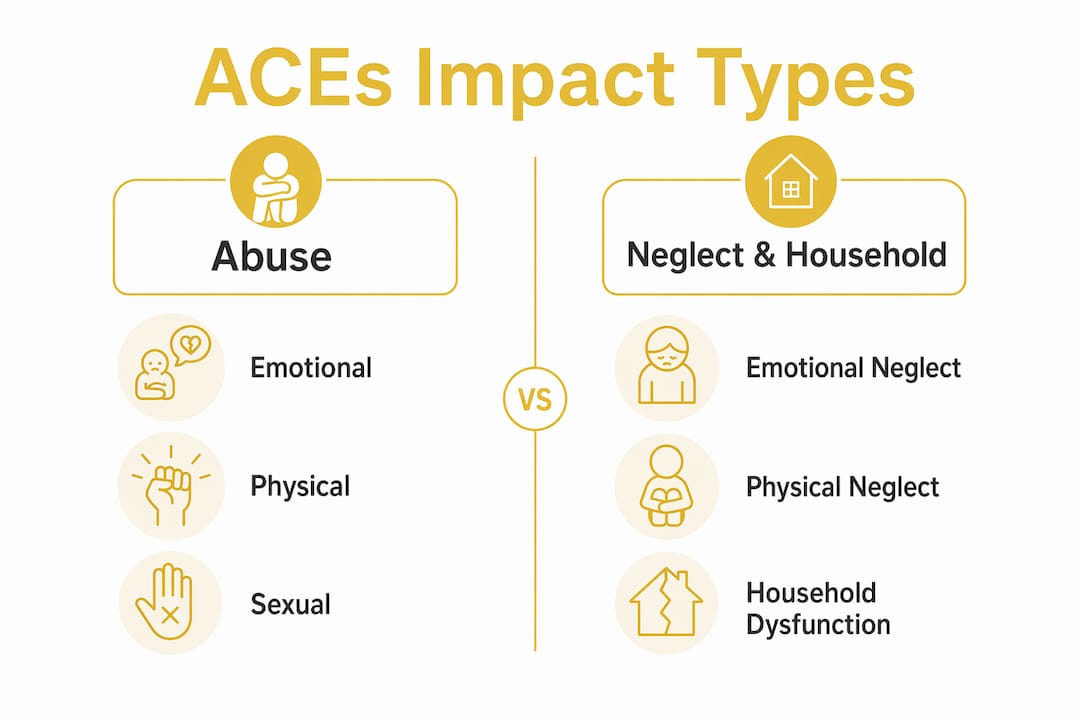
Research also shows there is no single neuroanatomical scar from childhood trauma. Each adversity type produces distinct structural changes in regions including the hippocampus, putamen, and entorhinal cortex. Sex also plays a role: women frequently show more pronounced structural brain differences following trauma than men, which partly explains why anxiety and depression present differently across sexes after ACE exposure.
Key outcomes by adversity type include:
- Emotional abuse: Strongest association with depression; structural changes in regions governing self-worth and emotional memory.
- Physical abuse: Heightened amygdala reactivity; increased risk of aggression and anxiety disorders.
- Neglect: Impaired prefrontal cortex development; difficulties with attention, planning, and emotional regulation.
- Sexual abuse: Elevated PTSD risk; disruption to hippocampal volume and memory consolidation.
- Household dysfunction (e.g., domestic violence, parental substance misuse): Chronic stress activation; dysregulated cortisol patterns affecting sleep and immune function.
The practical implication for caregivers is that the type of adversity your child experienced points toward specific areas of support. A child who experienced emotional abuse needs different therapeutic input than one who experienced neglect. Matching the support to the adversity type produces better outcomes.
What resilience factors can buffer the effects of childhood adversity?
Resilience is not a fixed trait a child either has or lacks. A study of 2,287 participants found that positive experiences and personal resilience measurably reduce the severity of anxiety, depression, and PTSD symptoms linked to ACE exposure. The brain retains plasticity, particularly in early childhood, and supportive relationships actively reshape neural development.
The first 1,000 days of life represent the most powerful window for intervention. During this period, non-clinical caregiver behaviours such as skin-to-skin contact reduce cortisol, increase oxytocin, and promote healthier brain circuit formation. These are not expensive medical procedures. They are everyday acts of physical closeness and attunement that carry measurable biological weight.
Supportive relationships also work through epigenetic pathways. Caregiver behaviour influences the expression of stress-response genes, meaning a consistently warm and responsive caregiver literally changes how a child’s stress system is calibrated at the molecular level. This is why building resilience in families is not a soft goal. It is a biological intervention. You can read more about practical approaches to building family resilience in Thezoofamily’s dedicated guide.
Pro Tip: Predictable daily routines are one of the most underrated resilience tools. A child whose environment is consistent and safe learns that the world is manageable. That belief is built into neural circuits, not just mindset.
Research is also shifting toward a Topological Approach, which focuses on how children interpret adversity rather than simply counting the number of events they experienced. Two children exposed to the same event may develop very different outcomes depending on whether they felt supported, believed, and safe during and after it. Your response to your child’s distress is itself a protective neurological intervention.
How can parents recognise signs of ACE-related brain development challenges?
Early identification of difficulties linked to brain development and trauma significantly improves outcomes. The challenge is that many signs overlap with typical developmental variation, which makes them easy to dismiss or misattribute. Knowing what to look for, and when to act, gives caregivers a real advantage.
The table below summarises common signs across three domains and the recommended caregiver response for each.
| Domain | Signs to watch for | Recommended response |
|---|---|---|
| Cognitive | Difficulty concentrating, poor memory, struggles with planning | Request an educational psychology assessment; explore structured learning support |
| Emotional | Persistent anxiety, emotional outbursts, flat affect, excessive fear | Consult a child psychologist; prioritise predictable, calm routines at home |
| Behavioural | Aggression, withdrawal, sleep disturbances, regression in skills | Speak to your GP or paediatrician; consider trauma-informed therapy |
| Social | Difficulty trusting others, clinginess, or extreme independence | Build consistent one-to-one connection time; avoid forcing social situations |
Mental health conditions including anxiety disorders, depression, and PTSD all carry neurological roots in ACE exposure. Seeking professional help is not an admission of failure. It is the most informed thing a caregiver can do. For a deeper look at how these changes unfold across childhood stages, Thezoofamily’s article on brain development in middle childhood offers useful context.
Managing a child’s stress during high-pressure periods, such as school examinations, also matters. Guidance on managing exam stress in children aged 5–13 offers practical strategies that complement trauma-informed caregiving at home.
Key takeaways
Adverse childhood experiences alter brain development in specific, timing-dependent ways, and informed caregiving remains the most powerful tool for reducing long-term harm.
| Point | Details |
|---|---|
| Timing determines impact | Brain regions maturing at the time of trauma are most affected, making the age of adversity critical. |
| ACE type shapes outcomes | Emotional abuse carries the strongest link to depression; neglect most disrupts prefrontal development. |
| Resilience is biological | Skin-to-skin contact, consistent routines, and warm caregiving change gene expression and stress circuits. |
| Early identification helps | Recognising cognitive, emotional, and behavioural signs early leads to better intervention outcomes. |
| Perception matters | How a child interprets adversity, not just the event itself, drives neurological and psychological outcomes. |
Why I think we underestimate the power of the ordinary
I have spent years reading the research on how trauma affects brain growth, and the finding that consistently stops me is this: the most powerful interventions are not clinical. They are ordinary. Skin-to-skin contact. A predictable bedtime. A caregiver who stays calm when a child cannot.
Parents often come to this topic feeling guilty or frightened, as though the damage is done and irreversible. The neuroscience says otherwise. The brain, especially in early childhood, is built for adaptation. It responds to safety the same way it responds to threat. Give it enough consistent safety and it begins to reorganise.
What I caution against is the assumption that all ACEs produce the same outcome. A child who experienced emotional abuse at age three needs different support than one who experienced neglect at age twelve. Treating them identically wastes time and misses the point. The research on the Maturation Match Hypothesis is not just academically interesting. It is a practical map for caregivers.
The other thing I would say is this: your child’s perception of what happened matters as much as what actually happened. A child who felt believed, protected, and supported during and after adversity has a meaningfully different neurological trajectory than one who did not. You cannot undo the past. You can absolutely shape what comes next.
— ALAIN
Thezoofamily: supporting children’s well-being beyond the screen
At Thezoofamily, we believe that healthy child development happens through connection, nature, and play. Our cameras, walkie-talkies, and binoculars are designed to pull children toward the world outside, building curiosity, confidence, and the kind of safe exploration that supports healthy neural development.

For every camera sold, Thezoofamily plants one tree. That commitment reflects our belief that children thrive when they feel connected to something larger than themselves. If you are supporting a child through adversity, our child well-being resources offer articles, practical tools, and guidance grounded in the latest developmental research. You will also find our full guide on how trauma affects brain development a useful companion to this article.
FAQ
What are adverse childhood experiences?
Adverse childhood experiences (ACEs) are traumatic events occurring before age 18, including abuse, neglect, and household dysfunction such as domestic violence or parental substance misuse. They are defined by their potential to disrupt healthy development across biological, psychological, and social domains.
Does every child exposed to ACEs develop lasting brain changes?
No. Outcomes vary significantly based on the type, timing, and frequency of adversity, as well as the presence of supportive relationships. Research shows that resilience factors and positive caregiving measurably reduce the severity of ACE-related symptoms.
Which part of the brain is most affected by childhood trauma?
The affected brain region depends on the age at which trauma occurs. Early childhood abuse primarily disrupts the amygdala, while adolescent neglect most affects the prefrontal cortex, according to the Maturation Match Hypothesis.
At what age is the brain most vulnerable to adverse experiences?
The first 1,000 days of life represent the most sensitive developmental window. Interventions during this period, including skin-to-skin contact and consistent caregiving, produce the strongest biological protective effects.
When should a parent seek professional help for a child affected by ACEs?
Seek professional support when you observe persistent difficulties in concentration, emotional regulation, sleep, or social behaviour. Early identification and trauma-informed therapy significantly improve long-term developmental outcomes.