

Many parents assume that eco parenting means composting every scrap, sewing your own nappies, and spending a fortune on organic everything. That picture puts most families off before they even begin. The truth is far more encouraging. Eco parenting is a mindful approach that minimises environmental impact, fosters a connection with nature, and builds conservation values in children, and it can start with one small change this week. This guide explains what eco parenting actually means, outlines its core principles, and gives you practical steps that fit real family life across Europe.
Table of Contents
- Defining eco parenting and its principles
- The practical habits of eco parenting
- Eco parenting in European urban and rural contexts
- Nurturing nature connection and eco values in children
- Expert tips, common pitfalls, and the myth of perfection
- Find more inspiration and resources
- Frequently asked questions
Key Takeaways
| Point | Details |
|---|---|
| Eco parenting defined | Eco parenting means making conscious, sustainable choices in raising children to protect their future and the planet. |
| Small steps matter | Simple swaps and changes in daily habits are effective and accessible for most families. |
| Nature connection benefits | Spending time outdoors builds resilience, empathy, and responsibility in children. |
| European context | Local brands, certifications, and sharing communities support practical eco parenting across Europe. |
| Progress over perfection | Consistent, realistic progress is more important and sustainable than aiming for eco perfection. |
Defining eco parenting and its principles
Eco-friendly or eco-conscious parenting is a mindful approach to raising children that minimises environmental impact through conscious choices in products, daily habits, and education. It is not a rigid rulebook. It is a set of values that you apply at your own pace, in ways that suit your family’s circumstances.
At its heart, eco parenting rests on a few clear principles:
- Sustainability first: choosing products and habits that reduce waste and resource use
- Health and safety: prioritising non-toxic materials and clean environments for children
- Nature connection: giving children regular, meaningful contact with the natural world
- Progress over perfection: celebrating small wins rather than demanding flawless consistency
- Education through experience: letting children learn conservation values by living them
“Eco parenting is not about doing everything right. It is about doing something better, consistently, and with intention.”
The benefits stretch well beyond the environment. Families who adopt eco-friendly parenting tips often report lower household costs, reduced exposure to synthetic chemicals, and children who are more curious, empathetic, and resilient. A thorough eco-friendly parenting guide can help you identify which principles resonate most with your family’s lifestyle and values.
The practical habits of eco parenting
Principles are inspiring, but habits are what create real change. Core eco parenting methodologies include reusables, composting, choosing organic and non-toxic products, buying second-hand, conserving energy, and engaging in nature play. Here is how those translate into everyday family life.
| Conventional habit | Eco swap | Approximate saving |
|---|---|---|
| Disposable nappies | Reusable cloth nappies | Up to €1,500 per child |
| Plastic bath toys | Natural rubber or wood toys | Reduces microplastic exposure |
| Fast-fashion children’s clothing | GOTS-certified or second-hand | 30–70% lower cost |
| Single-use wipes | Cloth wipes and warm water | Saves hundreds per year |
| Bottled toiletries | Refillable or bar alternatives | Cuts plastic waste significantly |
When shopping for new items, look for European certifications that carry genuine weight. GOTS (Global Organic Textile Standard) covers textiles. OEKO-TEX certifies that fabrics are free from harmful substances. The EU Ecolabel signals reduced environmental impact across a product’s life cycle. These labels help you cut through vague marketing claims quickly.
Here is a simple sequence to get started with eco-friendly routines at home:
- Audit one room at a time, starting with the bathroom or nursery
- Replace items as they run out rather than discarding everything at once
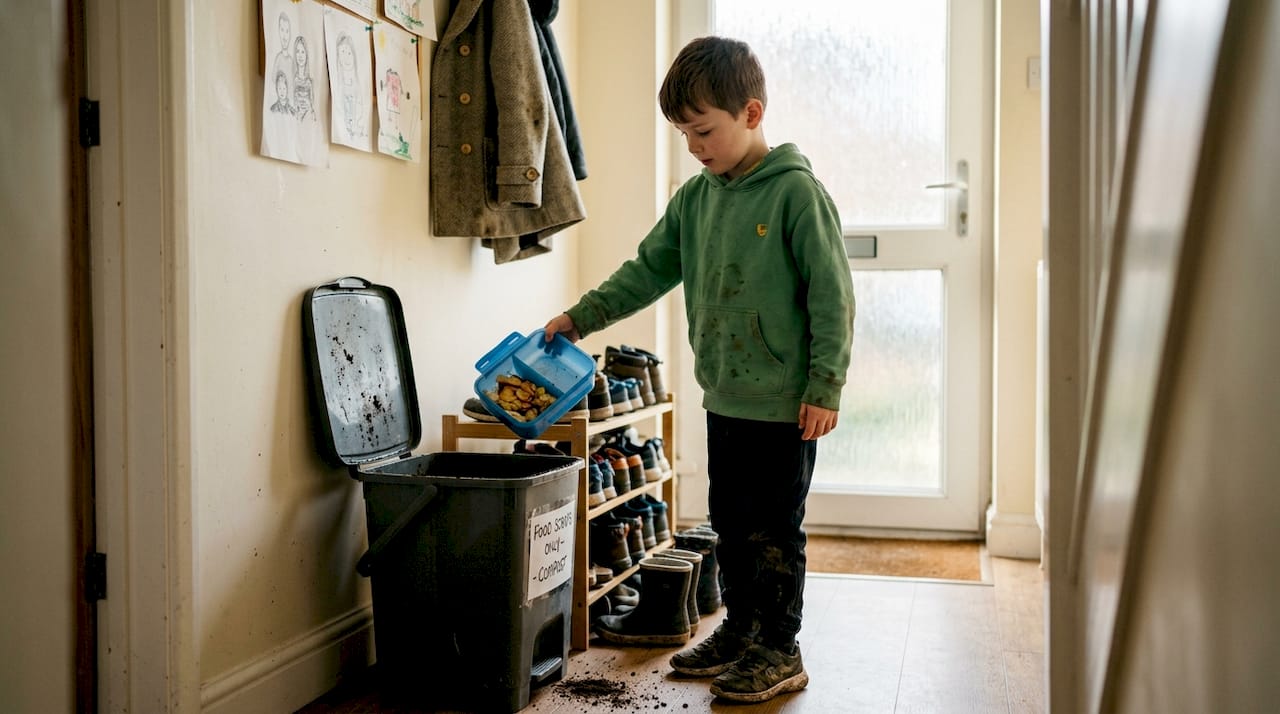
- Set up a small compost bin for fruit and vegetable scraps
- Switch to reusable containers for packed lunches and snacks
- Explore eco friendly bath toys made from natural materials for bath time
Pro Tip: The easiest way to save money as a green parent is to buy less overall. Before any purchase, ask whether you can borrow, rent, or find it second-hand first.
Eco parenting in European urban and rural contexts
Eco parenting looks different depending on where you live, and that is perfectly fine. European families benefit from focusing on local sustainable brands, eco labels, community sharing, and urban nature play like container gardening and market shopping.
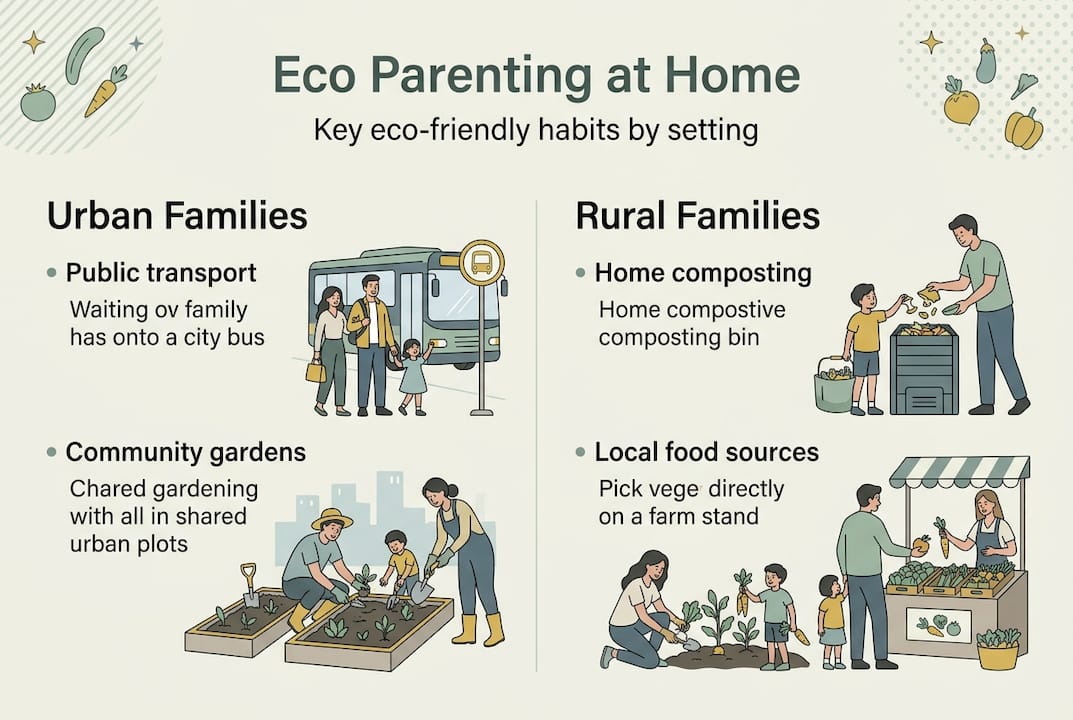
Urban families often feel they lack space or time. In reality, cities offer some excellent eco parenting advantages:
- Balcony and windowsill gardens grow herbs, strawberries, and even tomatoes in small spaces
- Local food markets reduce packaging and support regional farmers
- Toy libraries and swap groups mean children access variety without accumulating clutter
- Public transport lowers the family’s carbon footprint compared to car-dependent rural travel
- Community co-ops offer bulk buying of organic staples at lower prices
Rural families, meanwhile, often have direct access to nature, local farms, and space for composting or growing food. The challenge there tends to be transport emissions and fewer specialist shops. A family sustainability guide can help rural parents identify local networks and reduce reliance on long-distance deliveries.
| Context | Key advantage | Common challenge |
|---|---|---|
| Urban | Community resources, public transport | Limited green space, higher cost of living |
| Rural | Direct nature access, space for growing | Transport emissions, fewer eco shops |
| Suburban | Balance of both | Car dependency, sprawl |
Celebrating creative Earth Day activities is a brilliant way for both urban and rural families to mark their commitment and involve children in something joyful and purposeful.
Nurturing nature connection and eco values in children
The habits you build at home matter most when they translate into lasting values in your children. 85% of urban British parents want their children to spend more time outdoors, and the research backs them up: nature play boosts problem-solving, emotional regulation, and reduces anxiety through what researchers call ecotherapy.
The good news is that nature connection does not require a forest on your doorstep. Here are five practical ways to build it into family life:
- Grow something together: a pot of basil or a tray of cress teaches patience, biology, and responsibility in one go
- Watch local wildlife: a bird feeder on a balcony or a pond visit at the weekend introduces children to real ecosystems
- Try outdoor science activities: simple experiments with soil, water, and plants make science tangible and exciting
- Document nature: encourage children to photograph insects, leaves, and birds, building observation skills and genuine curiosity
- Join nature play week ideas: structured community events give children social nature experiences alongside peers
“Ecological education in early years links to higher environmental awareness and responsibility in adulthood.”
Introducing nature photography for children is a particularly powerful tool. When a child photographs a beetle or a flower, they slow down, observe carefully, and begin to care about what they see. Research from National Geographic confirms that regular outdoor time also delivers measurable mental health benefits, including reduced stress and improved focus.
Expert tips, common pitfalls, and the myth of perfection
Eco parenting has a reputation for being all-or-nothing, and that reputation puts families off. Experts consistently stress progress over perfection, and the importance of role modelling over strict rules. Avoid greenwashing by checking certifications rather than trusting packaging claims alone.
Here are the most common pitfalls and how to sidestep them:
- Greenwashing: brands use words like “natural” or “eco” without any certification to back them up. Always check for GOTS, OEKO-TEX, or EU Ecolabel
- Guilt spirals: one plastic bag or a forgotten reusable cup does not undo your efforts. Consistency over months matters far more than any single slip
- Overbuying “green” products: buying more stuff, even sustainable stuff, is still consumption. Reduce first, then choose better
- Lecturing children: children absorb values through observation. When they see you composting, cycling, or choosing local produce, they learn without a single lesson
Pro Tip: Pick one habit per month and make it automatic before adding another. This approach, sometimes called habit stacking, is far more effective than attempting a complete lifestyle overhaul in one weekend.
Exploring nature-connected parenting resources can give you fresh ideas when motivation dips. And remember, the families who sustain eco parenting longest are not the ones who do everything perfectly. They are the ones who keep showing up, imperfectly and consistently. Sharing parenting tips for greener families with friends and neighbours also multiplies your impact beyond your own household.
Find more inspiration and resources
Eco parenting is a journey, not a destination, and every family’s path looks a little different. At The Zoofamily, we believe that sparking a child’s curiosity about the natural world is one of the most powerful things a parent can do. Our kids’ cameras, binoculars, and walkie-talkies are designed with animal references that make nature feel exciting and accessible, and for every camera sold, we plant one tree.
Whether you are just starting out or looking to deepen your family’s commitment, you will find a wealth of ideas, activity guides, and community inspiration when you discover more eco parenting inspiration on our website. From seasonal nature activities to product guides built around sustainability, we are here to support every step. Explore our full collection of practical eco parenting tips and find the next small change that feels right for your family.
Frequently asked questions
Is eco parenting realistic for busy working families?
Yes, small habitual swaps like reusable containers and local shopping are manageable even with limited time. Urban families adapt well by prioritising rentals, subscriptions, and balcony gardens that require minimal daily effort.
Are eco parenting products more expensive?
Some carry higher upfront costs, but they typically save money over time through durability and reduced consumption. Buying second-hand and borrowing reduces costs significantly for most families.
How do I spot genuine eco-friendly products for children?
Look for trusted certifications on the label rather than relying on packaging language. GOTS, OEKO-TEX, and EU Ecolabel are the most reliable indicators for European shoppers.
What if my child resists outdoor play?
Start with short, interest-led activities rather than long unstructured sessions outdoors. Nature play boosts problem-solving and emotional regulation, so even brief, enjoyable outdoor moments build enthusiasm over time.
Recommended
- Understanding Eco Friendly Routines for Modern Families – The Zoofamily
- Understanding Eco Friendly Bath Toys: A Guide for Parents – The Zoofamily
- Understanding Taking Care of the Environment: A Mum’s Guide – The Zoofamily
- Eco-Friendly Parenting Tips: Raising Greener Children – The Zoofamily
- Vehicle Detailing For Families: Eco-friendly Convenience