

Over 80 percent of essential life skills are shaped during childhood, yet many parents overlook the power of play as a teaching tool. Learning responsibility does not just happen through chores or lectures, but takes root when children are free to make choices and experience outcomes on their own terms. By unlocking the hidden lessons in playful moments, families can nurture future-ready kids who understand the value of accountability and teamwork in everyday life.
Table of Contents
- Defining Responsibility Through Play
- Types Of Play That Cultivate Responsibility
- How Play Builds Responsibility Skills
- Parents’ Role In Play‑Based Responsibility
- Age‑Appropriate Play For Responsibility
Key Takeaways
| Point | Details |
|---|---|
| Value of Play | Play is a crucial developmental tool that fosters responsibility by allowing children to explore choices and consequences. |
| Structured Environments | Creating structured yet flexible play settings encourages autonomy and personal accountability in children. |
| Parental Involvement | Parents should intentionally shape play experiences, allowing natural consequences and modeling responsible behavior to support accountability. |
| Developmental Approaches | Tailoring play activities to a child’s age and cognitive development enhances their understanding of responsibility and social conduct. |
Defining Responsibility Through Play
Play represents more than just entertainment for children—it is a powerful developmental tool that teaches fundamental life skills, including responsibility. deled Institute highlights how freedom and autonomy during play contribute significantly to children’s understanding of personal accountability.
At its core, responsibility through play involves creating structured yet flexible environments where children can explore consequences, make independent choices, and learn from their actions.
 According to rsdjournal, play serves as a critical mechanism for defining roles and understanding social expectations within teaching-learning processes.
Children naturally develop responsibility through various play scenarios. For instance:
- Collaborative games that require turn-taking
- Role-playing activities simulating adult responsibilities
- Team-based challenges requiring collective problem solving
- Imaginative scenarios where characters must make ethical decisions
The beauty of teaching responsibility through play lies in its organic, non-confrontational approach. By embedding learning within enjoyable experiences, parents can help children internalize complex social concepts without feeling overwhelmed or pressured. Understanding the Benefits of Imaginative Play further explores how playful interactions can nurture critical developmental skills.
Effective responsibility-building play requires thoughtful design. Parents should create environments that encourage autonomy, provide gentle guidance, and allow natural consequences to emerge. This might mean selecting games that inherently require cooperation, decision-making, and mutual respect—transforming playtime into a powerful learning experience.
Types Of Play That Cultivate Responsibility
Children learn responsibility through diverse play experiences that engage their imagination, social skills, and problem-solving abilities. Wikipedia’s Free Play entry highlights several play types that are particularly effective in developing personal accountability and social understanding.
One powerful approach is make-believe play, which allows children to explore different roles and scenarios. According to Wikipedia’s Make Believe research, role-playing activities help children practice decision-making, empathy, and understanding consequences in a safe, controlled environment. These imaginative scenarios might include:
- Family simulation games
- Community role-playing (doctors, teachers, community helpers)
- Pretend scenarios involving shared responsibilities
- Problem-solving adventures with moral choices
Social play represents another critical mechanism for cultivating responsibility. Group activities that require cooperation, turn-taking, and collective decision-making teach children the importance of collective accountability. Making Learning Fun: Engaging Activities for Your Kids offers insights into how structured play can transform learning experiences.
Additionally, structured games with clear rules and collaborative objectives help children understand personal and shared responsibilities. By navigating these play experiences, children gradually develop critical life skills such as communication, empathy, self-regulation, and understanding the impact of their actions on others.
The key is creating playful environments that gently challenge children to think beyond themselves and consider the broader social context.
How Play Builds Responsibility Skills
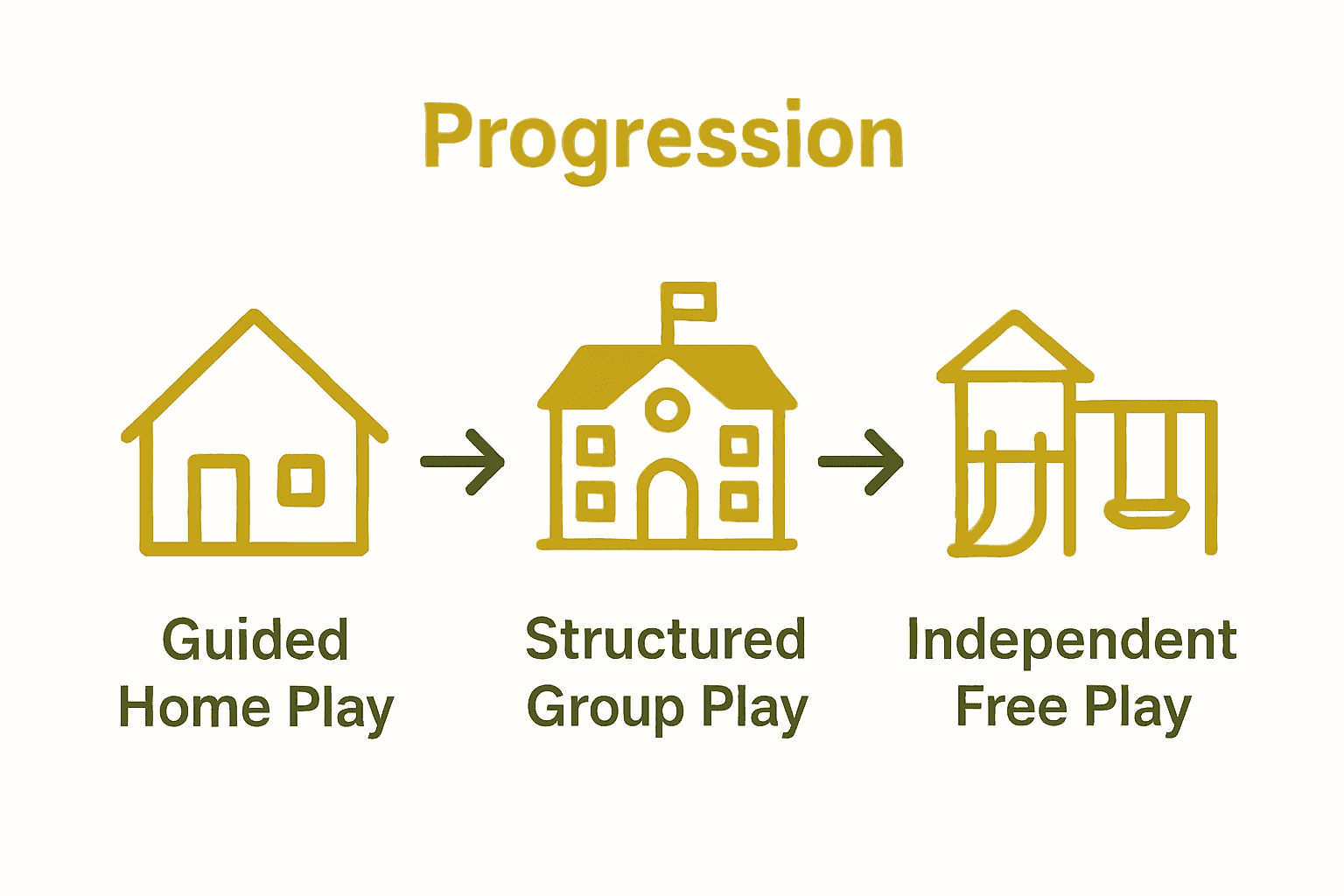
Responsibility is a complex skill that children develop gradually, with play serving as a critical mechanism for learning accountability and self-management. Wikipedia’s Gradual Release of Responsibility model demonstrates how structured play activities can systematically transfer responsibility from adults to children, creating a powerful learning environment.
The progressive skill-building approach happens through carefully designed play experiences. According to Wikipedia’s Concerted Cultivation research, parents can strategically use play to develop children’s sense of responsibility by introducing progressively challenging scenarios. These scenarios might include:
- Tasks with increasing complexity
- Games requiring independent decision-making
- Collaborative activities with shared goals
- Challenges that reward problem-solving
Social play becomes a fundamental training ground for responsibility. When children engage in group activities, they learn critical life skills such as turn-taking, negotiating, and understanding collective consequences. Making Learning Fun: Engaging Activities for Your Kids highlights how structured play can transform learning experiences into opportunities for personal growth.
Ultimately, responsibility is not about perfection but about learning and adapting. By creating playful environments that gently challenge children, parents can help them develop intrinsic motivation, self-regulation, and a genuine understanding of personal accountability. The key is to balance guidance with autonomy, allowing children to experience the natural consequences of their choices within a safe, supportive context.
Parents’ Role In Play‑Based Responsibility
Parents are the primary architects of children’s responsibility development, serving as crucial guides who shape play experiences that nurture accountability, self-regulation, and social understanding. Intentional parental involvement transforms ordinary play into powerful learning opportunities that help children develop critical life skills.
The most effective approach involves creating structured yet flexible play environments that allow children to explore consequences and make independent choices. Parents can support responsibility development by:
- Establishing clear but age-appropriate boundaries
- Providing opportunities for supervised independence
- Allowing natural consequences to emerge during play
- Offering constructive feedback without excessive criticism
- Modeling responsible behavior themselves
Making Learning Fun: Engaging Activities for Your Kids emphasizes the importance of designing play experiences that challenge children while maintaining a supportive atmosphere. This means carefully selecting games and activities that require cooperation, decision-making, and mutual respect.
Successful play-based responsibility development requires a delicate balance between guidance and autonomy. Parents must learn to step back and allow children to navigate challenges, make mistakes, and learn from their experiences. The goal is not to control every moment but to create a safe environment where children can gradually develop their own sense of personal accountability, problem-solving skills, and emotional intelligence.
Age‑Appropriate Play For Responsibility
Teaching responsibility is a developmental journey that requires tailoring play experiences to match a child’s cognitive and emotional maturity. Age-specific strategies ensure that children encounter challenges that are both stimulating and achievable, promoting gradual skill development and confidence.
For younger children (ages 2-4), responsibility play focuses on simple, concrete tasks and collaborative activities. These might include:
- Helping to put away toys
- Taking turns during group games
- Following basic rules in structured play
- Participating in simple household helper roles
Middle childhood (ages 5-8) introduces more complex responsibility scenarios. Childhood Brain Development: A Guide for Modern European Mums highlights the importance of gradually increasing autonomy during this critical developmental stage. Children at this age can handle more nuanced responsibilities such as:
- Managing personal belongings
- Contributing to team-based activities
- Understanding consequence-based decision making
- Participating in cooperative problem-solving games
As children approach pre-teen years (9-12), responsibility play becomes more sophisticated. Parents can introduce activities that require strategic thinking, emotional intelligence, and increased self-management. The goal is to create play experiences that challenge children to think critically, demonstrate accountability, and develop intrinsic motivation for responsible behavior.
Inspire Responsibility Through Nature-Inspired Play
Teaching responsibility through play can be challenging when you want your child to develop accountability, empathy and self-regulation naturally. The article highlights how structured play helps children explore consequences and make independent choices while fostering social understanding. At The Zoofamily, we understand these parenting goals deeply and support your journey by providing creative tools that spark curiosity and meaningful connections.
Our range of kids’ cameras, walkie-talkies and binoculars are not just toys but gateways to hands-on learning experiences that encourage autonomy and collaboration. Each item is inspired by animals and nature to spark imagination and inspire responsibility for the world around us. Explore our collection at The Zoofamily and discover how play can build critical life skills while nurturing love for the planet. Don’t wait to empower your child with joyful responsibility — start your adventure today with The Zoofamily and see how natural curiosity turns into responsible actions.
Frequently Asked Questions
How can parents promote responsibility in their children through play?
Parents can create structured yet flexible play environments that encourage autonomy, establish clear boundaries, and allow natural consequences to emerge. Activities like collaborative games and role-playing can help children learn about personal accountability.
What types of play are best for teaching responsibility?
Effective types of play for teaching responsibility include make-believe play, social play, and structured games with clear rules. These encourage cooperation, decision-making, and an understanding of consequences, fostering responsibility in children.
What age-appropriate activities can help children learn responsibility?
For younger children, activities like turn-taking and helping with simple household tasks are effective. As children grow, introducing cooperative problem-solving games and encouraging them to manage personal belongings can enhance their understanding of responsibility.
Why is play important for developing responsibility skills in children?
Play serves as a natural and enjoyable way for children to explore the consequences of their actions. It provides a safe environment for them to practice decision-making, empathy, and self-regulation, all crucial components of responsibility.