

Every eco-conscious mum knows the joy of seeing her child race into the garden, eyes bright with curiosity and hands ready for discovery. Finding educational gifts that inspire outdoor exploration without adding to landfill can feel impossible in modern city life. P cameras for kids offer a unique blend of real photography, creative self-expression, and multi-sensory learning, making them the ideal choice for families in France and Germany who value both nature connection and thoughtful design.
Table of Contents
- P Camera For Kids: Definition And Core Concepts
- Main Types And Creative Functions Explained
- Eco-Friendly Materials And Sustainable Practices
- Legal And Privacy Concerns For Children
- Common Pitfalls, Risks, And Safer Alternatives
Key Takeaways
| Point | Details |
|---|---|
| Child-Friendly Design | P cameras feature durable, lightweight construction tailored for small hands, prioritising safety and ease of use. |
| Encourages Exploration | These cameras promote outdoor activities and creative observation, enhancing children’s engagement with their surroundings. |
| Eco-Friendly Practices | Brands like The Zoofamily utilise sustainable materials and practices, teaching kids the importance of environmental responsibility through their play. |
| Privacy Protection | Choosing offline or standalone models ensures better privacy for children’s photos, minimising risks associated with data sharing and tracking. |
P camera for kids: definition and core concepts
A P camera for kids is a specially designed digital camera built for young children, combining child-friendly features with real photographic capabilities. Unlike toy cameras with fixed images, P cameras capture actual photographs, enabling children to explore their world through a creative lens.
These cameras prioritise safety, durability, and intuitive controls. They feature lightweight frames, large buttons, and durable materials that withstand the inevitable bumps of childhood adventures. The simplified interfaces mean your child can focus on composition and creativity rather than wrestling with complex settings.
Core features of P cameras include:
- Durable construction designed to survive drops and outdoor exploration
- Simplified controls with just a few essential buttons for ease of use
- Age-appropriate screen sizes that don’t strain young eyes
- Built-in safety features such as wrist straps to prevent loss
- Lightweight design that children can comfortably hold for extended periods
Research shows that young children can learn digital camera use through structured play and practice in supportive environments. This capability forms the foundation of why P cameras work so well for creative development.
These devices transform play into active learning. When your child captures an image of a beetle crawling through the garden or a bird visiting the bird feeder, they’re engaging in authentic nature observation and documentary storytelling.
What makes P cameras different from smartphones:
- Single-purpose design prevents digital distraction
- Encourages outdoor exploration rather than screen time
- Built specifically for smaller hands and developing motor skills
- Educational focus aligned with nature discovery
- No access to apps, notifications, or social media
Multi-sensory educational tools like cameras engage children’s senses to enhance learning efficiency and maintain sustained interest. P cameras exemplify this principle by combining visual observation, physical handling, and creative expression into one activity.
The eco-conscious design matters too. Brands like The Zoofamily plant one tree for every camera sold, embedding environmental values into the very product your child uses. This teaches children that their creative play can have positive planetary impact.
P cameras bridge the gap between toy simplicity and professional capability, allowing children to become genuine photographers rather than button-pressers.
Understanding these core concepts helps you recognise why P cameras serve as powerful tools for creative development, nature connection, and environmental awareness in one sustainable package.
Pro tip: Introduce your child to the camera through outdoor exploration first—let them chase interesting subjects like insects or flowers—rather than teaching technical features first, which builds confidence and genuine interest.
Main types and creative functions explained
P cameras come in several distinct types, each suited to different ages and creative interests. Understanding these variations helps you choose the right tool for your child’s developmental stage and curiosity.
Standard P cameras are the most common type, featuring basic photography controls and instant playback. These work brilliantly for children aged 4-8 who are just discovering how cameras capture the world around them. The simplicity encourages exploration without overwhelming young photographers with technical settings.
Dual-lens cameras offer wider creative possibilities by combining wide-angle and standard lenses. This lets children experiment with different perspectives—capturing a whole garden scene or zooming in on a tiny flower. Your child learns compositional thinking through hands-on experimentation rather than abstract lessons.
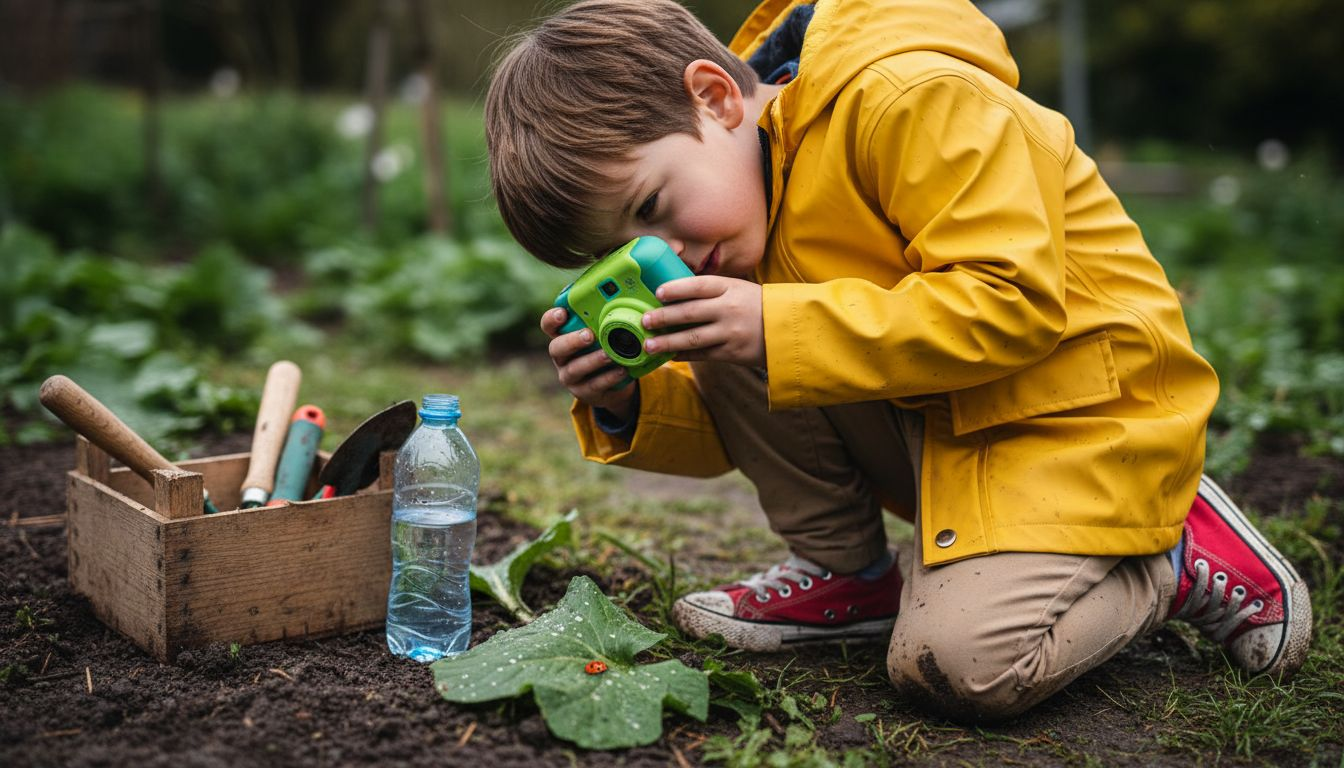
Waterproof P cameras transform outdoor adventures into photography opportunities without anxiety. Beach holidays, forest explorations, or rainy day garden visits become creative sessions rather than camera-threatening situations. The durability means your child can focus entirely on composition instead of protecting fragile equipment.
Creative functions available across P camera types:
- Photo modes with filters and artistic effects for self-expression
- Video recording capabilities for documenting nature sequences
- Built-in games that teach compositional skills through play
- Instant printing options for tangible creative output
- Night or special lighting modes for exploring different photographic conditions
The best kids’ cameras include easy controls and durability specifically designed to support creative experimentation. These features work together to build confidence in young photographers whilst protecting your investment.
Each camera type encourages different creative functions. Video capabilities help children tell stories about woodland creatures or document their garden’s seasonal changes. Photo filters enable artistic expression—making ordinary garden paths look mysterious or emphasising natural colours.
Creative play with cameras builds self-expression and confidence in children through hands-on discovery. When your child captures their own vision rather than copying adult photography, they develop genuine creative voice.
The eco-conscious models from brands like The Zoofamily combine these creative functions with environmental education. Every photograph your child takes connects to their understanding of nature worth protecting.
Here’s how the main P camera types differ for young photographers:
| Camera Type | Ideal Age Range | Key Creative Benefit | Durability Level |
|---|---|---|---|
| Standard | 4-8 years | Simple photography discovery | Moderately resistant to drops |
| Dual-lens | 6-10 years | Artistic perspective learning | Robust, but less waterproof |
| Waterproof | 5-12 years | Outdoor adventure photography | Highly resistant to water/shocks |
The camera type matters less than how it matches your child’s current interests—choose based on where they’ll actually use it most.
Pro tip: Start with a standard P camera to identify your child’s genuine photography interests before investing in specialised waterproof or dual-lens models.
Eco-friendly materials and sustainable practices
Eco-friendly P cameras represent a commitment to environmental responsibility that goes beyond the product itself. These cameras use sustainable materials and manufacturing processes that align with your values as an eco-conscious parent.
Materials used in sustainable P cameras include:
- Recycled plastics from post-consumer waste, reducing landfill burden
- Wood components sourced from responsibly managed forests
- Bioplastics derived from renewable plant-based sources
- Non-toxic coatings that protect children whilst avoiding harmful chemicals
- Minimal packaging using recycled or compostable materials
The shift towards sustainable toy materials like wood and bioplastics reflects growing industry recognition that children’s products must protect both young users and the planet. These material choices genuinely reduce environmental footprints without compromising durability or safety.
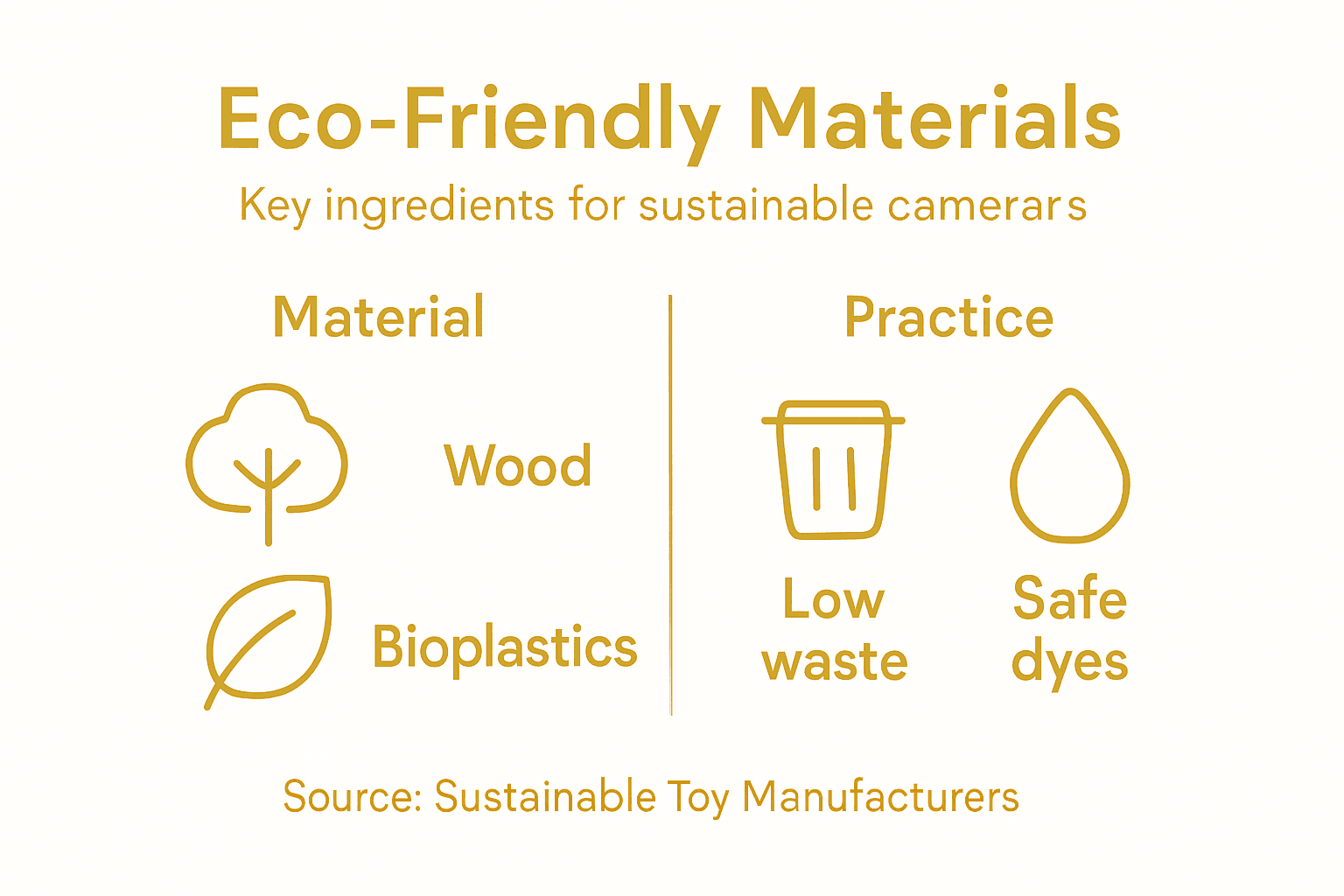
Manufacturers committed to sustainability go beyond material selection. They implement production practices that minimise waste, reduce energy consumption, and avoid harmful chemicals throughout the manufacturing process. Your purchase directly supports factories making these responsible choices.
The circular economy approach matters too. Sustainable brands design cameras expecting eventual end-of-life recycling. Components separate easily, materials remain pure enough for genuine recycling, and packaging returns to the production cycle rather than becoming waste.
Most conventional children’s toys end up in landfills because complex material blends make toys difficult to recycle. Eco-friendly P cameras solve this through deliberate design using single-material components wherever possible.
Brands like The Zoofamily embed environmental action into their business model. For every camera sold, one tree gets planted, creating a tangible environmental benefit alongside your child’s creative play. This teaches children that their possessions carry environmental responsibility.
Choosing eco-friendly P cameras teaches children that environmental care isn’t separate from daily life—it’s woven into the products they use.
When you select a sustainable camera, you’re making a statement about what matters to your family. Your child uses a product made thoughtfully, knowing its materials came from responsible sources and its eventual recycling was considered from day one.
Below is a summary of eco-conscious features offered by sustainable P camera brands:
| Sustainability Feature | Environmental Impact | Benefit to Children |
|---|---|---|
| Recycled plastics | Reduces landfill and pollution | Teaches responsible reuse |
| Tree planting programme | Offsets carbon from production | Connects play with nature |
| Minimal packaging | Cuts down waste and resource use | Highlights simplicity value |
Pro tip: Ask manufacturers directly about their material sourcing and end-of-life recycling options before purchasing—transparency indicates genuine commitment to sustainability.
Legal and privacy concerns for children
When your child uses a P camera, privacy and data protection matter as much as the creative experience. Understanding the legal landscape helps you make informed decisions that protect your child’s rights.
Data collection and storage concerns:
- Photo storage location whether on-device, cloud, or manufacturer servers
- Data retention policies specifying how long photos remain accessible
- User tracking through connected features or app integrations
- Third-party access to images or metadata your child generates
- Parental controls ensuring age-appropriate content management
Research highlights that children’s privacy in digital contexts requires stronger protections and child-centred design approaches. Many manufacturers don’t adequately involve children or parents in privacy decisions, creating gaps between product design and actual family needs.
Different regions enforce varying privacy standards. The European Union’s General Data Protection Regulation (GDPR) sets stricter requirements than some other jurisdictions. If you’re in Germany or France, these rules provide significant protection for your child’s data.
Standalone P cameras without WiFi or cloud connectivity offer the simplest privacy solution. Your child’s photos remain entirely on the device, eliminating concerns about data transfer or remote storage. This aligns perfectly with eco-conscious values—no unnecessary data infrastructure required.
Cameras requiring app connectivity introduce additional considerations. Check whether the manufacturer collects usage data, location information, or behavioural patterns. Some companies aggregate children’s creative habits for marketing purposes without meaningful consent.
Questions to ask manufacturers:
- Does the camera collect data beyond photos themselves?
- Who owns photos your child creates?
- How long does the company retain data?
- Can data be permanently deleted?
- Are there child safety features built in?
Legal frameworks around children’s safety in product design continue evolving. Manufacturers increasingly face responsibility to implement privacy-by-design principles, meaning protection built into products from inception rather than added afterwards.
The Zoofamily’s standalone P cameras require no accounts, cloud access, or data transmission. This approach eliminates privacy complications entirely whilst maintaining creative functionality your child genuinely needs.
Simpler cameras often provide better privacy protection than feature-rich alternatives requiring constant connectivity.
Your child’s creative work deserves protection. Photos they capture represent their perspective and imagination—choosing cameras respecting that privacy demonstrates values worth passing on.
Pro tip: Before purchasing, request the manufacturer’s privacy policy in writing and verify whether the camera functions fully offline without account creation or cloud requirements.
Common pitfalls, risks, and safer alternatives
Whilst P cameras offer genuine creative benefits, understanding potential risks helps you guide your child safely. Most pitfalls stem from connected features rather than photography itself.
Common pitfalls to avoid:
- Excessive screen time from cameras encouraging constant digital reviewing rather than outdoor exploration
- Shared photo platforms exposing your child’s images to strangers without proper consent
- Data-harvesting features that track location or collect behavioural information
- Inappropriate content access through integrated browsers or social functions
- Device damage from inadequate durability in budget models
Research identifies privacy invasion and data security as major risks children face with digital devices. Many camera manufacturers prioritise features over protection, creating vulnerabilities that undermine creative play benefits.
One significant risk involves photo sharing features. Cameras with built-in WiFi and cloud upload create opportunities for images to be accidentally or intentionally shared beyond your family. This exposure contradicts the private, personal nature of childhood creativity.
Another pitfall is over-reliance on screens. Cameras that encourage constant playback and digital manipulation can shift focus from outdoor exploration to device interaction. Your child misses the primary benefit—engaging with nature directly.
Safer alternatives and safeguards:
- Choose offline-only cameras without WiFi or cloud connectivity
- Select models with robust parental controls and no app requirements
- Prioritise durable construction meeting safety certifications
- Verify privacy policies explicitly stating no data collection
- Establish usage boundaries limiting screen review time
Research on online risks to children emphasises platform design improvements and stronger safety frameworks. The safest cameras align with this approach—simple devices without platforms, algorithms, or data collection infrastructure.
The Zoofamily’s P cameras exemplify safer design. Standalone operation means no accounts, no tracking, and no data transmission. Your child captures, reviews on-device, and transfers photos to your family computer when desired. Complete control remains yours.
Simpler cameras with fewer features often provide better safety than feature-rich alternatives requiring constant connectivity and data sharing.
Establishing clear photography rules matters too. Discuss what subjects are appropriate, when outdoor exploration ends and screen time begins, and how to respect others’ privacy when photographing.
Pro tip: Start with an offline P camera and add connected features only if your child demonstrates genuine need and you’ve established strong digital literacy boundaries first.
Discover Eco-Friendly Creative Play with The Zoofamily
The article highlights the challenge parents face in finding a safe, durable, and eco-friendly P camera for kids that fosters true creativity while protecting their privacy and the planet. Many families want to encourage outdoor exploration and imaginative expression without exposing children to digital distractions or unsafe data practices. The Zoofamily perfectly meets these needs by crafting cameras designed for young hands with sustainable materials and a built-in commitment to planting a tree for every product sold.
Experience the joy of watching your child connect deeply with nature using tools that respect their privacy and nurture their creativity. Visit The Zoofamily today to explore our eco-friendly kids’ cameras, walkie-talkies, and binoculars. Start your child’s journey towards creative discovery and environmental stewardship with a trusted brand that puts children and the planet first. Take the next step now and inspire a lifelong love for the natural world through play. Learn more at The Zoofamily and join our mission to grow greener futures together.
Frequently Asked Questions
What is a P camera for kids?
A P camera for kids is a specially designed digital camera that allows children to capture real photographs while being user-friendly, durable, and safe for young users.
How do P cameras differ from standard smartphones?
P cameras differ from smartphones mainly in their design and purpose; they focus on encouraging outdoor exploration, have child-friendly controls, and avoid digital distractions, ensuring that kids can engage with their environment creatively.
What are the main types of P cameras available for children?
The main types of P cameras include standard, dual-lens, and waterproof models. Each type caters to different age ranges and allows for varying levels of creative exploration, such as basic photography, artistic perspective learning, and outdoor adventure photography.
What eco-friendly materials are used in sustainable P cameras?
Eco-friendly P cameras use materials like recycled plastics, responsibly sourced wood, bioplastics, non-toxic coatings, and minimal packaging. These choices aim to reduce environmental impact while maintaining safety and durability for children.
Recommended
- News – The Zoofamily
- Camera Features for Kids: Sparking Eco-Friendly Creativity – The Zoofamily
- Camera Features for Kids: Sparking Eco-Friendly Creativity – The Zoofamily
- Toy Camera Digital: Inspiring Eco-Friendly Creativity – The Zoofamily
- ECO Pens & Pencils - My Next Promo
- Xiaomi lanzó un lápiz inteligente pensado para los niños - El Tecnoilogico
- Creative Enthusiast - Ikigai Personality Type | Ikigain