

You can start bird watching with young children today using only your eyes and ears, a 30–60 minute plan, and a couple of simple activities. No specialist apps, no expensive optics, and no prior knowledge required. The RSPB recommends 1–2 hours for a family session, and the annual Big Garden Birdwatch gives families a ready-made reason to begin. Thezoofamily’s child-sized nature gear makes it straightforward to kit children out when you are ready to go further.
You do not need:
- A field guide or specialist identification app
- Adult-grade binoculars or a telephoto camera
- A nature reserve visit for the first session
Key takeaways
Starting bird watching with children requires almost no equipment and as little as 30 minutes, with behaviour-first observation and one structured activity enough to make a first session successful.
| Point | Details |
|---|---|
| Start immediately | Eyes, ears, and a window are enough for a first session — no specialist gear needed. |
| Session length | Plan 30–60 minutes; RSPB recommends 1–2 hours for a full family outing. |
| Teach behaviour first | Focus on movement and feeding habits before colour, following RSPB identification guidance. |
| Join Big Garden Birdwatch | Register via the RSPB website; NDNA guidance supports nursery and school participation. |
| Thezoofamily kit | Child-sized binoculars, cameras, and walkie-talkies suit ages 3 and above for garden and reserve sessions. |
Table of Contents
- Where can you watch birds with children in the UK?
- What kit do children actually need for birdwatching?
- How do you teach children to notice birds?
- Activities and games that keep children engaged
- A simple 30–60 minute session plan you can use today
- Safety and supervision for child birdwatching sessions
- Why birdwatching matters for children
- Thezoofamily kids’ nature kit for birdwatching sessions
- Sources
Where can you watch birds with children in the UK?
The best starting point is wherever children already feel comfortable. A kitchen window overlooking a garden hedge, a school playground edge, or a local park pond all work well. Bird Spot confirms that gardens and windows are ideal starting places, and the RSPB’s network of more than 170 nature reserves offers a natural next step once children are ready for a longer outing.
Practical location options:
- Window or patio at home
- School garden or playground edge
- Local park with a pond or tree line
- Community nature reserve or woodland path
- RSPB reserve (check the family facilities page before visiting)
Quick safety and permission checklist before you choose a spot:
- Public access confirmed or permission obtained
- No open water within unsupervised reach of young children
- Toilets available for sessions longer than 30 minutes
- Ground is even and manageable for the group’s age range
- Distance from roads is appropriate
| Factor | Guidance |
|---|---|
| Recommended session length | 1–2 hours (RSPB) |
| RSPB reserve network | More than 170 reserves across the UK |
Pro Tip: Match the location to the child’s energy level. A toddler group does well at a window or garden; older primary children can manage a short woodland walk. A quieter spot with a clear sightline beats a scenic but busy location every time.
What kit do children actually need for birdwatching?
Eyes and ears are often enough to start. Bird Spot’s guidance for children is clear: the basics require no equipment at all. Gear becomes useful once children want to look closer or record what they find.
Helpful items, in order of usefulness:
- Child-sized binoculars (avoid magnification above 10x; look for lightweight, durable, waterproof models sized for small hands — see Thezoofamily’s binoculars buyer’s guide for age-specific guidance)
- A simple kids’ camera for recording sightings without needing to draw
- A notebook or sticker tally sheet for counting and recording
- Printed ID cards showing common UK garden birds (robin, blue tit, blackbird, wood pigeon, starling)
- Warm, waterproof layers and sturdy footwear
- Snacks and water for sessions over 30 minutes
For toddlers, a sticker sheet and a window seat are sufficient. Children aged 5 and above can manage a small notebook and a pair of child-sized binoculars. Thezoofamily designs cameras, binoculars, and walkie-talkies specifically for young children, with animal-themed references that connect gear to nature rather than making it feel like adult equipment scaled down.
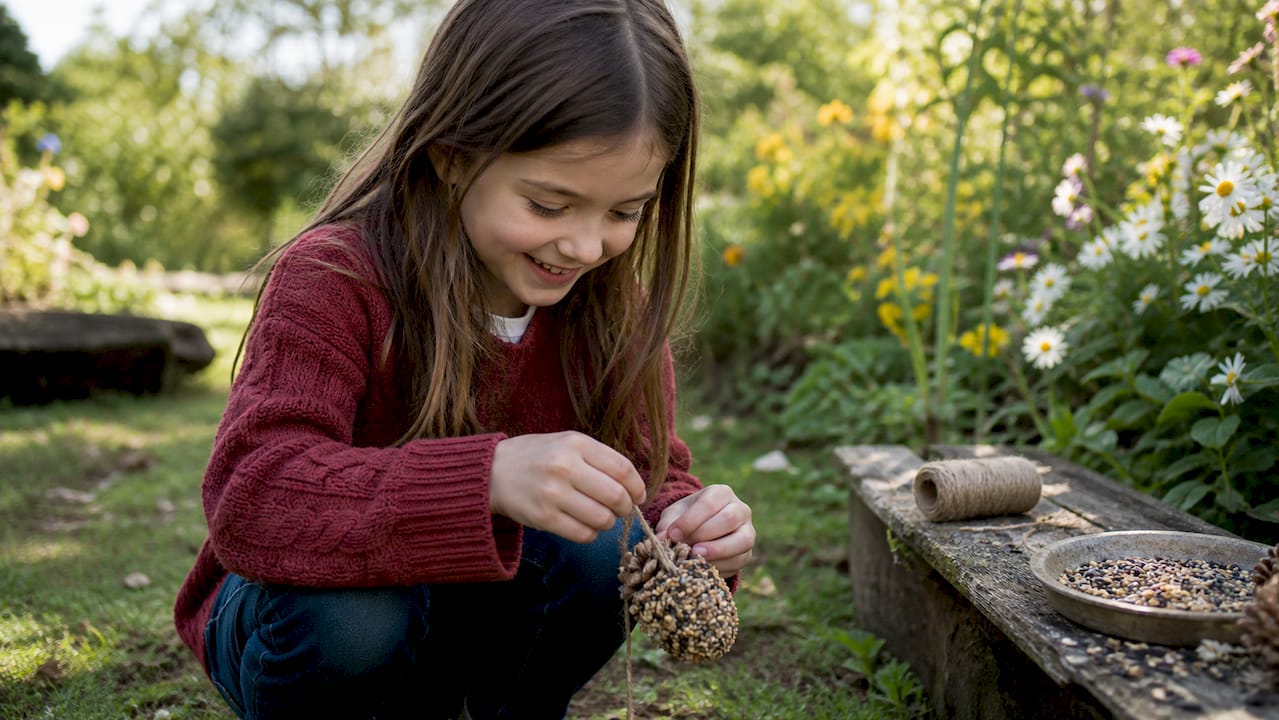
DIY options such as pine-cone fat feeders and black-paper window viewing slots cost almost nothing and draw birds close enough for children to observe without binoculars.
How do you teach children to notice birds?
Behaviour and sound are easier starting points than colour. Light changes, distance, and foliage all affect how a bird looks, but the way it hops, dips its tail, or calls stays consistent. The RSPB recommends using feeding habits and movement as reliable identification clues, which reduces frustration for young observers who struggle to match a fleeting glimpse to a colour plate.
Step-by-step observation prompts for children:
- Stop, stand still, and listen for 30 seconds before looking.
- Watch how the bird moves: does it hop, walk, or dart?
- Notice where it is feeding: on the ground, in a bush, or at a feeder?
- Compare its size to something familiar: is it smaller than a pigeon, bigger than a sparrow?
- Listen for its call: is it a whistle, a chatter, or a repeated phrase?
The RSPB’s beginner guide highlights being still and quiet as the single most effective technique for improving sightings and hearing calls. Frame this for children as a game: whoever stays quietest for the longest spots the most birds.
Pro Tip: The RSPB Bird Song Identifier recommends learning one birdsong per week. Pick the robin or the great tit for the first week — both are common, distinctive, and easy to find in UK gardens year-round.
Activities and games that keep children engaged
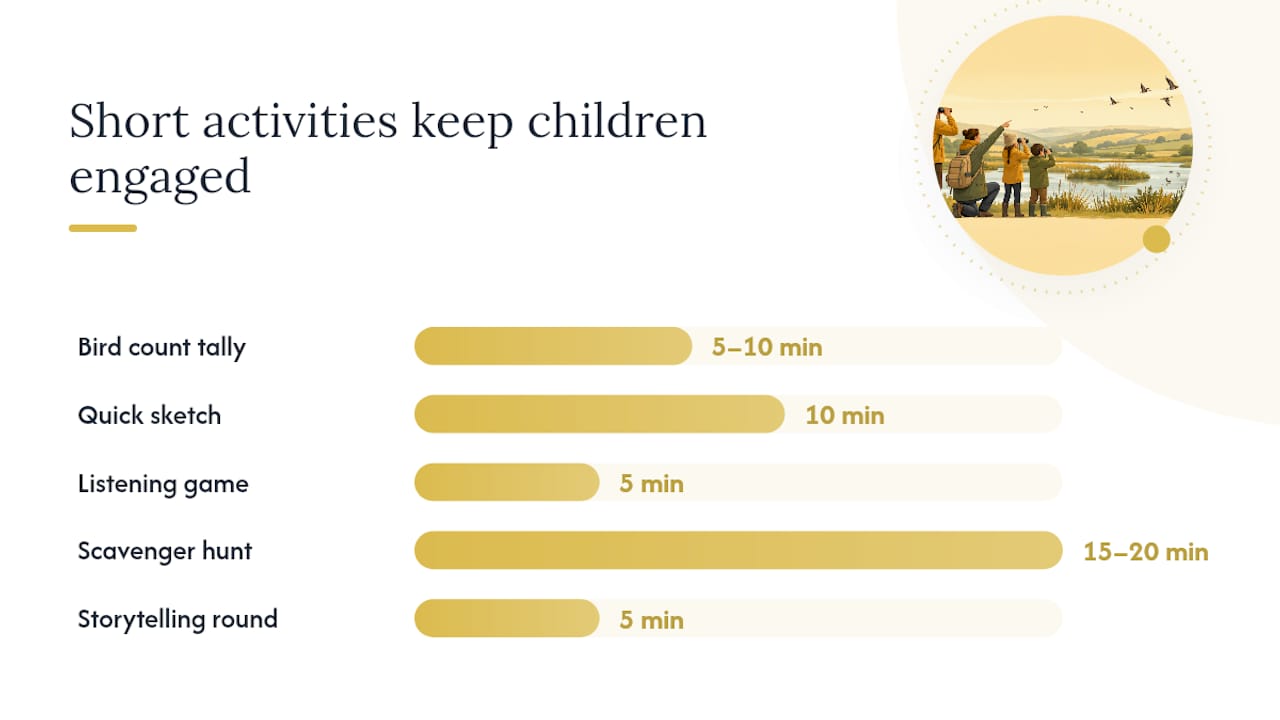
Short, repeatable activities work best. A child who draws one bird or fills in one tally mark feels successful; a child asked to identify twelve species in an hour does not. The NDNA’s early years guidance recommends planning one hour or multiple short slots, with tangible recording tools to anchor the experience.
Five activities with time and materials:
- Bird count tally (5–10 minutes): Mark a tally for each species seen. Materials: printed tally sheet, pencil. Links to numeracy.
- Quick sketch (10 minutes): Draw the bird’s shape and one feature. Materials: notebook, pencil or wax crayon. Links to art and observation.
- Listening game (5 minutes): Close eyes, count how many different calls you hear. Materials: none. Links to listening and language.
- Scavenger hunt (15–20 minutes): Tick off a list of behaviours (bird eating, bird flying, bird on a branch). Materials: printed checklist. Links to reading and science.
- Storytelling round (5 minutes): Each child names one thing their bird did. Materials: none. Links to speaking and narrative skills.
For mixed-age groups, pair older children with younger ones for the tally and sketch activities. Older children take the recording role; younger children point and name colours. Both stay engaged without needing separate resources.
A simple 30–60 minute session plan you can use today
This plan fits a school lunch slot, a weekend morning, or an after-school garden session.
Materials to prepare in advance:
- Tally sheets or sticker charts (one per child)
- Pencils or wax crayons
- Printed ID cards for five common UK species
- Child-sized binoculars if available
- Snacks and water for sessions over 30 minutes
Timed session checklist:
- Arrive and settle (0–5 minutes): Walk quietly to the chosen spot. Remind children of the stillness rule.
- First observation block (5–20 minutes): Watch and listen. Use the five prompts from the observation section. No recording yet.
- Activity block (20–35 minutes): Run one or two activities from the list above (tally, sketch, or scavenger hunt).
- Recording and ID (35–45 minutes): Match sightings to ID cards. Fill in tally sheets. NDNA guidance notes that recording even a zero count (no birds seen) is a valid and useful outcome.
- Sharing and wrap-up (45–60 minutes): Each child shares one thing they noticed. Ask: “What would you look for next time?”
Safety and supervision for child birdwatching sessions
Adult supervision and a basic risk assessment are mandatory for any outdoor session with children. This applies whether you are in a school garden or a public park.
Common risk checklist:
- Open water: keep children at a safe distance; assign a designated adult to monitor
- Roads and car parks: brief children on boundaries before the session starts
- Uneven ground: check the route in advance; avoid wet or muddy slopes with very young children
- Allergies: check for grass, pollen, or insect allergies before outdoor sessions
- Small craft parts: if making DIY feeders, supervise closely and avoid small components with under-3s
- Hygiene: wash hands after handling feeders, soil, or natural materials
Supervision ratios follow your setting’s standard policy. As a general guide, early years groups benefit from a 1:4 adult-to-child ratio outdoors; Key Stage 1 groups typically work at 1:6 to 1:8. Adapt activities to your organisation’s own risk-assessment framework and local authority guidance.
Always carry out a site-specific risk assessment before taking children to any outdoor location. Check for hazards, confirm access permissions, and brief all supervising adults on the session plan and emergency procedures before you begin.
Why birdwatching matters for children
Birdwatching gives children a low-cost, repeatable way to connect with the natural world. It builds patience, listening skills, and scientific observation without requiring a classroom or specialist equipment. The connection between noticing a bird and recording it is a small but real act of citizen science, and events like the RSPB Big Garden Birdwatch turn that act into something that contributes to national data.
Thezoofamily’s approach to nature gear reflects the same principle: design products that make the natural world accessible to children, and pair that with a commitment to the environment. For every camera sold, Thezoofamily plants one tree. The goal is not just to sell equipment but to build a habit of looking outward.
Thezoofamily kids’ nature kit for birdwatching sessions
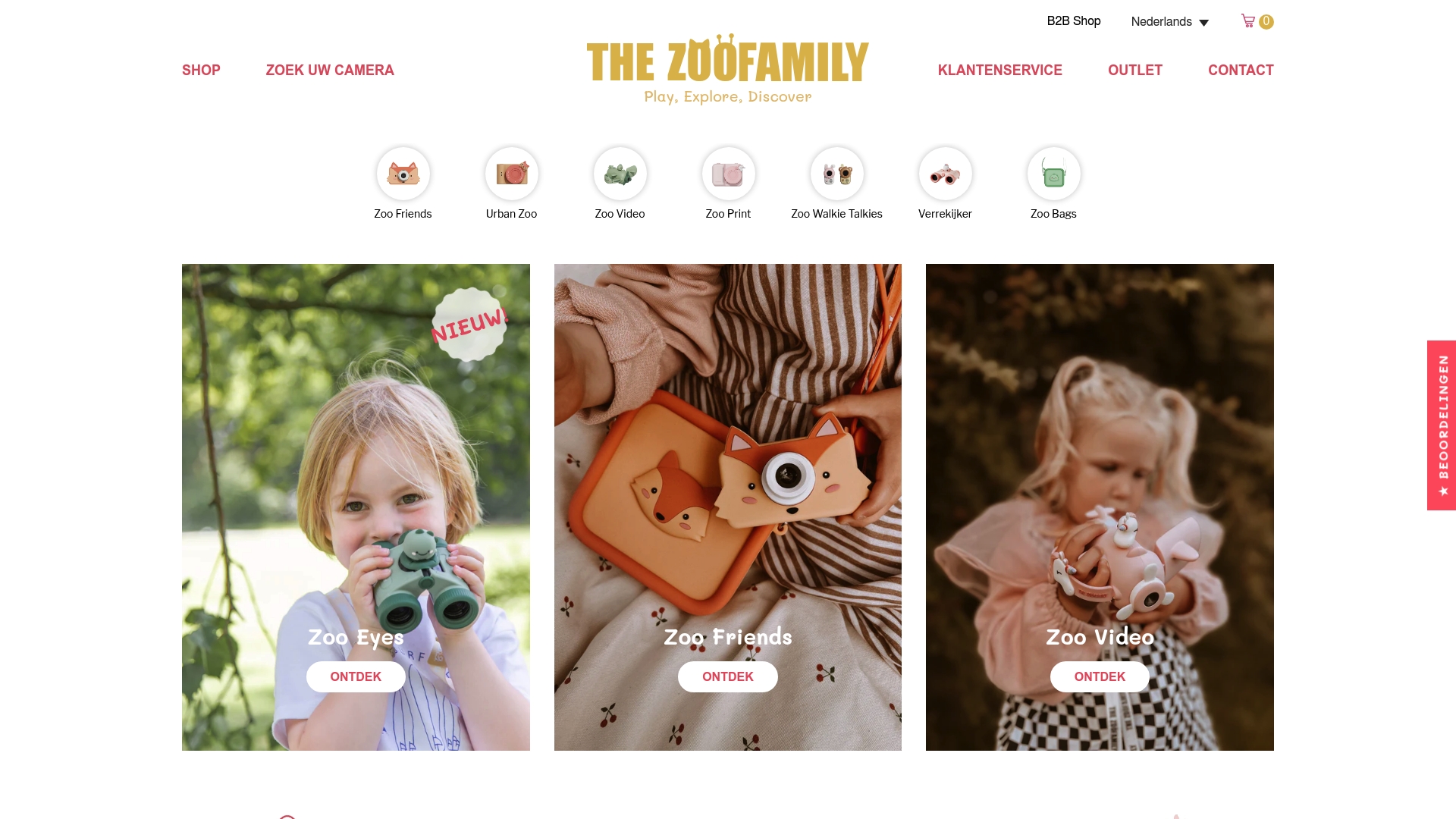
Thezoofamily produces child-sized binoculars, cameras, and walkie-talkies built for outdoor use by young children. The binoculars are lightweight and durable, suited to ages 3 and above, and designed for school sessions as well as family outings. The cameras are simple enough for a five-year-old to use independently, and each one sold funds the planting of one tree.
The kit supports:
- Window and garden observation sessions
- RSPB Big Garden Birdwatch participation
- Outdoor science and nature study activities
- School and nursery group sessions
Visit Thezoofamily to see the full range and find the right option for your child’s age and your session type.