

Balancing family routines with environmental values can feel like a daily juggling act, especially when school runs and budget limits leave little extra room for idealistic green goals. Yet, many families across France and Germany are searching for practical ways to make conscious choices that bring their children closer to nature. Practical green parenting today means finding achievable, sustainable habits that support your family’s real-life needs while nurturing genuine responsibility and curiosity about the planet.
Table of Contents
- Defining Practical Green Parenting Today
- Eco-Friendly Choices In Everyday Family Life
- Nature Play And Outdoor Learning For Children
- Sustainable Products, Toys, And Tools For Kids
- Inspiring Environmental Stewardship At Home
- Common Pitfalls And Balancing Realities
Key Takeaways
| Point | Details |
|---|---|
| Practical Green Parenting | Focus on conscious choices that reduce environmental impact without requiring perfection or complete lifestyle changes. |
| Eco-Friendly Choices | Small, manageable eco-friendly swaps that align with family values are more effective than attempting to overhaul habits overnight. |
| Nature Play Importance | Regular outdoor play fosters children’s holistic development and their connection to nature, enhancing learning through exploration. |
| Environmental Stewardship | Involve children in genuine environmental actions to instil a sense of responsibility and ownership towards nature and community. |
Defining Practical Green Parenting Today
Practical green parenting isn’t about perfection or abandoning modern life. It’s about making conscious choices that reduce your family’s environmental impact whilst raising children who genuinely care about the planet. Unlike the stereotype of green parents who compost every food scrap and make their own cleaning products, the reality today is far more nuanced. Modern green parenting combines everyday sustainable habits with a broader commitment to environmental responsibility, where parents recognise that protecting their children’s futures means protecting the planet itself.
What makes contemporary green parenting “practical” is that it acknowledges real constraints. You’re juggling work, school runs, household budgets, and family dynamics. The research shows that carbon capability in parents refers to your ability to adopt sustainable behaviours given your actual circumstances. This might mean buying organic when it fits your budget, not forcing your family to become zero-waste overnight. You might choose one or two environmental practices that genuinely work for your household rather than attempting every sustainability initiative you read about online. What matters is that you’re creating a foundation where nature and environmental care become normal parts of your family’s rhythm.
A key distinction within green parenting today involves balancing personal household changes with a wider understanding of collective responsibility. Many parents feel motivated to teach their children about environmental protection, yet they also recognise that individual action alone cannot solve climate challenges. This means practising sustainability at home whilst also discussing larger environmental issues, potentially involving children in conversations about climate policy or community environmental projects. You might establish sustainable routines for your family like regular nature outings, reducing single-use plastics, or supporting local businesses, whilst simultaneously helping your children understand that broader systemic changes are equally important. The goal isn’t to burden children with guilt about environmental crisis; it’s to empower them as thoughtful, informed citizens who understand both personal responsibility and collective action.
The beauty of defining green parenting for your family is that it’s deeply personal. What works for a family living near forests in the Black Forest differs from what works in urban Berlin or Paris. Your approach might emphasise outdoor exploration, sustainable consumption, environmental education, or a combination of these elements. What unites all practical green parents is the intention: raising children who grow up understanding their connection to the natural world and feeling equipped to make environmentally conscious choices throughout their lives.
Pro tip: Start with one sustainable habit that feels achievable rather than overwhelming—perhaps a weekly nature walk, reducing car journeys to school, or choosing natural materials for children’s toys—and let that become the foundation before adding other practices.
Eco-Friendly Choices in Everyday Family Life
Making eco-friendly choices doesn’t mean overhauling your entire household overnight or spending money you don’t have. The reality is that families want to live more sustainably, yet cost and convenience remain significant barriers to making it happen. Between packed school schedules, work commitments, and managing a household budget, you’re making countless small decisions every single day. The good news is that sustainable living isn’t about perfection. It’s about identifying which eco-friendly swaps work within your actual life rather than some idealised version of it.
Start by examining where your family already has flexibility and room for change. Perhaps switching to a reusable water bottle for your children’s school bags requires minimal effort and saves money over time. Maybe your local market offers loose vegetables at cheaper prices than supermarket packaging, which simultaneously reduces plastic waste. Other families find success with eco-friendly cleaning methods for busy households, switching from chemical-laden products to simple vinegar and baking soda solutions that cost less and work just as well. What matters is identifying changes that feel genuinely achievable for your household. If you despise cloth nappies but feel obligated to use them, you’ll resent the practice and eventually abandon it. If you enjoy gardening with your children, starting a small vegetable patch becomes a pleasure rather than a chore. The sustainability practices that stick are those that align with your family’s values and lifestyle.
The complexity of making eco-friendly choices within family life means accepting that your approach will look different from another family’s approach, and that’s entirely fine. Competing priorities shape every decision you make. You might prioritise buying organic food for health reasons whilst accepting conventional toy packaging for cost reasons. You might reduce car journeys where possible but choose convenience occasionally when managing multiple children and conflicting schedules. You might focus environmental efforts on reducing single-use plastics whilst using disposable nappies. This realistic balancing act reflects how most families actually live. Research shows that sustainable practices vary widely depending on individual circumstances, with families making compromises that fit their specific constraints and priorities. Your green parenting journey doesn’t require martyrdom or guilt about areas where you’re not perfect.
The most successful eco-friendly families build sustainability into routines rather than treating it as separate extra work. Sunday meal planning becomes an opportunity to reduce food waste. Your regular outdoor activities transform into nature exploration that deepens your children’s connection with the natural world. Buying secondhand clothing from local markets saves money whilst keeping garments out of landfills. Choosing toys made from natural materials aligns with both environmental values and child development needs. When sustainable choices overlap with other benefits—saving money, improving health, strengthening community connections—they become integrated into normal family life rather than feeling like environmental obligations.
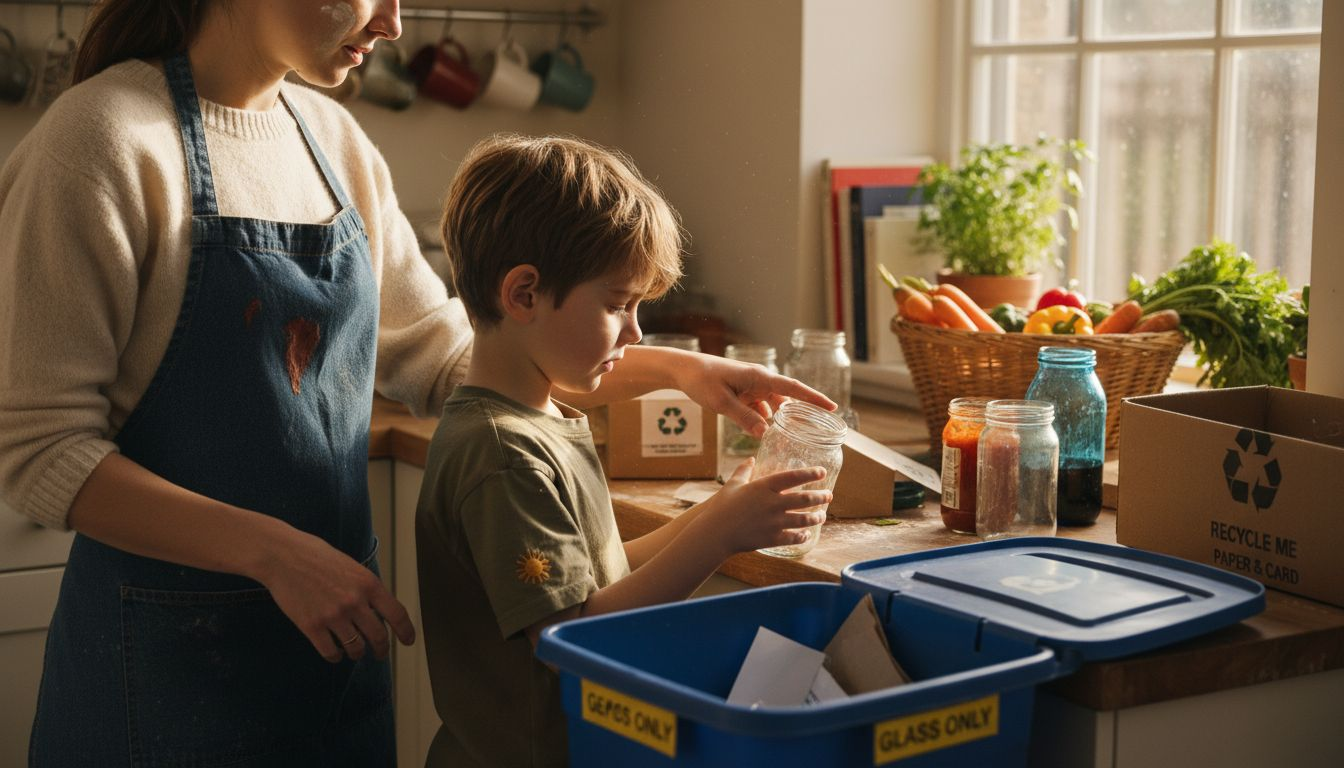
Here’s a comparison of sustainable family habits and their typical impact on daily life:
| Habit Type | Convenience Level | Cost Impact | Environmental Benefit |
|---|---|---|---|
| Reusable bottles | Easy to adopt | Saves money over time | Reduces plastic waste |
| Organic food | Moderately challenging | Higher upfront cost | Lower pesticide usage |
| Secondhand clothing | Requires effort | Usually cost-saving | Keeps garments from landfill |
| Natural material toys | Simple switch | Costs vary, often longer-lasting | Minimises toxic materials |
Pro tip: Pick one small change that saves money whilst reducing environmental impact, such as switching to a wooden toy collection or starting a shared vegetable purchasing arrangement with neighbours, and let that success build momentum for additional changes.
Nature Play and Outdoor Learning for Children
Nature play isn’t an optional extra or a nice-to-have activity squeezed in between structured lessons. It’s fundamental to how children learn, develop, and build their relationship with the natural world. When your child spends time outdoors exploring, digging in soil, climbing trees, and observing insects, they’re engaging in holistic development through outdoor learning experiences that no classroom can replicate. Their hands are learning texture and resistance. Their eyes are tracking movement and change. Their minds are solving problems in real time: how to balance on a branch, where the ant is going, why the puddle reflects the sky. This multimodal engagement with nature teaches children in ways that worksheets and screens simply cannot match.
The beauty of nature play is that it works in virtually every setting, whether you live beside forests in the Black Forest, have a small urban garden in Berlin, or access a neighbourhood park in Paris. Even limited outdoor spaces offer remarkable learning opportunities. A single tree becomes a laboratory for observation. Seasonal changes provide endless discovery. Soil, water, leaves, and stones offer tactile experiences that develop sensory awareness and creativity. Research confirms that intentional nature play supports children’s wellbeing and developmental outcomes, including emotional regulation, physical strength, and environmental familiarity. What matters most is consistent, regular engagement with whatever natural spaces you can access. A weekly visit to the same park teaches far more than occasional exotic trips, because children begin noticing changes, developing relationships with specific places, and understanding seasonal rhythms.
To create meaningful nature play experiences, start by letting your children lead the exploration. Instead of teaching them what to find, follow their curiosity and ask questions about what catches their attention. Why does your daughter want to collect specific leaves? What is your son observing about that beetle? This child-led approach transforms outdoor time into genuine learning rather than you simply supervising playtime. You might bring simple tools like binoculars, a magnifying glass, or a notebook for sketching, which deepens observation without requiring complex equipment or prior knowledge. Photography tools designed for children can extend their engagement, helping them capture details they want to remember and encouraging closer looking. The goal isn’t producing perfect pictures or findings. It’s developing the habit of noticing, questioning, and wondering about the natural world.
Consistent outdoor learning also means accepting that nature play looks different across seasons and weather conditions. Spring mud becomes material for exploration rather than something to avoid. Autumn leaves offer colours and patterns worth studying. Winter bare trees reveal structures hidden in summer. Rainy days bring different sounds, smells, and textures than sunny afternoons. Children who experience nature in all conditions develop genuine comfort outdoors rather than viewing it as a fair-weather activity. They learn that rain doesn’t stop exploration, wind creates observable effects, and seasonal change is constant and fascinating. This weathered resilience, combined with genuine curiosity, forms the foundation of nature-loving children who carry environmental awareness throughout their lives.
The following table summarises how outdoor learning differs through the seasons:
| Season | Nature Play Features | Potential Learning Outcomes |
|---|---|---|
| Spring | Mud, new growth | Discovery, sensory exploration |
| Summer | Abundant greenery | Observation, physical challenge |
| Autumn | Colourful leaves, change | Pattern recognition, adaptability |
| Winter | Bare branches, rain | Resilience, detail observation |
Pro tip: Choose one outdoor location near home and visit it weekly at the same time, allowing your children to notice seasonal changes and develop a genuine relationship with the space, which deepens their engagement far more than varied locations.
Sustainable Products, Toys, and Tools for Kids
Choosing sustainable products and toys for your children isn’t a luxury or a lifestyle statement. It’s a practical decision that aligns your purchasing with your environmental values whilst often delivering better quality and longevity than cheaper conventional alternatives. When you select toys made from natural materials, you’re not just reducing plastic waste; you’re also giving your children objects that feel pleasant to hold, smell fresh rather than chemical-laden, and actually improve with age. A wooden toy passed through multiple children in your family teaches lessons about durability and value. A natural rubber ball doesn’t off-gas toxic chemicals during vigorous play. These aren’t minor considerations when your children spend hours daily handling toys that end up in their mouths, particularly for toddlers and young children.
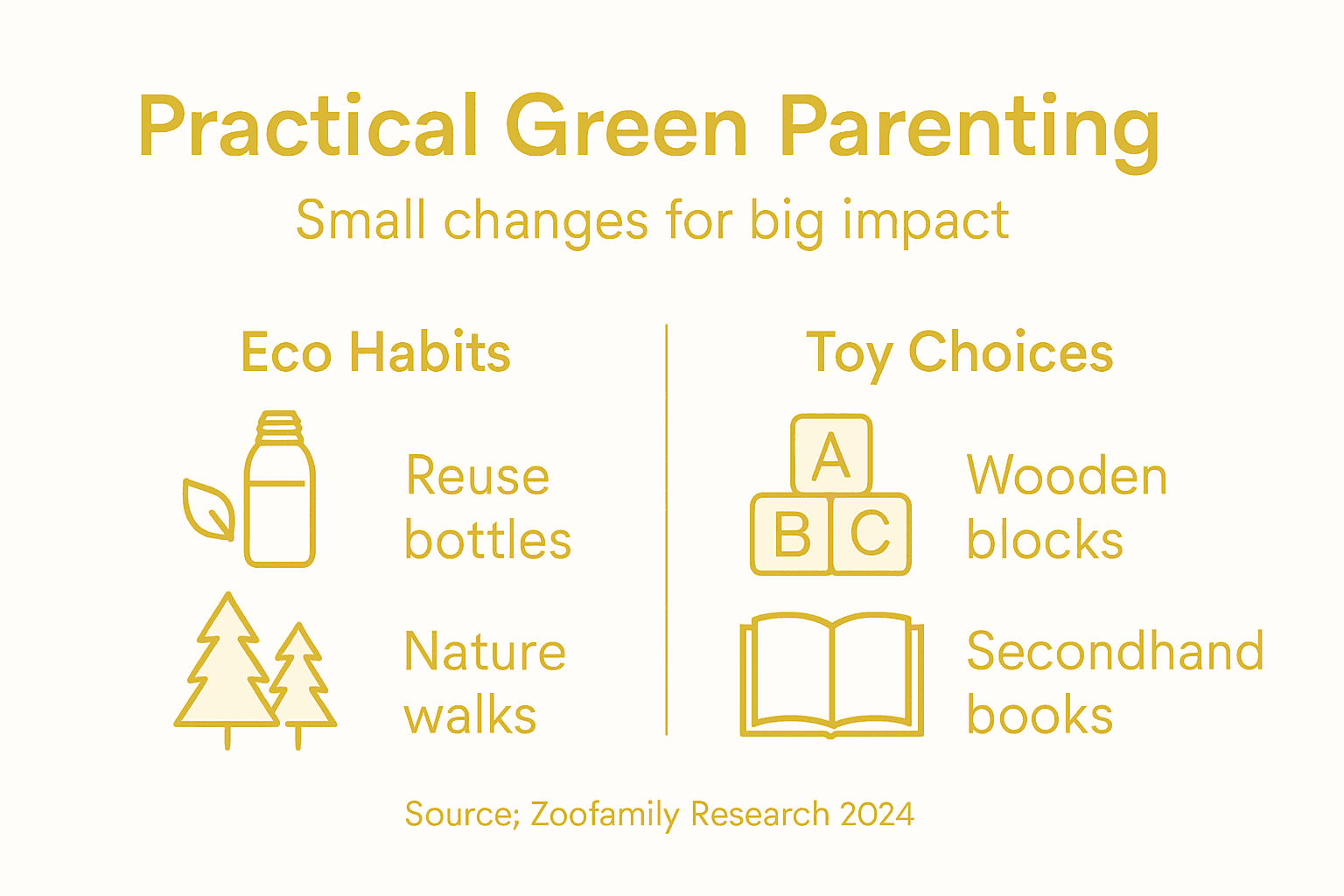
Parents increasingly recognise that eco-friendly toy purchases reflect environmental concern and health consciousness, with many willing to invest more in products manufactured ethically from sustainable materials. The shift makes sense when you consider the total cost of ownership. A plastic toy that breaks after three months costs far more over time than a well-made wooden equivalent that lasts years and can be passed to younger siblings. Natural fibre clothing grows with your child through multiple seasons. Sustainable tools designed for children’s learning—binoculars, magnifying glasses, cameras—encourage repeated use and deeper engagement with nature. When you select products with environmental sustainability built into the product lifecycle, from non-toxic materials to recyclability and educational value, you’re investing in items that serve your family whilst minimising environmental damage. These considerations make sustainability feel less like sacrifice and more like intelligent purchasing.
Building a sustainable toy collection doesn’t require replacing everything immediately or spending money you don’t have. Start by assessing what your children actually use and love. A child who genuinely engages with natural materials and outdoor exploration needs quality binoculars or a children’s camera far more than another plastic character toy that will sit in a basket untouched. Before buying new items, explore secondhand options through local markets, online communities of parents, and charity shops, where you’ll find quality wooden toys and genuine outdoor tools at fractions of their original prices. When you do purchase new, prioritise items that grow with your child or serve multiple purposes. A quality wooden tool set supports outdoor exploration, gardening projects, and creative building. Natural fibre clothing adapts as your child grows. Tools designed for nature observation encourage repeated use across years. You might also consider eco-friendly gifts that inspire genuine nature connection rather than accumulating more possessions. Many parents discover that their children engage more deeply with fewer, higher-quality items than with overflowing toy collections.
The most sustainable approach recognises that children need opportunities to use tools and engage with materials that support their learning and development. Quality binoculars transform a nature walk into genuine scientific observation. A basic magnifying glass reveals details invisible to the naked eye. Simple cameras encourage children to notice composition, light, and detail. Natural wooden toys support creative play without batteries, screens, or planned obsolescence. When you select products intentionally rather than impulsively, you’re teaching your children that objects have value and purpose. You’re demonstrating that environmental care extends to the choices you make as a consumer. And you’re creating a household where the focus shifts from quantity of possessions to quality of experiences and genuine engagement with the natural world.
Pro tip: Before purchasing new toys or tools, ask yourself whether your child will use it regularly and whether it will last through multiple children or seasons, then prioritise quality secondhand finds over new plastic alternatives.
Inspiring Environmental Stewardship at Home
Environmental stewardship isn’t something you teach through lectures or rules posted on the fridge. It develops when children participate in meaningful actions that demonstrate care for the natural world and their community. When your daughter helps plant seeds knowing they’ll feed your family, when your son observes how composting transforms waste into soil, when children participate in decisions about household consumption—these experiences embed environmental responsibility into their identity. Stewardship grows from doing, not from knowing. Your children learn that their choices matter, that small actions accumulate, and that environmental care is simply how families operate. This shift from passive awareness to active participation transforms green parenting from a collection of rules into a genuine value system your children internalise and carry forward.
Cultivating stewardship at home means involving your children in sustainability practices that demonstrate environmental responsibility through practical action. Start by giving them real responsibility rather than token gestures. Let them decide which vegetables to grow in a garden bed. Involve them in choosing between products and discussing why one option aligns better with your family’s values. Ask for their input on household systems. Do you compost, and if so, who manages it? How do you decide what gets recycled? What happens to clothing your children outgrow? When children contribute to these decisions, they develop the capacity to think about consequences and trade-offs, recognising that environmental stewardship involves complexity and choice. They’re not simply obeying rules; they’re developing critical thinking about consumption, waste, and responsibility.
Meaningful stewardship extends beyond household actions into community engagement. Many families discover that youth participation in environmental initiatives builds awareness and fosters leadership, with children becoming advocates for environmental responsibility. This might mean participating in local beach or park clean-ups, joining community gardens, supporting neighbourhood biodiversity projects, or learning about local environmental challenges. When your children see peers and adults working collectively toward environmental goals, they understand stewardship as a shared responsibility rather than individual burden. They encounter people who’ve dedicated themselves to environmental protection, expanding their sense of what’s possible. Community engagement also provides your children with experiences of genuine impact. They see rubbish they collected, habitats they’ve helped restore, or plants they’ve propagated thriving in community spaces. This tangible evidence of their contribution deepens commitment far more effectively than abstract discussions about climate change.
The most powerful aspect of environmental stewardship at home is the modelling you demonstrate through your own choices and attitude. Your children notice whether you genuinely care about environmental issues or merely perform concern. They observe whether you make sustainable choices even when inconvenient. They watch whether you engage with nature yourself or simply send them outside. When parents demonstrate authentic commitment to environmental stewardship, treating it as integral to how they live rather than as burden or obligation, children absorb that value system naturally. Your children learn that environmental care isn’t something exceptional or burdensome—it’s simply part of being a thoughtful, responsible person. This internalised stewardship becomes their foundation for making environmental choices throughout their lives, whether as parents themselves, consumers, or citizens voting on environmental policy.
Pro tip: Invite your child to lead one household or community environmental project, giving them genuine authority and decision-making power, which builds ownership and demonstrates that their stewardship matters.
Common Pitfalls and Balancing Realities
Green parenting sounds straightforward until you’re actually living it. The gap between ideal green parenting practices and real-world family life creates genuine tension that many eco-conscious parents struggle with silently. You read about families who compost everything, make their own cleaning products, grow all their vegetables, and never use single-use plastics. Then you’re managing work deadlines, school logistics, sibling conflicts, and a household that somehow accumulates rubbish no matter how hard you try. The pitfall lies in internalising guilt about areas where you’re not meeting some imagined standard rather than recognising that parenting practices require continuous adaptation to real-world constraints and family circumstances. Flexibility isn’t failure. It’s survival. And it’s the only way green parenting remains sustainable across years rather than collapsing under the weight of perfectionism.
One common pitfall involves becoming so focused on environmental practices that you lose perspective on other family values and wellbeing. You might prioritise reducing consumption so aggressively that children feel deprived, creating resentment rather than environmental values. You might restrict screen time so rigidly that you isolate your family from digital literacy skills increasingly necessary for education and employment. You might insist on organic food at such cost that household finances suffer, creating stress that undermines family relationships. Green parenting exists alongside other important parenting goals: raising resilient, socially connected, educationally supported children who feel secure and loved. When environmental practices begin competing with these other needs, something’s gone awry. The solution isn’t abandoning sustainability. It’s integrating it realistically within your broader parenting philosophy, making trade-offs consciously rather than allowing one value to overshadow everything else. Sometimes the most environmentally responsible choice is also the one that serves your family’s immediate wellbeing best.
Another significant pitfall emerges from unequal access to resources and knowledge. Green parenting advice often assumes access to specialised shops selling organic products, time for meal planning and food preparation, disposable income for sustainable alternatives, reliable transportation to farmers’ markets, and digital literacy to navigate environmental information. Not all families have these advantages. A parent working multiple jobs cannot prioritise composting systems. A family with limited income may need to buy whatever food is affordable rather than seeking sustainable sources. A household without garden space cannot grow vegetables. Rather than viewing these families as failing at green parenting, recognise that environmental responsibility looks different depending on circumstances. What matters is making the most sustainable choices available within your actual situation, not measuring yourself against families with different resources and privileges.
The reality is that green parenting requires constant negotiation between ideals and practicality. You might buy secondhand clothing for children most of the time but occasionally purchase new items. You might reduce car journeys where possible but accept that sometimes driving is necessary and sensible. You might compost what you can manage but not stress about perfect composting systems. You might choose organic for some foods whilst accepting conventional options for others. You might use reusable products most days whilst accepting disposable alternatives occasionally when truly necessary. These compromises reflect intelligent parenting, not environmental failure. You’re making thousands of small decisions, and being eco-conscious in many areas whilst accepting imperfection in others creates sustainable family systems rather than all-or-nothing approaches that inevitably collapse.
Pro tip: Identify two or three environmental practices that genuinely work for your family without creating stress or resentment, then stop trying to add more until those feel effortless and natural.
Empower Your Practical Green Parenting Journey with The Zoofamily
Facing the challenge of balancing real-world parenting demands with nurturing a deep connection between your children and nature can feel overwhelming. The article highlights the importance of practical green parenting that fits your family’s unique rhythm, embracing achievable sustainable habits without guilt or pressure. Your goal to raise curious, nature-loving kids who understand environmental stewardship resonates with The Zoofamily’s mission.
Discover our specially designed kids’ cameras, binoculars, and walkie-talkies that do more than play—that spark wonder and creative exploration outdoors. Each product features animal motifs crafted to ignite your children’s passion for the natural world in a way that aligns perfectly with practical green parenting principles. Plus, for every camera sold, we plant a tree helping restore natural beauty for future generations. Start turning those small wins in sustainable family life into meaningful nature experiences today by exploring our full collection. Take the step now to inspire lifelong environmental stewardship with tools made for kids who want to explore, learn, and care.
Frequently Asked Questions
How can I start practical green parenting without feeling overwhelmed?
Begin with one sustainable habit that feels achievable for your family, such as a weekly nature walk or reducing car journeys. Gradually incorporate more practices that align with your values, creating a foundation for sustainable living.
What are some eco-friendly choices I can make in my family’s daily life?
Look for simple changes like using reusable water bottles, buying loose vegetables to reduce plastic waste, or choosing eco-friendly cleaning methods. Assess what changes are manageable for your family and start from there.
How can I encourage my children to connect with nature?
Involve your children in outdoor play and exploration, allowing them to lead their own learning experiences. Regular visits to the same outdoor location can help them observe seasonal changes and develop a deeper relationship with nature.
Why should I consider sustainable toys and products for my children?
Sustainable toys made from natural materials are often of higher quality and durability, providing educational benefits and reducing plastic waste. They promote a healthier environment for your child, as they are free from toxic chemicals and designed for long-term use.
Recommended
- Comment protéger la planète au quotidien avec ses enfants – The Zoofamily
- Understanding Eco Friendly Routines for Modern Families – The Zoofamily
- 7 activités automne dehors enfant pour découvrir la nature – The Zoofamily
- Meilleurs gadgets plein air enfants – Comparatif 2025 – The Zoofamily
- 幼龙护理方法全攻略:健康成长的实用步骤指南